
Inactive· since Feb 11, 2026
- 36
- days it ran
- 0
- relaunches
Ad copy
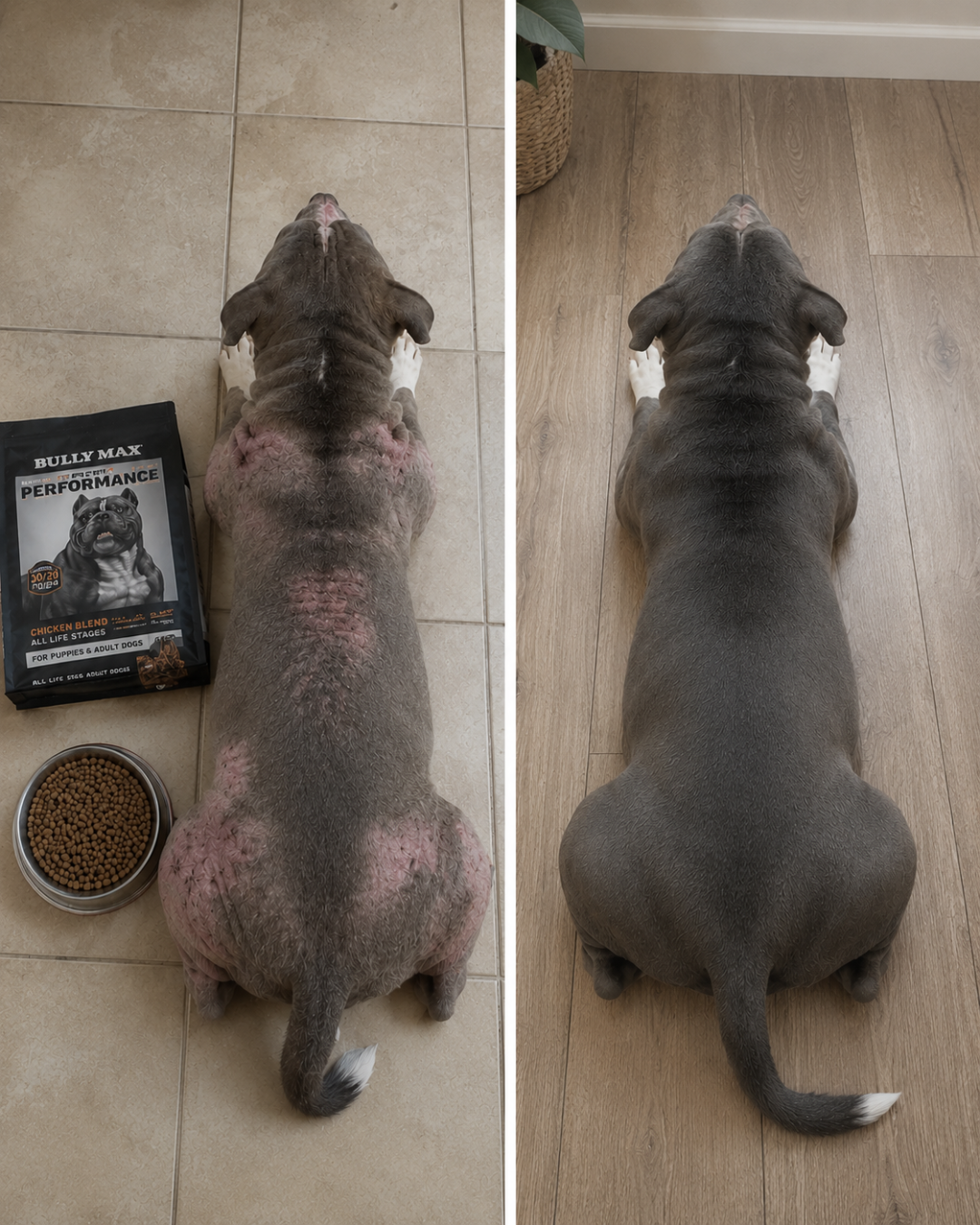
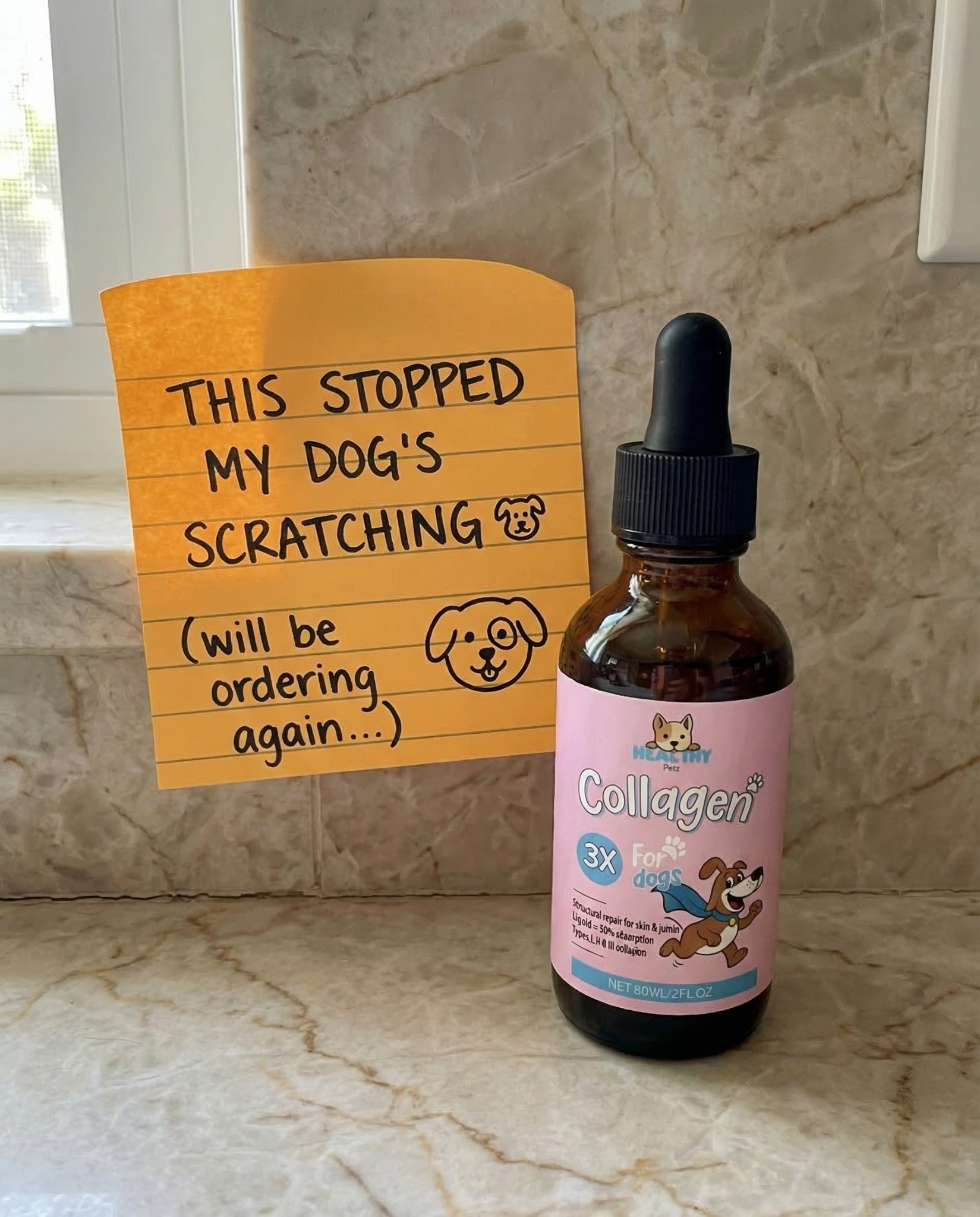
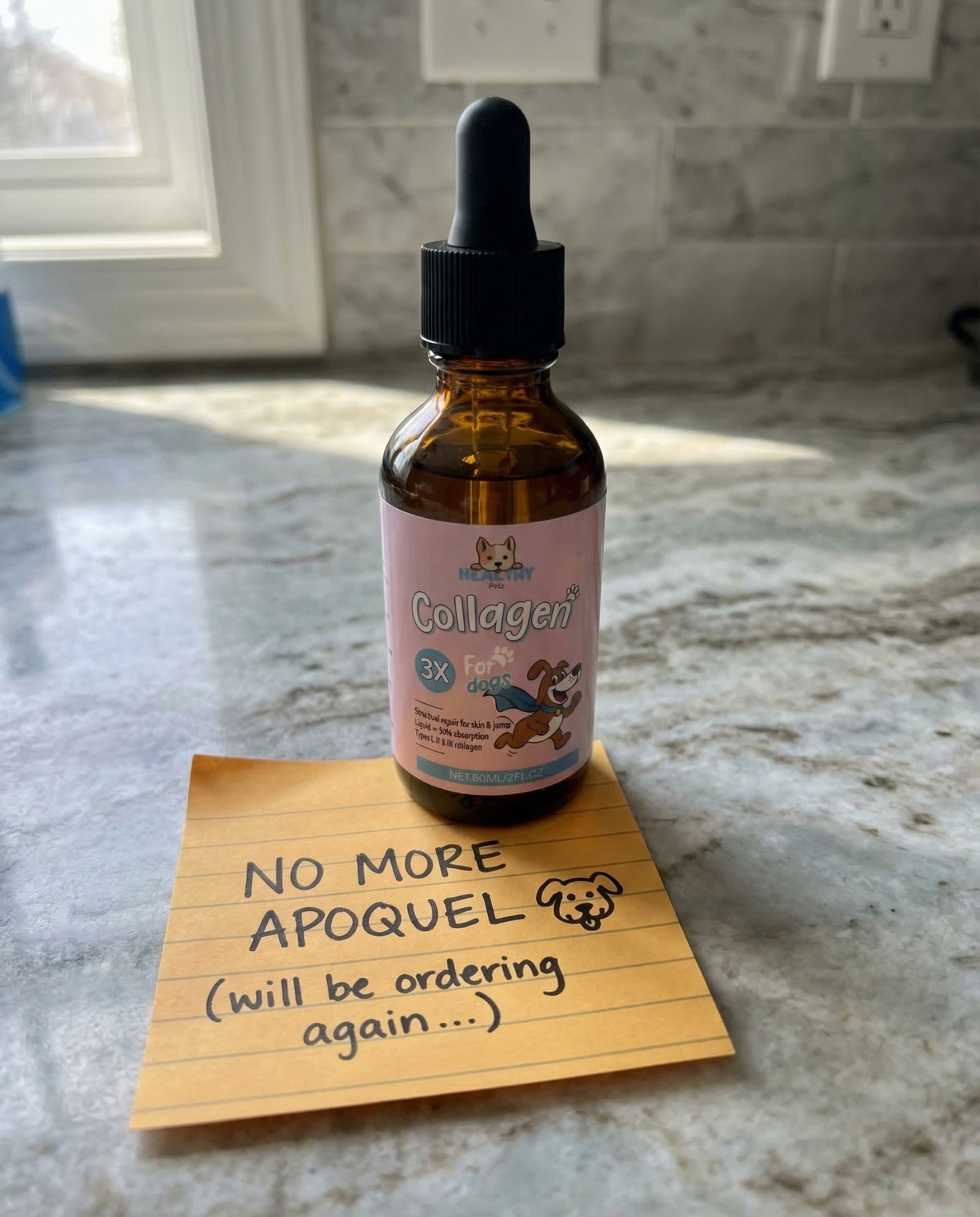
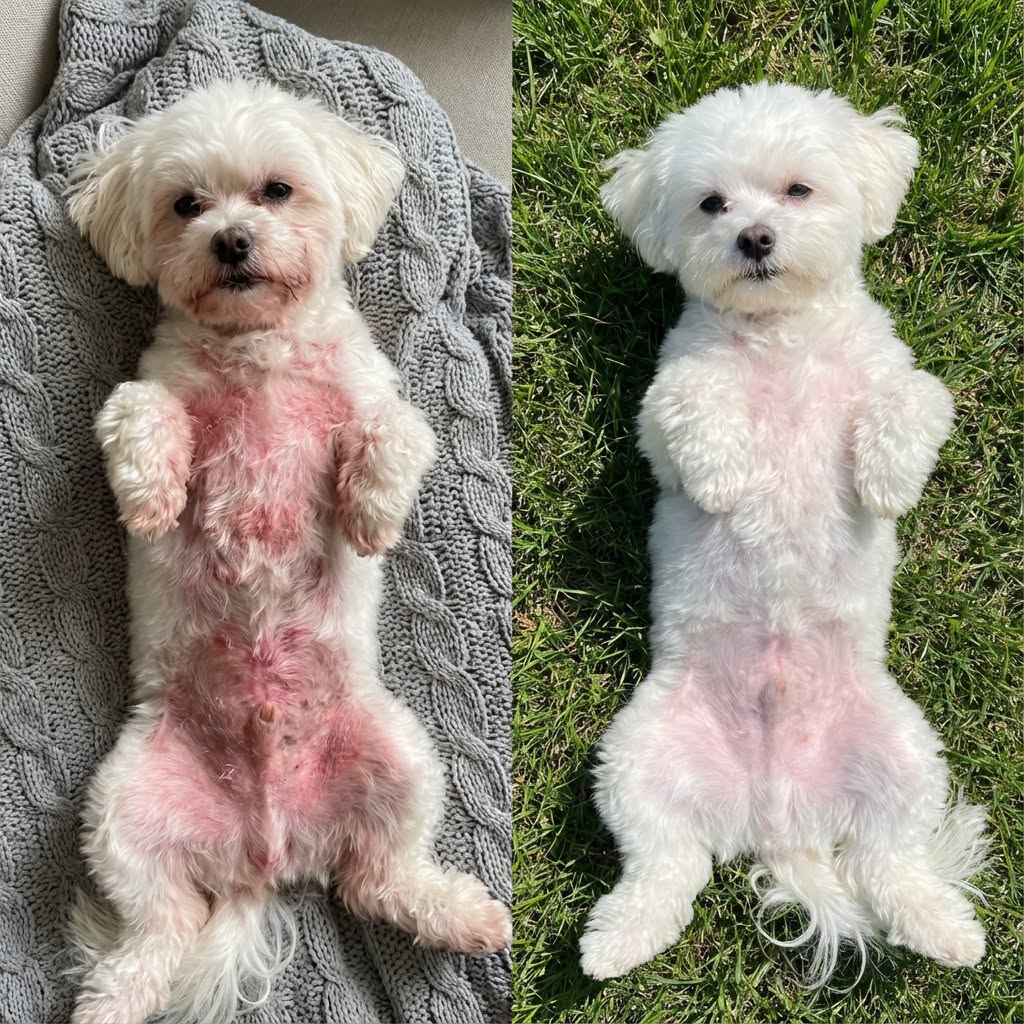
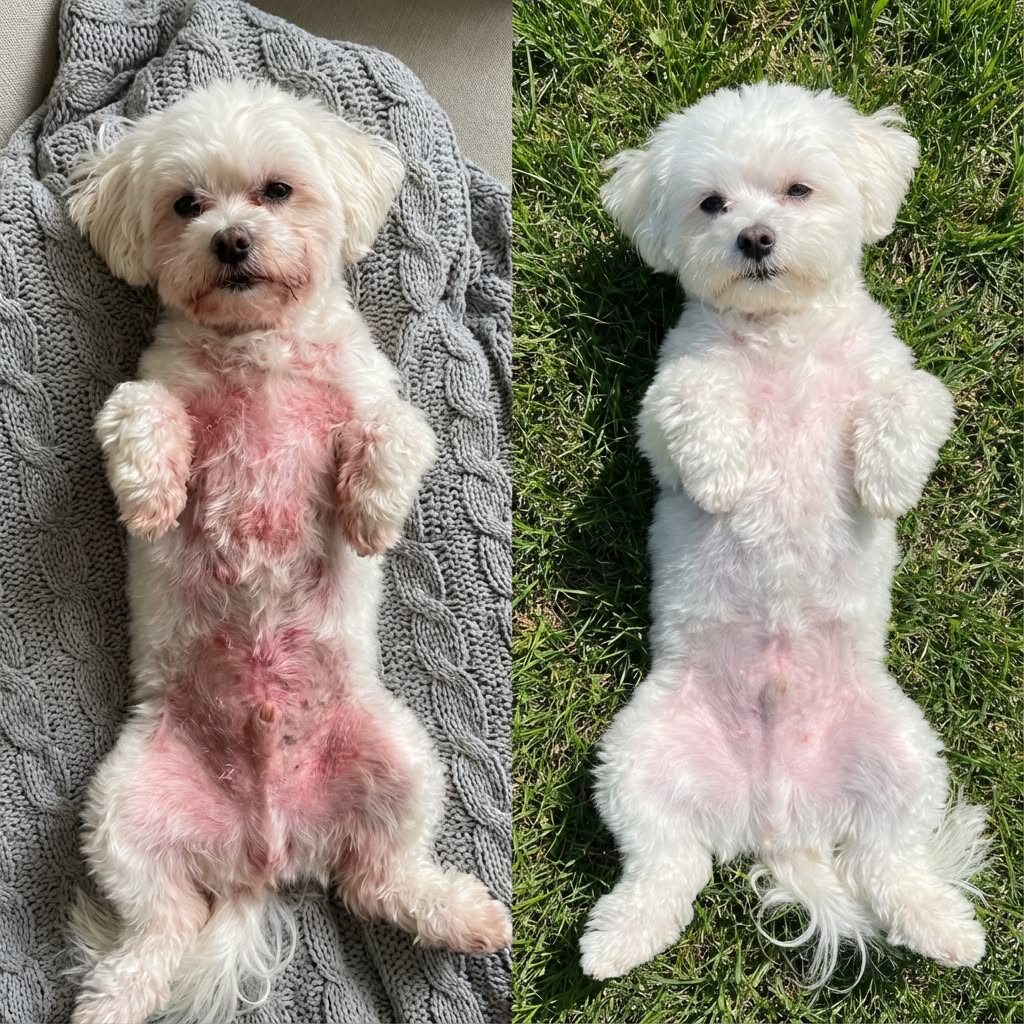
Please STOP trying to fix your dog's allergies. I know that sounds crazy, but every time you refill that Apoquel prescription or get another Cytopoint injection, you're actually making the underlying problem worse. Let me explain. I used to do the same thing. Spending $180 every two weeks on Cytopoint injections, convincing myself the price meant they HAD to work eventually. The vet was so confident: "This is one of our most effective allergy treatments. Most dogs respond beautifully." Charlie did respond. For exactly two weeks. Then the scratching came back. Just as intense. Just as desperate. "Some dogs need more frequent dosing," the vet explained. "Let's move you to every 10 days." So now I was getting injections every 10 days instead of every two weeks. $180 every 10 days is over $500 a month. For relief that kept getting shorter and shorter. But what choice did I have? Watching your dog suffer is unbearable. I also tried four different prescription foods at $120 per bag, dealing with the constant diarrhea because that's what the vet said we had to do. "Food allergies are very common," she explained. "We'll start with hydrolyzed protein. It takes 8-12 weeks to see full results." Week one: Charlie had horrible diarrhea from the food change. Week two: Diarrhea settled, scratching seemed slightly better. I felt hopeful. Week four: Scratching was back to baseline. Maybe worse. But the vet said to give it the full 12 weeks. "Sometimes it takes time," she said. So I kept buying $120 bags of food that gave my dog diarrhea and didn't stop the scratching. Twelve weeks. Three bags. $360. No improvement. "Let's try a different protein," the vet suggested. "Some dogs do better with salmon." So we switched to salmon-based prescription food. Same pattern. Brief hope. Then disappointment. Then duck. Then kangaroo. Each time, another $120 bag. Each time, the same cycle of hope and failure. By month six, my kitchen looked like a failed science experiment. Half-empty bags of prescription food. Bottles of Apoquel from when we tried pills before injections. Cytopoint receipts piling up. Fish oil supplements from the pet store. Probiotics recommended by a Facebook group. Medicated shampoos that did absolutely nothing. I'd spent over $2,800. Charlie was worse than when we started. Month after month, she kept scratching. More fur fell out. Her belly got more raw. The scratching sound at night became the soundtrack of my life. That horrible sound—paw hitting skin, over and over—would wake me from a dead sleep. And I'd lie there in the dark, listening, dreading what I'd see when I turned on the light. I felt like I was failing her. Was I doing something wrong? Was her allergy just too severe for anything to help? Every vet visit, I'd ask: "Is there anything else we can try?" And every time, the answer was the same: "We're doing everything we can. Some dogs just have severe allergies." But that didn't feel like an answer. That felt like giving up. The breaking point came one night when I couldn't take it anymore. I woke up to the sound of violent scratching—that wet, desperate sound that makes your stomach turn. When I turned on the light, there was blood on her white bed. Fresh scratches across her belly, reopening wounds that had just started to heal. Fur missing in patches, exposing raw, inflamed skin. Charlie looked at me with these exhausted, defeated eyes. Like she was saying: "Please. Make it stop." I sat on the floor next to her and cried. In that moment, I felt like the worst dog owner in the world. I'd spent nearly $3,000. I'd followed every recommendation. I'd tried everything the vet suggested. And my dog was still suffering. Maybe even worse than before. That's when everything changed. I couldn't sleep after that. So at 3 AM, I did what I always did—I Googled. But this time, instead of searching "best dog food for allergies" or "strongest allergy medication," I searched something different: "Why do allergy treatments stop working." That's when I found research from a veterinary dermatologist explaining something no vet had ever mentioned in any of our visits: After age 2, your dog's skin barrier—the protective wall made of collagen that keeps allergens OUT—starts breaking down. Every single year, they lose 7-10% of their collagen structure. By age 7, your dog has lost over 50% of their protective barrier. By age 10, they've lost nearly 70%. Charlie was 6 years old. She'd lost almost half of her natural protection. And no one had ever told me this. Here's what that means: When allergens like pollen, dust, or grass touch their skin, instead of staying on the surface where they cause minor irritation... They penetrate through microscopic gaps in the weakened barrier. They go deep into the tissue. Your dog's immune system detects these invaders and launches a massive inflammatory response. That's the chronic itching. The hot spots. The ear infections. The constant scratching that never stops. Now here's the part that made me absolutely furious: When you give them Apoquel or Cytopoint, you're suppressing that immune response. You're telling your dog's body: "Stop fighting the invaders." The itching stops temporarily because you've shut down the alarm system. But here's what's still happening: The barrier keeps breaking down. 7-10% more loss every year. The gaps keep getting bigger. The allergens keep penetrating deeper and in larger quantities. So two weeks later—when there are so many allergens flooding through so many gaps that even a suppressed immune system can't ignore them... The scratching comes back. You think the medication stopped working. But the medication didn't stop working. The underlying problem got exponentially worse while you were masking symptoms. That's why you need higher doses. That's why you need more frequent injections. That's why vets say "some dogs just have severe allergies." It's not that the allergy is severe. It's that the barrier is collapsing and no one is addressing it. You're trying to bail water out of a sinking boat while the hole keeps getting bigger. Eventually, you can't bail fast enough. As for food elimination diets? This made me even angrier when I understood it: When you switch to a hydrolyzed protein diet, you might successfully remove ONE trigger. Let's say Charlie was reacting to chicken protein. Great. You eliminated chicken. But environmental allergens—pollen, dust mites, mold spores, grass—are STILL penetrating through the broken barrier every single day. Dozens of different triggers flooding through gaps in her skin. That's why the food works for two weeks—you removed one irritant. But then the scratching comes back because you didn't fix the broken structure letting everything else through. You're eliminating triggers one by one while the barrier that's supposed to keep ALL of them out continues to collapse. My heart was racing as I read this research. This explained everything. Why the Apoquel worked for three weeks, then failed. Why we needed more frequent Cytopoint injections. Why switching foods gave brief relief, then nothing. Why every single treatment seemed to work initially, then stopped. I wasn't treating the broken structure. I was just managing symptoms—suppressing her immune response, eliminating dietary triggers—while Charlie's skin barrier kept deteriorating. The research explained that the solution isn't suppressing the immune system or eliminating every possible trigger. It's about rebuilding the barrier structure so allergens can't penetrate in the first place. I found studies showing dogs with severe chronic allergies—dogs who'd been on Apoquel for years, dogs who needed Cytopoint every week—completely transformed once their barriers were rebuilt. Not "managed." Not "controlled with medication." Actually healed. Dogs with raw bellies, missing fur, constant hot spots—transformed into dogs with thick coats, clear skin, and peaceful sleep. But these weren't dogs being pumped full of steroids and immune suppressants. These were dogs whose skin barriers had been rebuilt from the inside out. Dogs who didn't need medications anymore because the structure was fixed. I kept reading, desperate to understand how. The barrier is made of collagen—specifically Types I, II, and III. When you rebuild that collagen structure, you're literally repairing the microscopic gaps that let allergens penetrate. But here's the critical part most people don't know: Most collagen supplements are pills or chews. The molecules are massive. They get broken down during digestion. Studies show dogs only absorb about 20-30% of pill-form collagen. And of that small percentage, only a fraction actually reaches the skin. Most of it gets used elsewhere in the body or eliminated. That's why giving your dog collagen pills for skin allergies usually doesn't work. The delivery method is wrong. But liquid hydrolyzed collagen is completely different. The collagen molecules are pre-broken into tiny peptides small enough to absorb directly. 98% absorption rate. Nearly everything you give actually gets used to rebuild the barrier. The research emphasized you also need: MSM to calm the inflammation while repair happens (you can't rebuild a structure while it's on fire). Glucosamine to help new collagen integrate into the existing barrier structure. Hyaluronic acid to keep the repaired barrier flexible and hydrated. It's not just "give collagen and hope." It's a complete barrier repair system targeting every aspect of the breakdown. I found a liquid formula with all of these components. Types I, II, and III collagen. MSM. Glucosamine. Hyaluronic acid. Everything the research indicated was necessary. I ordered it that night. Within three days, it arrived. A simple amber bottle with a pump dispenser. One pump in Charlie's food once daily. That's it. No pills to force down her throat. No bi-weekly injections at the vet. No prescription refills. No $120 food bags. I didn't tell anyone what I was doing. Not my husband. Not the vet. Nobody. Because I was so exhausted from hope followed by disappointment. I just quietly added one pump to her breakfast every morning. Within two weeks, something changed. The frantic midnight scratching decreased noticeably. Not gone completely. But maybe 40% less frequent. I didn't want to get my hopes up. I'd been disappointed too many times. But I couldn't deny what I was seeing. By week three, the scratching had decreased even more. By week four, I could see the raw patches on her belly starting to actually heal. Pink, healthy skin appearing where there had been angry red inflammation for months. The bleeding stopped. Fur started growing back in the bald spots. For the first time in six months, I felt hopeful instead of helpless. My regular vet noticed at Charlie's routine exam at week eight. She stopped mid-exam, looked at Charlie's belly, and her face showed genuine surprise. "What have you been doing differently? Her skin hasn't looked this good in over a year." I hesitated, then told her about the liquid collagen and the research I'd found. She nodded slowly, thoughtfully. "That actually makes sense. We're trained to manage symptoms in vet school—suppress the immune response, eliminate triggers. But we don't really learn about addressing the barrier depletion itself. If you're rebuilding the actual structure, the immune system doesn't have to fight as hard." She paused. "I wish they'd taught us this. I have so many patients on chronic Apoquel who might benefit from this approach." By month four, I realized I hadn't refilled Apoquel in weeks. Because I hadn't needed to. I cancelled Charlie's standing Cytopoint injection appointments. The thin patches on her sides had completely filled in with thick, healthy fur. Her ears—which used to get infected like clockwork every six weeks—stayed completely clear. Her paws, which she used to lick raw every single night, looked normal and healthy. But the real test came when I decided to stop everything else. No more fish oil supplements. No more probiotics. No more prescription medications. Nothing but the liquid collagen. I expected her to relapse immediately. Instead, she continued improving. That's when I truly understood: Charlie's barrier was healthy again. Her immune system wasn't constantly overreacting because allergens weren't penetrating through broken structure anymore. She didn't need to be medicated into submission. Her body was functioning the way it was designed to. It's been seven months now. I look at photos from a year ago and barely recognize my dog. The dog who scratched herself bloody every night. The dog I spent $180 every two weeks trying to keep comfortable. The dog I thought would be on medications for the rest of her life. The dog I felt so guilty about because I couldn't figure out how to help her. If you're reading this and you recognize yourself in my story, please understand: You're not failing your dog. Your vet isn't incompetent. You just haven't addressed what's actually broken. You don't need to keep spending hundreds of dollars monthly on medications that only mask the problem. You don't need stronger doses or more frequent injections. You don't need to try every food on the market. You don't need to accept chronic allergies as something your dog just has to live with. You just need to stop suppressing symptoms and start rebuilding structure. Stop fighting the immune response. Start fixing the barrier. The transformation in these photos is six weeks apart. Same dog. Rebuilt barrier. The article that explained everything about barrier repair and how liquid collagen works is here: shophealthypetz.com/pages/collagen
Like this ad? Make it yours.
Crush rebuilds this exact creative around your product — your brand, your colors, your offer — in about a minute.