Susan Reynolds
 Facebook ad: “You Can Fix Your Lower Back Pain In Just 6 Weeks!”
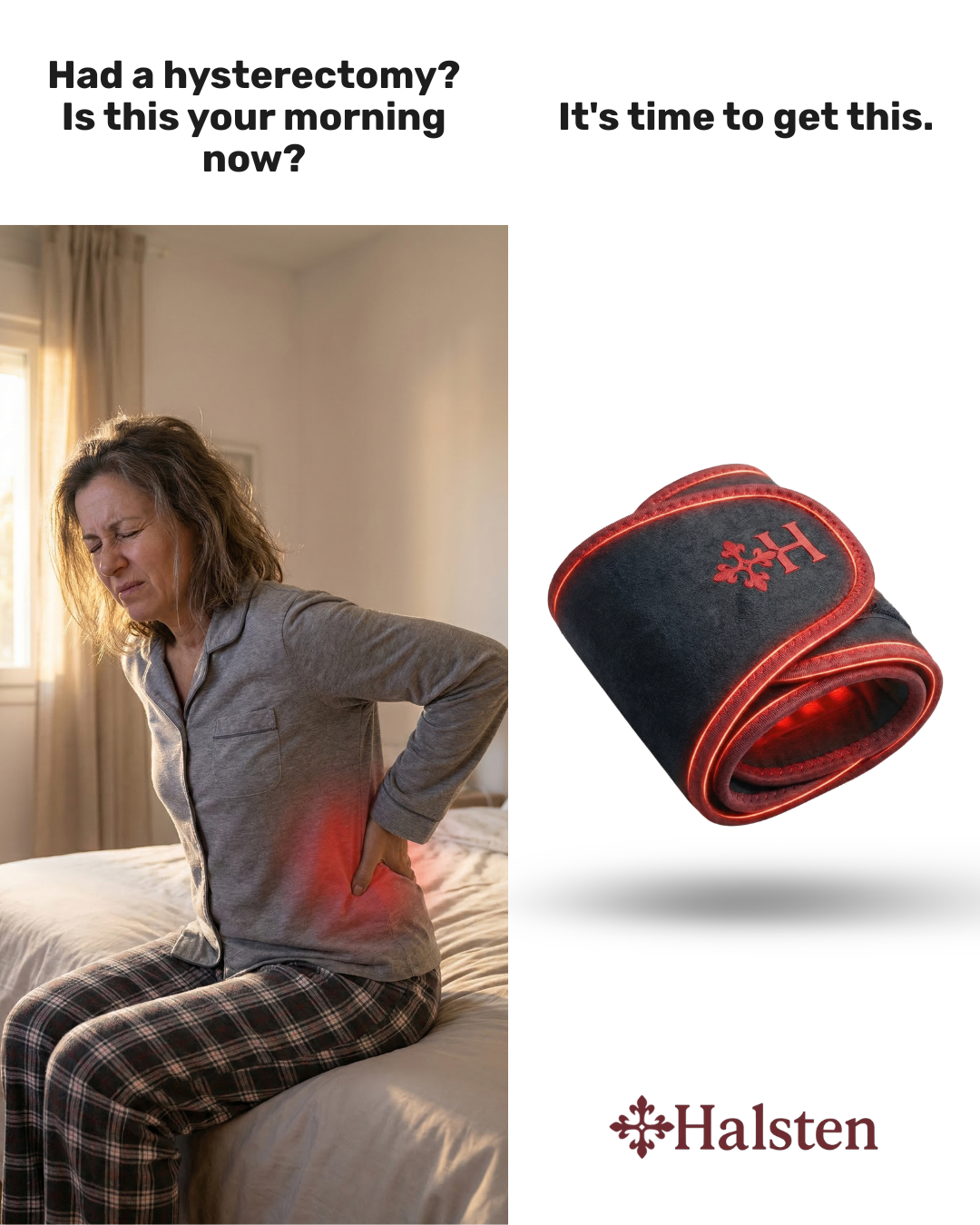
Ran for 3 days, from March 13 to March 16, 2026, the last day Crush saw it.
Run by Susan Reynolds on Facebook. Crush is not the advertiser and does not verify its claims. See this ad in Meta's Ad Library(opens in a new tab)
Make your own version of this ad
Crush makes it, launches it in your own Meta ad account, scales the winners and pauses the losers.
About this ad
- Meta Ad Library ID
- 895470620154194
- Platforms
- Facebook, Instagram, Audience Network, Messenger and Threads
- Relaunches
- 0
Ad text
If you've had a hysterectomy and you're dealing with a deep, relentless ache in your lower back, what I'm about to tell you will change EVERYTHING. The pain that radiates down through your hips and legs? The stiffness that makes getting out of bed feel like a project? The ache that's been there since your surgery and just... never left? It's not sciatica. It's not a disc problem. It's something called lumbar tendinopathy... and if you're thinking "what the f**k is that??" you're not alone. It's actually something most doctors miss entirely — they write it off as "something that happens after surgery" without asking: "What if it's something that can actually be fixed?" This leaves thousands of women who've had hysterectomies wondering: "Is there no solution to my back pain?" ========= I was one of those women, thinking I would have to spend the REST OF MY LIFE managing this pain. The pain started a few months after my hysterectomy: a dull ache low in my back that I blamed on how I was sleeping. Some mornings I'd wake up so stiff I had to lie there for a few minutes just working up to standing, like my spine had locked overnight. Other days it was sharp, shooting pain that would fire down through my hips without warning. Within a year of my surgery, I felt like I'd aged 15 YEARS. The pain would shift from deep aching to sharp, electric stabs that made me catch my breath. Getting dressed became this whole production — sitting on the edge of the bed, moving slowly, bracing for it. My world started getting smaller. I used to love long walks with my neighbor Carol — two, three miles without thinking twice. But I started making excuses. The truth was, I was terrified. ========= Terrified of that shooting pain when I moved wrong. The unpredictability was almost worse than the pain itself. Getting out of cars became a nightmare. Standing up from restaurant booths felt humiliating. I started avoiding invitations because I was embarrassed about how I moved — like a woman twice my age. I tried everything. Ibuprofen until my stomach couldn't take it. Tylenol that did nothing. A lumbar support cushion — twenty minutes of relief, then the pain came back. A TENS unit — forty minutes strapped to a machine, and the second I took it off, I was right back where I started. After talking to doctors, I tried cortisone shots. After a few days, the pain always crept back WORSE than before. "It's probably just some muscle strain," one doctor said, barely looking up. "These things take time after surgery." Another prescribed stronger anti-inflammatories and suggested I "take it easy." A third did an MRI: "I don't see anything significant. You might just have to learn to manage this." Learn to manage it. After a surgery that was supposed to make my life better. Then came the part that broke me: my husband started sleeping in the guest room. "I love you, but I can't sleep with you shifting and getting up every hour." I was now sleeping alone, in pain, wondering if this was just my life now. Then something happened that I will forever be grateful for. ========= My sister called one evening. "You know that specialist I started seeing? She asked me about back pain. Said it's directly connected to what happens to your hormones after a hysterectomy — in ways most doctors never explain." Instead of seeing another general practitioner, I finally saw a specialist who understood post-surgical hormonal changes. Her name is Dr. Sarah Mitchell, and I owe her EVERYTHING. The first thing she said was, "Tell me about your pain. Start from the beginning, and don't leave anything out." For the first time since my surgery, someone actually listened. She asked all the right questions: "Does the pain sit deep in your lower back — not shooting down the leg, just a concentrated ache?" Yes. "Does it get worse after sitting for a while? Worse in the morning?" Yes, exactly. "Does it feel like it's coming from inside the back itself — not the surface, not the muscles, but deeper?" "Are you reading my MIND?" After her assessment: "Just as I suspected. You have lumbar tendinopathy." "Lum... what??" Dr. Mitchell smiled. "Lumbar tendinopathy means the tendons stabilizing your lower back are breaking down. When you have a hysterectomy, your estrogen drops sharply — and estrogen is what keeps your tendons producing collagen. Without it, they stop repairing themselves. They thin. They stiffen. They fray. Most doctors don't connect back pain after hysterectomy to tendon breakdown. They look for disc problems, nerve impingement. They don't look at the tendons." It all clicked. "So THAT'S why nothing worked. The shots and the pills were covering up the pain while the actual problem kept getting worse." "Exactly. You can't medicate a structural problem. Without collagen repair, everything else is just temporary. Your tendons used to repair themselves when your hormones were different. Now they need something to restart that process." "So... is there actually a way to fix this?" Dr. Mitchell's face lit up. "I love when patients ask me that." ========= She pulled something from her desk. "This is what I've been recommending to my post-hysterectomy patients with lumbar tendinopathy. This is the Halsten Rise. It doesn't just mask the pain — it delivers a signal directly to your lumbar tendons and restarts collagen production. The thing estrogen used to do automatically? This does it from the outside in." She flipped a switch. The room filled with a deep red glow. "Red and near-infrared light therapy penetrates deep enough to reach the tendons themselves — not just the surface, not just the muscles. It reaches the tissue that's been breaking down since your surgery and tells the cells: start rebuilding." I was skeptical. After everything I'd tried, I'd earned that. "Take it home for a month. Use it every day. Twenty minutes." The first week, I used it religiously. Just warmth. No dramatic changes. I wondered if I was fooling myself again. Ladies. Let me tell you — I wasn't surprised because it worked. I was surprised because it worked SO FAST. By week 2, the sharp electric stabs were happening less. Week 3: I slept through the night. The whole night. My husband came back to bed. "I haven't seen you sleep like that in over a year," he said. Week 4: I walked to the car without thinking about it. Week 5: Carol and I walked a mile and a half. No shooting pain. No dread. "You're walking differently," she said. "Like before." Week 6: I sat through a three-hour dinner and stood up like a normal human being. It's been four months now. The morning stiffness is gone. The shooting pain is a memory. I sleep on my side again. I'm not afraid of my body anymore. I'm just... living. If this sounds like what you're going through, don't wait as long as I did. ========= Halsten Rise delivers medical-grade red light therapy directly to your lumbar tendons — restarting the collagen production your hysterectomy shut down. The Triple-Wavelength System includes: 660nm The Primer — Boosts oxygen-rich blood flow to the lower back, opening the supply lines so deeper wavelengths can reach tendon tissue that's been starving. 830nm The Activator — Reactivates cellular energy production in your tendon cells, boosting the power they need to produce new collagen by up to 150%. Flips the collagen factory back on — even without estrogen. 940nm The Healer — Penetrates deepest to reach the lumbar tendons themselves, calms inflammation at the source, and organizes new collagen fibers into strong, aligned structures. While other treatments offer temporary relief, Halsten Rise is engineered to address the actual cause of post-hysterectomy back pain — at the tendon level. Margaret R., 54 — "After 6 weeks with Halsten Rise, I'm sleeping through the night for the first time since my surgery. The sharp pain was gone by week 3. My husband says I'm moving like my old self again." Linda K., 49 — "Three doctors told me it was sciatica. Halsten Rise proved them wrong. I noticed a difference after 10 days. By week 5 I was walking without bracing myself for it." Use your Halsten Rise every day for a full 90 days. If you don't experience: ✅ Noticeably better sleep within the first 2–3 weeks ✅ Significant pain reduction by week 6 ✅ Return to activities you've been avoiding within 90 days Simply contact our team and return your device for a complete refund.
Where the ad sends people
tryhalsten.com
You Can Fix Your Lower Back Pain In Just 6 Weeks!
Halsten
Shop now: tryhalsten.com(opens in a new tab)