
Stopped· since Jan 14, 2026
- 20
- days it ran
- 1
- relaunches
Ad copy
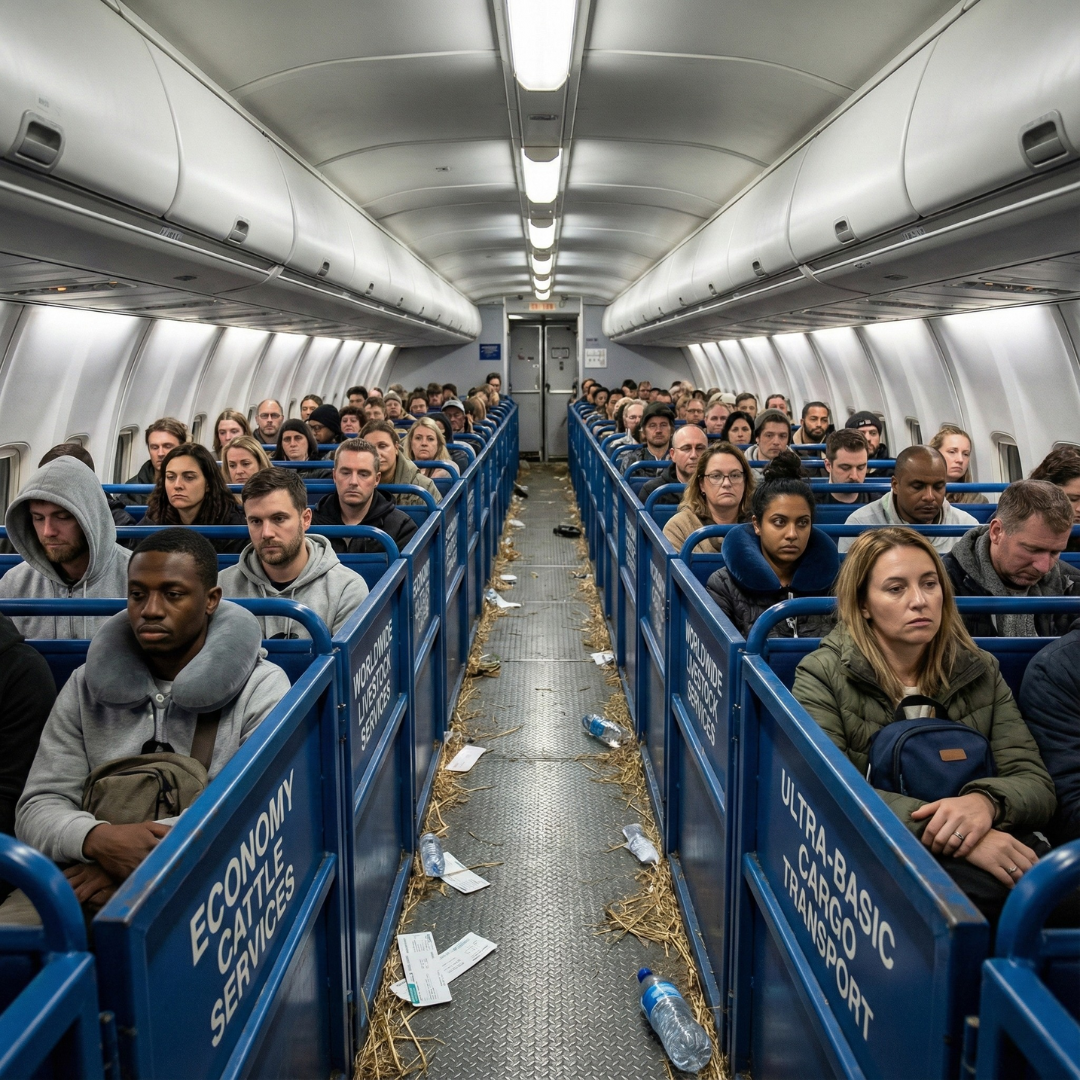
I told my husband in January 2025 our travel days were over. Not because we're too old—because I couldn't justify $16,000 for business class or another ruined vacation in economy. By November, I'd booked four trips for 2026. What changed? I stopped letting the airlines force me to choose between my money and my body. You've stared at that business class booking page late at night, haven't you? Seen the price, $8,000 each, $16,000 total, and felt your stomach drop. You've switched to economy. $2,200. Told yourself you're being responsible. Then you remember what happened last time. How you could barely stand up when you landed. How it took you three days, three days of your two-week trip, to get rid of the back pain. You spent $4,000 on that vacation. Used half of it recovering instead of exploring. That's the question that stops you from booking anything at all: "Am I being financially irresponsible upgrading, or irresponsible to my health staying in economy?" I asked myself that same question for months. Paralyzed. Unable to book a single trip. Then I discovered what the airlines had actually done, how they'd deliberately created this impossible choice. And how I could refuse to make it. This was early 2025. My husband and I have been married for 43 years. Retired for six. We'd saved our whole lives specifically for this moment. To see the Greek islands, visit the grandkids in Portland and finally do that Mediterranean cruise we'd been planning since our honeymoon. And I was telling my husband we couldn't afford to travel anymore. Not because we didn't have the money. Because every trip came with an impossible choice. The choice nobody talks about. Business class to Athens: $8,200 each. That's $16,400 for two seats. For one trip. I'd pull up the booking page. Stare at that number. Then open our retirement account in another tab. The math was brutal. $16,400 could cover our property taxes for a year. A big chunk of our living expenses. The new water heater we'd need eventually. It felt insane to spend that much on airplane seats. So I'd switch to economy. $1,100 each. $2,200 total. Completely reasonable. Except I knew what would happen. Because it had already happened. Athens, March 2024. Nine-hour flight in economy. Those rock-hard seats, I swear I was sitting on a metal bar. I could barely stand up once we arrived. It took me most of our two-week trip to get rid of my back and leg pain. Days I should have been exploring, I was in the hotel room with a heating pad. I'd spent $4,000 on accommodations. Used half of them lying down in agony. David kept saying, "We saved for this. What's the point of the money if we don't use it?" But I couldn't make him understand the paralysis. Because that $16,400 wasn't just money. It was safety. I'd started asking myself that question every time I looked at flights: Am I being financially irresponsible upgrading, or irresponsible to my health staying in economy? That's what it felt like. A forced choice between two types of ruin. Spend our emergency fund on business class, arrive comfortable, worry about money for months. Or save the money, arrive broken, spend the trip recovering instead of living. I couldn't justify either one. So I just stopped looking at flights. Stopped opening the travel emails. Stopped daydreaming about Greece. My sister was planning a Mediterranean trip for October. "If not now, when?" she kept saying. I made excuses. "The timing's not right." "We just spent so much on the house." The truth was I was paralyzed. Late at night I'd be awake, running the numbers in my head. If we do business class to Athens next time, we lose this much cushion in the emergency fund. If I get sick next year and need care, what then? I grew up watching my parents stretch every dollar. Saw what happened when the money ran out before the month did. I swore I would build a different life. More security. More cushion. And I did. We saved for decades. But now I was being forced to choose between spending it all or suffering anyway. I'd tried everything else. Aisle seats. Exit rows. Getting up every hour to walk around. Compression socks. Ibuprofen before the flight. None of it fixed the fundamental problem: nine hours on a rock-hard seat with all my weight crushing my tailbone. So I was left with the only two options that seemed to actually work: pay $16,000 for business class, or don't go. I started resenting the airlines for it. I felt like I was being punished for not being rich. For doing everything "right," saving, planning, being responsible, and still ending up with no good options. Then in February 2025, something happened. My friend Linda came over for coffee. She'd just gotten back from visiting her daughter in San Francisco. "How was the flight?" I asked. "Fine," she said. Then paused. "Actually, really good. I tried something different." She'd been complaining about flights for years. We'd bonded over it, the back pain, the way you arrive feeling wrecked. I assumed she'd finally given in and paid for business class. "Are you kidding?" she laughed. "I'm not made of money. No, my daughter told me about this cushion thing. She's a nurse, works with patients who sit all day in wheelchairs. They use these air cell cushions to prevent pressure sores and tissue damage." She showed me on her phone. It looked like bubble wrap almost. Air cells. "She explained how it works," Linda continued. "When you sit on a regular seat, all your weight crushes down on your tailbone and sit bones. That's what causes the pain and numbness. But these air cells, they redistribute that pressure across the whole surface. So instead of all your weight on two small points, it spreads it out. That's how wheelchair users can sit 10, 12 hours without damage." "The ones at the hospital are huge though," she said. "Bulky, heavy, expensive. Like $300, $400. You can't travel with them. But she found this company, Travlr, that makes a travel version. Same technology, same air cells, but lightweight and portable. Folds down. I was skeptical, but I tried it on the flight out. Six hours. No pain." I couldn't stop thinking about what she said. Medical-grade. The same technology hospitals use for patients who sit 10, 12, 14 hours a day. Because here's what hit me that night, lying in bed at 11 PM, unable to sleep: Economy seats have become unbearable. Rock-hard. Close to wooden planks. I don't know if they removed padding, or never had much to begin with, or if my body just can't tolerate them anymore. But I know the result: economy destroys my back. And business class felt like the only escape. Except wheelchair users sit on hard surfaces all day. Hospital chairs. Transfer benches. Mobility devices. They use pressure redistribution technology, air cells that prevent tissue damage by moving pressure away from your tailbone and sit bones. The airlines didn't own that technology. They just owned the seats. I could bring my own pressure redistribution. I ordered the Travlr that night. $60. Didn't even read reviews. Just bought it. I didn't have a trip planned. So when it arrived, I tested it on our desk chair. Sat there for three hours planning that Mediterranean itinerary my sister kept asking about. The one I'd been making excuses not to book. I sat there for three straight hours and forgot I was sitting. When I finally stood up, I did this weird thing, I froze, waiting for the pain. It didn't come. David saw my face. "What's wrong?" "Nothing," I said. "Nothing's wrong." I booked a flight to Portland the next day. May 3rd. Six-hour flight to see the grandkids. Economy. $480 per person. I brought the cushion. Felt slightly ridiculous inflating it in my seat while other passengers boarded. But then we took off. And I sat there. Reading. Watching a movie. Actually falling asleep. At hour four, I realized I hadn't repositioned once. Hadn't done that thing where you shift from cheek to cheek trying to relieve the pressure. Hadn't gotten up to walk around just to escape the seat. We landed. I stood up. Walked off the plane. David was staring at me. "You're not limping," he said. I started crying right there in the jetway. Not from pain. From relief. From realizing that for months I'd been making an impossible choice that was never actually necessary. We spent four days in Portland. Took the kids to the zoo. Walked the waterfront. Hiked. I kept waiting for my back to punish me. It never did. On the flight home, I pulled out my phone and did the math. Economy plus Travlr: $1,360 plus $60 equals $1,420 total. Business class: $16,400. We saved $14,980. It's still in our emergency fund. That money is still there. Still safe. Still protecting us. I've taken four more trips since May. Greece in June, finally. The Mediterranean in August. Vermont in October. Arizona in November. All economy. All comfortable. All without that sick feeling in my stomach about draining our savings. Same cushion, every trip. Still works exactly like it did on that first Portland flight. I just booked four more trips for 2026. Not because I'm suddenly wealthy. Because I'm not choosing between my money and my body anymore. The airlines built that false choice to extract money from people like me. People who saved responsibly. Who can't justify $16,000 on seats. But who also can't justify ruining a $5,000 vacation by arriving in too much pain to enjoy it. I refuse to live inside their trap anymore. I'm 68 years old. We're in our late 60s. We have maybe 15-20 good travel years left if we're lucky. I'm not spending them either broke from business class or broken from economy. I'm not spending them paralyzed late at night, trying to choose between financial security and physical dignity. There's a third option. And it costs less than a nice dinner out. Look, I know what you're thinking. I thought the same thing. What if it doesn't work for me? That's why Travlr has a 60-day guarantee. Try it on an actual flight. If it doesn't work, send it back. No questions. I didn't need the guarantee. But knowing it was there made it easier to click "buy" that night in February. I wish someone had told me in early 2025, before I wasted all those months grieving trips I thought I couldn't take. I'm telling you now.
Like this ad? Make it yours.
Crush rebuilds this exact creative around your product — your brand, your colors, your offer — in about a minute.