Michelle Reed
Michelle Reed Facebook ad: “If your a FNP or NP read this”
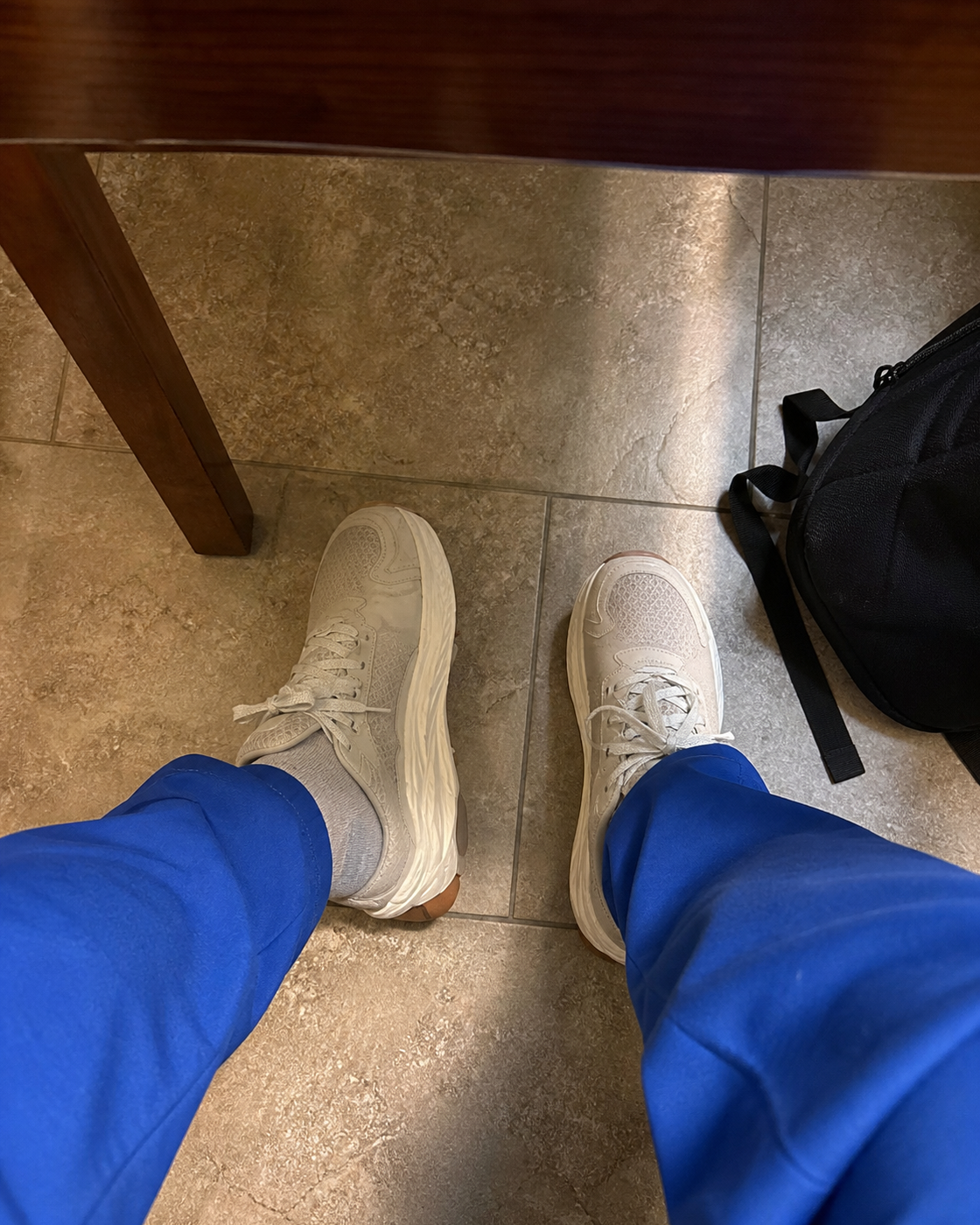
Ran for 4 days, from August 1 to August 5, 2026, the last day Crush saw it.
Run by Michelle Reed on Facebook. Crush is not the advertiser and does not verify its claims. See this ad in Meta's Ad Library(opens in a new tab)
Want an ad like this for your product?
Crush makes new ad images for your product from this ad: your logo, your product photo, your offer.
Trials from $19.95 USD, then $79.95 USD a month. Cancel anytime.
About this ad
- Meta Ad Library ID
- 895771593126883
- Platforms
- Facebook, Instagram, Audience Network, Messenger, WhatsApp and Threads
- Relaunches
- 0
Ad text
I made it home. My school day had not ended. I still had material to review. I also had very little interest in building another study plan. That was becoming the problem. Every night started with decisions. Which notes should I use? Which book should I open? Which saved file was the important one? Which topic deserved the time? I was tired before the review even began. I thought the answer was more effort. So I set bigger goals. More chapters. More questions. More notes. The goals did not organize the material. They only made the pile feel heavier. Working harder was not the same as having a system. I had to admit that. What I needed at home was a starting point I did not have to invent every night. One topic. One order. Presentation. History and symptoms. Red flags. Differential diagnosis. Exam or workup. Treatment framework. Pearls and next-step reminders. That sequence gives me something concrete to do. I can stop when the topic is complete. I can see which part needs more review. I can return later without rebuilding the whole plan. FNP Practice Foundations is organized around that kind of clinical-reference structure. It is a physical, spiral-bound guide with color-coded sections and tabs. It is designed for FNP learners across school, clinical rotations, boards, and practical review. The current guide is more than 300 pages. But I am not drawn to it because it gives me more pages. I am drawn to it because it gives those pages an order. The guide can stay open while I work. The tabs make sections easier to find. The repeatable categories make it easier to review one condition at a time. That matters after a long day. I do not want to search five places. I do not want to compare several formats. I do not want to spend the first part of the evening deciding how to begin. I want to open the relevant section and work through it. That is selection relief. It is not avoiding the work. It is removing the choices that do not help me learn. The RN-to-FNP transition already requires a different kind of thinking. I bring experience as a nurse. I know how to observe. I know how to gather information. I know how to respond within my role. Now I am learning to organize a presentation into assessment and next-step reasoning. That takes practice. The practice is easier when the structure stays consistent. The same questions across different topics. What is presenting? What history matters? What is urgent? What else belongs on the differential? What should be examined or worked up? What management framework applies? What detail changes the next step? I can use that sequence even when my study window is small. I can also use it to decide what I need from my other resources. Instead of opening everything, I can go looking for one missing answer. That changes the role of the pile. My other resources can support the system. They do not have to become the system. FNP Practice Foundations does not replace my program, supervision, clinical judgment, or current references. It gives my educational review a clearer center. That is what I needed after work. Not a motivational speech. Not another complicated schedule. Not a promise that studying would suddenly become easy. I needed the next useful step to be obvious. If you are doing school around shifts and your study time keeps starting with the same argument about what to open, look at the structure underneath it. One organized guide may be more useful than another disconnected resource. The more I looked at the problem, the more ordinary it seemed. I was not missing information. I was missing continuity. My lecture notes were useful during lecture. My saved files were useful when I remembered them. My review material was useful when I knew where to look. The trouble started between those moments. Nothing held the pieces together. That made every topic feel new. I would review respiratory material one way. I would approach endocrine material another way. I would study pediatrics from whatever was open. I would review women's health from whatever I had saved most recently. The content changed. My process changed with it. That made retrieval harder than it needed to be. A repeatable structure changes the question. Instead of asking what to open, I can ask what part of the sequence I need. Do I understand the presentation? Can I identify the important history? Do I know the symptoms that matter? Can I recognize the red flags? Can I build a reasonable differential? Do I know what belongs in the exam or workup? Can I follow the management framework? Do I know the exceptions? Those questions are specific. They keep me from hiding inside general review. It is easy to say I studied cardiology. It is harder to say what I reviewed. Did I review presentations? Did I review urgent exclusions? Did I review workup? Did I review management? Did I review what changes the next step? The sequence gives the session a finish line. That matters when time is limited. I do not have to finish an entire section. I can finish one useful pass. One presentation. One clinical chain. One clear gap to return to. That feels more realistic than waiting for a perfect study day. Most of my days are not perfect. They are divided between responsibilities. My attention has limits. My time has limits. My study process needs to respect both. This is also why the physical format matters. A lay-flat guide is easy to keep in use. The tabs create visible entry points. The color-coded sections help separate categories. The clinical-reference layout keeps related questions together. Those are not decorative features. They reduce small points of friction. I do not need to remember a file name. I do not need to search an old message. I do not need to reconstruct a folder. I do not need to decide which of several tabs has the best explanation. I can begin with the section. Then I can follow the framework. That is what quick retrieval means in practice. It does not mean rushing. It means getting to the useful part faster. I had also been worried about buying another resource that would sit unused. That concern made sense. I already had resources I respected. The question was not whether they were good. The question was whether they worked together. A traditional review book can provide depth. Course materials can provide required detail. Current references can answer focused questions. An organized guide can provide the path between them. That is a different job. I do not need every resource to do everything. I need each one to have a clear role. FNP Practice Foundations can serve as the organized center. The other material can support it when I need more depth. That is more useful than comparing every source before I start. It also addresses another objection I had. I can find information online. That is true. Finding information was never my biggest problem. Choosing, sorting, and returning to it was. A search can answer one question. It does not automatically build a repeatable study system. It can also create ten new directions. That is useful when I need depth. It is less useful when I need a clear review path. The guide is not valuable because information exists nowhere else. It is valuable because the information is organized for retrieval and next-step review. That distinction matters. Another question is whether one guide can be useful across different parts of training. The format is positioned for school, clinical rotations, boards, and practical reference. Those uses are connected by the same clinical chain. School introduces the material. Rotations make the questions more concrete. Board review asks me to recognize patterns and choose next steps. A structured reference lets me review the same topic through those connected questions. The context changes. The organizing sequence can stay familiar. That familiarity is useful. It means I am not starting over every time the purpose changes. I can use the guide to orient myself before deeper coursework review. I can use it to prepare around a topic relevant to a rotation. I can use it to organize board review by presentations and next steps. The guide remains educational. The work remains mine. What changes is the amount of searching before the work can begin. I also appreciate that the product is designed as a substantial guide. More than 300 pages gives the clinical categories room to be useful. The spiral binding supports active use. The tabs support movement between sections. The large format supports scanable organization. Each feature connects to a study action. Open it. Find the section. Follow the sequence. Identify the gap. Review what needs more attention. That is concrete. It is not a vague promise about becoming a different person. It is a better way to direct the work I am already doing. The resource-overload problem can be easy to dismiss. It can look like abundance. More notes should help. More books should help. More saved explanations should help. Sometimes they do. Sometimes they create another layer of selection. I had to separate having resources from having a system. They are not the same. A resource gives me information. A system tells me how to move through it. A resource can answer a question. A system helps me notice which question comes next. A resource can be excellent on its own. A system makes several study moments connect. That is the gap FNP Practice Foundations is meant to address. The guide organizes common FNP review material around symptoms, red flags, differential diagnosis, workup, treatment framework, and clinical pearls. It gives the material a repeatable shape. I can work through that shape slowly when I have time. I can use it for a focused pass when I do not. The same structure still applies. That consistency is what I was missing. It is also a respectful approach to the RN-to-FNP transition. I am not forgetting how to be a nurse. I am building on that foundation. I am learning to ask broader questions. I am learning to compare possibilities. I am learning to connect findings to a workup and management framework. My experience gives me context. The organized sequence helps me direct it toward a different role. That is more accurate than treating the transition like starting from nothing. It is also more useful than pretending experience alone will organize every new responsibility. Both things can be true. I can be experienced. I can still need structure. I can be capable. I can still feel scattered. I can work hard. I can still use a clearer system. There is no contradiction in that. If you recognize this problem, look at what happens before you actually study. How many choices do you make? How many places do you check? How often do you switch resources? How often do you restart the same topic? How often do you finish with more saved material than usable understanding? Those patterns say something about the system. They do not automatically say something about your ability. A practical next step is to reduce the choices. Choose one topic. Use one clinical sequence. Keep one organized reference at the center. Let other resources answer focused questions instead of competing for your attention. That approach is simple enough to repeat. Repetition is what makes it useful. I do not need a perfect method for one night. I need a workable method I can return to. That is what I want from FNP Practice Foundations. A visible starting point. A consistent order. A faster way to retrieve the relevant section. A practical bridge between facts and next-step thinking. If that is what your current study setup is missing, take a closer look at FNP Practice Foundations. Look at how the guide is organized. Look at the tabs, sections, and clinical sequence. Then decide whether one organized system makes more sense than adding another disconnected resource.
Where the ad sends people
trivexiastore.com
If your a FNP or NP read this👆
10,000+ Passed Exams
Shop now: trivexiastore.com(opens in a new tab)