Chase Welmer
Chase Welmer Facebook ad: “Stop Tennis Elbow Without Surgery”
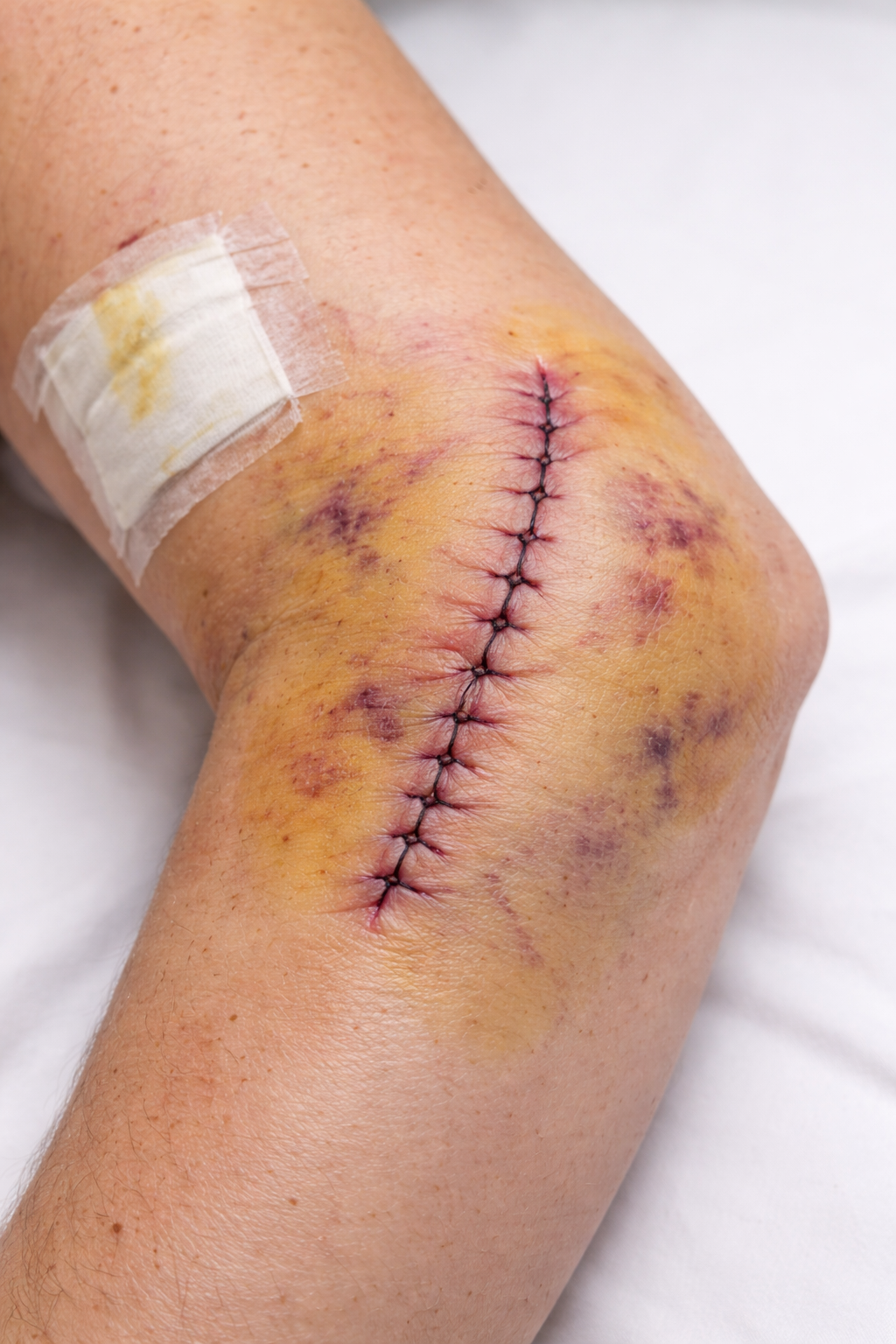
Ran for 19 days, from March 3 to March 22, 2026, the last day Crush saw it.
Run by Chase Welmer on Facebook. Crush is not the advertiser and does not verify its claims. See this ad in Meta's Ad Library(opens in a new tab)
Want an ad like this for your product?
Crush makes new ad images for your product from this ad: your logo, your product photo, your offer.
Trials from $19.95 USD, then $79.95 USD a month. Cancel anytime.
About this ad
- Meta Ad Library ID
- 902970825671134
- Platforms
- Facebook, Instagram, Audience Network, Messenger and Threads
- Relaunches
- 0
Ad text
I've treated over three hundred tennis elbow patients in my career. And for years, I followed the same protocol every time. Eccentric exercises. Forearm stretches. Ice. Rest. And when the pain didn't budge, I'd refer them for a cortisone shot. That's what every textbook says to do. But after enough years in practice, something started to bother me. Patients I'd worked with for months would come back still unable to grip a coffee cup. Still wincing when they turned a doorknob. Still popping ibuprofen every morning just to get through the day. The exercises were done perfectly. The cortisone gave them a few good weeks. But the pain always came back. And no one could explain why. I remember one patient clearly. A carpenter named Ray. He’d spent 23 years swinging hammers, drilling, carrying lumber. He came to me after his grip got so weak he dropped a drill in front of his crew. He said, "I can't do my job anymore. Fix this." We did everything right. Three months of rehab. Twice a week. He did every exercise I gave him at home. By month four, he was better. Then he went back to work. Two weeks later he was back in my office, worse than before. He looked at me and said, "What's the point?" That was the day I started questioning my own training. If the standard protocol worked, it should work for everyone. But it didn't. Especially not for the people who needed it most — the ones who use their hands for a living. So why did so many of my patients keep hurting even after months of rehab? That question stayed with me. I started reading every new study I could find. Nights after my last appointment, sitting at my desk, the same thought repeating — what are we getting wrong? Then I found it. It was a paper from a sports medicine journal that changed how I understood tennis elbow completely. It said the condition had been misnamed for decades. Doctors called it "tendinitis" — meaning inflammation. But the research showed there was almost no inflammation present in chronic tennis elbow. It wasn't tendinitis. It was tendinopathy. The tendon wasn't inflamed. It was degenerating. I read it three times. Every treatment I'd been using — ice, anti-inflammatories, cortisone — was designed to fight inflammation. But there was no inflammation to fight. We were icing a bruise that wasn't bruised. The real problem was that the tendon fibers were breaking down from overuse. Tiny micro-tears forming faster than the body could repair them. And the reason the body couldn't keep up? The tendon wasn't getting enough blood flow. Tendons are naturally low in blood supply. That's why they heal so slowly. And when someone uses their hands all day — gripping, lifting, twisting — the tendon never gets a chance to recover. It just keeps fraying. Like a rope being pulled apart strand by strand. Cortisone made it worse. Studies from the Lancet showed that patients who received cortisone for tennis elbow were actually worse off after twelve months than patients who received no treatment at all. The shot was weakening the very tissue we were trying to heal. It finally made sense. We weren't helping the tendon recover. We were suppressing symptoms while it kept breaking down underneath. Once I understood that, the question changed. It wasn't "how do I reduce inflammation?" anymore… It was "how do I get blood flow to a tendon that's starving?" That's when I looked at something I'd had in my clinic the entire time. My TENS unit. I'd been using it on patients for years — mostly as a pain management tool between sessions. Put the pads on, run the current, take the edge off so they could do their exercises. But when I looked at the research specifically on TENS and tendon recovery, something jumped out. TENS doesn't just block pain signals. At certain frequencies, it increases local blood circulation. It triggers the body to release endorphins. And newer studies were showing that consistent electrical stimulation could support the kind of cellular repair that degenerating tendons desperately need. I started paying closer attention to which patients recovered fastest. It wasn't the ones doing the most exercises. It was the ones getting the most consistent TENS sessions. But here was the problem. Those patients could only get TENS two or three times a week — during their appointments with me… At $150 a session. The people who needed daily stimulation the most, the carpenters and electricians and mechanics, couldn't afford to come in every day. So the technology worked. But the delivery model was broken. I started looking for something my patients could use at home. Every day. Without needing me. Most of what I found was junk. Tangled wires. Complicated remotes with twenty modes. Phone apps that half my patients couldn't figure out. Cheap pads that fell off after ten minutes. Then a colleague sent me a link and said, "Look at this one." That's how I found Vibit. A small wireless pod that sticks directly to the skin. One button. No wires, no remote, no app. You press it, set your comfort level, and it goes to work. I was skeptical. I'd seen too many gadgets come and go. But the technology was legitimate. Multiple studies backing it. Same electrical nerve stimulation principles I'd been using in my clinic for years. Just packaged in a way that a forty-six-year-old carpenter could actually use on a job site without thinking twice. So I tried it on myself first. Years of treating patients had left my own forearms tight and aching. I placed it on my elbow, pressed the button, and within a few minutes felt a warm pulsing sensation right where the tension sat. Fifteen minutes later I took it off. My forearm felt looser than it had in months. I started recommending it to patients who were stuck. The ones in that frustrating middle ground — too much pain to function normally, but not bad enough for surgery. The ones who'd done their exercises, tried cortisone shots, bought every brace on Amazon, and were running out of hope. Ray was one of the first. He used it every morning before work and every evening after. Within a week he told me the burning had dropped by half. Within three weeks he was back to full days on the job site. He called me and said, "My crew thinks I got surgery. I told them I just press a button now." Another patient, a woman who'd spent fourteen months unable to hold her grandson, sent me a photo of her carrying him on her hip. No brace. No wince. Just a smile. That's when I knew this wasn't a coincidence. When you give a damaged tendon what it actually needs — consistent blood flow, pain signal relief so the muscles stop guarding, and daily stimulation instead of weekly — the body knows how to do the rest. We just have to stop treating the wrong problem. I still use exercises in my practice. I still refer for cortisone when it's truly appropriate. But I don't pretend those things alone are enough anymore. You can't stretch your way out of a degenerating tendon. You have to nourish it. That's why I recommend Vibit to my patients now. Not because it's fancy. Because it does what the tendon actually needs, and it's simple enough that people actually use it every day. I'm not sharing this as a sales pitch. I've just seen too many people spend thousands on treatments that were designed for a problem they don't have. If you're someone who's tried the cortisone, done the PT, bought the braces, and you're still gripping your elbow every morning wondering if this is just your life now — take a step back. The tendon isn't inflamed. It's starving. And the fix might be simpler than anyone told you. Here's the link if you want to learn more. Vibit offers a 30-day money-back guarantee, so there's no risk in trying it for yourself. They’ll even replace the device for free if it breaks within the first 12 months. https://vibit.com.au/products/vibit-tens No pressure. Just information I wish I'd given my patients years ago. Sometimes healing doesn't come from another cortisone shot. Sometimes, it comes from giving your tendon the blood flow it's been missing.
Where the ad sends people
vibit.com.au
Stop Tennis Elbow Without Surgery
If you're suffering from tennis elbow, golfer's elbow, or stubborn elbow pain that won't go away — read this before trying anything else.
Shop now: vibit.com.au(opens in a new tab)