
Inactive· since Mar 18, 2026
- 7
- days it ran
- 0
- relaunches
- 6
- EU reach
Ad copy
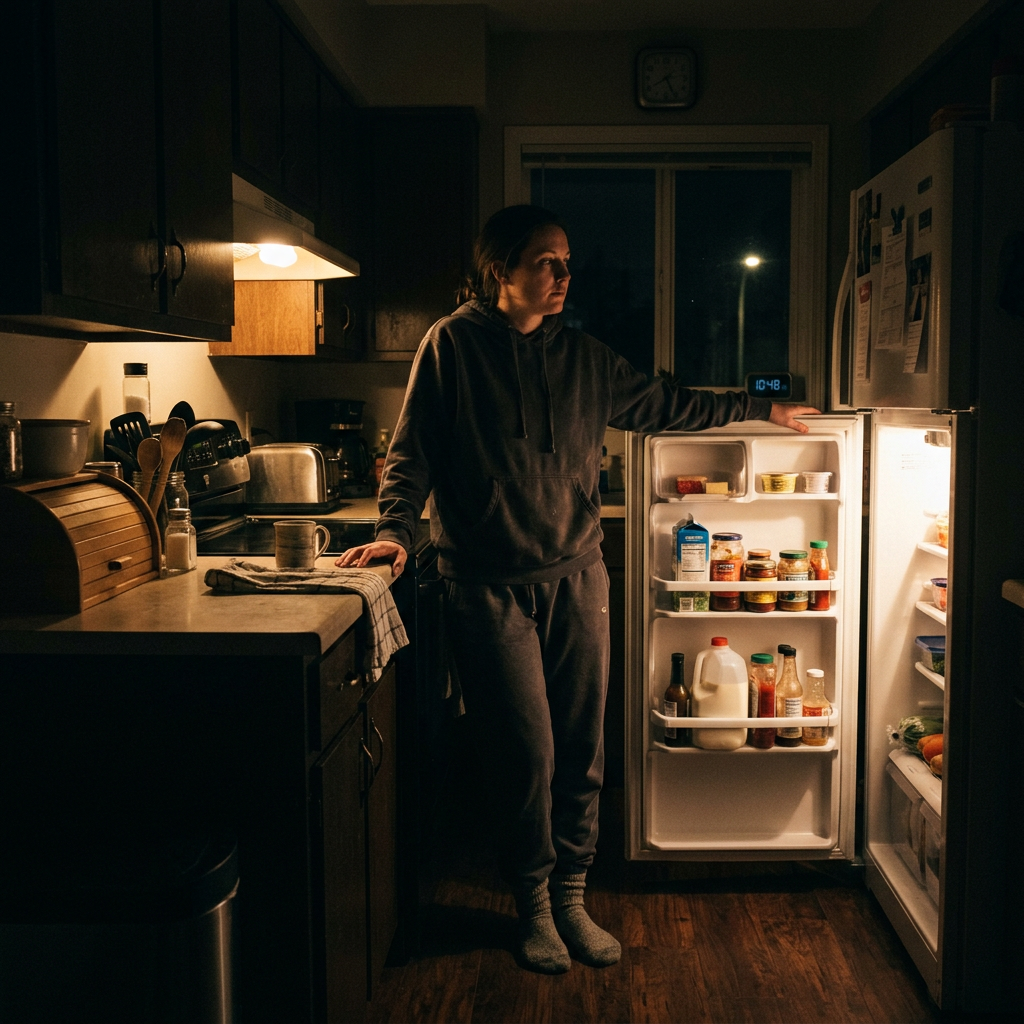
She lost the weight. But she lost something else too. I've been a nurse for 18 years. Last spring, I watched one of my favorite patients walk back into my clinic and I almost didn't recognize her. She'd lost the weight. But she'd lost something else too. I've been an RN in internal medicine for 18 years. I've sat with patients through diagnoses that changed their lives. I've held hands in rooms where the news wasn't good. I thought I'd seen everything that weight, hormones, and midlife could do to a woman's body and mind. Nothing prepared me for what I started seeing in 2023. It started with Margaret. 54 years old, office manager, two grown kids. She came in every three months like clockwork. Sharp, funny, always asked about my daughter by name. The kind of woman who had spent her whole life being capable. Organized. The one her family depended on to hold everything together. For four years I watched that woman quietly fall apart around food. Not in ways anyone else could see. She wasn't overweight in any dramatic sense. She wasn't bingeing in the way people imagine when they picture someone struggling. It was subtler and, honestly, more painful than that. She'd describe it sitting on the exam table in her gray cardigan, hands folded in her lap, voice low like she was confessing something shameful: "I used to have willpower. I used to be the person who could say no to things. Now I'm thinking about food in every meeting. I'm planning my next meal while I'm still eating the current one. I go to bed full and I wake up already thinking about breakfast. I don't even recognize myself anymore. What happened to me?" I knew exactly what had happened. But knowing the science didn't make it easier to watch. Food noise. That was the phrase we were hearing everywhere by then — in forums, in intake forms, in the nutrition consults that were booking out six weeks. Women in their 40s and 50s describing something that sounded almost neurological. Not hunger. Not lack of discipline. A constant, intrusive loop that had everything to do with hormones that had quietly stopped cooperating somewhere after 40 and nothing to do with who these women were as people. The cruelest part is that the women experiencing it most severely were often the most high-functioning, the most disciplined, the most capable women I treated. Women who had managed demanding careers and households and other people's lives for decades. Women who suddenly couldn't trust their own bodies and had no explanation for why — and so they did what women always do when they can't explain something: they blamed themselves. Margaret had tried everything. She'd tracked macros. She'd done the protein timing. She'd done dry January and then dry February. She'd gotten up at 5am to exercise before the noise of the day started, because that was the only hour it was quiet enough in her head to make good choices. She told me once: "I feel like I'm fighting a war inside my own brain and losing." I'd heard that exact phrase from six other patients that same month. By the time she came in that spring, Margaret had already done her research. She wanted to talk about Ozempic. I understood. I'd had that conversation 23 times that year. And I gave her the same honest answer I gave everyone: it works. The GLP-1 mechanism is genuinely effective for food noise. Women who'd spent decades in that mental battle described the quiet like something they'd forgotten was possible. One of my patients said: "I didn't know how loud it was until it stopped." That sentence stayed with me for weeks. So I supported Margaret's decision. Her doctor prescribed it. She started in June. She came back in March. She had lost 31 pounds. Her labs were better than they'd been in a decade. By every clinical metric, it had worked exactly as intended. But I almost didn't recognize her face. It wasn't dramatic. It never is at first. It's subtle — a hollowing at the temples, a looseness at the jaw, a gauntness that aged her in a way the scale was supposed to be reversing. There's a name for it now that patients bring up before I do: Ozempic face. The rapid fat loss that GLP-1 drugs produce doesn't discriminate between the fat you want gone and the fat that keeps your face looking like you. It takes the belly. It takes the face too. And at 54, you don't get that back. Margaret sat across from me and said something I haven't stopped thinking about since: "I finally stopped thinking about food. I finally feel like myself again. I just wish I didn't have to look in the mirror every morning and see someone who doesn't." She was talking about $1,100 a month out of pocket — her insurance didn't cover it for weight management. She was also talking about her face. She was also, I realized, talking about something deeper: she had traded one way of not recognizing herself for another. That was the moment I started asking different questions. I drove home that evening thinking about Margaret. My husband was already asleep. I sat in the kitchen with a glass of water and I did something I hadn't done in a long time — I thought honestly about myself. I was 46. Perimenopausal for about two years, though I'd spent most of that time explaining it away as stress, poor sleep, a demanding schedule. The weight around my middle that hadn't been there at 38. The morning I stood in front of my closet for ten minutes and put on the same oversized cardigan I'd been reaching for every day for six months because everything else felt like an accusation. The 3pm wall where I'd find myself in the break room staring at the vending machine at things I didn't even want, just — pulled there. The evenings where I'd eaten a full dinner and sat down and within an hour I was in the kitchen again, not hungry, just drawn there by something I couldn't name and couldn't stop. I'd been telling my patients for years that the solution was behavioral. Protein timing. Fiber. Mindful eating. Better sleep. All true. All things I was doing. All things that helped around the edges and did nothing for the noise. Sitting there at 11pm, I realized I was one bad year away from asking my own doctor for the same prescription I'd just watched hollow out Margaret's face. I was not willing to make that trade. And I didn't believe anymore that those were the only two options on the table. Two weeks later I was at a continuing education conference in Chicago — a nutrition and metabolic health symposium I'd been attending for six years. Mostly unremarkable. The kind of event where you drink bad coffee and collect contact hours and run into colleagues you only see twice a year. On the second afternoon there was a session I almost skipped. A dietitian named Dr. Park, who ran a metabolic wellness practice in Seattle, was presenting on non-GLP-1 appetite support approaches — specifically what was being studied and used in East Asian clinical nutrition for perimenopausal women. I stayed. Mostly out of professional obligation. What she presented stopped me cold. She had been tracking a category of functional supplement that had been standard in Korean wellness clinics for over a decade — concentrated cutting jellies combining soluble fiber, Garcinia Cambogia HCA, and skin-support ingredients like Marine Collagen and Hyaluronic Acid. Not a diet pill. Not a powder you mix and forget to drink. A small, single-serve jelly stick — the kind of format that Korean women actually used every day because it felt like a snack, not a medical intervention, not one more thing to manage, not one more chore to feel guilty about skipping. The mechanism she walked through was specific. Garcinia Cambogia at a therapeutic dose — 750mg HCA, not the 200mg you find in drugstore bottles, which is why most women who've "tried Garcinia" have never actually tried it properly — works on appetite through a different pathway than GLP-1. It supports serotonin signaling and slows gastric emptying, which means the body's own satiety cues start functioning more reliably. You don't override the system from the outside. You restore the system from the inside. The soluble fiber adds a second layer — slower digestion, more stable blood sugar, fewer of the blood-sugar drops that create the 3pm pull. And the format — a jelly you actually look forward to eating — solves the problem that kills every other supplement: you stop taking it. Then she showed the skin data. Because here is what nobody in this conversation ever addresses: the problem isn't just losing weight. The problem is what rapid weight loss does to a face that's already losing collagen faster than it did at 35. Marine Collagen and Hyaluronic Acid at clinical doses have demonstrated measurable improvements in skin elasticity and hydration in multiple trials. The Korean clinical model built these ingredients into the same daily format deliberately — appetite support and skin protection together — because the women using it understood that you shouldn't have to look older to get smaller. Dr. Park looked out at the room and said: "The question isn't whether food noise is real. We know it's real. The question is whether we're willing to keep handing women a $1,000-a-month needle as the only serious answer to it." I wrote down everything. I took a photo of the slide. I went back to my hotel room and spent two hours researching the formulation she'd referenced. The American brand that had adopted the Korean clinical model was called Numi. I ordered it that night. I want to be careful here, because I'm a nurse and I don't make promises I can't keep. What I can tell you is what happened to me in the ten weeks after I started taking one Numi jelly stick every day before lunch. Around day five, the bloating started to ease. I hadn't realized how much chronic low-level inflammation I'd been carrying until the clothes that had been tight started sitting normally again. Not dramatically. Just — like my body had stopped being at war with itself. By week three, the noise got quieter. It didn't stop overnight. It wasn't a switch. It was more like someone slowly turning a dial. The 3pm pull stopped feeling like a demand and started feeling like a suggestion I could decline. I stopped reaching for the cardigan every morning. Not because I'd lost a dramatic amount of weight — I hadn't, not yet — but because I started recognizing myself again. The woman who used to feel in control. The woman who could trust her own body to cooperate. That, I realized, was what this had always been about. Not the number on the scale. The woman in the mirror. And then Margaret called. She'd stopped the injections three months earlier — the cost had become unsustainable and she was scared about what was happening to her face. Her daughter had seen the Korean cutting jelly format circulating in the wellness communities she followed and had sent her the link. She wanted to know if I knew anything about it. I told her everything. I told her about the conference. I told her about the 750mg HCA dose and why it mattered. I told her about the collagen. She called me six weeks later. "Linda," she said, and I could hear it before she'd finished the sentence. "It's quiet." She wasn't hollowing out. She was sleeping through the night. She'd gone back to the gym — not as punishment, she was careful to say, just because she wanted to. Her clothes were fitting differently. Her face looked like her face. "It's not magic," she said. "But I feel like myself again. And I didn't have to lose my face to get there." If you've read this far, you already know whether this is about you. You know the exhaustion of the radio that won't turn off. You know what it feels like to stand in front of a closet and not recognize the woman who needs to get dressed. You know the shame of eating dinner and being back in the kitchen an hour later and hating yourself for it — for something that was never, not once, a failure of your character. It was a hormonal shift. It was biology. And you were fighting a battle you were never equipped to win alone, with tools that were never designed for what your body actually needed. You are not broken. You were never broken. Your body changed and nobody gave you the right information. 11,317 women have found the quiet. Not through a needle. Not through $1,000 a month. Not through trading their face for a smaller number on a scale. Through a pomegranate jelly stick that takes four seconds to eat and actually works with a perimenopausal body instead of overriding it. The Numi jelly I link below is $70 a month. The Garcinia is dosed at 750mg HCA. The Marine Collagen and Hyaluronic Acid are in there because the women who designed this format refused to accept that getting smaller had to mean looking older. There's a 90-day full money-back guarantee with no return required — because they already know it works, and they want you to know it too. I don't know if your experience will be exactly like mine or Margaret's. Bodies are different. Timelines are different. That's why the guarantee exists. What I know is that you have been carrying this alone long enough. And you deserve an option that gives you back the quiet without asking you to give up your face. If you know a woman who's been struggling with this quietly — a friend, a sister, your mom, someone you've watched disappear a little inside herself over the last few years — share this with her. She probably hasn't said anything. We rarely do. There's too much shame attached to something that was never our fault. That shame ends here.
Nothing prepared me for what I started seeing in 2023.
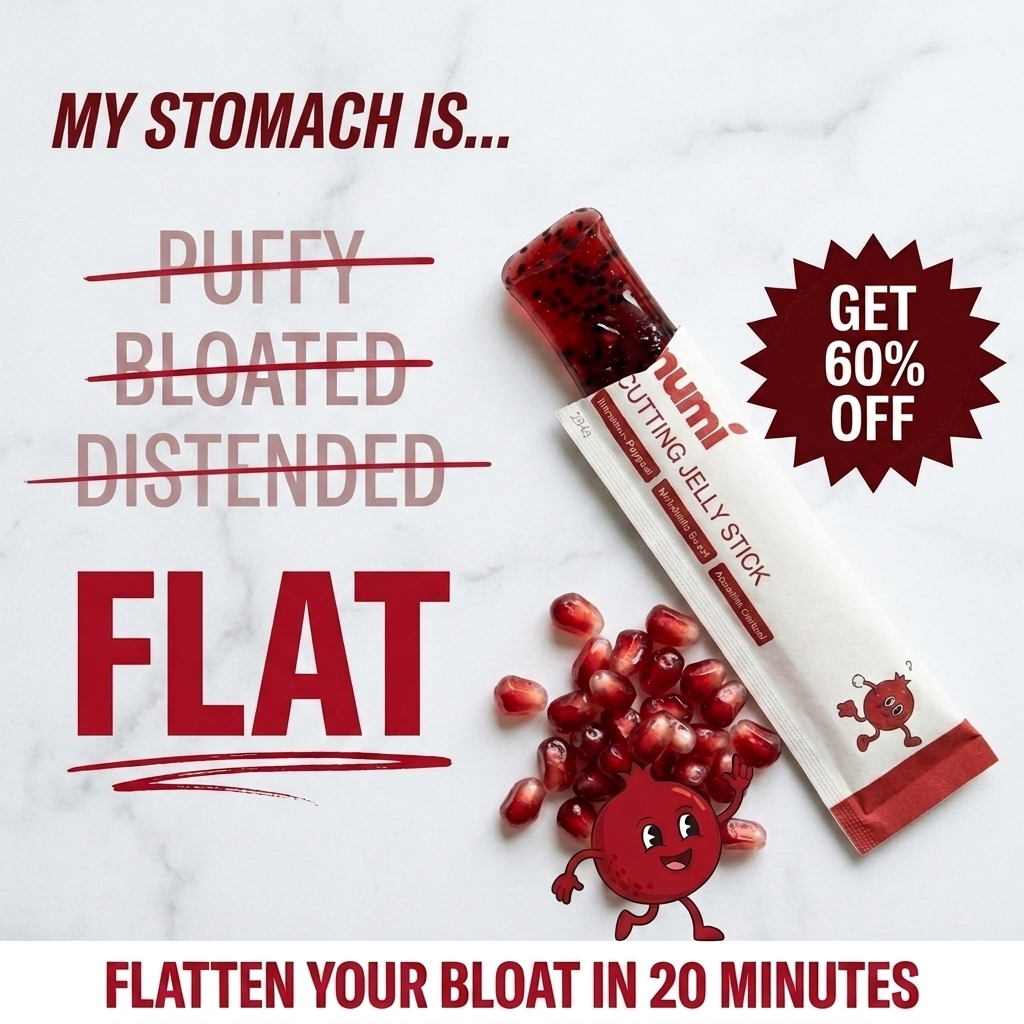
Experience quieter cravings & more energy — thanks to our breakthrough natural wellness formula in a tasty on-the-go snack!
SHOP NOWLike this ad? Make it yours.
Crush rebuilds this exact creative around your product — your brand, your colors, your offer — in about a minute.