Patricia Brown
Patricia Brown Facebook ad: “More Details About Spine Alignment Here”
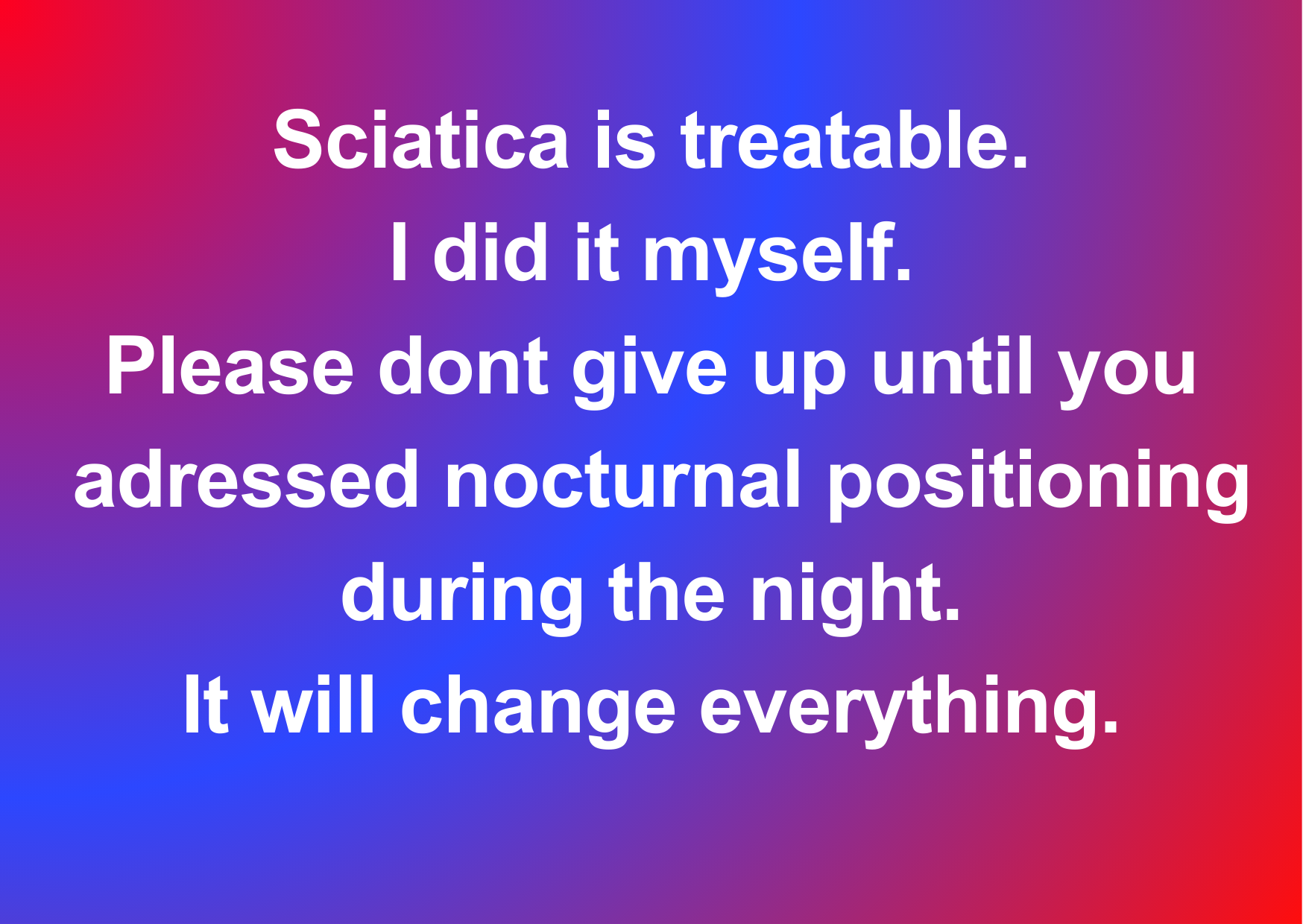
Ran for 90 days, from February 28 to May 29, 2026, the last day Crush saw it.
Run by Patricia Brown on Facebook. Crush is not the advertiser and does not verify its claims. See this ad in Meta's Ad Library(opens in a new tab)
Want an ad like this for your product?
Crush makes new ad images for your product from this ad: your logo, your product photo, your offer.
Trials from $19.95 USD, then $79.95 USD a month. Cancel anytime.
About this ad
- Meta Ad Library ID
- 906279835339351
- Platforms
- Facebook, Instagram, Audience Network, Messenger and Threads
- Relaunches
- 0
Ad text
My sciatica got so bad I couldn't sleep in a bed anymore. Nobody told me I was weeks away from permanent paralysis If you have a herniated disc or sciatica that won't go away, what I'm about to share is something most doctors never mention. Physical therapists are finally speaking out about why 3 out of 4 patients never fully recover. Not because the exercises are wrong. Not because the medications don't work. But because every single night, while they sleep, their body undoes everything. Every night the spine collapses, that herniated disc presses harder into the sciatic nerve, and that inflamed nerve that's supposed to slowly recover during the day gets crushed all over again before morning. Physical therapists call this the Nocturnal Collapse Cycle, and it's the real reason herniated disc and sciatica patients spend years in treatment without ever truly getting better. Weeks of therapy with little to no improvement? Pain that started on one side and spread to both legs? Shooting sensations or electric jolts all the way down to your feet? Those aren't just symptoms. Those are warnings. Research shows that patients who don't break this nightly compression cycle risk permanent nerve damage within 8 to 14 months. My name is Patricia. I had a herniated disc at L4-L5. Shooting pain down both legs. Stiffness every single morning and a constant ache around my hip that made every step feel like hell. The first thing I did every morning, before I even opened my eyes, was reach for the pill bottle on my nightstand. Not because I wanted to. Because without it, I couldn't get out of bed. Nine months of that. The pills took the edge off, maybe 40 percent on a good day. But the moment they wore off, it came right back. That electric jolt from my lower back, through my hip, all the way down my leg and into my feet. I stopped making plans that involved walking. Stopped booking the weekend trips my husband and I used to do every summer. And the bed? I had given up on the bed months ago. Every time I lay down flat, the pressure became unbearable within minutes. So I started sleeping in the recliner chair in the living room. My husband would come downstairs in the morning and find me there, stiff, exhausted, already reaching for the pills before I'd said a word to him. I wasn't living anymore. I was just managing my way through the day. Until my doctor ordered an MRI. The results showed a herniated disc at L4-L5, pressing directly onto the sciatic nerve. "Patricia, I think it's time we talk about surgery." I walked out of that office without saying a word. Drove home in silence. Sat in that recliner just staring at the wall. I wasn't ready for surgery. But more than anything I was just completely exhausted from nine months of treatments that hadn't touched the real problem. That night I sat at the kitchen table with my laptop, determined to understand why nothing had worked. Somewhere in the middle of the night I came across an article by a physical therapist named Dr. Spencer, who had spent decades treating sciatica patients. He didn't talk about exercises or stretches. He explained something I had never heard in nine months of doctor visits. The reason most sciatica patients never fully recover has nothing to do with what they do during the day. It has everything to do with what happens to their spine while they sleep. Not a single doctor had ever mentioned sleep. I had to read that sentence three times. He explained it like this. Your lower back has a natural curve, the lumbar lordosis. When you're upright, that curve keeps pressure off your spinal discs. But when you lie down, that curve gets pressed flat. Like a bridge losing its arch. Your lower back flattens against the mattress. The space between the vertebrae narrows. That herniated disc gets pushed harder into the nerve tissue. And it stays there for hours. Every single night. "Imagine breaking your arm, spending all day letting it heal, and then re-breaking it every single night while you sleep. That's what's happening to your sciatic nerve." That's why the pain is worst the moment you wake up. Because your nerve just spent hours being compressed. The painkillers, the physio, the injections — they all address what happens during the day. But none of them can undo hours of overnight compression. Every night the collapse happens again. Every morning the nerve wakes up damaged again. Then came the part that made my hands shake. "Sustained nerve compression beyond 12 to 18 months carries a real risk of permanent nerve damage. Early warning signs include bilateral leg pain, shooting sensations to the feet, and progressive numbness that doesn't fully recover between episodes." Bilateral leg pain. I had that. Shooting sensations to the feet. I had that. Nine months in. I was sitting inside that window. Even in the recliner, without proper lumbar support, my spine was still partially collapsing every single night. I wasn't solving the problem. I was just making it slightly more bearable while the damage continued underneath. If the nights were the problem, the nights had to be the solution. Dr. Spencer mentioned that maintaining the natural lumbar curve during sleep was the first thing he addressed with every chronic sciatica patient. No matter what you did during the day, if your spine was collapsing every night, nothing would ever hold. I grabbed two cushions and positioned them under my lower back right then and there. Something felt different immediately. But by morning the cushions had shifted completely. They were on the floor. That's where I found the Alignex Pro. A medical-grade lumbar support developed by spinal specialists in Copenhagen, designed specifically to maintain the natural lumbar curve through the entire night, so the spine could finally do what it was always supposed to do while you sleep. Heal. I ordered it that same night. The first morning something felt different. The fire I normally woke up with was quieter. That first step out of bed — still uncomfortable, but not the same sharp punishment. By the end of the first week I was sleeping through the night in my bed for the first time in months. I just lay there in the dark and cried. Quietly. Good tears. By week three, the flare-ups had almost completely disappeared. The tingling in my feet was fading. The hip ache that had been constant for nine months was almost gone. Some mornings I got halfway to the bathroom before I realised I hadn't reached for the pills. Two months later I was off all medication entirely. I'm not sharing this to sell you something. I'm sharing it because I spent nine months doing everything I was told, and nobody once mentioned that what was happening at night was canceling out everything I was doing during the day. If your pain is worst in the morning. If you can't sleep through the night. If you've been sleeping in a recliner just to get a few hours of rest. Please don't let someone operate on you before you understand what's actually happening inside your spine while you sleep. The Alignex Pro comes with a full 90 day money back guarantee. If you don't feel a meaningful difference within 90 days, you get every dollar back. No questions asked. Don't let sciatica take another morning, another night, another year from you. Every night the nerve stays compressed, the damage compounds. Some of it you can't get back. I barely made it out in time. You still can.
Where the ad sends people
alignextechnology.com
More Details About Spine Alignment Here 👉
Alignex
Learn more: alignextechnology.com(opens in a new tab)