Karen Feldman Roberson
Karen Feldman Roberson Facebook ad: “My hygienist said my teeth were yellowing. Then she told…”
Ran for 8 days, from July 21 to July 29, 2026, the last day Crush saw it.
Run by Karen Feldman Roberson on Facebook. Crush is not the advertiser and does not verify its claims. See this ad in Meta's Ad Library(opens in a new tab)
Want an ad like this for your product?
Crush makes new ad images for your product from this ad: your logo, your product photo, your offer.
Trials from $19.95 USD, then $79.95 USD a month. Cancel anytime.
About this ad
- Meta Ad Library ID
- 909247022223691
- Platforms
- Relaunches
- 0
- Niche
- Skincare & Beauty
Ad text
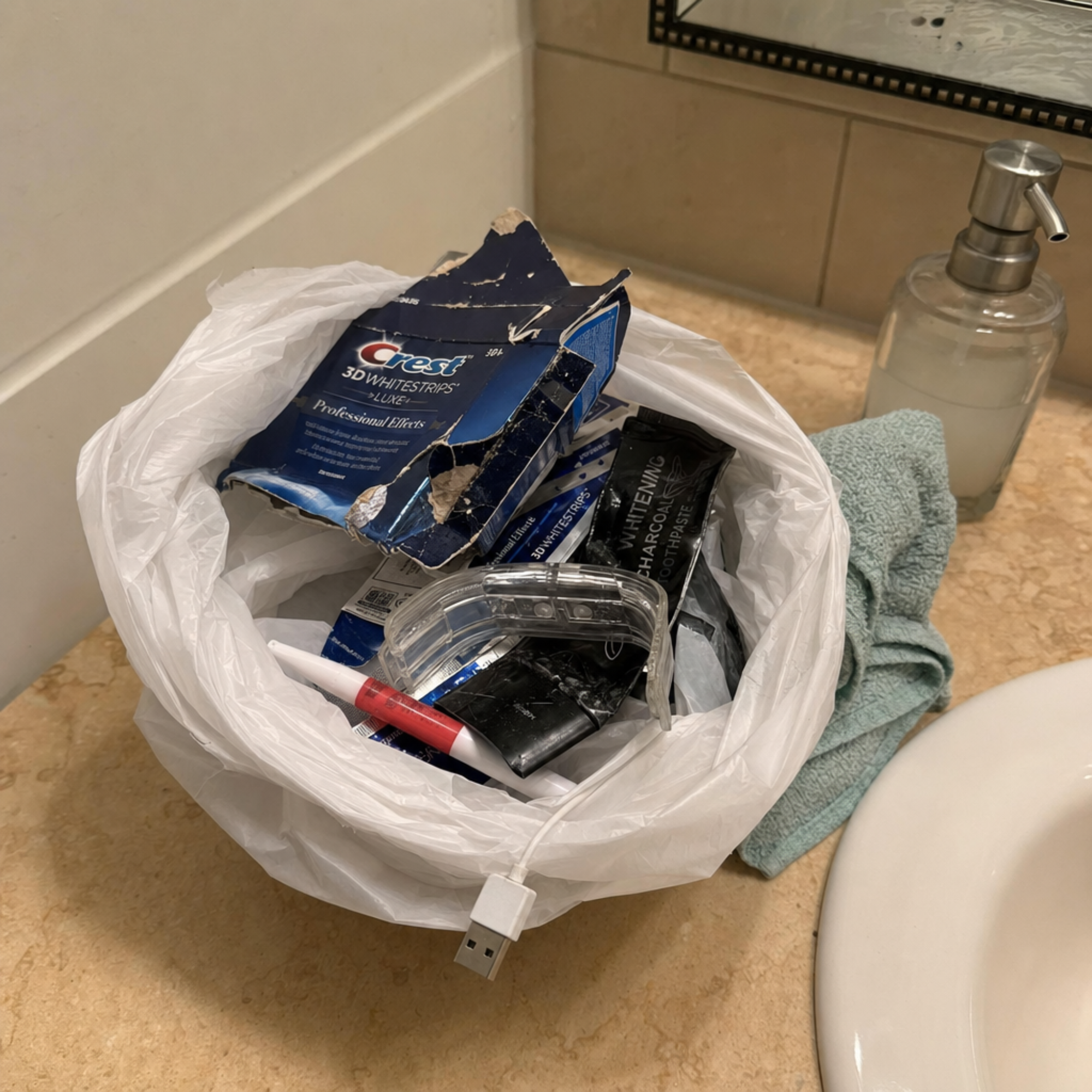
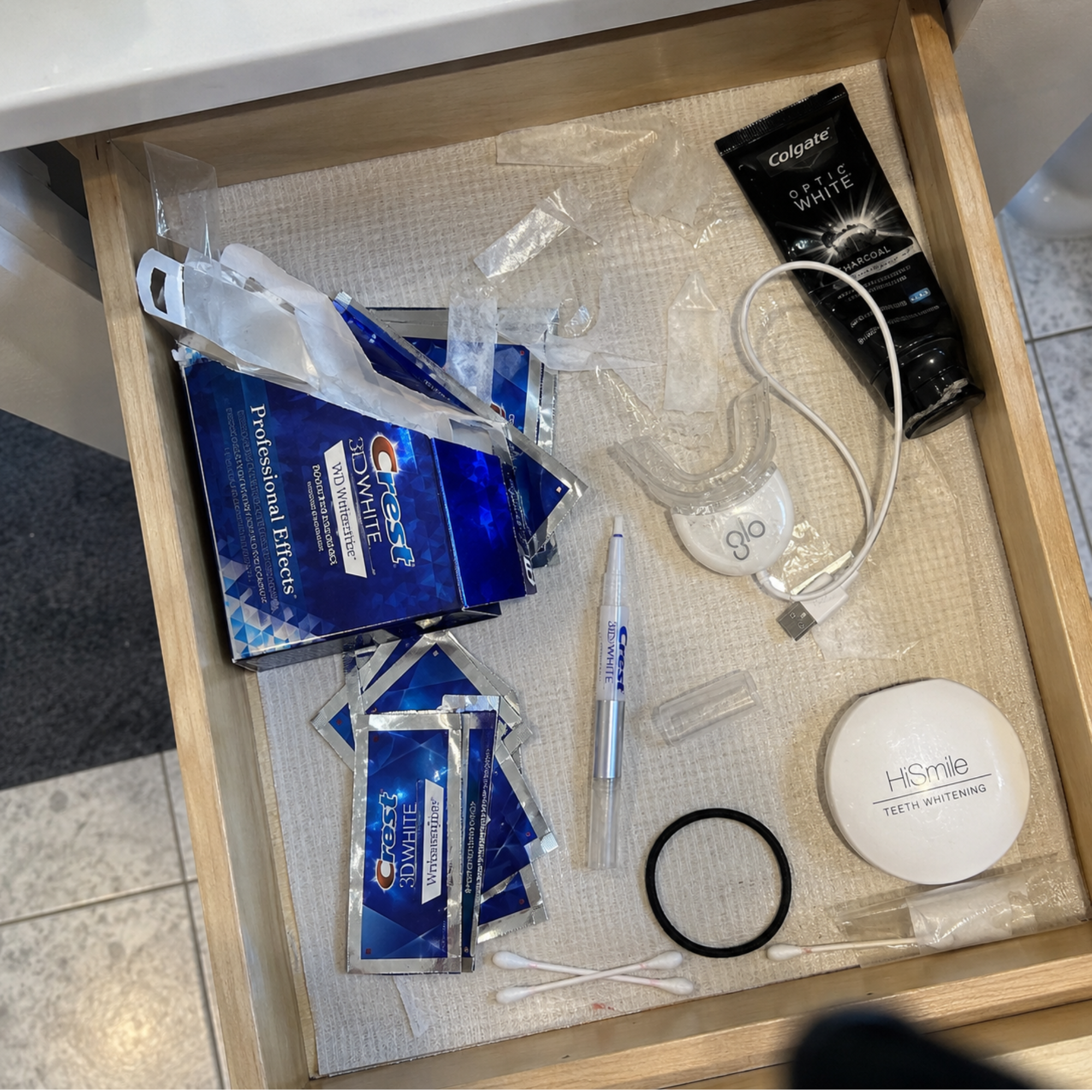
2 months ago I sat in my dentist’s office mortified after my hygienist leaned in and told me, “Your teeth have started yellowing quite a bit.” And I’m sitting there thinking… Are you serious? Because I had been trying to whiten them. I used whitening toothpaste every morning and night. I tried oil pulling because women online swore by it. I bought charcoal powder that stained my sink gray. I tried a whitening pen that leaked inside my purse before it made any noticeable difference. And then there were the whitening strips. Those worked a little. But every strip came with a price. That cold, electric jolt through my front teeth whenever I drank water. Two days of wincing every time I had coffee. And just when the sensitivity finally calmed down, I was supposed to put on another strip and start the whole thing again. I couldn’t do it. I tried gel trays next. Same aching. Then one of those LED whitening kits that promised professional results at home. My teeth hurt, the yellow was still there, and now I owned a glowing mouthpiece I never wanted to use again. The final box I bought actually said “sensitive formula” on the front. I made it through two treatments before throwing the rest into my bathroom drawer. So when my hygienist told me my teeth were yellowing, I wanted to disappear into that chair. “I know,” I said. “But I can’t whiten them.” She looked confused. “What do you mean you can’t?” So I gave her the entire embarrassing list. The toothpaste. The oil pulling. The charcoal. The strips. The pen. The trays. The LED kit. She listened and then asked: “Did the strips and gels make your teeth sensitive?” “Yes,” I said. “Every single time.” Then she asked me something nobody had ever asked before. “Were they peroxide-based?” I had no idea. I assumed whitening was whitening. Different boxes. Different brands. Different applicators. But basically the same thing. She nodded. “That may be why they all ended the same way.” Then she explained something I had never seen written on a whitening box. Most whitening strips, gels, pens and in-office treatments use peroxide. And peroxide doesn’t just sit on top of the stains. It travels through microscopic channels in the enamel toward the more sensitive area inside the tooth. For people with reactive teeth, that can be what causes the sharp cold-water zing and the aching that lasts afterward. She said: “Your teeth may not be too sensitive to whiten. You may have just been using the wrong kind of whitening.” That stopped me. Because for years, I had blamed my own teeth. I thought I was being dramatic. I thought other women were simply better at tolerating the pain. I thought noticeably whiter teeth required suffering, and I just wasn’t willing to keep doing it. Then I looked at my hygienist’s teeth. They were bright, even and naturally white. So obviously I asked: “What do you use?” I expected her to recommend the $400 professional treatment offered inside the office. Instead, she told me she would never use peroxide on her own sensitive teeth. Which surprised me, because she had been a dental hygienist for 14 years. She had applied peroxide gel to hundreds of patients. She could have gotten professional whitening for free whenever she wanted. But she used a peroxide-free whitening powder at home. No strips. No trays. No LED light. Just a fine white powder she dipped her normal toothbrush into and brushed with for two minutes. I laughed a little because it sounded too simple. After everything I had tried, I wasn’t interested in another product claiming to be “gentle.” She could tell I was skeptical. So later that afternoon, she sent me an article she had written after attending a continuing-education seminar on enamel health. I opened it in my car and planned to skim the first few paragraphs. I ended up sitting there reading the entire thing. Then I read it again that night. It explained why switching from one brand of strips to another had never solved anything for me. Different packaging. Different strengths. Different application times. But the same peroxide route that kept leaving my teeth sensitive. It also explained why the white could fade and the stains could return after traditional whitening. But the part that really got my attention was what she said needed to happen instead. You have to break down the stains without sending peroxide toward the nerve. And at the same time, you need to support and smooth the enamel surface. The powder she used contained PAP to help break down stain molecules without peroxide. And hydroxyapatite, the same type of mineral enamel is made from, to help remineralize and smooth the tooth’s surface while brushing. Dissolve the stains. Support the enamel. Both at the same time. That was the difference nobody had ever explained to me. The article didn’t promise blindingly white teeth overnight. It explained that the first thing I should notice was what I wouldn’t feel. No zing. No aching. No sensitivity the next morning. Then the surface dullness should begin lifting during the first week, with the deeper coffee staining improving gradually over the next two to four weeks. That sounded far more believable than every “instant whitening” claim in my bathroom drawer. So I ordered one jar. When it arrived, there was almost nothing to set up. I wet my toothbrush. Lightly dipped it into the powder. Brushed for two minutes. Then rinsed. That was it. But the entire time, I was waiting. Waiting for the burning. Waiting for the pulse in my front teeth. Waiting for the first sign that I had wasted my money again. It never came. My teeth just felt unusually smooth and clean. That afternoon, I poured myself a glass of ice water. Normally, I would never drink anything cold after whitening. But I wanted to know. So I took a sip. Nothing. I took another one. Still nothing. No electric shock. No wincing. No carefully moving the water to the other side of my mouth. My husband walked into the kitchen and asked why I was staring at a glass of water. “I’m testing my teeth,” I said. He looked at me like I had finally lost my mind. I kept brushing with the powder once a day. By the end of the first week, the dull surface staining looked noticeably lighter. By the second week, my teeth had that smooth, polished look they normally only had after a professional cleaning. They didn’t look fake. They didn’t look like veneers. They just looked cleaner, brighter and more like they had before years of coffee stains. Then my husband stopped me in the middle of a conversation. “Did you get your teeth whitened?” A few days later, a woman at work asked if I had changed my lipstick. I hadn’t. And through all of it, not one cold jolt. Not one achy day. Not one careful sip of coffee. That is still the part I find hardest to believe. Not the white. The nothing. Nothing hurt. For the first time, I didn’t feel like I had to choose between noticeably whiter teeth and teeth that felt normal. So if you’re a woman over 50… If you have a bathroom drawer full of strips, pens, trays or LED kits you couldn’t finish… If every “gentle” whitening product still left your teeth aching… Or if you’ve quietly accepted that your teeth are simply too sensitive to whiten… Read the article my hygienist sent me. You don’t have to buy anything. Just read her explanation. She has spent 14 years applying professional whitening treatments, and she explains exactly why she would never use peroxide on her own sensitive teeth. She also shows the two things she believes need to happen together if you want to whiten without repeating the same pain-and-fade cycle. It explained in five minutes what years of whitening-product packaging never did for me. I’ve linked it below.
Where the ad sends people
musthavedigest.com
My hygienist said my teeth were yellowing. Then she told me this....
Must Have Digest
Learn more: musthavedigest.com(opens in a new tab)