Douglas Bell
 Facebook ad: “Essential Reads of 2026 click here to read it first”
Ran for 2 days, from October 23 to October 25, 2026, the last day Crush saw it.
Run by Douglas Bell on Facebook. Crush is not the advertiser and does not verify its claims. See this ad in Meta's Ad Library(opens in a new tab)
Make your own version of this ad
Crush makes it, launches it in your own Meta ad account, scales the winners and pauses the losers.
About this ad
- Meta Ad Library ID
- 915491008168166
- Platforms
- Facebook, Instagram, Audience Network and Threads
- Relaunches
- 1
Ad text
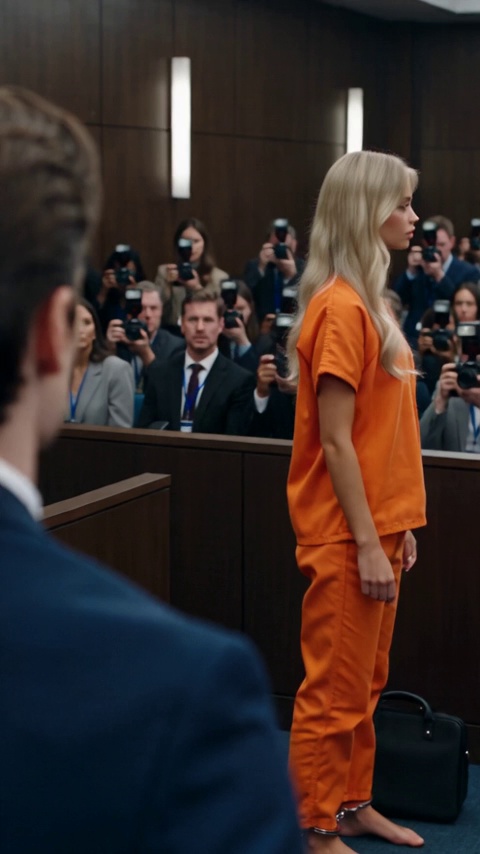
My Husband Framed Me for His Mistress's Crash. He Forgot I Never Lost a Case. I fell asleep in the passenger seat after my husband's campaign gala. I woke up behind the wheel, in handcuffs, with a dead man in the road and my husband telling the police I'd insisted on driving. His mistress had been driving. He carried me into the driver's seat himself. I'd taken a sleeping pill. We'd lost our daughter two years ago. Who would doubt a grieving wife on pills? By morning the whole city wanted me in prison, and he was on the courthouse steps promising to hire me the best lawyer money could buy. He forgot the best lawyer this county ever saw used to be me. I fell asleep in my husband's passenger seat. I woke up in the driver's seat, with a cop locking handcuffs on my wrists. Red and blue lights filled the car. My knees were jammed against the steering wheel. In the headlights, a dented aluminum lunch pail lay on its side in the road. Past it, a white sheet covered a man. I'm five-ten. The seat was pushed all the way up, to the front notch. I had never once driven with the seat there. My legs don't fit. "Ma'am. Ma'am, stay with me." The cop's flashlight hit my eyes. "Keep your hands where I can see them." My tongue felt thick. My head was full of wet cotton. The last clear thing I remembered was 11:20 p.m., on the road home from my husband's campaign gala. I'd tipped the passenger seat back as far as it went. My husband, Conrad, leaned up from the back seat and dropped a pill into my palm. "Take your pill, sweetheart. Gemma's driving." Gemma Larkin ran his campaign. She was also sleeping with my husband. I'd known for months, from the red lipstick on the rims of his coffee cups. She was five-two, in gold four-inch heels, and in the hotel garage she'd yanked his seat all the way forward so her feet could reach the pedals. Her red nails were on the wheel. He'd had too much bourbon to drive, and he wanted to lie down in the back. Gemma swore she'd only had one glass. I'd counted four. She missed the first turn out of the garage, then the second. Conrad snapped at her from the back seat, and she snapped back. They were still arguing when my eyes closed. I'd swallowed the pill. I'd needed one to sleep every night for two years, since we lost our daughter. Now Gemma was gone. The passenger door hung open. On the windshield, where the dashcam used to be, there was only the suction mount. The wire hung loose, torn in half. Gemma must have taken the camera. The passenger seat was still tipped back, with his wool coat spread over it, right where I'd been sleeping. The cop stepped back to talk to Conrad by the hood. "She insisted on driving," Conrad told him. "I'd had a few. I should have stopped her." He rubbed his eyes. "She never even got out of the car. She just sat there." The cop shined his flashlight on the passenger seat. "Why's that one tipped back?" "I was resting there before she took the wheel." I understood it all at once. His campaign manager, drunk, in his car, with a dead man in the road. That story would end his election tonight. A grieving wife on sleeping pills was a story he could survive. Across the street, a neighbor in a bathrobe stood on her porch with her phone up, filming. Conrad's face smiled from the yard sign in her grass. Later I'd learn she had called 911 from her back kitchen when she heard the thud, and only came out when the sirens did. By then, Gemma had walked off into the dark with her phone, calling herself a ride. He saw the phone. Then he walked over, bent down, and tucked my hair behind my ear. He used to do that only when nobody was looking. Now he did it only when somebody was. "You took your pill," he whispered. "You don't remember anything. Let me handle this." He had forgotten who he was talking to. Eight years ago, prosecutors in this county prayed they wouldn't draw me at trial. I was a defense lawyer, and I didn't lose. Then I married one of those prosecutors. Now he was the District Attorney of Marlow County, three weeks from re-election. "One lawyer in the family is enough," Conrad said. So I stopped. I let my license go quiet. I learned to sign whatever he slid across the kitchen table. The cop came back to my window. "Ma'am, were you driving this vehicle?" I could have said Gemma's name. But my words were coming out slurred. I'd sound like every drunk who ever blamed a ghost. I turned my wedding ring around until the diamond sat in my palm. I held it there like a piece of evidence. "I want a lawyer," I said. "I won't answer any questions without one." While the cop wrote, I counted three things. One: the seat at the front notch. Two: the mount with the torn wire. Three: the passenger seat, still tipped back under his coat. Somewhere in that night, my left earring was gone. The cop closed his notebook and turned to my husband. "Sir, was anyone else in the car?" Conrad looked right at me. "Just my wife and me." At 12:50 a.m., an officer at the station rolled my fingers across a glass plate, one at a time. I was still in my silver gown. At the scene, the cop had made me blow into a little machine. It read 0.00. He'd frowned and tapped it twice with his finger. Now he held up my evening bag and pulled out an orange pill bottle. ZOLPIDEM 10 MG — AUDRA KINCAID. My own name, from my own bag. He dropped it into a plastic evidence bag. "Sleeping pills and driving, ma'am." I didn't argue. The bottle was mine. Arguing with a cop at one in the morning, in a gown, with my words still thick, would only help him. By 6:40 a.m., I was on a steel bench in a holding cell with four other women. A TV hung in a cage on the wall. The sun was coming up over the courthouse steps. My husband stood at a podium with my photo in his hands. "My wife has been fighting a darkness since we lost our daughter," he said. He paused in exactly the right place. "I'll get her the best lawyer money can buy. I'm not leaving her side." Beside him stood Gemma. She stood where a wife stands, so close that her shoulder touched his arm. Her lipstick was fresh. One tear ran down her cheek, slow, like she'd timed it. "Conrad has carried her for two years," she told the cameras. "Nobody ever asks what that costs the one doing the carrying." An old woman in an orange jumpsuit at the end of my bench snorted. "Honey, that man's crying with dry eyes." At 7:05, a guard let me make my first call. A sign above the phone said ALL CALLS ARE RECORDED. Good. I wanted it recorded. I called Conrad and kept my question small. "Where were you sitting, Conrad?" I wanted his answer on that tape, in his own words. "Don't talk on this line, honey," he said. Then he slowed down, the way he did for juries. "I was in the passenger seat. You insisted on driving. I begged you." I shut my eyes. Every jail call is evidence. He thought he'd won that round. He hadn't. That tape was his story, in his voice. Now his lie had a time stamp. If his story ever changed, I'd have the first version. "I've hired you the best defense lawyer in the state," he said. "Do exactly what he says." …… At 2:00 p.m., they took my gown at Marlow County Jail and gave me an orange jumpsuit. A deputy held out a plastic bag. "Jewelry." I took off my wedding ring and dropped it in. My thumb kept moving against my finger, turning a ring that wasn't there. My cell had two bunks. The woman on top was in her sixties, with a voice like gravel. She'd watched them walk me through booking in my silver gown. She didn't ask my name or what I'd done. She looked at my bare feet on the concrete. Then she dropped down a pair of gray socks and a black hair tie. "First night's the coldest, Princess," she said, and rolled over. I put on the socks. I tied my hair back. It was the first kind thing anyone had done for me since 11:20, and she didn't know who I was. At 3:30, a guard walked me to the visiting window. Gemma sat on the other side of the glass. Around her neck were my mother's pearls. I knew them before I knew anything else. My mother fixed the clasp herself with blue thread, because she didn't trust jewelers. The blue thread sat right there, against Gemma's throat. Those pearls had been in the box on my dresser yesterday. This morning, while I sat in a cell, she'd been in my bedroom. She lifted a garment bag so I could see through the plastic. Inside hung an orange shift dress. "For court tomorrow," she said. "Conrad asked me to pick. I asked the guard your size. Same size as the jumpsuit." "He says you always looked best when you didn't talk." She smiled. Above the glass, a small sign said VISITS ARE RECORDED. I let my voice go soft and tired. "Did you get home all right last night, Gemma?" She didn't blink. "I left at ten. I was in bed by eleven. Alone, if you're wondering." "Good," I said. "I'm glad someone got home safe." She heard a sad wife's jab. It wasn't one. It was a time, said out loud, on a recorded line. She had just put her own lie on file, right next to Conrad's. She leaned close to the glass. "He says you don't remember a thing. Lucky you." I remember, I thought. I remember everything up to 11:20. Now I understood why she'd come. Conrad had handed me that pill himself and said, "Gemma's driving." He'd bet the pill would wipe the night clean. And if it didn't, who would believe a woman on sleeping pills? He'd told her I remembered nothing. She'd come to enjoy it. Gemma stood. She touched the pearls with two fingers, gently, like they had always been hers. "Oh—and these? He said you won't need them where you're going." She hung up the phone. "Kincaid," the guard called. "Your lawyer's here." At 5:00 p.m., the best lawyer money could buy was waiting for me in a small gray room. His suit cost about nine hundred dollars. I knew him. He'd gone to law school with Conrad. He didn't ask how I was. He didn't ask what happened that night. He slid a paper across the table. It was a plea deal. Vehicular manslaughter while impaired. Six years in state prison. My name was already typed at the bottom, above an empty line. "The offer dies at nine tomorrow morning, when you see the judge," he said. "After that, they go for the max." Less than a day after the crash, and they had six years ready on paper. The election was three weeks out. Conrad wanted this closed before Monday's news. The offer came from a special prosecutor in the next county. A District Attorney's wife can't be charged by his own office, so my case had been sent away. The special prosecutor worked for that county's District Attorney. He was the man who had lost the national moot court final, a law-school trial contest, to me eleven years ago. Conrad couldn't touch my case. But he'd known that county's District Attorney for twenty years, and these terms had his fingerprints all over them. I looked up. "Did you watch the officer's body camera?" "Not yet." "Photos of the scene?" "They're not in." "Did you send a letter to keep the car safe as evidence?" "Mrs. Kincaid, that's not how this works." His phone buzzed on the table. He read it and smiled. Then he turned the screen toward me and held it there. "So you'll stop asking questions," he said. He was enjoying it. It was a text from my husband. She'll sign. She always signs. Eight years of marriage, and that was the summary. He wasn't wrong. I signed when I quit my firm. I signed when we moved. I signed the form that let him read my therapy notes, the month after our daughter died. Each time, he kissed my forehead after. Each time, I told myself it was a small thing. Six years was not a small thing. "Sign," the lawyer said, "or your husband stops paying me, and you get a public defender with ninety files." "Send a preservation letter tonight," I said. "The car stays exactly as it is. Seat included." He laughed a little. "Mrs. Kincaid, you're not a lawyer." "Not tonight." His pen lay beside the plea form, a cheap plastic pen, the only kind allowed in that room. I picked it up and clicked it once. Then I put it in my jumpsuit pocket. "I'll sign tomorrow," I said. "In front of everyone." I would sign something tomorrow, with his own pen. Just not his plea. At the door, I turned around. "One more thing. Tell my husband to bring the cameras."At 7:30 p.m., Conrad came to the visiting window in his navy suit, campaign pin on his lapel. He held his own phone up to the glass and pressed play. A young woman stood outside a small house, holding a dented aluminum lunch pail against her chest. The dead man's daughter. "He was walking home," she told the camera. Her chin shook. "I want her to rot." Her father fixed buses and walked home, and someone left him under a sheet. I was going to put the right person in a cell for it. "Six years, Audra," he said. "I'll be there every Sunday." He leaned closer to the glass. "Do it for our daughter. She'd want her mother to make this right." Our daughter. He said it like a password. She was born still two years ago, and now he was holding her up to the glass to make a deal. I didn't answer that. He reached into his jacket and held something up to the glass. My left earring, a small diamond, in his palm. "You dropped this by the front bumper," he said softly. "You got out, Audra. You saw him. You just don't remember. I kept it for you." One crying confession through this glass and it's over. He pushed it toward the slot. The guard was there in a second. "Nothing passes, sir." She took it and pulled out a property form. "Would you write down what he just said?" I asked her. "Word for word." I had never been near the front bumper. The officer pulled me out the driver's door and walked me straight back to his cruiser, behind us. He was trying to plant a memory in me: a woman who climbed out and saw the body. But on Alder Street, he'd told the officer I never even got out of the car. He had just torn up his own statement, and a guard had it in writing. Later I'd learn that Gemma found the earring by the car, and he took it out of her hand. He used to know where my seat went, too. For three years, on cold mornings, he went out first and slid it to the third notch for me. My ring was downstairs in a plastic bag, with the word he'd engraved inside it the day he proposed. Overruled. —C. It was his joke: I'd win every argument, and he'd be overruled. "I'll do it," I said. "I want the whole city to see me do the right thing." He laid his palm flat against the glass. "That's my girl." I turned the ring that wasn't there into my palm and held it. The woman on the top bunk leaned over the edge. "You signing tomorrow?" I lay back and looked at the springs above me. "Tomorrow I go back to work." At 8:40 Monday morning, the jail van turned onto the street in front of the courthouse. Through the wire on the window, I saw the steps. They were full. A woman held up a sign that said KILLER SOCIALITE in red paint. Another sign said JUSTICE FOR DAD. The dead man's daughter stood in the front row, hugging the dented lunch pail with both arms. Conrad stood at the top of the steps, in front of six cameras. Gemma came up beside him and handed him a coffee. The wind had blown a piece of her hair across her face. He reached over and tucked it behind her ear. That was mine. In all our years together, I had never seen him do it for anyone else. Six cameras caught it. Every one. Inside, the deputies sat the defendants from the jail in one long row against the wall. I wore the jumpsuit. The orange dress stayed in its garment bag, in my property bin. My hair was pulled back with the black hair tie from the top bunk. The woman from the top bunk sat beside me. Her case was on today too. "Nice crowd," she muttered. "Somebody famous?" The gallery was packed. Reporters filled every bench, phones out, notebooks open. I'd asked for them, and Conrad had brought them, the way I knew he would. He sat in the first row, right behind the defense table, close enough to touch. Gemma sat two seats down from him, in cream silk. At the far table sat the special prosecutor from the next county. I knew him, and he knew me. He could have passed on this case. He hadn't. He kept writing and didn't look at me once. "The People versus Audra Kincaid," the clerk called. The best lawyer money could buy stood up and buttoned his nine-hundred-dollar jacket. He didn't look at me. "Your Honor, the defendant will be entering a plea pursuant to an agreement with the People. My client accepts the offer." I shook my head. The judge saw it. She looked past him, at me, in my orange row. "Mrs. Kincaid," she said. "Is this your attorney?" The room went so quiet I could hear the clock. I stood up. The chain between my ankles pulled tight, and I let it. "No, Your Honor," I said. "He's my husband's. I'll be representing myself." A sound went through the gallery, like wind in dry leaves. Pens scratched. Somebody whispered, "Can she even do that?" In the first row, Conrad rose halfway off the bench. "Audra—" I didn't look at him. "Sit down, Conrad. You're on my witness list."Conrad stood and took a step toward the rail. A bailiff moved in front of him and pointed at the bench. He sat. His face had gone the color of paper. He leaned over the rail and hissed something at the best lawyer money could buy. The lawyer didn't turn around. He was putting his plea form back in his briefcase, one slow page at a time. Behind them, the gallery came alive. "Her witness list?" "She's calling her husband?" Phones went up. The judge tapped her pen. "Mrs. Kincaid, before I let you represent yourself, I have to be sure you know what you're giving up. Tell me about your legal experience." "Before I married, I was Audra Vale, Your Honor," I said. "I won the national moot court final. Then I tried eleven felony cases downtown and won all eleven." Along the wall, a few older lawyers stopped whispering. The judge turned to the far table. "Does the People's side dispute that?" The special prosecutor stood. He was gray at the temples now, but he still wore his tie a little crooked, the way he had at twenty-five. "Marcus Ridley, for the People." He didn't look at his notes. "That's accurate, Your Honor. I was the one she beat in that final." The judge wrote it down. For eight years, I'd been Conrad's wife. The one who said less. Now I had said my old name out loud in a courtroom, and the man I'd beaten had said yes. It sounded like a door opening. The clerk slid a waiver form across to me. I took the plastic pen out of my jumpsuit pocket and signed it. Down the orange row, the woman from the top bunk let out a long, low whistle. Her name was Bernie. The deputy had called it at breakfast. "Princess?" she said, grinning. I turned and looked at Conrad.
Where the ad sends people
h5.reelshortnovel.com
"Essential Reads of 2026" 🔞🔥click here to read it first👉
Learn more: h5.reelshortnovel.com(opens in a new tab)