Restore Daily
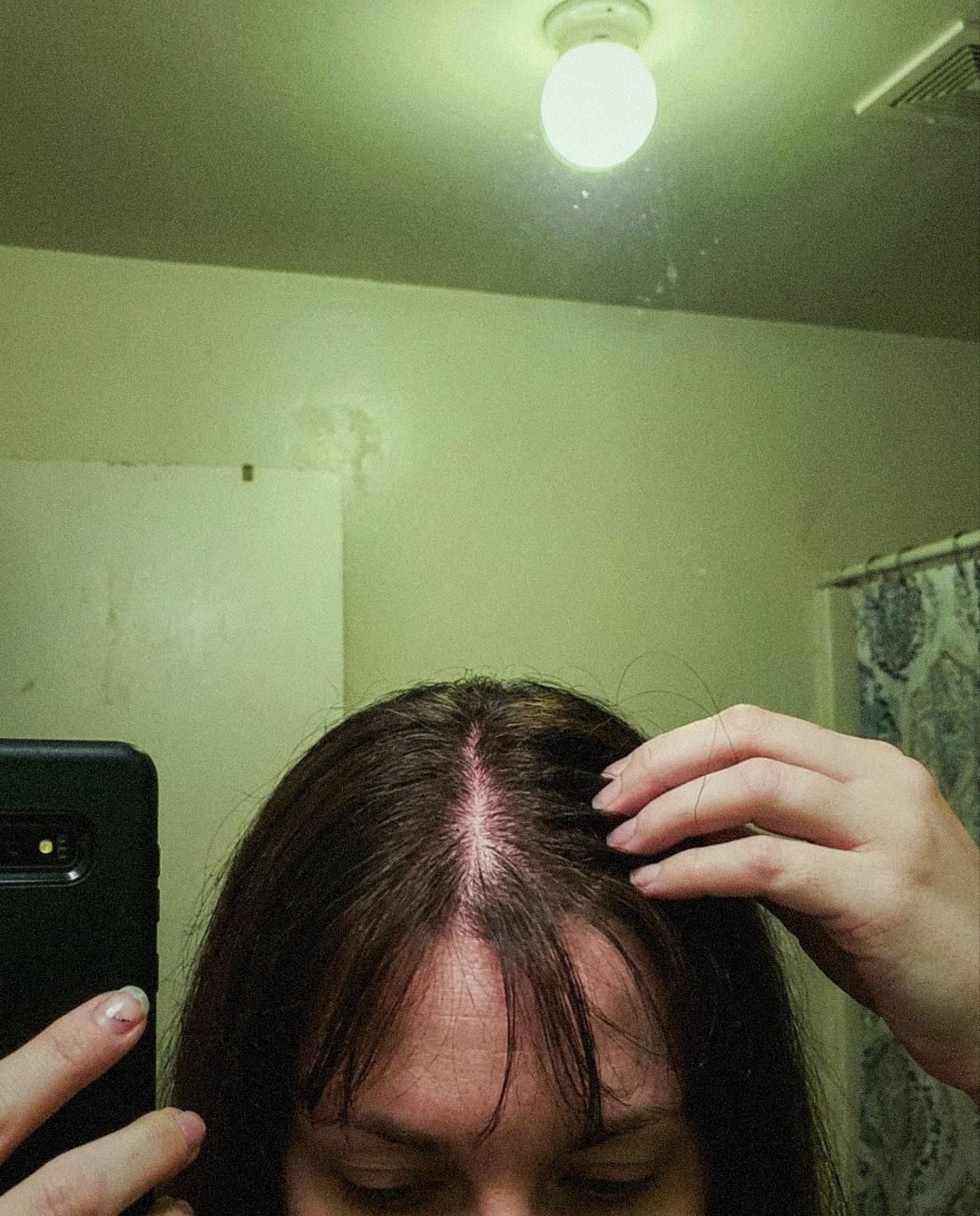
 Facebook ad: “My thyroid labs came back perfect. My hair kept falling…”

Ran for 10 days, from July 5 to July 14, 2026, the last day Crush saw it.
Run by Restore Daily on Facebook. Crush is not the advertiser and does not verify its claims. See this ad in Meta's Ad Library(opens in a new tab)
Make your own version of this ad
Crush makes it, launches it in your own Meta ad account, scales the winners and pauses the losers.
About this ad
- Meta Ad Library ID
- 916537841471625
- Platforms
- Facebook, Instagram, Messenger and Threads
- Relaunches
- 0
- Niche
- Hair Care
Ad text
My TSH came back 2.1. "Textbook," my doctor said, sliding the printout across the desk. "Your thyroid is perfect." I was pulling hair out of the shower drain by the fistful that same morning. Both of those things were true on the same Tuesday. And nobody in that office could explain how. For four years I did everything they told me to do. Levothyroxine, every morning, on an empty stomach. Waited the full hour before coffee. Never missed a dose. Never split a pill. I read the pamphlets. I kept the follow-up appointments. I was the good patient. My labs read like a medical school example. TSH in range. T4 in range. "You're doing great," they'd say, and I'd nod, and I'd drive home and cry in the garage before I went inside. Because I was not doing great. I was sweeping hair off the bathroom floor twice a day and telling myself it was the season. ---- It started so quietly I almost talked myself out of it. A Tuesday morning in the shower. Fingers through the conditioner, and more coming away than usual. I rinsed. Pulled again. More. I stuck the strands to the tile so I wouldn't have to watch them swirl toward the drain, and by the time I stepped out there were six little dark clumps on the wall. I stood there dripping and told myself it was stress. Summer shedding. The new shampoo. It was none of those things. Three weeks later I switched to the thinner hair ties, the ones my daughter left in the guest bathroom. Wrapped it twice. Then three times. Then four. By the second month I could see scalp through my part under the bathroom light. I started parting it on the other side to cover the first side, and then that side thinned too. By the third month I was wearing my hair up every single day. Not because I liked it that way. Because a bun hides a widening part and a ponytail doesn't. I bought hats I never used to wear. I found the corner of every restaurant with the softest lighting. I stopped letting people stand behind me. And then there was the eyebrow. The outer third of my right eyebrow, the part closest to my temple, just thinned out to almost nothing. I started penciling it in before I'd even had coffee, before I'd say good morning to my own husband. There's a photo from my niece's engagement party that month. Everyone's smiling. I'm the one turned three-quarters to the camera with my hand casually resting at my temple. I remember exactly why my hand was there. By month four, my hairdresser, a woman who'd had her hands in my hair for eleven years, lifted my ponytail to section it and went quiet. Not a polite quiet. The kind that fills a room. "Honey," she said. "When did this start?" I cried in her chair. Mascara down my face, cape soaked, shoulders going in front of the Saturday regulars. She squeezed my shoulder and said, "You are not the first one to sit in this chair this year. Not by a long shot." That was supposed to make me feel better. It terrified me. ---- Let me be clear about something. I am not anti-medication. I would take my levothyroxine again tomorrow. It kept me upright through years I don't remember clearly. I am not one of those people who thinks pills are poison. But somewhere between the "perfect" lab result and the hair on my pillow, my body had made a decision I never agreed to. And not one person in a white coat could tell me what it was. So I went back. Of course I went back. My doctor ran the same panel. TSH. T4. She looked at the numbers, smiled the smile I'd started to hate, and said, "Everything looks normal. It's probably just your age. Or the perimenopause. Hair thins. Give it six months." Give it six months. To a woman pulling hair out of the drain every morning. I asked her, almost embarrassed, if we could check the other numbers. The free T3. The reverse T3. I'd read about them at midnight and I could barely pronounce them. She said those tests weren't necessary. My T4 was normal. Insurance wouldn't cover the rest. And besides, she said, they wouldn't change anything. I went home feeling like the crazy one. Like a woman who'd read too much on the internet. And here is what I couldn't say out loud, not even to my husband. It wasn't really about the hair. Not only. It was that I didn't recognize the woman in the mirror anymore. She had my face and my tired eyes and a scalp I kept covering, and I kept thinking, I want my old self back. Not younger. Just me. The version of me who didn't plan her whole day around lighting and camera angles. You lose your hair a strand at a time, but you lose yourself all at once, on some ordinary morning when you realize you've been hiding for a year. Here is what she didn't say. What nobody said. "Just wait" is not a neutral instruction. For a follicle, waiting is not the same as safe. A follicle that stops getting fuel doesn't freeze in place, patient and unharmed, until the fuel comes back. It shrinks. It goes dormant. And a follicle that stays dormant long enough eventually stops producing anything at all. "Give it six months" wasn't a plan. It was a clock. And nobody told me it was already running. ---- I did what I always do when a doctor hands me a shrug and a six-month wait. I went looking for the real answer myself. Weeks of it. Endocrinology papers I had to read three times. Thyroid forums at eleven at night. Studies I barely understood, and then, slowly, understood too well. And what I found reorganized everything I thought I knew about my own body. Here is what is actually happening. To me, and maybe to you. Your thyroid makes a hormone called T4. Think of T4 as the storage form. Sitting in a warehouse. It does almost nothing on its own. Before a single cell in your body can use it, T4 has to be converted into T3, the active form. T3 is the one that actually runs things. Energy. Clear thinking. Body heat. And yes, the hair on your head. That conversion is where everything went wrong for me. Two things have to be true for it to happen. Your body needs the right materials to flip the switch. And your stress has to be low enough that it doesn't override the whole system. When both are true, T4 becomes T3, and your cells get fed. When they aren't, something worse than "nothing" happens. Because when your body is under stress, and I mean the ordinary grinding stress of being a woman over fifty, perimenopause, bad sleep, a decade of running on empty, your liver starts flipping that conversion the wrong way. Instead of turning T4 into useful T3, it makes a backwards version called Reverse T3. Reverse T3 is metabolically dead. It does no work. But here's the cruel part. It is the same shape as the real thing. So it docks into the exact same receptors where real T3 is supposed to bind. And it just sits there. Blocking the door. Think of it like a set of fake keys jamming every lock in your house. The real keys are right there in your hand. They can't get in. The house stays dark, and cold, and you're standing on the porch wondering why the key you've always used suddenly doesn't work. Your follicles are one of those locked doors. Hair follicles are some of the most demanding tissue in your entire body. They are always working, always cycling, and every cycle burns fuel. That fuel is T3. When the real T3 can't get in, the follicle doesn't die dramatically. It just goes quiet. Enters the resting phase early. The hair you have lets go, and the hair that was supposed to grow in behind it never shows up. That is the drain. That is the widening part. That is the outer eyebrow you're penciling in. And it explained the timing, too. Why now. Why in my fifties, when the stress and the sleep and the hormones all stacked up at once. That's exactly when the backwards conversion runs hardest. ---- And here is the part that made me furious. Your blood test can read perfectly normal while all of this is happening. Because your body protects the one number your doctor actually checks. It keeps your bloodstream stocked and your TSH looking clean, and it does that by quietly pulling resources away from the tissues it has decided are non-essential. Your follicles are non-essential. As far as pure survival goes, you can go bald and live. So the panel looks fine. Your doctor sees "normal," says "you're fine," and sends you home. And you stand in your bathroom holding two hundred strands of your own hair, wondering if you're losing your mind. Your labs are fine. You are not. I read that line back in my own handwriting at midnight and started crying, because for the first time someone, even if that someone was only me, had finally said the thing out loud. I wasn't dramatic. I wasn't imagining it. I wasn't the crazy one in the appointment. I was a woman whose one test was designed to miss the exact thing that was happening to her. ---- Once I understood the blocked conversion, every failed thing in my bathroom cabinet suddenly made sense. It wasn't bad luck. It wasn't that I'd picked bad products. It was the right solution aimed at the wrong problem. Every single time. The biotin gummies. My nails grew. My hair kept falling. Biotin cannot restart a conversion your stressed liver has flipped backwards. The thickening shampoos and the rosemary oil. Sat on my scalp. The chemistry that was starving my follicles was happening on the inside, where a topical can't reach. The collagen powder in my coffee. Better skin, thinner hair. Wrong building blocks entirely. The iron pills and the endless ferritin worry. A real problem for some women, but it was never my bottleneck, so it moved nothing for me. The expensive hair vitamins every woman in the forums swears by. Five months, a small fortune, designed for a completely different kind of hair loss than mine. It never had a chance. The minoxidil. It started to work, and then I read the fine print. Every day, for the rest of your life, or the shedding comes back worse than before. A dependency, not a fix. The dermatologist. Twelve minutes. One word: Rogaine. One pamphlet. Zero answers about why. I added it up one night, all of it, the gummies and the shampoos and the powders and the appointments, and the number was high enough that I closed the laptop and didn't tell my husband. Every one of them treated a symptom on the surface. Not one of them touched the backwards conversion jamming the lock. You cannot fix a conversion problem with a product that was never designed to touch the conversion. ---- The thing that finally connected the dots for me wasn't a product. It was a person. A thyroid specialist. Someone who has spent her whole career on exactly this: the women whose labs read "perfect" while their bodies quietly fall apart. She sat me down and laid the whole thing out in plain language, the way no one in a twelve-minute appointment ever had. She said the standard of care runs one number, TSH, and calls it a day. It doesn't measure the backwards conversion. It doesn't measure how much active hormone is actually reaching your cells. So millions of women walk out of appointments labeled "fine" while their follicles run on fumes. And she said the fix is not more of the storage hormone. Adding more T4 to a system that's already flipping it backwards just gives your liver more raw material to jam the locks with. That, she said, is why so many women get their dose raised again and again and still lose hair. The fix is upstream. You have to get the conversion itself working again. That means the two minerals that actually run the switch. Selenium and zinc. Selenium is the cofactor for the enzyme that turns T4 into active T3. Zinc is what lets that T3 dock where it's supposed to. Most women over fifty are quietly short on both, she said, because our diets don't supply enough and the stress burns through what little we have. It means iodine, the raw material your thyroid needs to build the hormone in the first place. And it means settling the cortisol, because cortisol is the thing driving the whole backwards conversion. That is where ashwagandha comes in, the KSM-66 form, which doesn't crush your stress hormone. It just calms the curve enough that your liver can stop making the dead version. That's the third leg. And it's the one almost every supplement on the shelf leaves out. You can take selenium and zinc for a year, she told me, but if the cortisol is still screaming, the conversion never turns back the right way. That was the whole reason my careful little supplement stack had never moved the needle. I'd been feeding two legs of a three-legged stool and wondering why it kept tipping over. The formula she pointed me toward is a liquid called Kindled. Not a horse-pill. A berry-flavored liquid you put under your tongue, which matters more than it sounds. Hypothyroidism slows your gut and cuts your stomach acid, so half of what you swallow in pill form you never actually absorb. Under the tongue, it skips all of that and goes straight into the bloodstream. Selenium and zinc to run the conversion. Iodine for the raw material. KSM-66 ashwagandha to settle the cortisol driving the reverse shunt. Vitamin D3, which almost every one of us is low on. And no iron, on purpose, because iron actually interferes with thyroid medication, and they left it out for exactly that reason. Every single piece mapped onto one of the failures I'd spent months reading about. For the first time, I wasn't buying a product and hoping. I understood exactly why each thing was in the bottle. ---- I ordered it on a Thursday night and told no one. I was too burned by the drawer full of broken promises to announce another experiment. Two droppers under the tongue before bed, and I went to sleep thinking, this probably won't work either. By the end of the first week I ran my fingers through my hair the way I'd started doing every night, like pressing on a bruise to see if it still hurt. Fewer strands came away. I didn't say anything to anyone. I was afraid to jinx it. Three weeks in, my husband cleared the shower drain out of habit and stood up confused. "There was barely anything in there," he said. I walked to the bathroom, closed the door, and cried into a towel. For the first time in months I hadn't held my breath while the water drained. Around week six I was blow-drying my hair and something near my temple caught the light. I turned off the dryer and leaned into the mirror with my phone flashlight. Little hairs. Short, fine, standing straight up. In an area that had been bare scalp for months. I sat on the edge of the tub and counted them through tears. Eight. Twelve. Fifteen. More than I could keep track of. At week nine, my hairdresser ran her fingers through it before I sat down and said, "Girl. What did you do?" The woman whose whole job is looking at hair saw it without being told. By week twelve I wore it down to a family dinner. No bun. No hat. No hand hovering at my temple. Just my hair, loose, in a room full of people, and halfway through the night I realized I'd stopped thinking about it. Let me be honest, because this audience can smell a fairy tale from a mile away. My hair didn't come back to what it was at thirty. I'm not selling you a time machine. I'm fifty-four, and I still have a bad angle in every photo. But it's mine again. Full enough for a real ponytail. Strong enough to blow-dry without watching it fly off in the light. The outer third of that eyebrow filled back in, and I stopped penciling. And the part that mattered most: I stopped counting. I stopped pressing on the bruise. I stopped auditing my pillow every single morning. I just started living again. Which, if you'd asked me a year ago, was the only thing I actually wanted back. ---- Here's the whole reason I'm telling you this. I wasted the better part of a year, and a cabinet full of money, treating the surface while the real blocker sat there, unnamed, quietly jamming every lock. If your labs keep coming back "normal" while your hair keeps coming out, I don't need to convince you of anything. You already know that number on the printout is not telling the whole story. The thyroid specialist I found laid all of it out, in plain language, better than I ever could. Exactly how the backwards conversion starves the follicle. Exactly why your doctor's one test can't see it. And exactly what turns the conversion back on. 👉 Go read her full breakdown of what's actually starving your follicle: https://trykindled.com/now It's the piece nobody ever handed me. And it comes with a 30-day money-back guarantee, so you can read it, try it, and watch for the baby hairs yourself, or get your money back. Either way, in a month, you'll finally have an answer. And an answer is worth more than another year of wondering. P.S. Every day that backwards conversion runs, a few more follicles go quiet. The waiting your doctor prescribed isn't harmless. It's the clock. If you've been told your thyroid is "perfect" while your hair says otherwise, the specialist's breakdown is the first thing I'd read, and it's backed by that same 30-day guarantee. Baby hairs, or your money back. 👉 Read exactly what's blocking it here: https://trykindled.com/now ---
Where the ad sends people
trykindled.com
My thyroid labs came back "perfect." My hair kept falling out anyway.
A thyroid specialist reveals the hidden blocker your doctor never checks - and the 30-second fix that
Learn more: trykindled.com(opens in a new tab)