
Active· since Feb 24, 2026
- 201
- days running
- 0
- relaunches
Ad copy
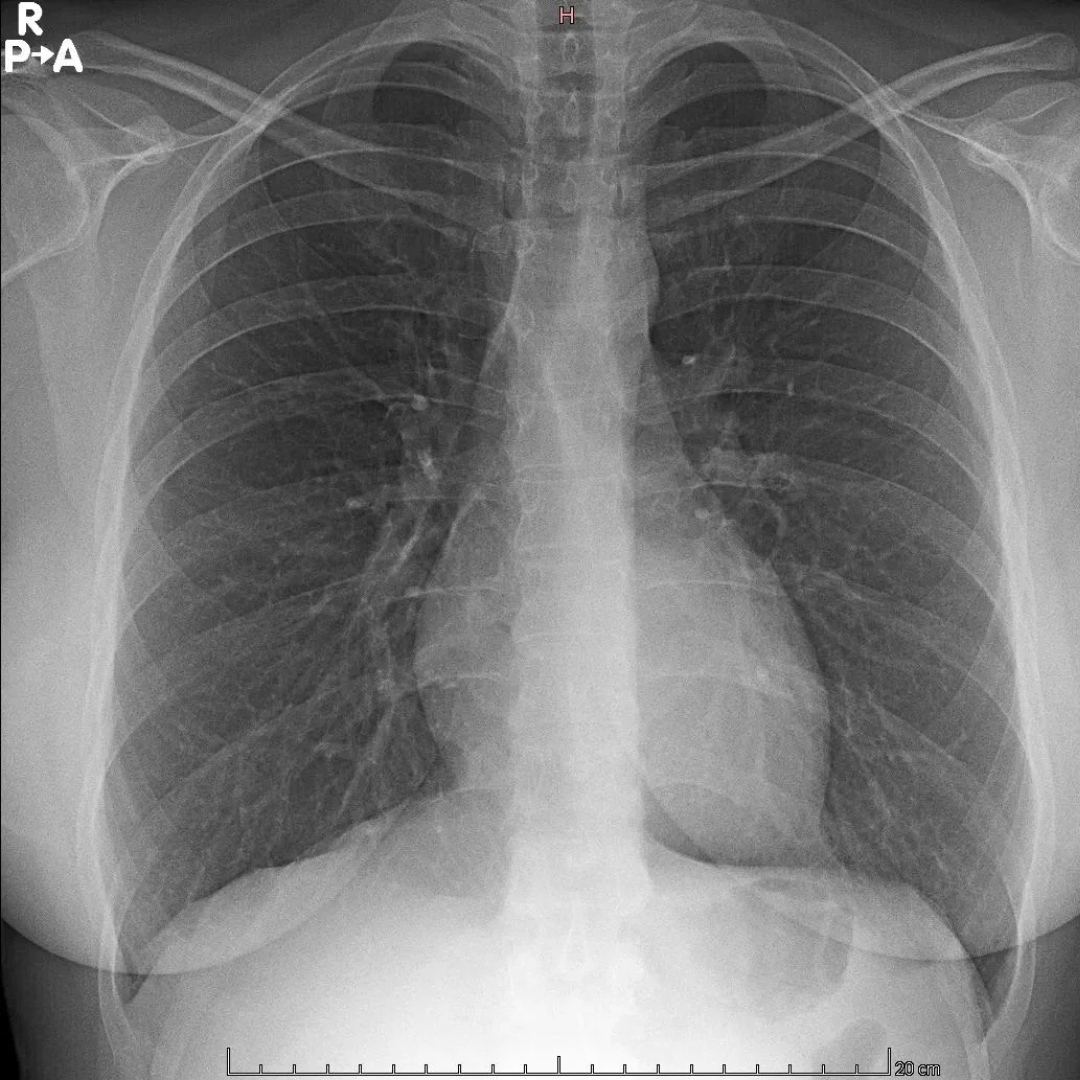
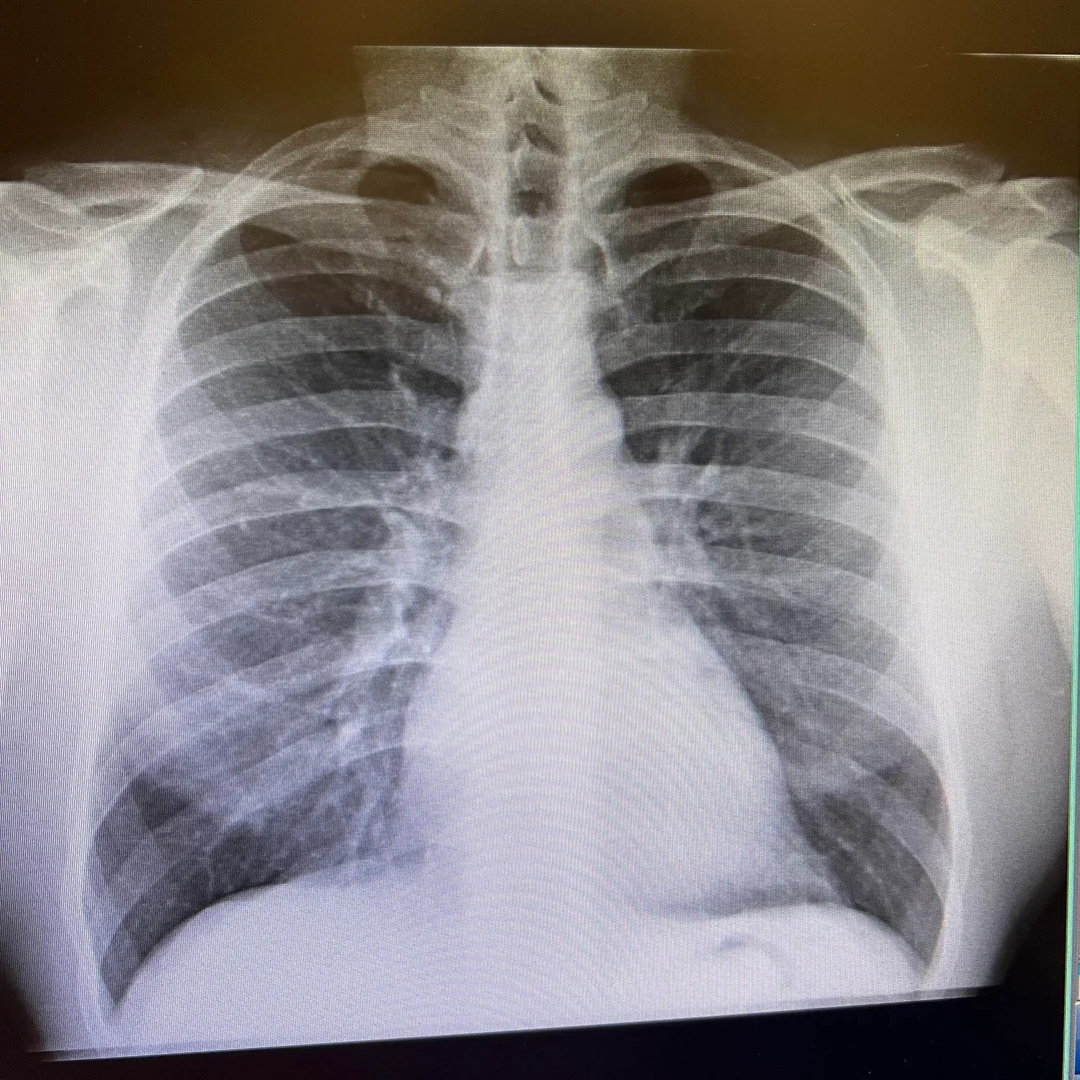
My Sister Smoked a Pack a Day for 39 Years. She Died at 62 From Lung Cancer. I've Smoked a Pack a Day for 38 Years. My Doctor Just Showed Me My Chest Scan. My sister died at 62. I'm 59. Six weeks ago, my doctor closed the exam room door. The click echoed. She sat down across from me and pulled up her laptop without looking at me. "Emma." She turned the screen toward me. "Do you see this area here?" A gray smudge. A shadow on a scan of my lungs. "Ground-glass opacity. Right upper lobe. It's not a mass. Not yet. But this pattern — combined with your history, your age, your exposure — this is your warning shot." She folded her hands. "Emma, I need you to stop smoking. Not in six months. Not after New Year's. Now. Before this becomes something I can't reverse." My throat closed. I stared at the scan. My sister's face flashed in my mind. Not the way she looked when we were young. The way she looked at the end. My sister, Linda, smoked her entire adult life. Started at 23. Never stopped. I watched her light up on the back porch every morning when I'd stay with her. The orange ember. The first long drag. The way her shoulders dropped two inches like the cigarette was the only thing holding the tension in her body. She was three years older than me. Growing up, she felt more like a second mother than a sister — the one who drove me to school when our parents couldn't, who called me every Sunday without fail, who organized every holiday, every birthday, every family dinner, for thirty years. She was the person who held everything together. By her late fifties, the cough started. Not the smoker's cough she'd had for years — that low, productive rumble every morning. This was different. Dry. Cracking. Wouldn't stop. She waved it off. "Just a bug." Then the weight started dropping. She'd always been strong — had her mother's build, her mother's presence. By 59 she looked hollowed out. Her clothes hung wrong. Her husband scheduled the appointment. She didn't go willingly. Stage 3B non-small cell lung cancer. Right upper lobe. The same lobe showing up on my scan right now. They gave her 18 months. She lasted 14. The last four months I don't talk about much. What chemo does to a person. What it looks like to watch your sister — a woman who hosted Thanksgiving for twenty people without breaking a sweat, who rearranged her entire schedule to fly across the country when I had surgery, who was supposed to outlive all of us — reduced to a person who couldn't make it down the hallway unassisted. She died at home on a Thursday morning in March. I was there. I held her hand. She was 62. She smoked a pack a day her whole adult life. So did I. I started at 21. Don't remember exactly how it happened — parties, friends, the particular way it felt to stand outside a bar in winter with a cigarette and feel like you belonged to something. That was 1986. I'm still smoking. My hands shook sitting in that exam room. The scan still on the screen. That gray shadow. "What are my options?" My voice came out smaller than I intended. "You quit. That's the option." Dr. Paulson leaned forward. "Emma, your sister's cancer — that's your family history. That's your genetics. That's the same tissue, the same 35-plus years of exposure. If we catch behavioral change now, your lungs can begin repairing. The opacity could resolve. But if you keep smoking, I am telling you with complete confidence that I will be having a different conversation with you in three years. One I don't want to have." I drove home on autopilot. Pulled into the driveway. Sat in the car. Reached into my purse and pulled out my cigarettes. Stared at the pack for a long time. Lit one anyway. The thing nobody tells you about trying to quit smoking is how many times you can fail before you stop believing it's possible. I had tried before. More times than I can count with any honesty. The first time I tried NicoDerm CQ patches. I wore them religiously for three weeks. The cravings dulled slightly — enough to feel like I was making progress. Then a hard week at work. One cigarette "just to get through the afternoon." By the weekend I'd bought a new pack. I tried Nicorette gum twice. The flavor was tolerable. The cravings were not. Every time I chewed a piece what I felt wasn't satisfaction — it felt like being told to eat a photograph of a meal. Something was deeply, fundamentally wrong about the substitution. My hands didn't know what to do. I kept picking up pens, touching my face, reaching for something that wasn't there. I tried Chantix two years after Linda died. I wanted to quit for her. I told myself that. The vivid dreams started in week two. I woke up disoriented three, four times a night. Sweating. My mood shifted in ways my husband noticed before I did. Not sad exactly — just flat. Like someone had turned the color down on everything. I made it nine weeks. Then my mother got sick and I was driving to see her every other weekend and I told myself I'd finish quitting after things settled down. They never settled down. I tried the generic bupropion — Wellbutrin — after a friend swore by it. Six weeks of dry mouth, insomnia, and cravings that felt like grief. I smoked through the whole prescription. I tried cold turkey four separate times. My record was 22 days. After that last attempt, sitting in my car outside a gas station with shaking hands at 11 PM buying a pack after 22 days clean, I made a quiet decision. Not out loud. I didn't say it to anyone. But somewhere under my conscious thoughts I had concluded: This is just who I am. Some people can quit. I can't. That was three years ago. Now I had a scan with a gray shadow in my right upper lobe. The same lobe. The same side. That night I didn't sleep. The ceiling. The fan. My husband's breathing beside me, slow and even. I watched the red numbers on the clock. 11:47 PM. Rolled over. 12:39 AM. 1:22 AM. At 2:07 I gave up. Went to the kitchen. Sat at the table in the dark for a while. Then opened my laptop. I typed: how to quit smoking when nothing works Forum after forum. Reddit threads that went nowhere. Products I'd already tried. Advice that amounted to "just decide to stop" from people who'd never been addicted to anything in their lives. I typed: why is nicotine replacement not enough to quit smoking The results were different this time. Study after study. Behavioral addiction research. Habit formation science. One headline stopped me: "Nicotine replacement addresses chemical dependency. It does not address behavioral dependency. For long-term smokers, behavioral programming may be the dominant driver of relapse." I clicked through. A pack a day for 35 years. The math in the article was stunning. Over 2 million hand-to-mouth movements. Practiced. Repeated. Neurologically encoded. The physical ritual of lifting a cigarette, drawing resistance through it, the weight of it between your fingers — all of it wired into your nervous system as deeply as any habit a human being can form. The patches give you nicotine. The gum gives you nicotine. Chantix interferes with your brain's nicotine receptors. None of them give you the ritual. None of them give you the physical act that 35 years of repetition has made as automatic as breathing. That's why the cravings don't stop. That's why my hands never knew what to do. That's why I kept reaching for something that wasn't there. I sat with that for a long time. Then I closed the laptop and went back to bed. Didn't sleep. But I lay in the dark thinking. Two days later I was back at the hospital for follow-up bloodwork. I was sitting in the hallway outside the lab waiting for my name to be called. Two nurses walked past — not talking to me, not aware I was listening — mid-conversation. "—the patients who've been trying that breathing necklace, the Revya one—" I looked up. "I know, it sounds like nothing. But the quit rates people are reporting—" "Because it actually mimics the cigarette. Like, physically. That's the whole thing." "The resistance is the same?" "Exactly the same. 3.5 kilopascals or something. Whatever a cigarette draws at. So your body doesn't know the difference on some level. It's like it actually satisfies the motion." The other nurse laughed quietly. "Honestly I was skeptical but I've had three patients bring it up in the last two weeks—" They turned the corner and I lost the rest. I pulled out my phone immediately. The research I found matched what she said. A cigarette draws at 3.5 kilopascals of resistance. That specific, measurable physical sensation — the slight pull, the drag, the breath cycling through resistance — is something your nervous system learns over millions of repetitions. It becomes its own signal. Its own reward. No patch delivers that. No piece of gum. No pill. The Revya necklace was designed around exactly that resistance. 3.5 kPa — calibrated to match what a cigarette actually feels like to draw from. So when your hands reach out of habit, when your body goes through the ritual, when your nervous system fires the signal it's fired a million times — you give it the physical response it's asking for. Not nicotine. The movement. The breath. The resistance. They called it Proprioceptive Matching Technology — the idea that your body's muscle memory, your sensory programming, your physical ritual can be met and gradually redirected rather than simply starved out. I sat in my car in the hospital parking lot and ordered one. It arrived on Monday. I held it in my hands for a while. Lighter than I expected. Simple. Nothing medical about it. Just a small pendant on a chain. I put it on and went about my day. The first craving hit around 9:30 AM. I was at my desk. The pull was familiar — that restless reaching feeling, hands wanting something to do. I lifted the necklace. Drew a breath through it. The resistance was — I wasn't prepared for it. It was right. Not approximate. Not "close enough." The specific physical sensation of a draw. My shoulders dropped the same way they used to. Something in me went quiet. Not gone. But quieter. I used it every time a craving hit that first day. Every single time. I wasn't trying to cut back — I wasn't thinking about numbers. I just gave my body what it was asking for and let it work. Day 3 I noticed I was smoking less without trying. Not because I was white-knuckling it. Because some of the cravings were actually being satisfied. Week 1: Down from a pack to about 14 cigarettes. I hadn't voluntarily smoked fewer than 18 in years. Week 2: 9 cigarettes. My husband noticed. Asked what I was doing differently. I showed him the necklace. He picked it up. Turned it over. Drew a breath through it himself. Looked at me with an expression I don't have a word for. "It feels like a cigarette." "I know." Week 3: 4 cigarettes. I was forgetting to smoke. That had never happened. Not once in 38 years. Week 4: I smoked twice. Both times out of something closer to habit than craving. And neither time felt like what I'd needed. The necklace had already given me that. I called my husband the evening of day 28. He'd been traveling for work. I wanted to tell someone who'd watched the whole thing — the failed patches, the Chantix, the 22 days, all of it. The person who had been there every time. "I haven't smoked today," I told him. Silence. "Emma—" "Or yesterday. Or the day before." He made a sound I don't have a word for. Something between a long exhale and a laugh. "What changed?" he finally managed. I told him everything. The 3.5 kilopascals. The behavioral programming. The two million hand-to-mouth movements. The thing the patches never understood — that it was never just the nicotine. He was quiet for a moment. "Linda would have wanted to know about this," he said. I didn't say anything. "She would have wanted to try it." "I know," I said. "I know she would have." Three weeks later I went back to Dr. Paulson. The nurse did my intake. Asked about smoking status. I told her I'd stopped five weeks ago. She typed it without looking up. Dr. Paulson came in. Reviewed my file. Looked at me over her glasses. "You stopped smoking." "Five weeks ago." "What did you use?" I told her about Revya. The resistance calibration. The behavioral mechanism. The proprioceptive matching. She nodded slowly. Typed notes. "I want to do another scan in four months. Give the tissue time to respond." She paused. "But I want you to know — five weeks is meaningful. What you just did is meaningful. Your lungs will start repairing almost immediately. The opacity we saw — there's a real chance that resolves. That depends on you staying stopped." She looked at me steadily. "Stay stopped, Emma." I walked out of that building and stood in the parking lot in the cold and called my husband. "She says if I stay stopped, the opacity could resolve." My voice shook. "She actually said that." He was quiet for a moment. Then: "Stay stopped." "I'm going to." That was seven weeks ago. I haven't smoked in 12 weeks. Not one cigarette. Not because I'm suffering through it. Not because I'm gripping the edge of a counter somewhere sweating through a craving. Because for the first time in every attempt I've ever made, the physical ritual has somewhere to go. My sister smoked a pack a day for 39 years. She died at 62 with cancer in her right upper lobe. I smoked a pack a day for 38 years. Six weeks ago a doctor showed me a gray shadow in my right upper lobe and told me it was my warning shot. I took the shot. If you're reading this, you see yourself somewhere in this story. You've tried the patches. The gum. Maybe Chantix. Maybe cold turkey more times than you can count with any honesty. You've made it days or weeks and then something happened — a stressful afternoon, a hard phone call, a moment where the craving was just louder than your willpower — and you bought a pack. And somewhere under your conscious thoughts, you've started to believe that this is just who you are. I want you to understand something that took me 38 years to learn: You were never failing because of weak willpower. You were failing because every method you tried was solving the wrong problem. Nicotine replacement gives you nicotine. It does not give you the physical ritual your nervous system has performed over two million times. It does not give you the drag, the resistance, the breath cycling through that specific 3.5 kilopascals of pull that your body has been trained to recognize as relief. Your hands don't reach for a cigarette because of nicotine. They reach because they've reached a million times before and your nervous system is running a program it learned before you were old enough to decide whether to learn it. Revya is the first thing I've tried that speaks to that program directly. Not patches that leave your hands empty. Not gum that gives you something to chew while your fingers still don't know what to do. Not a pill that dulls your brain chemistry and takes your mood with it. The physical act. The breath. The resistance that your body already knows. Why Revya Works When Everything Else Failed Calibrated to 3.5 kPa — The Exact Resistance of a Cigarette A cigarette draws at 3.5 kilopascals. That specific physical sensation — the slight pull, the drag — is neurologically encoded in long-term smokers through millions of repetitions. Patches can't deliver that. Gum can't. No medication can. Revya is calibrated to exactly 3.5 kPa. Your nervous system can't tell the difference. The ritual is satisfied. The craving quiets. I felt it in the first breath. Proprioceptive Matching Technology The reason behavioral addiction is so resistant to treatment isn't chemical — it's physical memory. Your body knows how to smoke the way your body knows how to ride a bike. Suppressing the craving doesn't erase the programming. Revya works with that programming rather than against it. The hand-to-mouth motion. The breath. The resistance. Every element of the ritual met — redirected — until the neural pathway gradually weakens from disuse rather than from being starved. Wearable — Available Every Time the Craving Hits It's around your neck. It's there at 9:30 AM at your desk. It's there after dinner when your hands don't know what to do. It's there in the car, at the break room door, in the moments that always beat you before. No patch can be there like that. No piece of gum feels like that. Try Revya for up to 60 days. Track your cigarette count. Watch the number drop without white-knuckling a single craving. If you're not satisfied for any reason — if you don't see your smoking decrease — if it doesn't feel like the missing piece that every other method ignored — contact customer service for a full refund. No questions asked. You risk absolutely nothing. You're at a crossroads. One path: Keep trying the same methods that haven't worked. More patches. More gum. More willpower against a behavioral program nearly four decades deep. More mornings waking up having failed again. Another path: Try the thing that works differently from everything else. That addresses what every other method missed. The physical ritual. The breath. The resistance your nervous system actually recognizes. I chose the second path. It ended 38 years of smoking. It may have saved my life. Twelve weeks ago I sat in a hospital parking lot and stared at a gray shadow on a scan of my lungs. My sister's shadow. My sister's lobe. My sister's pattern. She didn't get a warning shot. Or if she did, she didn't take it. I took mine. If you're where I was — watching your health reports move in one direction, carrying a family history that terrifies you, knowing you have to quit and convinced after years of failure that you simply can't — try Revya. Give your body the one thing every other method denied it. Your future self will thank you. https://revya.co/breathing-necklace — Emma Callahan P.S. — By week two, I was under half a pack without trying. By week four, I had my first smoke-free day in 38 years. By week seven, I stopped counting days because I'd stopped thinking about cigarettes. Your timeline might be different. But you won't know unless you try. P.P.S. — Every day you wait is another day of exposure. Another day your lungs absorb what they're absorbing. Another day closer to a scan that shows something worse than a warning. Don't wait. Order now. https://revya.co/breathing-necklace
Like this ad? Make it yours.
Crush rebuilds this exact creative around your product — your brand, your colors, your offer — in about a minute.