
Inactive· since Jan 5, 2026
- 50
- days it ran
- 3
- relaunches
- 1,501
- EU reach
Ad copy
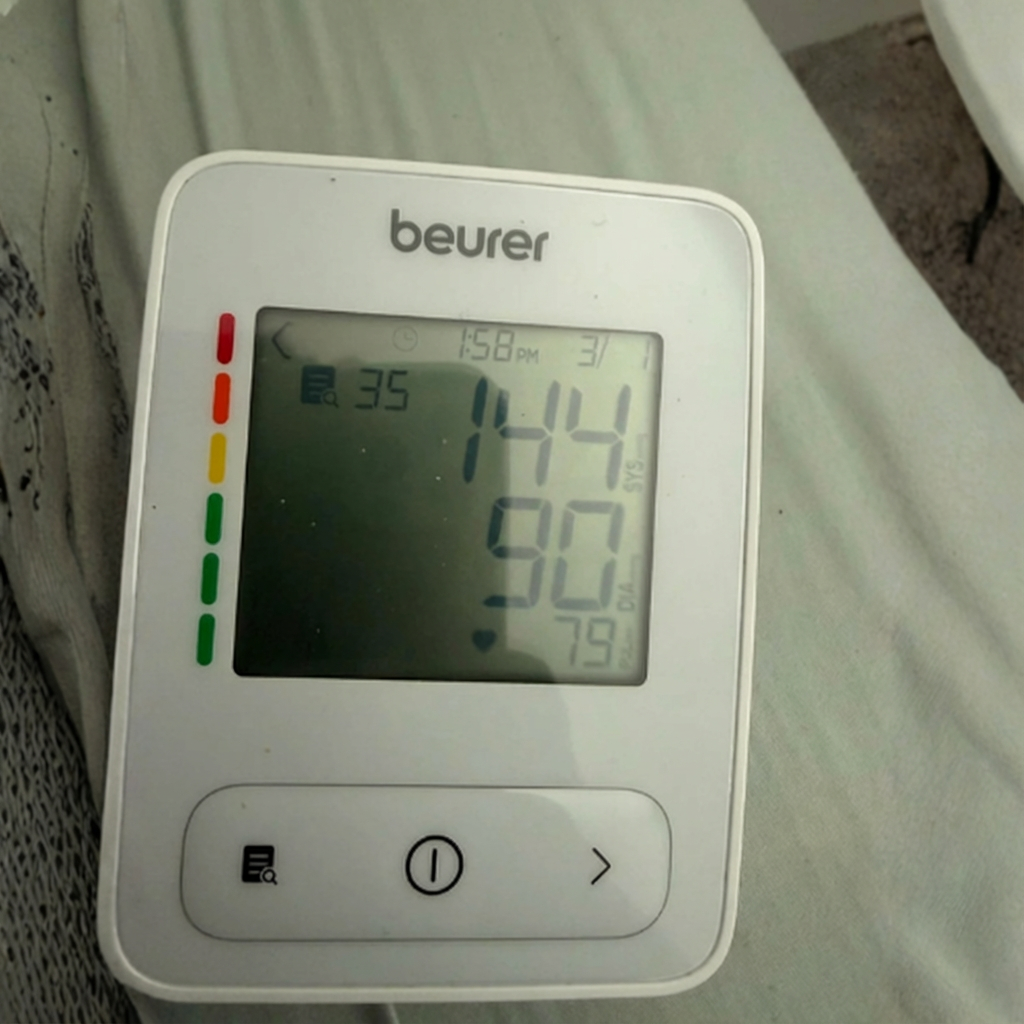
After 23 Years in Cardiology, I've Watched Hundreds of Patients Destroy Their Lives With Obsessive BP Checking. Here's What I Finally Started Recommending. My name is Dr. Clinton Foster, and I've been a practicing cardiologist for twenty-three years. In that time, I've seen thousands of patients walk through my door with elevated blood pressure. Some need immediate pharmaceutical intervention. Some respond well to lifestyle modifications. But there's one group that's always troubled me most. The obsessive checkers. You know who you are. First thing when you wake up. Before breakfast. After breakfast. Mid-morning. After work. Before bed. Sometimes five times within an hour trying to find the "real" number. Multiple BP tracking apps. Detailed spreadsheets. Graphs showing every reading for months. You know your average for every hour of every day. Despite all this monitoring, you feel less in control than ever. Three weeks ago, a fifty-six-year-old man sat in my office and said something I hear constantly: "Doctor, I'm constantly checking my blood pressure throughout the day. I know I shouldn't, but I can't help myself. Every time I check it's different and that freaks me out even more." His wife was with him. She told me he'd checked fourteen times the previous day. That he'd cancelled dinner plans because his reading was 135/85 and he panicked. That their home blood pressure monitor was controlling their lives. Other doctors told him it's anxiety. To stop checking so much. Try meditation. One doctor said to hide the monitor and forget about it. He tried. Lasted three days before he broke down and got it back out. This is not an isolated case. This is a pattern I see constantly in my practice. These are not irrational people. They're not hypochondriacs. They're terrified individuals watching their blood pressure fluctuate wildly, getting different readings within minutes of each other, and receiving zero useful guidance about why this is happening or how to stabilize it beyond "stop worrying about it." That advice is useless. It's dismissive. And it completely misses what's actually occurring in their vascular system. Let me explain what I've learned from twenty-three years of treating these patients and, more importantly, what finally started helping them. When someone tells me they're checking their blood pressure ten times a day because every reading is different, they're not describing a psychological problem. They're describing a physiological problem with a psychological consequence. Here's what I mean. Blood pressure is not a static number. It fluctuates normally throughout the day based on activity, stress, time of day, and dozens of other factors. A variation of 10-15 points is completely normal. But when someone's blood pressure is swinging 20, 25, sometimes 30 points within a short period, when they're getting readings of 128/82 one moment and 148/94 ten minutes later without any significant activity change, that's not normal variability. That's vascular instability. And it's almost always related to endothelial dysfunction and depleted nitric oxide. Now, I realize that sounds technical, so let me put it in plain terms. The inner lining of your arteries produces a molecule called nitric oxide. This molecule tells your blood vessels when to relax and when to constrict. It's your body's natural blood pressure regulation system. When endothelial function is healthy and nitric oxide production is adequate, blood vessels respond appropriately. Pressure stays relatively stable. Readings are consistent. But when endothelial function is impaired and nitric oxide production is insufficient, arteries lose their ability to regulate. They become reactive rather than responsive. Pressure spikes unpredictably. Every reading is different because the vascular system can't maintain stability. This is what's happening when patients tell me their morning reading is 132/84, they check again five minutes later and it's 144/90, check a third time and it's 138/86, and by the fourth check they're at 146/92 and completely panicking. It's not anxiety causing the fluctuations, though anxiety certainly makes them worse. It's vascular dysfunction causing the fluctuations, which then creates anxiety, which further destabilizes the readings, creating a self-perpetuating cycle. When patients describe this pattern, most physicians label it "white coat hypertension" or "anxiety-related hypertension" and prescribe anti-anxiety medication, recommend stress reduction techniques that don't address the vascular problem, or suggest checking less frequently. None of that addresses why the readings are unstable. It's like telling someone with a malfunctioning thermostat to stop looking at the temperature gauge. The gauge isn't the problem. The regulation system is the problem. The fifty-six-year-old patient had tried everything previous doctors suggested. Meditation apps he used for two weeks before giving up. Breathing techniques that provided momentary calm but no lasting stability. Limiting himself to checking twice daily, but the anxiety would build until he couldn't resist. Deleting his BP tracking apps only to reinstall them the next day. Nothing worked because nothing addressed the endothelial dysfunction causing the instability. His father died of a heart attack at sixty-one. He's fifty-six. Every high reading felt like a countdown to the same fate. Every 145/92 or 148/90 was another step down his father's path. So yes, he was anxious. Of course he was anxious. But the anxiety wasn't the primary problem. The vascular instability was the primary problem, and the anxiety was a completely rational response to watching his blood pressure behave erratically with no clear explanation or solution. About seven years ago, I started noticing research showing dietary nitrates from beetroot could significantly improve endothelial function and stabilize blood pressure variability. Not just lower pressure, but actually stabilize the fluctuations making my patients' lives miserable. The mechanism made sense. Dietary nitrates convert to nitric oxide in the body, directly supporting the vascular regulation system that was failing. I started recommending it cautiously to obsessive checking patients who'd tried everything else without success. The first few came back with mixed results. Some felt it helped. Some felt no different. I couldn't understand the inconsistency when the research was so promising. Then I started digging into what they were actually taking. One patient was taking a supplement with twenty milligrams of nitrates. Research showing benefits used three hundred to five hundred milligrams daily. She was getting less than one-tenth of the effective dose. Another was taking heat-processed beetroot powder. Heat above sixty degrees destroys the nitrates we're trying to preserve. Essentially denatured powder with minimal active compounds. A third had a "proprietary blend" label. No disclosed content. No verification. No way to know if he was getting anything therapeutic. The issue wasn't the science. The issue was supplement quality and formulation. So I researched companies that actually understood the biochemistry. That used cold-extraction to preserve nitrates. That standardized to therapeutic doses. That published third-party testing. Most companies failed on multiple points. Heat processing destroying compounds, massive underdosing, proprietary blends hiding content, or unreasonable pricing. Then I came across Zenther with their BeetWise formula. When I reviewed their formulation, I understood why this might work where others failed. Cold-extraction processing preserves heat-sensitive nitrates. Active compounds survive manufacturing intact. Standardized to four hundred milligrams of verified dietary nitrates per serving. Not beetroot powder of unknown content. Four hundred milligrams of actual nitrates, independently tested. Published Certificates of Analysis for every batch. Exact nitrate content. Heavy metal screening. Pesticide testing. Complete transparency. This addressed every formulation problem I'd identified. I started recommending BeetWise specifically to my obsessive checking patients, the ones whose vascular instability was creating the fluctuation anxiety cycle. The results were remarkably consistent. Most patients reported noticeable changes within three to four weeks. Their morning readings became more predictable. The wild swings started diminishing. Instead of seeing 128/82 followed by 144/90 followed by 136/84 followed by 148/92, they'd see 128/82 followed by 132/84 followed by 130/82. Stable. Consistent. Their vascular system finally regulating properly. And when the readings stabilized, the checking compulsion naturally decreased. The fifty-six-year-old patient I mentioned earlier started taking BeetWise about eleven weeks ago now. When he came in last month for his follow-up, his wife told me he's checking maybe twice a day instead of fourteen times. His morning reading is consistently in the 124-130 range. His evening reading is consistently in the 126-132 range. The stability has broken the anxiety cycle. He told me something that stuck with me: "Doctor, for the first time in three years, I don't wake up dreading what that monitor is going to say. I check it, and it's basically the same as yesterday. Finally, my body makes sense again." That's what vascular stability gives back to people. Not just lower numbers, though that often happens. But predictability. Consistency. The sense that their body is functioning as a coherent system rather than a random number generator. Now, I need to be clear. This is not a medication. I'm not prescribing this. I'm recommending a food-based supplement that supports normal vascular function. If you're on blood pressure medication, continue it and work with your physician. Some of my patients have reduced medication dosages over time as their readings stabilized and doctors agreed it was appropriate. Others continue medication and use BeetWise as complementary support. Both approaches can be valid. But if you're one of these obsessive checkers, if your home blood pressure monitor is controlling your life, if you're tracking every reading in spreadsheets, if a high morning reading ruins your entire day, if you've cancelled plans because your number was 135/85 and you panicked, if you know you shouldn't check it so much but you can't help yourself, you need to understand what's actually happening in your vascular system. The checking isn't the problem. The instability is the problem. The checking is just your body trying to understand why the numbers keep changing. This is not something you can meditate away. You need to address the underlying endothelial dysfunction and restore the nitric oxide production that allows proper vascular regulation. I've watched this pattern over twenty-three years. Patient comes in with blood pressure in the 130s or 140s. Not emergency territory, but concerning. They're checking constantly because numbers are unpredictable. Previous doctors said it's anxiety, to stop worrying, try relaxation. Nothing helped because nothing addressed the vascular instability. Within weeks of starting properly formulated dietary nitrates at therapeutic doses, readings stabilize. Checking decreases naturally. Anxiety lifts. Quality of life returns. This is what frustrates me about how we approach these patients in conventional medicine. We see the behavior, label it anxiety, and prescribe medications or techniques that don't address the physiological dysfunction driving the behavior. If your arteries are functioning properly and your nitric oxide production is adequate, your blood pressure will be stable. You won't get wildly different readings minutes apart. You won't feel compelled to check constantly because the numbers will make sense. But if your endothelial function is impaired, no amount of meditation or stress reduction will fix that. You need to restore the biochemical pathway that's failing. I understand if you're skeptical. Most of my patients have tried multiple supplements. They've spent hundreds on products that didn't work. That's why formulation matters. Most products are either underdosed, improperly processed, or inconsistently formulated. They can't deliver therapeutic effect because they don't contain adequate active compounds. BeetWise addresses the specific formulation problems that make most products ineffective. Cold-extraction preserves nitrates. Standardization ensures consistent dosing. Third-party testing verifies content. They offer a ninety-day money-back guarantee, removing financial risk. If your readings don't stabilize, if you're not satisfied, you can return it. You're simply trying a properly formulated supplement for a reasonable trial period to see if it helps your vascular stability the way it's helped many of my patients. The longer vascular dysfunction persists, the more difficult it becomes to restore proper function. Endothelial damage progresses. Arterial stiffness increases. If you're currently trapped in the checking compulsion cycle, if your quality of life is suffering because your monitor has become the center of your existence, you have an opportunity to address the underlying cause rather than just managing symptoms. This isn't about taking another pill and hoping. This is about supporting the specific biochemical pathway that regulates vascular tone and blood pressure stability. It's about giving your endothelium the compounds it needs to produce adequate nitric oxide so your arteries can respond properly instead of reacting erratically. After twenty-three years in cardiology, I've learned that the best outcomes come from addressing root causes rather than suppressing symptoms. The obsessive checking is a symptom. The vascular instability is the root cause. Dietary nitrates at proper therapeutic doses represent the most effective natural approach I've found for addressing that root cause. If you're tired of being told "it's just anxiety" when you know something is wrong with how your blood pressure behaves, if you're exhausted from constant monitoring, if you want your life back from that monitor, I'd encourage you to try properly formulated dietary nitrates and see if your experience matches what I've observed in my practice. Your vascular system wants to regulate properly. It wants to maintain stable pressure. It just needs the biochemical support to do so. Give it that support, track your readings over several weeks, and see if the stability returns. That's what I tell my patients. That's what I'm telling you now.
Read this if you check BP compulsively.
Zenther Beetwise, 400mg verified nitrates per serving—not 5mg like most brands. Cold-extracted beetroot supplement with published lab results. 90-day guarantee. Try BeetWise today.
LEARN MORELike this ad? Make it yours.
Crush rebuilds this exact creative around your product — your brand, your colors, your offer — in about a minute.