
Inactive· since Apr 29, 2026
- 3
- days it ran
- 0
- relaunches
- 1
- EU reach
Ad copy
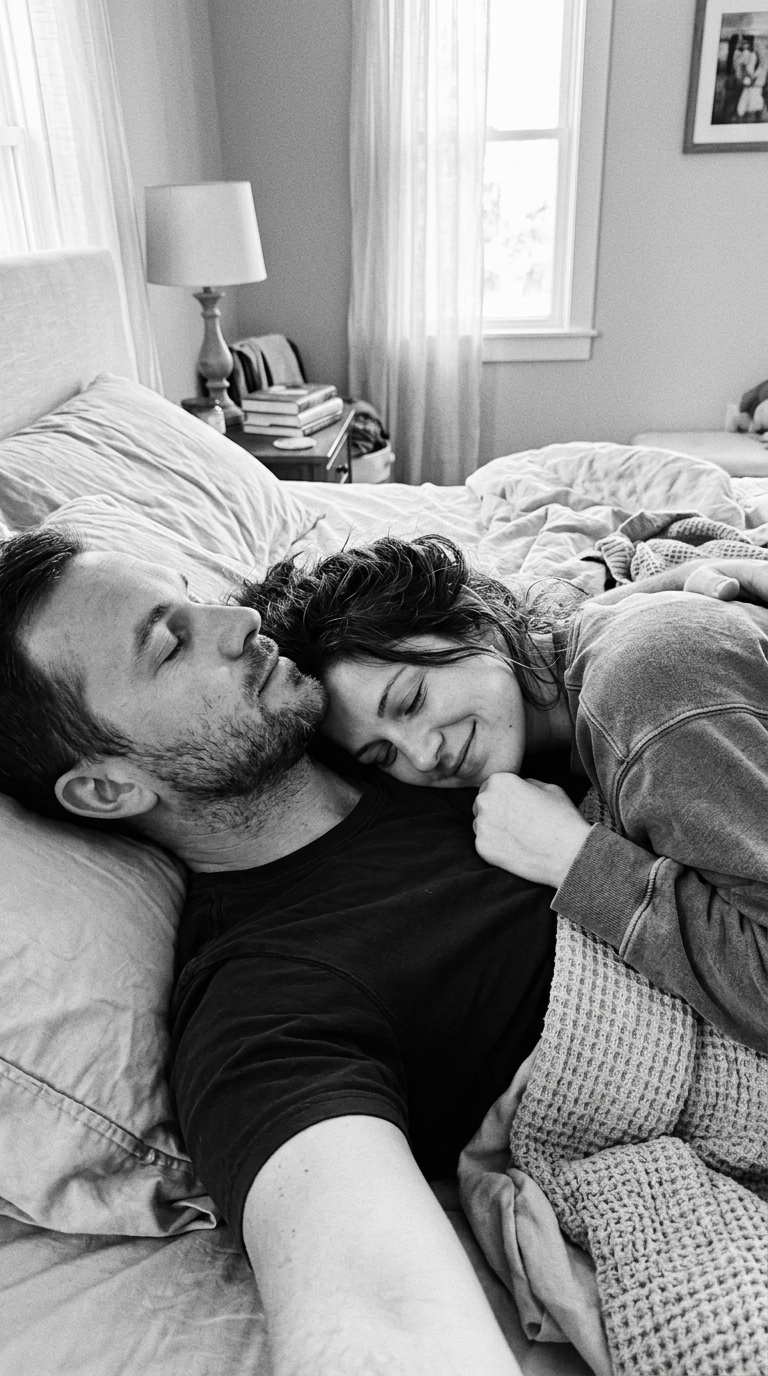
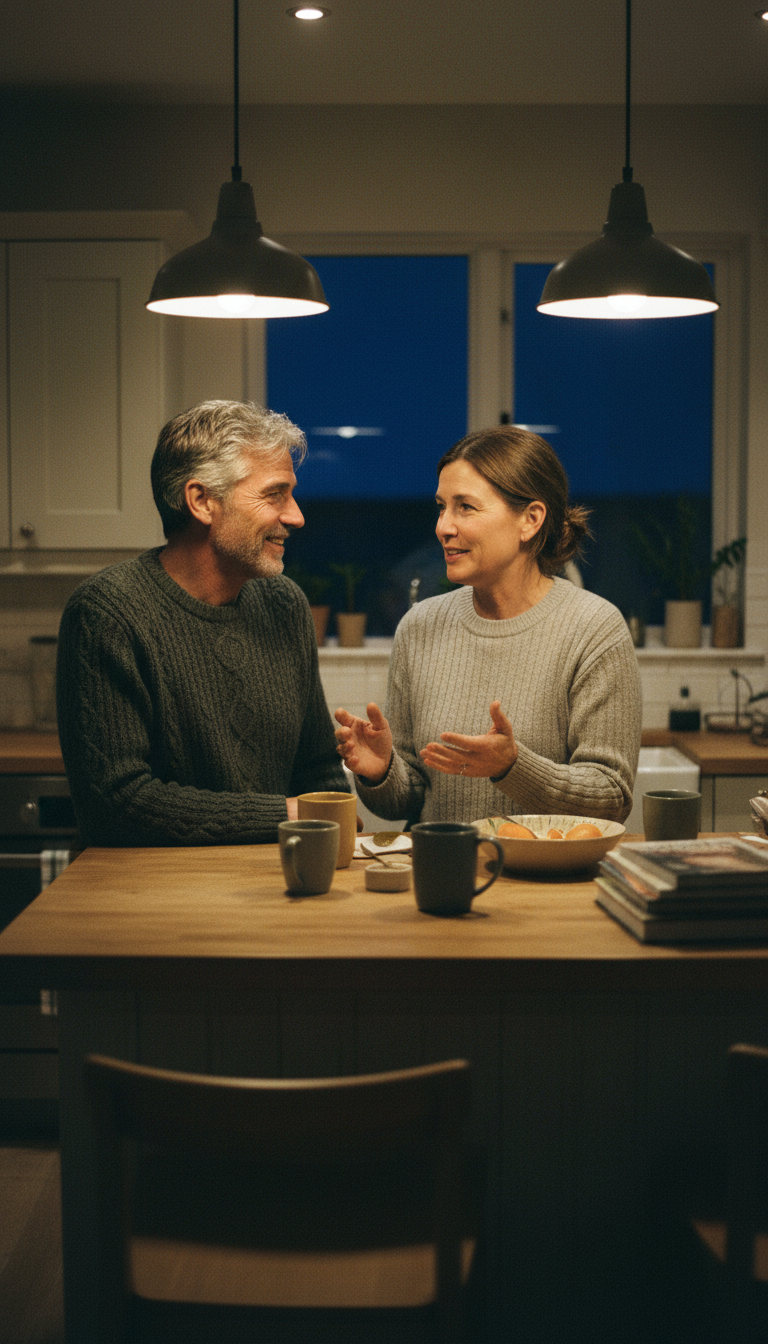
I called my father from the car last Thursday. I had just left my doctor's office. The doctor had given me a finding I had not been expecting — not bad, not catastrophic, but the kind of thing you want to tell somebody about because you do not want to drive home in silence with it. I called him. He picked up on the third ring. He asked how I was. I said fine. He asked about the car — was the brake light still doing the thing, had I gotten it looked at, what had the guy at the shop said. I told him about the brake light. We talked about the brake light for a while. He told me about his neighbor, who had bought a new mower. He told me about a thing on the news he had been watching. He asked if my husband had finished the deck. After forty-seven minutes I said I needed to get home. He said, drive safe. I said, I will. I hung up. He still does not know I had been to the doctor. I had not been planning to tell him. I had been planning to want him to ask. I am 42 years old. My father is 72. He is healthy. He is alive. He lives an hour away. We talk on the phone every Sunday — and sometimes, like last Thursday, when I am the one who calls in between. He has never asked me how I am, in a way that wanted an answer, in any conversation I can remember. I have known this since I was about thirty. I am still calling him. Let me describe him, because the description is the entire problem. My father is not a bad man. He has never raised his voice at me. He has never hit me. He has never been the kind of unreliable that makes a child afraid. He showed up to my graduations. He paid for my college. He drove eight hours to help me move into my first apartment in 2007 and he stayed for the weekend and assembled a bookshelf and left without making a fuss. He is, by every observable behavior, a decent father. He has also never, in 42 years, asked me what I think about my own life. He has not asked what I want. He has not asked what I am afraid of. He has not asked who I am dating, or whether I love my husband, or whether being a mother is what I had thought it would be, or whether I miss my mother, who died seven years ago, or whether I am tired. He calls me to tell me about the news. He calls me to tell me about the mower. He calls me to ask if I have gotten the brake light looked at. He answers my questions when I ask them. He does not generate his own. I have, on three specific occasions in my adult life — at 28, at 33, at 39 — tried to have a different conversation with him. I am not going to describe the details of those attempts because the details are private and also because they did not change anything. He listened politely each time. He said something that sounded like the beginning of a response. He did not finish the sentence. He shifted the subject. This is the problem of him. There is no clear category to put him in. He has not done anything I can name in a sentence. He is not a narcissist. He is not cruel. He is not absent in any way I could file as a grievance. He just is not there. He never has been. I have spent forty years tuning to a frequency that almost transmits. Every few years there is a fragment. A sentence. A look. A hand on my shoulder for two seconds at a wedding. The Christmas Eve in 2014 when he was looking out the window at the snow and said, without turning around, "you turned out to be a good person, you know that." A summer night in 1996 when I was fourteen and we were driving home from somewhere and he said, "you can tell me if you are not okay at school." A morning in 2019 when he came over for breakfast and watched my son for a minute and said, "he looks just like your mother." Each of these moments was a fragment. Each of them ran maybe four seconds. Each of them I have remembered for years. I have built my adult life around the fragments. I have remembered them at every doctor's appointment. I have remembered them every time I have been in love. I have remembered them at every milestone — promotions, my wedding, the day my son was born — when I was waiting for the next one. I have used them as evidence, in the part of my brain that needs evidence, that what I remember is real and that he is reachable, that the man on the other end of the phone last Thursday is the same man who said the sentence about being a good person on Christmas Eve in 2014, and that if I just keep calling, eventually he will say something else. I have, by my count, made approximately 4,000 phone calls to my father since I was eighteen. He has produced, in those calls, perhaps fourteen sentences I cannot let go of. I have known this about my father since I was about thirty. I read the books in my mid-thirties, the ones for adult children of emotionally immature parents. I underlined. I highlighted. I had the vocabulary by 35. The vocabulary did not stop me from leaning. I have been leaning toward my father since I was four years old. I am 42 now. The leaning is the shape of me. It is the way I sit in every room I have ever been in. I lean toward my husband, who is good, who reaches for me, and who does not require me to lean — and when he does, sometimes, in the kitchen, ask me a real question and look at me while he waits for the answer, I do not know what to do with him. The reaching is the unfamiliar thing. I do not have a body for being reached for. My body knows how to lean. My body does not know how to be received. I lean toward my boss, a kind woman who likes me, whose approval I do not need but pursue anyway because pursuing is what I have a body for. I lean toward the women in my friend group who never ask me how I am unless I ask first. I lean toward my son's teachers, who are not withholding, who already think I am a wonderful mother, and from whom I extract another reassurance every parent-teacher conference because the leaning is automatic now, even when there is nothing to lean toward. The leaning is the wound. I had thought the wound was the thing he had not given me. The wound is what I had become while waiting. My father came to my son's twelfth birthday last month. He brought a card. He brought a check. He stood in the kitchen with my husband and made conversation. My son — twelve years old, a kind kid, an observant kid — made him a coffee the way I have explained, several times, that my father takes it. Light splash of milk. No sugar. In a mug, not a cup. My son brought him the coffee. He held it out with both hands. My father took it. He said, "thanks, buddy." He did not say my son's name. He went back to talking with my husband. My son watched him walk away. He watched him for maybe four seconds. Then he turned around and went to find his friends. I watched my son watch my father. I watched my son lean. I sat down on my couch that night, after the party was over and the kids were asleep, and I texted my friend Anna. Anna is fifty. Her father had been a version of mine. He died two years ago. I had been thinking, when I texted her, that maybe Anna had something to tell me about how it ended. Maybe death had given her a thing she had been waiting for. Maybe I was in the early chapters of a story she had finished. She wrote back at 11 PM. She said: "He died and I am still doing it. The leaning did not stop because he stopped. I do not know if I will ever stop. I send you something. I have been waiting to send it. Click it tonight." She sent me a link. I sat with what she had said for a long time before I clicked. The thing I had been quietly hoping — that my father would either change or die, and either way the leaning would stop on its own — was not how this worked. Anna's father had died. Anna was still leaning. The wound was not in him. It had been in him at the start. It was in her now. It would be in her after he was gone. It was in me. It would be in me whether my father lived to ninety or got hit by a truck on his way home from buying the new mower he had been telling me about. The leaving was going to have to happen inside me, while he was still alive, on my own time, without him noticing. I clicked the link. It was not what I expected. It did not ask me about my father. It did not ask me about my childhood. It told me things. It told me I had probably married a kind man who reaches for me, and that I did not entirely know what to do with the reaching. It told me I had probably been the friend in my friend group who texts first, plans first, follows up first, and waits for someone to text me first in a way that is mostly silence. It told me I had probably had the same boss six times in my career — different women, same dynamic, woman who is fine, who likes me, whose approval I do not need but cannot stop pursuing. It told me I had probably written and not sent at least one long email or letter to my father in the last five years, in which I had explained myself, in detail, in language designed to finally land. It had probably been thousands of words long. I had probably read it back and crafted it and edited it and not sent it. It told me I had probably watched my own son lean toward my father at least once, and that I had felt it in my chest before I had been able to think about it. It told me, in a voice that did not lecture, that the wound was not what my father had failed to give me. The wound was the posture I had built while waiting. I had not told the quiz any of these things. What changed was not less wanting to be seen by him. I do not think the wanting goes away. I do not think there is a version of me who picks up the phone on a Sunday and does not somewhere underneath want him to ask the question. The wanting is what is left after forty years of leaning. What changed was the leaning itself. Six minutes a day, in body practices that worked underneath words. Mornings, before the first text from anyone. Practices that taught my body, slowly, what sitting upright in a relationship felt like. Practices that did not require my father to do anything. Practices that did not depend on the next fragment. Three weeks in, I called my father on a Sunday. He answered. He told me about a thing on the news. I noticed something I had not noticed in my life. I was not leaning. My shoulders were not climbing. My voice was at its actual register, not the slightly higher one it goes to when I am performing receptivity. The conversation was the same conversation it always is. My body was not the body it usually is in that conversation. When I hung up I did not have the after-feeling I always have after I talk to him. The hollow one. The one where I have just stretched toward something that did not stretch back. The hollow was not there. I sat with this for a long time. I had been preparing my entire adult life to be the woman my father finally saw. I had not been preparing to be the woman who could sit in her own posture next to a father who would never see her. The second one turned out to be available to me. The first one was not, and was not going to be, and the leaning toward the first had been the cost of refusing the second. Six weeks in, my husband asked me a real question in the kitchen on a Wednesday night. I answered him. I did not perform answering him. I did not add the small extra brightness I sometimes add when someone reaches for me. He watched me answer. He said, "thank you for telling me." He did not look surprised this time. He looked the way he had looked the first few months we were dating, before I taught him not to ask the real questions. Nine weeks in, my father called me on a Tuesday afternoon. He told me about his neighbor's mower again. He has told me about this mower seven times. I noticed myself not reaching for any small piece of him I could mine from the conversation. I just listened. I let the call be the call it was. I got off the phone after twelve minutes. I had been on it for almost an hour the previous time. Twelve weeks in, last Sunday, my son asked me at dinner if I missed my mom. I said yes. He said, "I figured." He went back to eating. He had asked me a question my own father has not asked me in the seven years since she died. I held the question in my chest for a minute before I answered. Then I answered. My son did not have to lean to receive the answer. I did not have to lean to give it. The chain breaks here. Imperfectly. Not at the source. Not by my father changing. Not by me leaving him. By me, slowly, with help, learning to sit upright in a kitchen with my own son, and let him ask the questions I had spent forty years asking the wrong man. 💙 I am still calling my father. He still picks up on the third ring. He still tells me about the news. The leaning shows up sometimes. The wanting does too. But the leaning is not the shape of me anymore. There is a posture underneath the leaning now that does not require him. The thing I tried, the thing Anna sent me the night I watched my son lean, is from an app called Liven. If you have a parent who is alive, and not bad, and not there, and you have spent decades reaching for fragments, and you have just watched your child do it for the first time — link below. Link below.
My father is not a bad man. That is the problem of him.
LEARN MORELike this ad? Make it yours.
Crush rebuilds this exact creative around your product — your brand, your colors, your offer — in about a minute.