
Active· since Aug 23, 2026
- 25
- days running
- 0
- relaunches
Ad copy
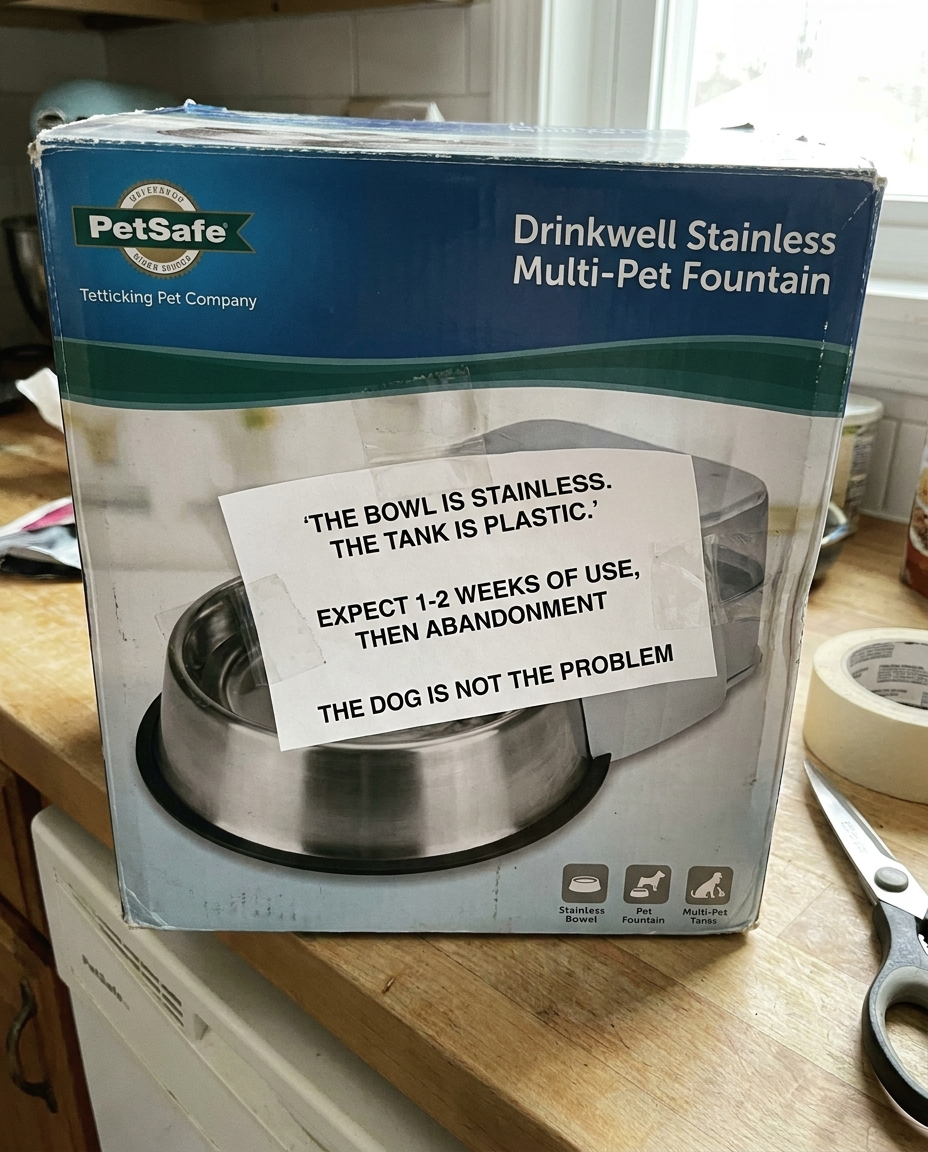
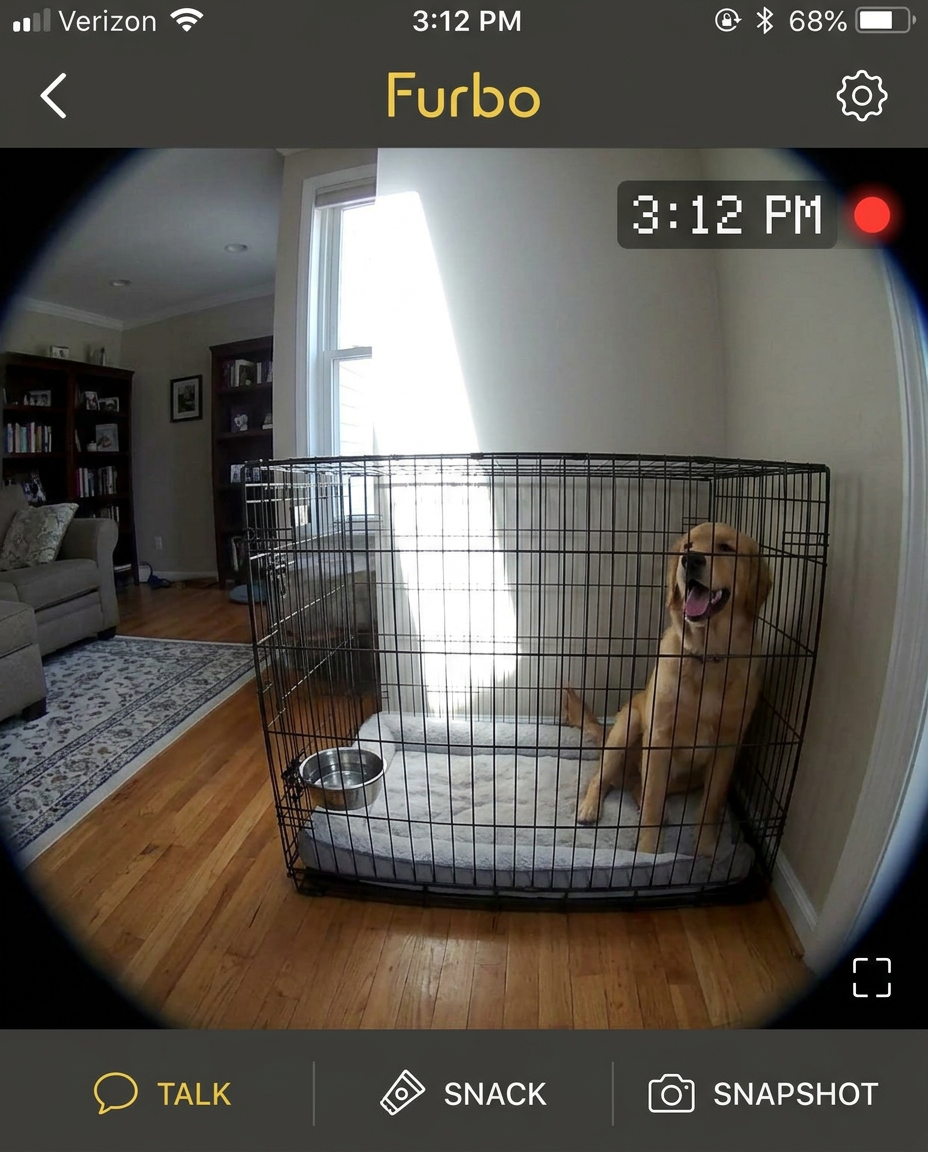
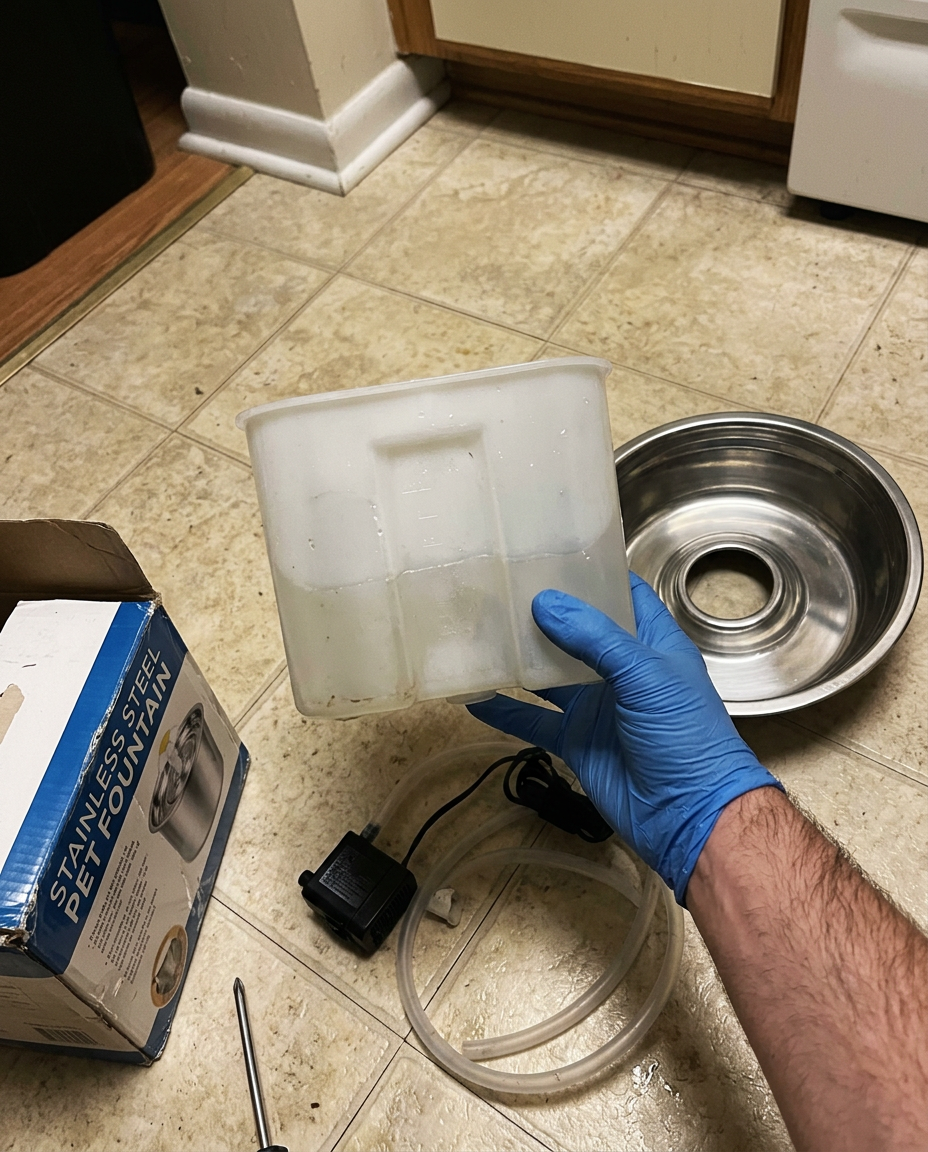
Do not buy your dog a water fountain until you've read the label the "stainless steel" ones should be required to carry. I wrote it myself, with three dead fountains and my receipts in front of me. Every line of it is true, and every line of it explains something that has probably already happened in your house. Here it is. The honest label. "STAINLESS STEEL PET FOUNTAIN. The bowl you can see in the photos is stainless steel. The tank underneath it, where the water actually sits for hours, is plastic. Plastic holds microscopic pores. Pores grow an invisible bacterial film your dog's nose can detect and yours cannot. Expect enthusiastic use for approximately one to two weeks, followed by gradual abandonment. The dog is not the problem." If you've owned a fountain, you just recognized that timeline, because you lived it. The excited first week. The tapering. The day you noticed the water level wasn't moving anymore and the dog was back at the toilet. The moment you decided fountains are a gimmick and your dog is just weird. Your dog is not weird, and fountains are not a gimmick. You bought a bowl with a pump in it, wearing a stainless costume, and your dog's nose read straight through the costume. Let me walk you through it, because once you understand the inspection your dog runs, the entire fountain aisle sorts itself into two piles. The inspection has two parts. Part one is chemical. A dog's nose has around 300 million scent receptors against our six million. Within a couple of hours, still water loses oxygen and grows a bacterial film in the pores of whatever plastic it touches. Bowl, tank, tubing, it doesn't matter that water is technically moving through the system. If it sits in plastic anywhere along the path, it picks up the signature, and the nose flags it at the spout. Part two is ancient. Fifteen thousand years of instinct: still water reads as dangerous, moving water reads as safe. This is the part fountains are supposed to solve, and it's why your dog was excited in week one. The movement passed part two immediately. Then, over days, part one caught up, as the film established itself in the plastic tank, and the nose started overruling the eyes. That's the tapering. That's the abandonment. Your dog didn't get bored. He got informed. Which means the whole product category comes down to one question nobody prints on the box: where does the water sit, and what is that made of? So here's the test, and I want you to actually do it, tonight, with the fountain currently unplugged in your garage. Unscrew it. Take it apart. Find the reservoir, the part that holds the water between drinks. Now look at what it's made of. I did this on my kitchen floor with fountain number two, a $49 bestseller with the word stainless in its title, and I sat there holding a plastic tank like I'd caught it lying to me. Because I had. Fountain number three, the "premium ceramic" one, same autopsy, plastic pump housing and plastic tubing where the water lived overnight. Three fountains, three costumes, one dog telling me the truth the whole time by walking away. Here is the checklist that would have saved me about $150, and it has exactly three lines. One. Real food-grade stainless steel along the entire water path. Not the bowl. The path. Tank, basin, everything the water touches for more than a moment. Steel is non-porous. The film has nowhere to live. This is the line that disqualifies almost everything on the market. Two. Continuous moving flow. This trips the ancient safe-water instinct and keeps the water oxygenated. Most fountains do have this part. It's the cheap part. It's also why they all work for a week. Three. Real filtration, multi-stage, actually replaceable, so what's moving is genuinely clean and stays that way. All three, at the same time. Two out of three is a bowl with special effects. I did not invent this checklist. I found it, after the third autopsy, in an article by a veterinary nephrologist named Dr. Claire Bennett, eleven years in kidney clinics, who explains why this matters more than fountain-aisle disappointment: a dog rejecting his water source doesn't stop drinking, he rations, for years, and the rationing lands silently on the kidneys, which show nothing until around 75 percent of the function is gone. Her article opens with a golden retriever named Murphy, whose owner did everything right, and it walks through the biofilm, the instinct, the kidney math, and the exact plastic-tank construction I'd been unscrewing on my kitchen floor. She got tired of the two-out-of-three market and designed the fountain that passes her own checklist, the FreshFlow, all-stainless path included, and reading her materials breakdown after three autopsies felt like finding the coroner's report for my receipts. My golden, by the way, was the whole reason for the fountain saga, a lifetime bowl-sniffer and toilet enthusiast whose "weirdness" I'd accepted for years. He has been on the all-stainless one since spring. He drinks from it the way he used to drink from the hose, long and unembarrassed, many times a day, and the water level actually drops now, which after three fountains felt genuinely strange to watch. So, the whole post in three sentences, printable, tapeable to the fountain aisle: Ask where the water sits and what that's made of. If the answer contains plastic, your dog will find it, on average somewhere in week two. And if a fountain already failed in your house, the dog was never the problem, the tank was, and the fix is a checklist away. The full breakdown, the mechanism, Murphy's story, and the fountain that passes the inspection are all in Dr. Bennett's article. Nine minutes. Read it before your money moves again. 👉 https://rhykin.com/pages/ff-advertorial-2 P.S. The unscrew test is the most clarifying two minutes in pet ownership. Whatever you own, take it apart and find where the water sleeps. Steel, you're done, congratulations. Plastic, and now you know why the toilet is still winning, and the article explains the rest. 👉 https://rhykin.com/pages/ff-advertorial-2 P.P.S. To everyone whose fountain is currently a very elaborate garage ornament: you were not wrong to try. You were sold two-thirds of the answer. The movement was real. The material was the lie. Read the label they should have printed, then read the nephrologist who explains it, then run the checklist. Three lines. Nine minutes. One dog who finally drinks. 👉 https://rhykin.com/pages/ff-advertorial-2
The water fountain scam
Home to award-winning pet products. Shop premium, vet-approved items that both you and your pets will love. Quality you can trust, for pets that deserve the best.
LEARN MORELike this ad? Make it yours.
Crush rebuilds this exact creative around your product — your brand, your colors, your offer — in about a minute.