Sharon H.
Sharon H. Facebook ad: “Read if your dog stays silent until you open the door.”
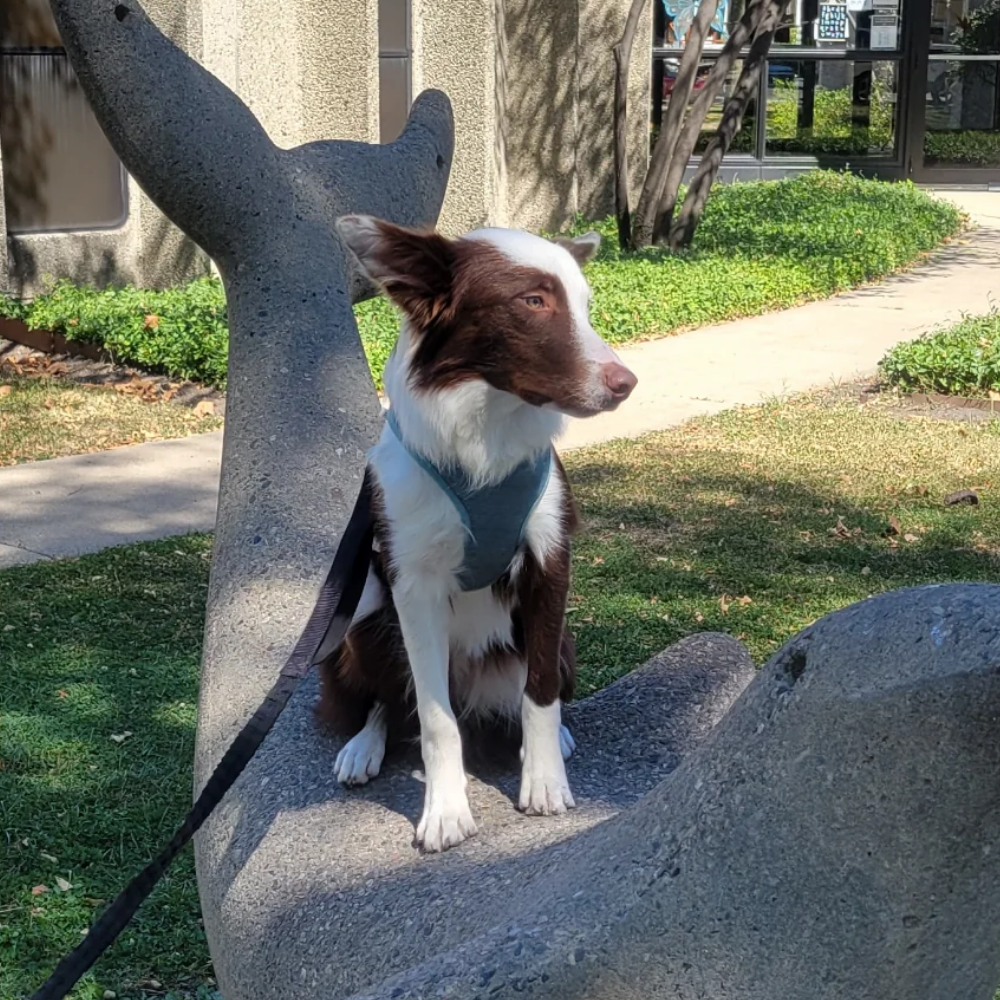
Ran for 1 day, from March 17 to March 18, 2026, the last day Crush saw it.
Run by Sharon H. on Facebook. Crush is not the advertiser and does not verify its claims. See this ad in Meta's Ad Library(opens in a new tab)
Want an ad like this for your product?
Crush makes new ad images for your product from this ad: your logo, your product photo, your offer.
Trials from $19.95 USD, then $79.95 USD a month. Cancel anytime.
About this ad
- Meta Ad Library ID
- 928124679811478
- Platforms
- Facebook, Instagram, Audience Network, Messenger and Threads
- Relaunches
- 0
- Niche
- Pets
Ad text
If you've tried everything for your Border Collie's separation anxiety and the barking still comes back, it isn't because you haven't tried hard enough. It's because there's a second half to this problem that most owners never find out about. I came back from grocery shopping and my neighbor was waiting at the door. She wasn't angry. She was just tired. She said Luna had barked the entire time I was gone. Not a few minutes at the start and then quiet. The whole time. Every minute I was in that supermarket, Luna was at the door calling for me. I thanked her and apologized and carried my bags inside. And then I sat down on the kitchen floor next to Luna — who was wagging her tail like nothing had happened, perfectly happy now that I was back — and I just felt awful. Not embarrassed. Awful. Because I already knew about separation anxiety. I had read about it, researched it, joined groups about it. I wasn't surprised by what my neighbor told me. I had been hearing it through the door myself every single time I tried to leave. The whining starting before I even reached for my keys. The barking that kicked in the moment the door clicked shut. I knew it was happening. I knew it was loud. I just hadn't been able to stop it yet. And the part that hurt the most wasn't the barking. It was what the barking meant. Luna wasn't being difficult. She wasn't acting out. She was distressed. Every single time I left — even for twenty minutes, even for something as ordinary as groceries — she genuinely suffered until I came back. Luna is the most loving dog I have ever known. She is calm and gentle and completely devoted. She follows me from room to room. She leans against my legs when I sit on the floor. She watches me with this steady, trusting expression that makes me feel like the luckiest person alive when I'm home and the worst person alive the moment I try to leave. Because I could feel it starting before I even touched the door handle. She'd pick up on something — maybe the keys, maybe me putting my shoes on, maybe just a shift in the atmosphere she'd learned to read better than I realized — and she'd start. A low whine first. Then following me to the door. Then the full barking that I could still hear faintly from the street as I walked to the car. I had been trying to fix it for months. I want to be clear about that because I know how this sounds and I wasn't ignoring it or hoping it would pass on its own. I had taken her for long walks before leaving so she'd be tired. I had left an old t-shirt of mine in her bed so she'd have my scent. I had a white noise machine going in the hallway. I had tried putting lavender oil on her blanket because someone swore by it. I had a Kong I stuffed and froze every night to leave with her when I went out. I had also tried the thing where you scramble your leaving triggers — putting your shoes on and then staying, picking up your keys and putting them back down, so she can't predict from your routine when you're actually about to go. I did that for two weeks. Luna figured it out anyway. Border Collies are too smart for that trick. She just started watching my face instead of my hands. The Kong lasted ten minutes. And then the barking started. All of it helped a little around the edges. None of it solved the thing in the middle. And I understood why, at least intellectually. Border Collies are not dogs who do well alone by nature. They were bred for constant partnership — to work alongside someone, to be connected, to have a job that runs through another living thing. When that connection closes behind a door they don't understand why or when it's coming back. And a brain wired for that kind of closeness, left suddenly alone, doesn't sit quietly and wait. It panics. It calls. It stands at the door and keeps calling until the person comes back. Understanding that didn't make it easier to go to the supermarket. I wish someone had explained this part to me sooner. Everything I had been doing — the walk, the t-shirt, the lavender, the Kong, the scrambled routine — was aimed at the same problem. How Luna felt about me leaving. Managing the emotional response to the door closing. And all of that matters. I'm genuinely not saying it doesn't. But there is a second problem sitting underneath the first one, and I had been so focused on the emotional side that I had completely missed it. The second problem is what happens in her brain once I'm gone. Not how she feels about the leaving — what her brain actually does in the silence after the door clicks shut. And that part has nothing to do with how much she loves me or how anxious she is about separation. It has to do with whether there is anything in that room that her brain can actually lock onto and run. A Border Collie's brain does not idle. It is one of the most intelligent working breeds on the planet — developed specifically to think, to track, to make independent decisions, to solve problems without a human directing every step. That intelligence doesn't switch off when the house goes quiet. It keeps going. And a brain that intelligent, left with nothing to engage it, will generate its own stimulation. In a dog who loves you and is already anxious about where you went, that stimulation is almost always more anxiety. More barking. More standing at the door. The Kong addresses hunger. The walk addresses physical energy. The t-shirt addresses the emotional loss of my scent. None of them address the cognitive gap — the part of her brain that is still running, still looking for something to do, still searching for a loop to run in the absence of any better option. I finally booked a dog trainer. Not because I had high hopes by that point — I had read enough to be cautious of anyone who promised a quick fix — but because I had genuinely run out of things to try on my own and I needed someone in the room to tell me what I was missing. She came to the house, spent some time with Luna, asked me to walk her through a typical morning. And about ten minutes in she stopped me and said something I have thought about every day since. She said everything I had been doing was right. And then she said — you've been solving the emotional half of the problem. There's a cognitive half that nobody talks about. And until you solve that one too, the barking is going to keep coming back no matter how tired she is or how much she can smell you on the bedding. She explained that dog behaviour specialists who work specifically with herding breeds come back to the same recommendation again and again for separation anxiety in this kind of dog. Not medication, not more desensitization training, not a better Kong recipe. An interactive dog ball. Something specifically designed for a brain like Luna's — high intelligence, high drive, needs a problem to solve. Something that moves unpredictably when she engages with it. That rolls at odd angles, bounces in ways she can't fully anticipate, behaves enough like something alive that the tracking part of her brain locks on to it and stays locked. That part of her brain — the part that was bred to manage moving things — doesn't co-exist easily with anxiety. When it's running a proper loop, it occupies so much of her cognitive attention that there isn't space left for standing at the door and falling apart. She's not distracted from the anxiety. She's genuinely elsewhere. Doing the thing her brain was built to do. The key, the trainer said, is timing. Don't give it to her at the door as a last-minute consolation. Introduce it fifteen minutes before you leave while you're still home. Let it become interesting while you're still in the room. And then leave while she's still working it. The door closing stops being the beginning of the emptiness because she's already somewhere else before you go. I had tried balls before. I said that. She said not like this one — the unpredictability is everything. A ball that rolls straight and stops is boring in four minutes. A ball that bounces back at odd angles, that moves differently every time she touches it, that she genuinely cannot predict — that keeps the brain asking the next question. And a brain asking the next question isn't a brain standing at the door barking for the entire duration of a grocery run. I ordered it that evening with the same quiet skepticism I had about most things at that point. The first morning I put it down about fifteen minutes before I needed to leave. Luna sniffed it, nosed it, and it bounced back at an angle she hadn't expected. She followed it. Nosed it again. Different direction. She was completely absorbed by the time I picked up my keys. I left while she was still playing. I closed the door. I stood in the hallway and waited. Nothing. No whining. No barking. Just quiet. I didn't rush the shopping. First time in months I just did the shopping like a normal person and came home. My neighbor was not waiting at the door. Luna was lying on the floor near the ball when I walked in, calm and settled, tail wagging because I was back but not frantic, not distressed, not the dog who had been barking for forty minutes while I chose between two types of pasta. It took about a week to become fully reliable. Some mornings were better than others at first. But by the end of the week the pattern was clear — Luna knew the ball came out when I was getting ready to leave, and somewhere in that association the leaving stopped being only about loss. I still do the walk in the morning. I still leave my t-shirt in her bed. Those things are part of her routine now and they matter to her. But I understand now that they were only ever addressing half of what was happening. The ball addresses the other half. And that was the half that the barking was coming from. The ball looks exactly the same as the day I bought it. Weeks of daily use — nosed into walls, launched across floors, carried around the house between sessions. It has not fallen apart the way everything else did. That matters more than I expected it to. Because I had run out of patience for things that stop working. I still feel something when I close the door. I don't think that fully goes away when you love your dog the way I love Luna. But it's different now. It's not the feeling of leaving her alone with nothing. It's just the ordinary missing that comes with having somewhere to be. I went grocery shopping yesterday. Came back, walked upstairs, no one was waiting. Luna was calm when I came in. That was it. If you already know about separation anxiety, if you've already tried the walks and the Kong and the t-shirt and none of it has solved the barking — it's probably not that you haven't tried hard enough. It might just be that you've been solving the emotional half and missing the cognitive one. Give her the ball before you leave. Let her brain have somewhere to go. That's the part that was missing.
Where the ad sends people
getpawdash.co
Read if your dog stays silent until you open the door.☝️
PawDash
Shop now: getpawdash.co(opens in a new tab)