
Inactive· since Apr 26, 2026
- 3
- days it ran
- 0
- relaunches
Ad copy
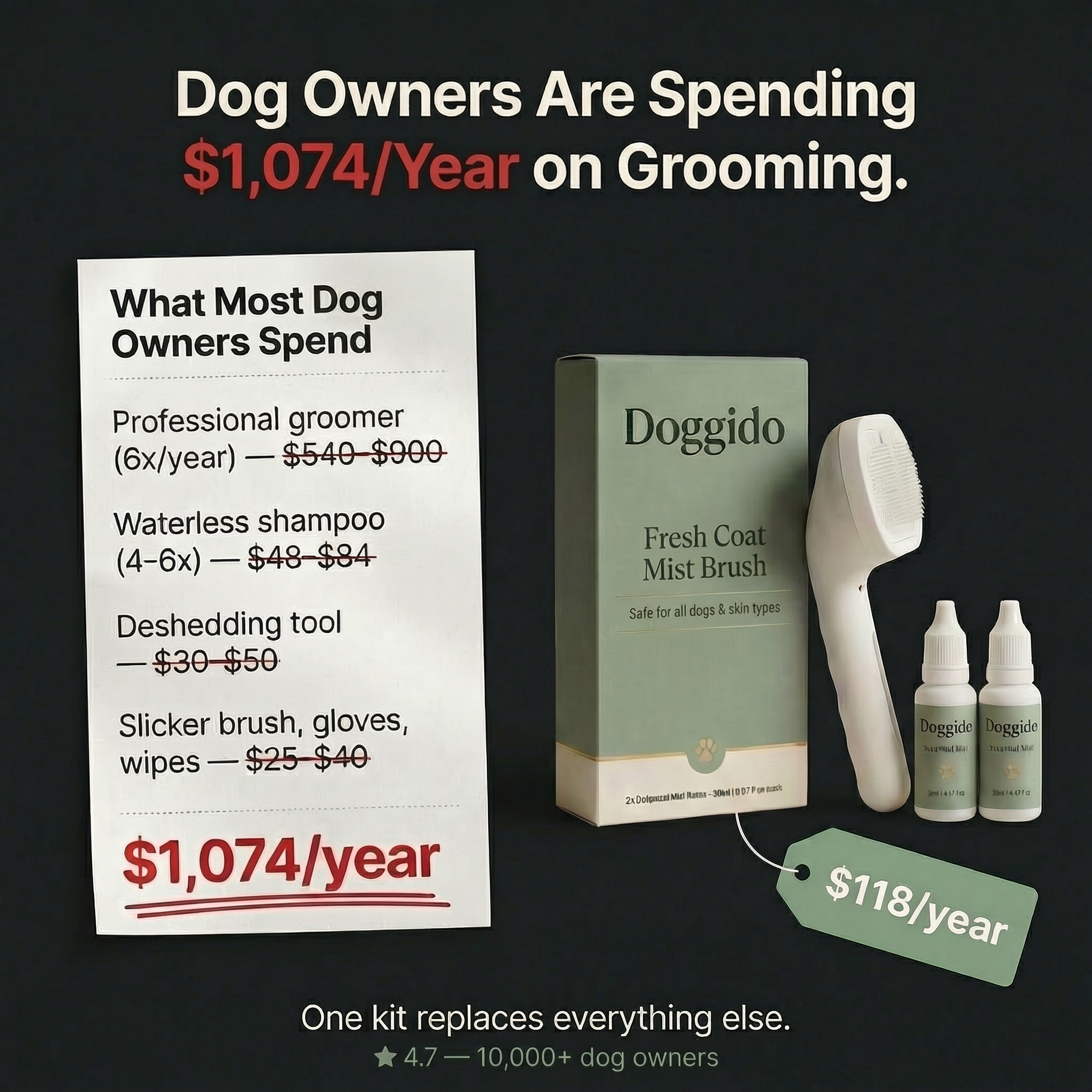
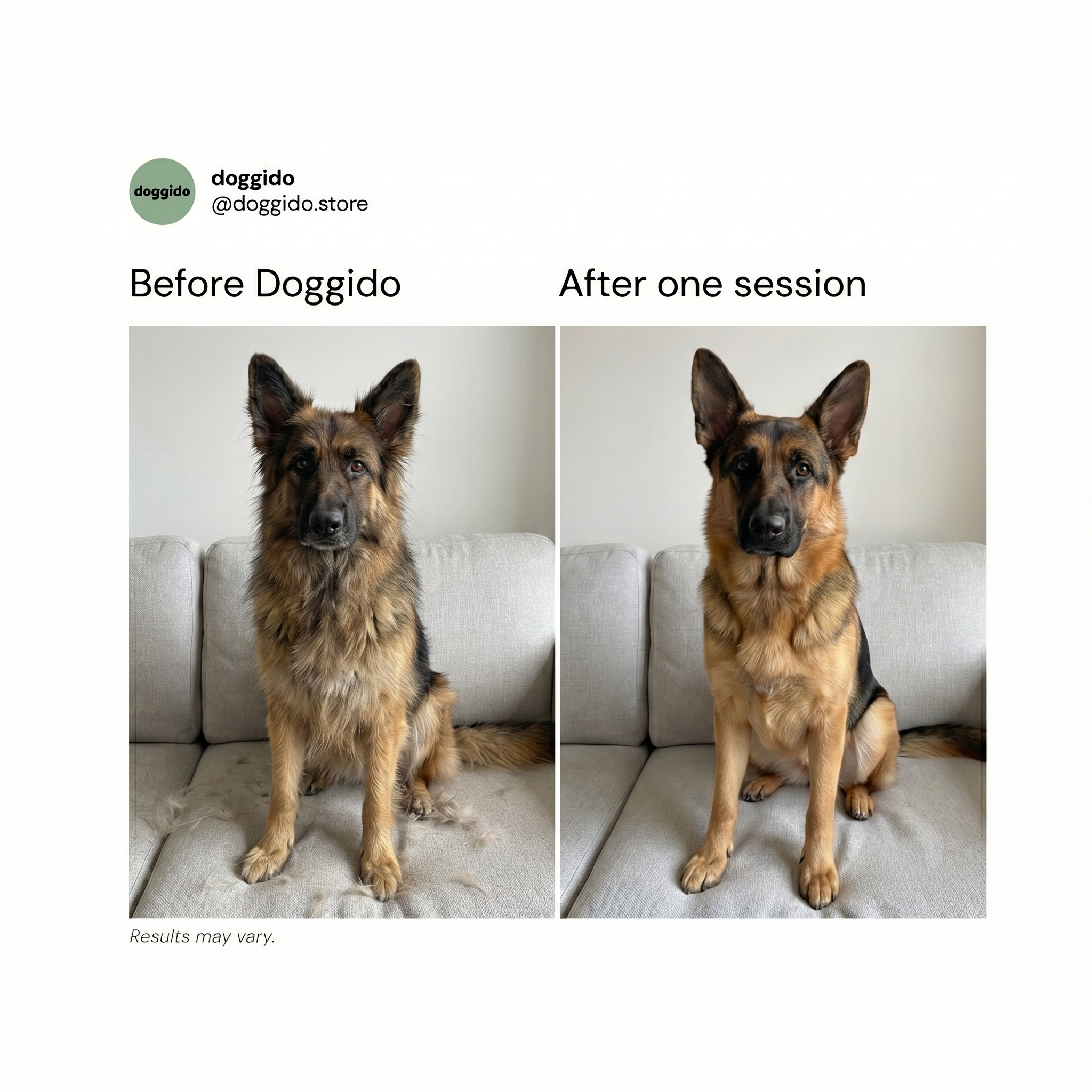
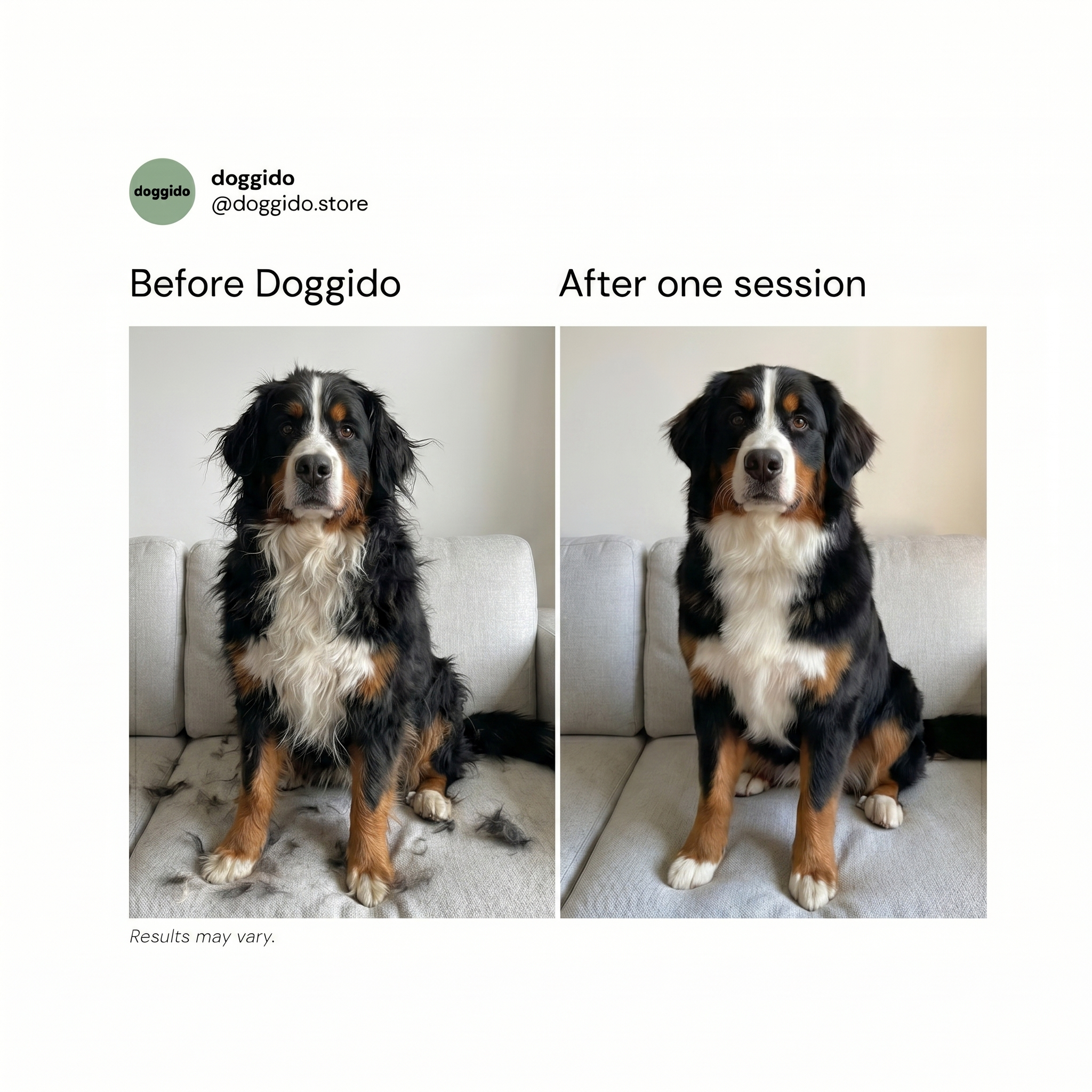
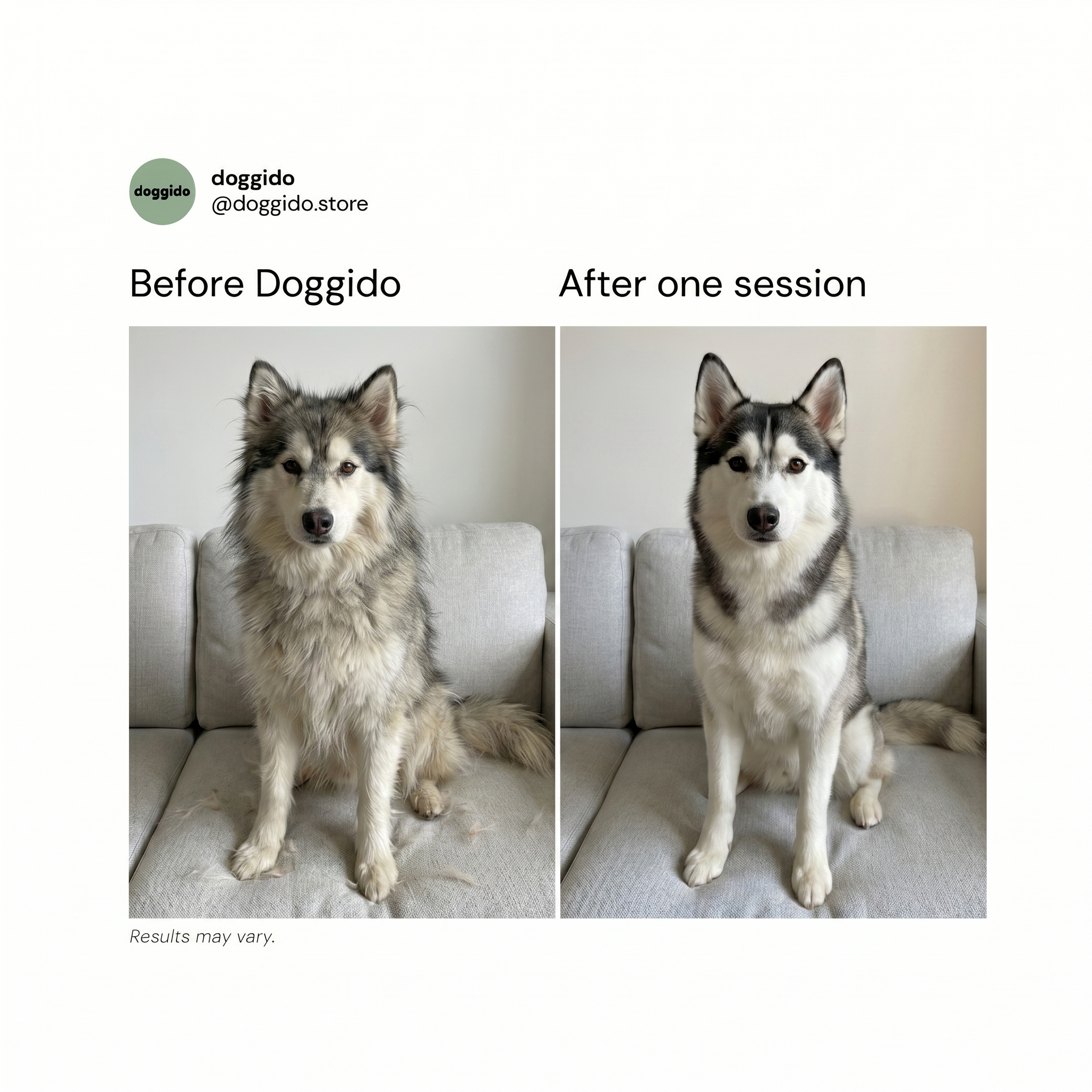
I vacuumed the entire house on Sunday. Every room. Twice. Tuesday morning I walked into my living room with my coffee and counted four tumbleweeds of fur on the hardwood. Four. In 36 hours. One was the size of a small apple. I stood there in my pajamas, holding my coffee, and felt the very specific exhaustion of someone who has been losing the same war for two years. I have a Husky. Of course I have tumbleweeds. Everyone tells you Huskies shed. They warn you. They show you pictures. They send you Facebook reels of "what owning a Husky is really like." Nobody tells you that you can vacuum twice on a Sunday and have visible fur tumbleweeds on Tuesday morning. For most of those two years, I'd believed I just had a heavy-shedding breed and that's how it was. Huskies shed. That's the deal. I'd accepted vacuuming every single day as the cost of owning this dog. I'd accepted lint rollers and air purifiers and special vacuum bags and grooming wipes between baths. I'd accepted my floors looking dusty within hours of cleaning them. That was wrong. And it took a conversation with my dog's groomer to find out how wrong. I took him in for his quarterly de-shed last month. New groomer — mine had moved. The new one ran her hands through his coat at intake, parted the fur near his shoulder, looked at his skin, and asked me what I was using on him. I told her. The shampoo from the pet store. The conditioning rinse. The undercoat rake twice a week. She nodded like she'd had this conversation a thousand times. "Excessive shedding isn't a brushing problem," she said. "It's a skin barrier problem. And what you're using on him is making it worse." She walked me through it. A dog's skin has a thin protective layer — a lipid barrier that locks in moisture and keeps the coat strong. When that barrier is healthy, follicles hold hair properly. Even Huskies, with their double coats and notorious shedding cycles, shed at a manageable, predictable rate when the barrier is intact. When the barrier breaks down — from harsh shampoos, over-bathing, allergens, stress — the skin can't hold moisture. Follicles weaken. Hair falls out faster than it should. The undercoat releases continuously, twenty-four hours a day, instead of in normal seasonal cycles. That fur doesn't fall in one shedding session. It releases over hours and days. Some becomes airborne. Most of it accumulates on hard surfaces — and Huskies have so much of it that the strands collect into rolling tumbleweeds within hours of vacuuming. Damaged barrier. That was the root cause. Two years of daily vacuuming had been treating a symptom that nothing in my routine was addressing at the source. And the worst part? My grooming routine had been actively maintaining it. Most pet store shampoos contain sulfates and harsh detergents that strip the lipid barrier with every wash. The "gentle" ones too. Even the natural-marketed ones. "It's like brushing your teeth with bleach," she said. "Sure, it 'cleans' — but it's destroying everything underneath." That was the moment two years made sense. Every bath I'd given him had stripped his natural oils. The barrier never had a chance to recover. Sebum overproduction kicked in to compensate. Inflammation followed. Follicles weakened. Shedding accelerated to constant — not seasonal, not cyclical, just constant, all year, every day. I'd been paying to make him shed more. She told me the problem has two halves. Which is why no brush, no shampoo, no de-shedding tool had ever fixed my tumbleweed problem. Half one: the barrier can't rebuild itself if you keep stripping it. Every sulfate-based shampoo, every harsh wash resets the damage. The skin never gets to recover. Half two: even if you stop stripping it, the barrier needs active topical support to rebuild. Lipid-supporting compounds delivered at the skin level — not on the hair, not absorbed through food. Directly at the skin, where the barrier exists. Most products do neither. They strip and don't deliver. Even the most aggressive de-shedding tools — they just rip out hair from the surface. They don't address why the undercoat is releasing 24 hours a day. She told me about a grooming system her salon had started recommending for heavy-shedding breeds — Huskies especially. A Calm Clean grooming system from Doggido. Not another brush. A different category entirely. A botanical mist sprays through the brush as you use it. Lavender, chamomile, coconut oil, aloe vera, tea tree oil. pH-matched to canine skin. Sulfate-free. The mist contains lipid-supporting compounds that integrate into the barrier instead of stripping it. Chamomile and aloe calm the inflammation that drives the over-shedding cycle. The mist penetrates through the guard coat down to the skin level. That's the delivery half. Then soft silicone bristles — long, flexible, completely different from any wire rake or undercoat blade — reach through the guard coat into the undercoat, where 90% of the loose fur is sitting. They pull out the dead fur trapped against the skin in one session, instead of letting it fall out into the house over the next 72 hours. And with one push of a button, all that captured fur ejects straight into the trash. No mess. No clogging. No fur flying around the living room. The mist rebuilds the barrier. The bristles capture the loose fur before it can become a tumbleweed. Together. I wasn't a bad dog mom. My brushes were bad. My shampoo was bad. And nobody had told me. This wasn't a "buy a better de-shedding tool" problem. Or a "buy a stronger vacuum" problem. The whole category of solutions I'd been using was wrong. I'd been trying to clean up faster instead of stopping the supply. I did the math on the way home from that appointment. Two years of daily vacuuming. Two replacement vacuums at $400 each. Three failed brushes — undercoat rake, slicker, deshedding blade — averaging $40 each. Premium pet store shampoo at $30 a bottle, two a month — $720 a year. Air purifier replacement filters every three months — $150 a year. Carpet cleaning twice a year — $300. A groomer visit costs $80-100 for a Husky de-shed, and I'd been going every six weeks. That's $850 a year just for groomer visits. Conservative two-year total: over $3,200 spent on a problem that was getting worse instead of better. I ordered the Calm Clean system that night. The first session, I sat on the floor with him and pressed the mist button. He stretched into it. The silicone bristles moved through his double coat without pulling. I could feel them reaching the skin in a way no brush I'd ever used had — including the undercoat rakes that pulled hard enough to make him flinch. When I pressed the eject button, I stopped counting passes. The clump that came out was bigger than anything any of my brushes had ever produced. Dense undercoat — pale, fluffy, the texture of wool. Not surface guard hair. Actual fur that would have rolled across my floor as a tumbleweed within 72 hours, captured before it could. I did ten minutes every other day. On the floor with him. While the TV was on. Week one, I noticed something different. Tuesday morning I walked into the living room and there were two tumbleweeds. Not four. Two. Week three, the tumbleweeds were smaller. The hardwood looked vacuumed for full days at a time. Week six, I went four days without vacuuming as an experiment. The floor was acceptable. Not pristine, but no tumbleweeds. The constant stream of fur had slowed to something manageable. Eight weeks in, I'm vacuuming three times a week. Not twice a day. Three times a week. The barrier is rebuilding. The undercoat releases at a normal seasonal rate now instead of continuously dumping into my house. The strangest part is what came with it. My dog smells different now. The botanical mist leaves him fresh in a way I didn't expect — lavender, coconut, something clean and natural. My husband commented last week that the house smells different. He couldn't quite place it. His coat looks different too. Fuller. Glossier. The double coat that used to look matted at the underlayer now looks healthy through and through. Strangers at the dog park ask me what I'm doing differently. And — naturally — I haven't given him a proper bath in two months. He doesn't need it. The mist keeps him cleaner than weekly baths ever did, without stripping the barrier I'd just spent two months rebuilding. If you've vacuumed your house and watched the tumbleweeds come back within 36 hours — I promise it's not your vacuum. It's not your effort. It's a damaged skin barrier that's releasing fur into your home 24 hours a day, and a brush that physically can't reach where it's coming from. The Calm Clean system isn't a better brush. It's a different category entirely.
Like this ad? Make it yours.
Crush rebuilds this exact creative around your product — your brand, your colors, your offer — in about a minute.