Dr. Stephen Joseph
 Facebook ad: “The heartbreaking reality for seniors with vertigo”
Running for 77 days since August 25, 2026. Crush last saw it on November 10, 2026.
Run by Dr. Stephen Joseph on Facebook. Crush is not the advertiser and does not verify its claims. See this ad in Meta's Ad Library(opens in a new tab)
Make your own version of this ad
Crush makes it, launches it in your own Meta ad account, scales the winners and pauses the losers.
About this ad
- Meta Ad Library ID
- 930098782853889
- Platforms
- Facebook, Audience Network and Messenger
- Relaunches
- 0
- Niche
- Jewelry & Watches
Ad text
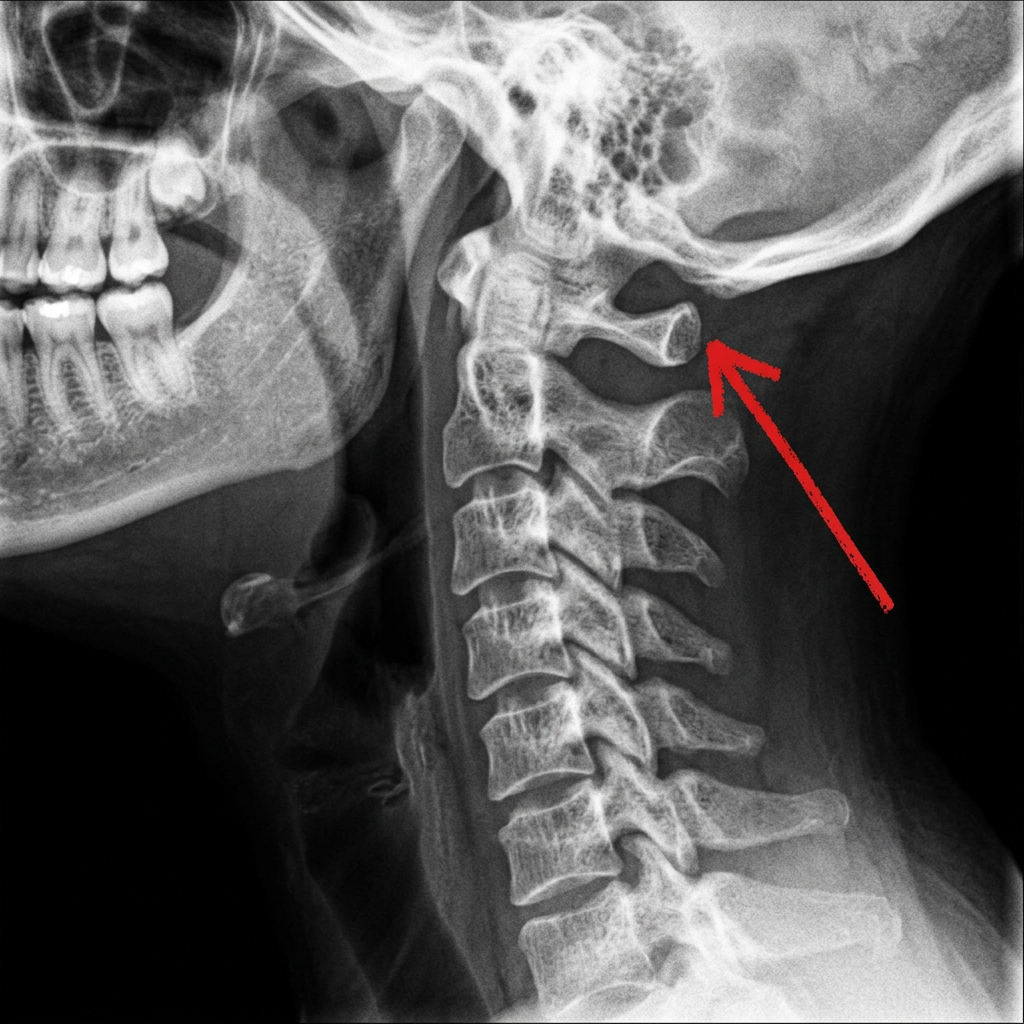
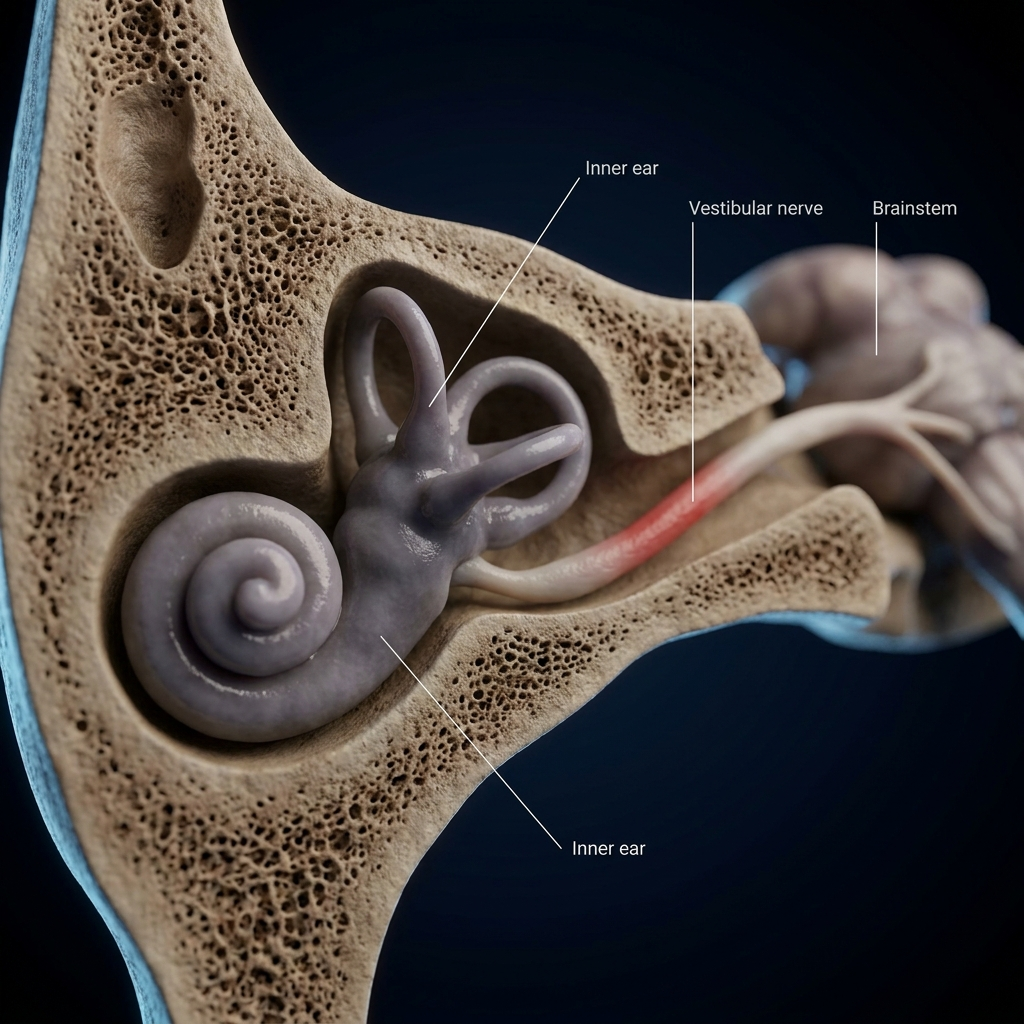
When a senior with vertigo dies in a car crash, nobody writes "vertigo" on the report. They write failure to yield. Or failure to maintain lane. Or driver error. Or, on the certificate, blunt force trauma. Vertigo is almost never the official cause of anything — even though it's very often the actual one. There is a reason for that, and it has nothing to do with paperwork. It has to do with where vertigo does its real damage. And once you understand where, you understand why the Epley maneuver, meclizine, and eleven appointments have never once "fixed" anyone — and why a Nobel Prize awarded in October 2021 may matter more to you, personally, than anything your doctor has said to you in an eight-minute visit. I want to tell you what vertigo actually is. Not the textbook definition. The real one. Vertigo is a disease of signal integration disguised as a disease of the inner ear. The loose crystals are the symptom you can name. They're the thing that shows up when they tip you backwards on the examination table. They're what the positional test is looking for. They're what every treatment in the standard protocol is built to move. But the actual damage — the damage that takes driving, takes stairs, takes choir, takes weddings, takes your own front door, and eventually takes lives — is happening somewhere else entirely. Not in your ear. In four small muscles at the base of your skull, and in the cluster of brainstem cells that has to decide, forty times a second, which of your senses is telling the truth. Because balance is not a sense. Balance is a calculation. Your brainstem runs it continuously, using three separate feeds. Your inner ear reports how your head is moving. Your eyes report where the horizon is. And the deep muscles at the base of your skull — four small ones behind each ear — report where your head is sitting on your neck. Three feeds. One answer. That answer is what you walk on. Now here is a number that should stop you cold. In 2001, researchers at Christian Medical College in Vellore published a study in Neurology India that counted the position sensors — muscle spindles — packed into human muscle tissue. Your trapezius, the big muscle across the tops of your shoulders, the one that gets sore, the one that every neck massager ever sold is designed to sit on, has about 2.2 spindles per gram. The obliquus capitis inferior — one of those four small muscles, two inches higher, at the base of your skull — has 242. Not twice as many. Not ten times. More than a hundred times. That narrow band behind your ears is, gram for gram, one of the densest sensory tissues in the entire human body. It is not really a muscle. It is a reporting instrument. And it feeds into the exact same brainstem neurons your inner ear feeds into. When those muscles are loose and reporting accurately, the calculation works. You roll over and the room stays still. You reach for the top shelf and nothing happens. You stand up without counting first. You drive at night. You go to the market on Saturday. You climb your own stairs without a hand on the rail. But here's what 5, 10, 15 years of tension does to that tissue. It corrupts it. Stress. Posture. Sleeping badly. Forty years over a desk, a wheel, a sink. And most of all — and this is the part nobody ever explains to a dizzy woman — bracing. Tensing against the dizziness itself. Every single time the room turns and you stiffen your neck to survive it, you tighten the exact muscles whose accuracy you depend on to stay upright. A clamped muscle sends distorted data. So now your neck is telling your brainstem one thing and your inner ear is telling it another, and your brainstem has no way to know which one is lying. It cannot resolve a contradiction it cannot diagnose. So it does the only thing available to it. It panics. That panic is the spinning. That panic is the nausea. That panic is your hand going out for a wall. And your brain, no longer able to trust two of its three feeds, starts leaning entirely on the third — your eyes. Which is why supermarket aisles feel worse. That is why patterned carpet feels worse. That is why a dark parking lot feels worse. That is why you stopped driving at night a year before you stopped driving. Your postural reflexes run on that same corrupted feed — which is why the correction that used to catch you when you stumbled now arrives half a second late. That half second is the fall. And the drug they gave you to quiet the panic is a sedating antihistamine — which is why the woman in the crash report was not being careless. She was medicated, unsteady, and running a balance calculation on two bad inputs, in a car, at a junction. It's all the same disease. The spinning. The nausea. The unsteadiness. The night driving. The stairs. The fall. They are not six separate complications of getting older. They are six faces of one problem — a calculation running on corrupted data. This is not fringe, and it is not hidden. Cervical proprioceptive signals converging with vestibular and visual input at the vestibular nuclei is standard neuroanatomy — a 2025 review in Frontiers in Neurology states it in exactly those words. It is in the textbooks. Your doctor knows this. Your doctor has known it since medical school. Now here is the part that should make you angry. There is not a single treatment in the standard vertigo protocol that targets those muscles. The Epley maneuver doesn't. It repositions crystals in the inner ear. Meclizine doesn't. It sedates the inner ear. Betahistine doesn't. It acts on the inner ear. Vestibular rehabilitation doesn't. It retrains you around the inner ear. Even surgery, at the far end of the road, is performed on the inner ear. The standard protocol manages the one feed it can see, while the tissue that actually decides whether you keep your car, your stairs, your Saturdays and your own front door quietly goes on reporting garbage. And then, when a new symptom surfaces, they book you back in six months to check on it. That is not treatment. That is a carousel. I have been calling it the six-month carousel — and if you have vertigo, you have been riding it for years. You started with the Epley. Then they added something for the nausea. Then the dose went up, because it "wasn't enough anymore." Then somebody in a Facebook group told you to buy a neck massager, and you did, and it worked beautifully for five days. Then the grab bars went in. Then you stopped driving at night, and nobody wrote that down anywhere, because there is no box on any form for a woman quietly giving up half her week. Then somebody used the word walker, gently, in a way that made your stomach turn over. Maybe right now, this morning, you sat on the edge of your bed and counted to ten before you stood up. And you can't remember when you started doing that. And the conversation at every appointment is the same. Balance recovery is slow. These things take time. Keep doing what you're doing. I'll see you in six months. Recheck. Recheck. Recheck. Never fix. Never finish. Just six more months. And six more. And six more. Forever. Your doctor is not the one who is going to get you off this carousel. I want to say that carefully, because I respect doctors. Most of them are good people working inside a broken machine. But I have to be honest with you about how the machine works. Your doctor has 8 minutes with you. Maybe 12 if you're lucky. And your doctor was trained inside a system that files dizziness under the ear, files the ear under ENT, files the nerve under neurology, files the neck under physical therapy — and files the place where all three converge under nobody at all. In 2008, a physiotherapy researcher named Susan Reid, at the University of Newcastle in Australia, published something that should have changed all of this. It was a randomized, placebo-controlled trial in the journal Manual Therapy. Thirty-four dizzy patients. The treatment was applied to the upper cervical spine — the base of the skull. Not the ear. Nobody touched anyone's ear. The Dizziness Handicap Inventory is the standard measure of how far dizziness has taken over a person's life. In the treated group it fell 18 points. In the placebo group, 2. Twelve weeks later the treated group was still down almost 20 points. The placebo group had moved 6. She did not stop there. In 2014 she published the long-term outcomes of that trial in the same journal, following those patients out to twelve months. That was eighteen years ago. It has been cited ever since. It has been replicated — a 2022 randomized controlled trial in the journal Life, using functional massage and mobilization of the top three segments of the neck, found patients' worst dizziness dropped by nearly 50 points on a 100-point scale within 48 hours, still down a month later, with what the authors called a large effect size. And it is still not what you get handed at your appointment. Not because anyone is hiding it. Because clinical guidelines move on a twenty-to-thirty-year lag. Because cervicogenic dizziness has no single agreed diagnostic test, which makes it nobody's specialty and therefore nobody's responsibility. And because there is no pharmaceutical company on earth with $400 million and a patent to spend on telling your ENT about a muscle. I'm telling you this because Susan Reid is not going to be at your appointment, and there aren't enough clinicians who work this way to go around. Roughly one in three adults over 65 has some form of vestibular dysfunction. There are a few thousand physiotherapists worldwide who genuinely treat the cervical contribution to dizziness. You are not going to get one of them. You are going to get the family doctor who has eleven minutes for you and someone else in the waiting room. So you are going to have to take the lead. Not by firing your doctor. Not by stopping your medication. Not by doing anything reckless. By learning what the system was never organized to teach you — how to support the one tissue that determines whether the next 20 years look like your mother's last 5, or whether you drive yourself to your granddaughter's wedding and dance at it. The base of your skull. In October of 2021, a researcher named Dr. Ardem Patapoutian, at Scripps Research in California, was awarded the Nobel Prize in Physiology or Medicine. He shared it with Dr. David Julius. Patapoutian's discovery was a tiny mechanical doorway on the surface of human cells called PIEZO2 — the protein your body uses to convert physical position into a nerve signal. PIEZO2 is what lets you touch your nose with your eyes closed. It is the sensor inside every muscle spindle in your body — including all 242 per gram of them at the base of your skull. But that wasn't why it won a Nobel Prize. It won a Nobel Prize because of what happens to people who don't have it. People born with a non-functioning PIEZO2 gene cannot tell where their limbs are in space. They cannot stand steady with their eyes closed. And their inner ears are completely, perfectly normal. That is the whole argument in one sentence. A person with a flawless inner ear, unable to stand up straight, because the position-reporting system failed. Now here is the other half. In 1914, the Nobel Prize in Physiology or Medicine went to Robert Bárány, in Vienna, with the citation: "for his work on the physiology and pathology of the vestibular apparatus." That is the inner ear. That is the feed medicine has spent the last hundred and eleven years perfecting its treatment of. The Bárány Society — which to this day writes the diagnostic criteria for dizziness disorders used worldwide — is named after him. Two separate Nobel Prizes. 1914 and 2021. One hundred and seven years apart. One for each of the two feeds that have to agree before you can safely cross a room. Medicine treats the 1914 one exhaustively. Almost nobody treats the 2021 one at all. I want to be careful and honest with you here, the way I wish more people in this industry were. This is not a cure for vertigo. There is no cure for vertigo. It is not a replacement for working with your doctor. If loose crystals are your problem, the Epley maneuver is a genuinely good treatment and you should keep doing it. The hair cells your inner ear has lost to age are not coming back — not at 60, not at 40, not ever, in humans. And the trials on treating the neck are real, randomized and placebo-controlled — and they are also small. Thirty-four patients. Forty patients. That is meaningful evidence, not overwhelming evidence. Those trials tested a trained clinician's hands, not a device. Anybody who tells you that anything cures vertigo is lying to you, and you should close their page immediately. But what this research does support is something far more important than another miracle claim. That there is a real, published, placebo-controlled, Nobel-underwritten mechanism for the second of the two feeds your balance runs on. A mechanism your doctor was almost certainly never trained to treat, because it sits in the gap between three specialties and belongs to none of them. And one that involves muscle, not molecules — which is precisely why nobody has spent a fortune marketing it to you. This is where VertiClear Pro comes in. I'm not going to insult your intelligence with a "secret formula" pitch. You've seen too many of those. The $39 massager with 12,000 five-star reviews and "doctor designed" on the box. The TENS unit that says "used by physical therapists." The $200 "medical grade" collar from the shop out by the highway. The vertigo drops. The magnetic bracelets. The herbal blend with a mountain on the label and a monk in the video. The ear-pressure gadget. You've been burned. So have your friends. So has everyone in your support group. I'm going to do the opposite. I'm going to tell you exactly what it does, exactly where, and exactly why — and where the evidence stops. VertiClear Pro is built around one decision that everything else follows from: four pads seated at the suboccipital line. That is the narrow band directly behind each ear and along the base of the skull. Not across the shoulders. This is the entire reason the cheap ones fail — a pad two inches too low is stimulating tissue with 2.2 position sensors per gram instead of tissue with 242. It will feel wonderful. It will do nothing whatsoever for your balance. That is not a manufacturing flaw in those products. It is where they were designed to sit. But placement alone is only one piece of the picture. Your brainstem has multiple requirements before it will re-weight three feeds. So the device runs a stack of components, each one chosen because there is published research behind either the tissue it targets or the effect it produces. Suboccipital pad placement — Kulkarni, Chandy and Babu, Neurology India, 2001, counted 242 muscle spindles per gram in obliquus capitis inferior, 190 in obliquus capitis superior, and 98 in each rectus capitis posterior, against 2.2 in trapezius and 1.4 in latissimus dorsi. The paper describes the suboccipital group as having "extreme high spindle density." This is the tissue the pads sit on. Electrical stimulation — gentle pulses calibrated to interrupt overactive firing without contracting the muscle. Enough to break the alarm loop, not enough to make your head nod. Therapeutic deep heat — heat that penetrates to the muscle rather than warming skin. This is the component the cheap devices skip, and it is the single reason a massage helps until dinner and a chiropractic adjustment helps until Thursday. Interrupt the firing without releasing the guarding and the clamp returns within hours. Targeted mechanical massage — six levels, on those same four muscles. Carrasco-Uribarren and colleagues, in the journal Life, 2022, applied functional massage and mobilization to exactly these segments — C0-1, C1-2, C2-3 — in forty dizzy patients. Worst dizziness dropped by nearly 50 points on a 100-point scale at 48 hours, was still down at one month, with a large effect size, d = 1.28. All three at once, not one at a time — because the trials that worked did all three at once. Reid, Rivett, Katekar and Callister, Manual Therapy, 2008: thirty-four patients, randomized against placebo, upper cervical treatment, Dizziness Handicap Inventory down 18.1 points against 2.2 in placebo, still down 19.7 at twelve weeks against 6.5. Reid and colleagues published the twelve-month follow-up in the same journal in 2014. Fifteen minutes — the session length is built around what a person will actually do every morning for three months, because that is the variable those clinic trials could never solve. Every single day, at home — this is the part that matters most and gets discussed least. The published trials delivered three sessions, or six, in a clinic, at over a hundred dollars a visit. Central vestibular compensation — your brainstem's ability to re-weight three feeds and rebuild a stable world around a damaged ear — does not run in six visits. It runs over weeks of accurate daily input. Nobody had solved getting that into a woman's own kitchen every morning. Nothing entering the bloodstream — no sedation, no anticholinergic load, no interaction with anything you're already taking. Meclizine appears on the American Geriatrics Society's Beers list of medications older adults should avoid, and one of the documented reasons is increased fall risk. This has none of that, because it isn't a drug. Nothing suppressed — and this is the philosophical difference. Vestibular suppressants work by muffling the signal, and long-term use is documented to delay or prevent the compensation your brain was going to perform on its own. This does the opposite. It cleans up one of the two feeds and then gets out of the way. That is the whole thing. Four pads, one place, three functions, fifteen minutes. Every claim above is either a published paper or a description of what the hardware physically does. No proprietary technology hiding behind a fairy-tale name. I want to draw a hard line, because if I don't, I'm no better than the people selling vertigo drops. VertiClear Pro is not a cure for vertigo. There is no such thing. Anyone who tells you otherwise is selling you a fairy tale. It is not a replacement for the treatment your doctor has given you. Do not stop your meclizine, your betahistine, or anything else without your doctor's involvement. When your numbers start to move — and many women's do — bring those numbers to your doctor and ask about tapering. That is the right path, in that order. It is not a license to stop the Epley. If displaced crystals are part of your picture, keep doing it. This addresses a different feed entirely, and the two are not in competition. And it is not instant. Your neck has been guarding for somewhere between 5 and 40 years. It is not letting go in 5 days. The fastest-moving thing — the spin stopping when your head stops — tends to show up somewhere in weeks one to three. The deeper work of your brainstem re-weighting three feeds happens over eight to twelve weeks. That is why our money-back guarantee is 90 days and not 30. We want you to have enough time to actually find out. That is the line. Now let me tell you what the women using it have started to notice. By law, I have to remind you that results are not typical, that your individual results may vary, and that this is a wellness device not intended to diagnose, treat, cure, or prevent any disease. With that understood — the first thing most women notice is that the spin stops outlasting the movement. The room still turns when they sit up in bed. But it stops when their head stops. This is by far the most common piece of feedback in the first two to three weeks, and it is exactly what you would predict from cleaning up a corrupted position signal. The second thing most women notice is sleep. Rolling over at 2 a.m. without grabbing the mattress. Not gone, in a lot of cases. Quieter. Enough to stay asleep. The third thing is the counting. The ten seconds on the edge of the bed before standing up. Nobody decides to stop doing it. They notice, one afternoon, that they already have. The fourth thing is the supermarket. Walking the length of an aisle without steering by the cart handle. It sounds small. If you have been doing it, you know exactly how not-small it is. The fifth thing — and this is the one that takes 2 to 3 months — is the testing. Up from a chair, ten feet, turn, sit down. Over twelve seconds and you are formally classified a fall risk. Women come back from a reassessment having crossed back over that line, and their doctor looks at the chart and asks them what they've changed. Some doctors are intrigued. Some are skeptical. Almost all of them say, keep doing whatever you're doing. The deepest piece of feedback we ever got — and I think about this one a lot — came from a woman in Ohio, four months in, who wrote: "I drove myself to my granddaughter's recital. Nobody in that room knew it was a big deal except me. I sat in the car for ten minutes afterwards before I went in." I read that letter to the team out loud. That is why we built this. I know you're skeptical. You should be. This category has earned every ounce of your distrust. So I want to be plain about why I think VertiClear Pro is different — and then I'm going to give you a guarantee that takes essentially all the risk off your shoulders. The mechanism is real. PIEZO2 won a Nobel Prize in 2021. The vestibular apparatus won one in 1914. The spindle counts are from Neurology India, 2001. The convergence is in a 2025 Frontiers in Neurology review. The treatment trials are Reid 2008 and 2014 in Manual Therapy and Carrasco-Uribarren 2022 in Life, both randomized, one placebo-controlled. We did not make any of this up. We assembled what was already sitting there. The limits are disclosed. I told you the trials are small — thirty-four patients, forty patients. I told you they tested a clinician's hands and not this device. I told you your hair cells are not coming back. I told you to keep doing the Epley. Nobody selling you vertigo drops is going to tell you any of that, and the fact that I just did is the most useful thing on this page. The design is specific. The pads sit where the sensors are, and all three functions run at once, because half-measures buy four hours and the trials that worked didn't use half-measures. And the guarantee is 90 days. Not 14. Not 30. Ninety days. Use it every morning for three full months. Get your timed test redone. Take it to your doctor. If your spinning isn't calmer, if the attacks aren't less frequent, if you aren't steadier on your own stairs — send it back and we refund every dollar. No interrogation. No restocking fee. No "are you sure" upsell. That is not a marketing trick. That is us putting our money where the evidence is. If it doesn't work for you, we lose money on your order. The only way that math works for us is if it works for most women. I want you to picture two different futures. In one future, you keep doing what you're doing. The six-month appointments continue. Balance recovery is slow, keep doing what you're doing, see you in the spring. You stop driving at night, and then you stop driving. The grab bars go in. Your daughter starts saying "let me" more often than she used to, and you let her, because it's easier than the conversation. Someone mentions a walker. And then one afternoon on a staircase you have climbed ten thousand times, or one Tuesday at a junction you have turned at for thirty years, the calculation runs on two bad inputs and returns the wrong answer. And a man with a clipboard writes two words on a form, or a doctor writes "complications of hip fracture" on a certificate — and the actual thing that took you does not appear anywhere on the paper. In the other future, you start — today — on the one feed nobody has been treating. You give it 90 days. Fifteen minutes at your own kitchen table with your coffee. You notice the room stops turning when your head stops. You notice you slept through. You notice you've stopped counting. You walk a supermarket aisle without touching the cart. You go back for the timed test and cross back over the line, and your doctor asks you what you changed. You ask her, for the first time, whether you still need the pill. You drive yourself to the recital. You keep your house. You keep your Saturdays. You keep the keys. You break the pattern. You become the woman in your family who broke it for everyone after her. That is not a guarantee. I am not allowed to make that guarantee, and I would not make it even if I were. But it is what is possible. And it is what is not possible if you stay on the carousel. If you've read this far, you already know. You knew before you started reading. You knew when the exercises stopped helping and your doctor said "these things take time." You knew when you handed somebody your keys. You knew when you started sitting on the edge of the bed and counting to ten, and decided not to mention it to anyone. You don't need another piece of evidence. You need permission and a path. This is both. Tap below to claim your VertiClear Pro at $89.99 — half the usual $180 — backed by our 90-day money-back guarantee. https://information.shopverticlear.com/da-adv/article Fifteen minutes a morning. One feed your doctor was never trained to treat. Two Nobel Prizes, a hundred and seven years apart, and medicine still acts on only the older one. And one chance — at 62, at 68, at 74 — to be the woman whose record says something true about her, fifteen or twenty or thirty years from now, instead of two words on a form. I'll see you on the other side of 90 days. Individual experiences vary. VertiClear Pro is a wellness device and is not intended to diagnose, treat, cure, or prevent any disease. It is not a substitute for medical evaluation of dizziness. Do not discontinue any prescription medication without consulting your prescribing physician. If your dizziness began suddenly alongside double vision, slurred speech, severe headache, one-sided weakness, or hearing loss in one ear, contact a doctor or emergency services today.
Where the ad sends people
information.shopverticlear.com
The heartbreaking reality for seniors with vertigo
Neurologist With 20 Years of Experience: “Every Doctor You’ve Seen Has Been Treating Your Vertigo Wrong. Here’s What They Should Have Told You.”
Learn more: information.shopverticlear.com(opens in a new tab)