
Inactive· since Mar 23, 2026
- 65
- days it ran
- 1
- relaunches
Ad copy
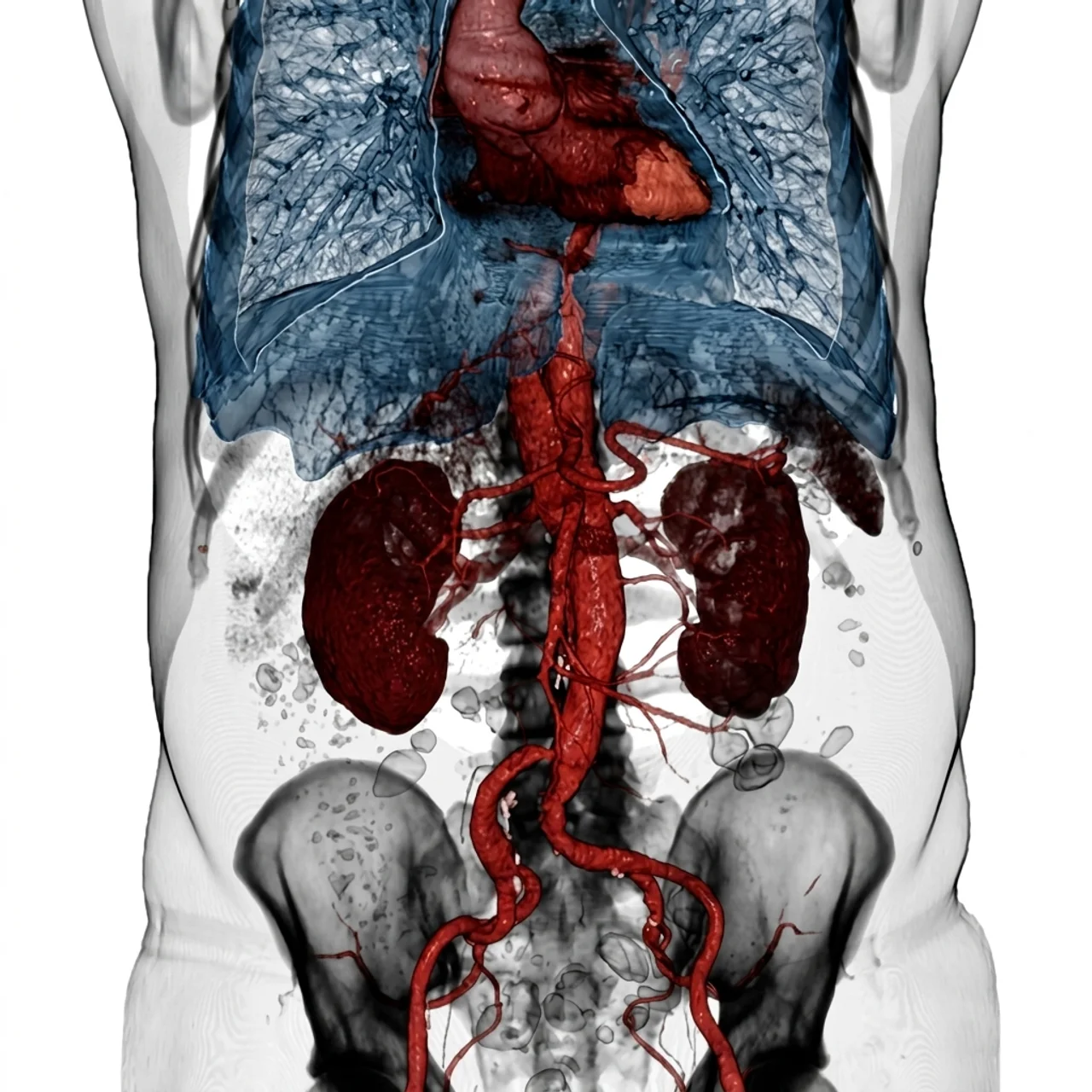
In 1928, a 114-year-old Chinese monk named Li Ching-Yuen sat across from a Time magazine journalist who had travelled to a remote village in China's Sichuan province with one question. How are you still alive? The interview was difficult. Li spoke no English. The journalist spoke no Mandarin. Everything went through two translators and took three times as long as it should have. But the journalist got his answer. Three things. Slow movements. Inner calm. And what translated roughly as "the fire herb taken daily in oil." The journalist wrote it down. Published it. Readers found it interesting. Then everyone moved on. Nobody followed up on the oil part. When researchers examined the health records of Li's monastery in 1970, they found the same phrase repeated across 200 years of monk health documents. "The fire herb in oil." Listed in the diet records of the longest-living monks across six generations. The monks who consumed it daily consistently showed something the researchers noted but never fully investigated. Cleaner arteries. Less calcium buildup in their vessel walls. At ages when most men's arteries were stiff and heavily calcified, these monks had vessel walls that looked decades younger than they should. The researchers filed it as a curiosity. Nobody asked why. If your doctor has ever told you your cholesterol is high — or if you have had a coronary calcium scan and the number came back higher than you expected — this story is about you. Here is something most people are never clearly told about cholesterol and arterial health. Cholesterol is not the whole story. Your doctor measures your LDL cholesterol — the so-called bad cholesterol — and if it is high, you get a statin prescription. The statin brings the number down. Your doctor is satisfied. You feel like the problem is solved. But here is what the number on your cholesterol test does not tell you. Cholesterol does not damage your arteries on its own. It damages them when it gets inside the walls of your arteries and gets stuck there. And it only gets stuck there when the inner lining of those arteries — a layer just one cell thick called the endothelium — is damaged or inflamed [Libby P et al. Nature Reviews Disease Primers, 2019]. When your endothelium is healthy, LDL cholesterol flows past without causing harm. When your endothelium is damaged and inflamed, LDL particles slip inside the artery wall, get trapped, and harden into calcium deposits over time. Those deposits are exactly what a coronary calcium scan measures. A high calcium score does not just mean your cholesterol has been high. It means your artery walls have been damaged at a level your cholesterol reading alone was never going to tell you. And here is the part that matters most. Your statin lowers your cholesterol number. It does not repair the damaged endothelium that allowed the cholesterol to get inside the wall in the first place [Bonetti PO, Lerman LO. Arteriosclerosis, Thrombosis, and Vascular Biology, 2003]. It does not dissolve the calcium already deposited there. It manages one variable in a much more complicated process — and leaves everything else running underneath. This is why people with well-controlled cholesterol still develop significant calcium buildup. The number looks fine. The arteries tell a different story. Now here is where Li Ching-Yuen's monks and a Nobel Prize come in. In 2021, a scientist named David Julius won the Nobel Prize for discovering exactly how capsaicin — the active compound in the fire herb, cayenne pepper — works inside the human body. What Julius found was that capsaicin activates specific receptors called TRPV1 inside the cells lining your blood vessels. When these receptors are activated, two important things happen. First, your vessel lining starts producing nitric oxide again — the natural chemical that keeps your vessels relaxed, flexible, and less inflamed [Yang D et al. European Journal of Pharmacology, 2010]. Less inflammation means LDL cholesterol is less able to penetrate the artery wall. The damage that leads to calcium buildup slows down at the source. Second, a 2024 paper published in the journal Aging and Disease confirmed that TRPV1 activation upregulates a protein called SIRT1 while reducing a marker called p21. In plain language — capsaicin slows the aging and breakdown of the endothelial cells responsible for keeping your artery walls clean and protected [McCarty MF et al. Aging and Disease, 2024]. The monks were not just living longer. Their artery walls were aging slower. The fire herb in oil was activating a protective mechanism inside their blood vessels that 200 years of monastery health records captured without anyone understanding why. The Nobel Prize explained it in 2021. So why can you not just eat more cayenne pepper and get the same result? Most people try this. Most see nothing happen. Here is the reason. Capsaicin dissolves in fat, not water. When you eat cayenne powder or add hot sauce to your food, your stomach acid breaks most of it down before it ever reaches your bloodstream. What survives your stomach then faces your liver, which processes the remainder before it can reach your artery walls. Studies measuring blood levels of capsaicin after consuming raw powder versus a fat-based delivery system found that the fat-based version produced blood concentrations eight times higher from the exact same dose [Cs-Szabo G et al. Journal of Dietary Supplements, 2016]. Li Ching-Yuen's monks were consuming theirs in oil. Without knowing the science, they had solved the problem that defeats most people who try cayenne supplements today. The vast majority of capsaicin products on the market use dry powder packed into hard capsules. The capsaicin barely reaches the bloodstream. People take them for a few weeks, notice nothing, and give up. The compound was right. The delivery was wrong. Aurivita Capsaicin Power are cayenne pepper softgels — pharmaceutical-grade capsaicin already dissolved in a lipid carrier, sealed inside a soft gelatin shell that bypasses your stomach acid and absorbs properly in your small intestine, where fat-soluble compounds are designed to enter the body. Each serving delivers 3 mg of standardised capsaicin — the midpoint of the therapeutic dose used in clinical research. Enough to activate your vessel lining receptors consistently. Enough to make a difference your next calcium scan can actually measure. It also contains BioPerine — a standardised black pepper extract that slows down the liver enzymes responsible for breaking capsaicin down too quickly. It keeps capsaicin active in your system longer and at higher concentrations [Shoba G et al. Planta Medica, 1998]. Vitamin K2 as MK-7 is included specifically for calcium. K2 activates a protein called Matrix Gla-protein that actively works to prevent calcium from depositing in artery walls — and in some research, helps shift existing calcium away from vessels toward bones where it belongs [Schurgers LJ et al. Blood, 2007]. If a high calcium score is what brought you here, K2 is the compound directly relevant to that number. Vitamin D3 is included because vitamin D deficiency is independently associated with arterial calcification and poor vessel health across multiple large population studies [Pilz S et al. Journal of Hypertension, 2012]. The full course is 60 days. Not 30. Because the research on endothelial repair and arterial health uses 8 to 12 week protocols consistently. The changes that matter — the ones that show up on a follow-up calcium scan — take time to develop. Most capsaicin supplements are packed into 30-day bottles for commercial reasons. The 30-day supply runs out exactly when the repair process is beginning. People stop. They conclude it did not work. It was working. The packaging stopped them too soon. The monks did not take the fire herb for 30 days. They took it every day for decades. Six generations of monastery health records show what consistent, properly delivered capsaicin does to artery walls over a lifetime. You do not need decades. The clinical research shows measurable endothelial improvement in 8 to 12 weeks with the right dose and the right delivery. But you do need 60 days minimum. That is what the science requires and that is what one full supply of Aurivita Capsaicin Power gives you. If your cholesterol number is managed but your calcium score came back higher than expected — if your doctor told you the numbers look fine but something feels like it is still progressing — this is the mechanism your statin was never designed to address. Your statin manages your cholesterol reading. It does not repair your endothelium. It does not slow the calcification of your artery walls. It does not activate the TRPV1 pathway that a Nobel Prize confirmed and that 200 years of monastery records quietly documented. Aurivita Capsaicin Power comes with a 120-day money-back guarantee. The protocol takes 60 days. You have a full additional 60 days after that to get a follow-up reading, assess your results, and decide before you are committed to anything. If you are not satisfied for any reason, you get every penny back. No questions asked. Li Ching-Yuen did not know about Nobel Prizes or TRPV1 receptors or coronary calcium scans. He just knew the fire herb in oil kept his monks' arteries working the way they were supposed to. The two translators in that 1928 interview did their best with the words. The monastery health records did the rest. Now you know why. Disclaimer: This image is used for illustrative purposes only and does not represent a Li Ching-Yuen.
How a Chinese Monk Lived To 114
At Aurivita we offer Aurivita Capsaicin Power - Cayenne Pepper Softgels at the lowest price. Check it out now!
LEARN MORELike this ad? Make it yours.
Crush rebuilds this exact creative around your product — your brand, your colors, your offer — in about a minute.