Shelly L. Gayton
Shelly L. Gayton Facebook ad: “The magic sheet that reversed my aging”
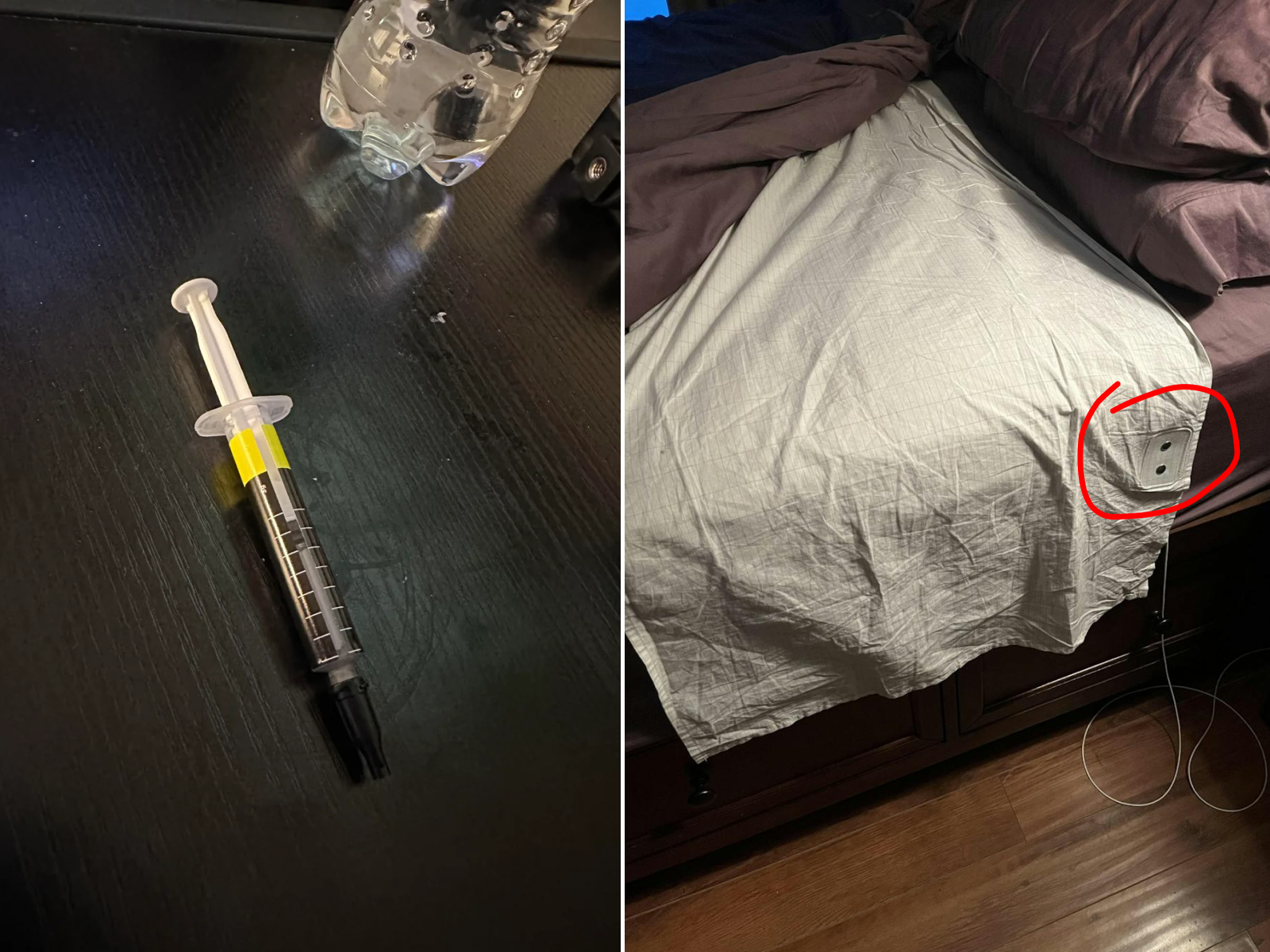
Ran for 7 days, from April 6 to April 13, 2026, the last day Crush saw it.
Run by Shelly L. Gayton on Facebook. Crush is not the advertiser and does not verify its claims. See this ad in Meta's Ad Library(opens in a new tab)
Want an ad like this for your product?
Crush makes new ad images for your product from this ad: your logo, your product photo, your offer.
Trials from $19.95 USD, then $79.95 USD a month. Cancel anytime.
About this ad
- Meta Ad Library ID
- 932357199408760
- Platforms
- Facebook, Instagram, Audience Network, Messenger and Threads
- Relaunches
- 1
- EU reach
- 2,177
Ad text
I'm a night-shift nurse. I've worked ICU for 14 years. Last month my brother showed up at my door after a decade of neglect and I haven't been the same since. Not because of what he said. Because of what he looked like. Let me back up. I have a younger brother named Marcus. Growing up, Marcus was the one my parents whispered about when they thought I couldn't hear. He started smoking weed at 14. By 17 he'd dropped out. By 19 he was doing pills — oxy first, then whatever he could find. By 21 it was heroin and he wasn't pretending anymore. He'd show up to family dinners nodding off at the table. He stole my mother's pain medication after her knee surgery. He sold my dead grandfather's watch for forty dollars. I was the other one. Honor roll. Nursing school. Dean's list. The one relatives pointed to at Thanksgiving and said "at least you've got her." I wore that like armor for a long time. By the time Marcus was 23 he was living in his car. Then he wasn't living in his car because he didn't have a car anymore. He was couch-surfing with people whose names we didn't know, in parts of the city my parents had never been to. I'd get calls at 3am from numbers I didn't recognize. Sometimes it was him asking for money. Sometimes it was an ER telling me he'd been brought in with an abscess, or dehydration, or something worse they wouldn't describe over the phone. One Thanksgiving he showed up and my mother left the room. He was maybe 115 pounds. His collarbones looked like they were trying to escape his chest. His teeth were browning at the gumline and two of the bottom ones were gone. His skin had this grey-yellow tint I recognized from patients with liver damage. He smelled like acetone and unwashed clothes and something metallic underneath that I knew from the ICU — ketoacidosis. The smell of a body eating itself. He ate half a plate of food, asked my mother for three hundred dollars, and left. I'm a nurse. I've watched people die of exactly what he was doing. I'd seen his future play out a hundred times in hospital beds — the organ failure, the endocarditis, the OD that finally sticks. I'd already started grieving him in the present tense. Then he disappeared. Not dramatically. Not a fight. He just stopped calling. Stopped showing up. His phone went dead. No social media. Nothing. We filed a missing person report after four months. Nothing came of it. My mother kept his room the way it was. She'd go in there sometimes and just sit on the bed. When people asked if I had siblings I'd say "just me." That was easier than the truth. Ten years went by. I need you to understand what those ten years did to me. Because everyone thinks nurses are healthy. We're not. We're some of the most broken people in any hospital and we're the ones nobody checks on. Twelve-hour overnights. Rotating schedules that flip your circadian rhythm like a coin every week. You eat when you can, which means a granola bar at midnight and cold pizza from the break room at 4am. You sleep when you can, which means blackout curtains and melatonin and still lying there at noon with your heart pounding because your body has no idea what time zone it's living in. I aged in dog years. It didn't happen all at once. It happened the way it always does — slowly enough that you explain away each piece until the whole picture is undeniable. At 30, I started getting these faint lines around my eyes. Normal, I told myself. Everyone gets those. By 33, the lines weren't faint anymore. They were creases. Deep ones that didn't go away when I stopped squinting. My skin started losing that firmness that you don't appreciate until it's gone. I'd catch my reflection in the bathroom mirror under the fluorescent lights at the hospital and see my mother's face staring back at me. I was thirty-three. By 35, the grey hairs started coming in fast enough that I stopped plucking them and started dyeing. Every five weeks, like clockwork, because the roots came in silver and wiry and they aged me another five years overnight. But it wasn't just the surface. My knees started grinding going up stairs. Not clicking — grinding. That wet, crunchy sound that you feel more than hear. My lower back seized so badly last year I called in sick for the first time in six years. I'd wake up, swing my legs off the bed, and just sit there for a minute because my feet ached so deep it felt like the bones were bruised. My hands — fourteen years of gripping, pressing, adjusting, pulling — my hands felt like they belonged to someone thirty years older than me. I'd flex my fingers in the morning and they'd lock halfway, stuck, like rusted hinges that needed oil. I was 38 and strangers guessed 48. I know because a patient's husband said it to my face once. He apologized. But you don't unhear a thing like that. I tried everything. Compression socks. Epsom salt baths. CBD oil. Magnesium glycinate. A $200 mattress topper. Retinol. Collagen powder. Blue light glasses. Every sleep supplement on Amazon with more than a thousand reviews. Nothing worked. Not really. I'd get maybe one decent night a week and spend the other six in this grey zone between sleep and just lying there with my eyes closed, conscious of every sound in the building, watching the light change around the edges of the curtains. My doctor told me it was "just the job." My therapist told me to practice sleep hygiene. My coworkers told me to drink more water. I was so tired I started making mistakes. Small ones. Charting errors. Forgetting to relay a detail in handoff. Nothing that hurt anyone. But enough that I noticed. And when a nurse starts noticing her own mistakes, that fear never leaves. It sits in your chest every shift like a second heartbeat. I was the reliable one. The one who never missed a day. The one my family pointed to as proof that someone turned out okay. And I was falling apart from the inside out, aging twice as fast as everyone around me, and too proud to admit any of it. Then Marcus called. It was a Tuesday. I was home after a night shift, trying to sleep. My phone rang from a number I didn't recognize and normally I'd ignore it but something made me pick up. "It's me." I sat up in bed. "It's Marcus. I know it's been a long time. I'm in town. Can I come see you?" My first thought wasn't relief. It wasn't happiness. It was dread. Because I knew what was coming. Ten years of silence and now a phone call meant he was either dying or needed money or both. I'd been through this before. I'd sat in hospital waiting rooms while he detoxed and seized on a gurney. I'd cleaned out apartments where the carpet was burned and the walls had holes in them. I'd held my mother on the kitchen floor at midnight when she found out he'd been arrested again. I almost said no. But I said yes. Because I'm a nurse and I'm the reliable one and that's what the reliable one does. I spent the next two hours cleaning my apartment and bracing myself. I looked in the mirror before he arrived and saw exactly what I expected — puffy face, dark circles so deep they looked like bruises, skin dull and slack, hair pulled back in a bun that hid how thin it was getting at the temples. I looked tired in a way that no amount of concealer could fix. I looked old. But I figured it didn't matter. Because whatever I looked like, Marcus would look worse. He always looked worse. He knocked at four. I opened the door and something collapsed inside me. Marcus was standing there in a clean white t-shirt and jeans. And I'm not exaggerating what I'm about to say because I need you to understand the full weight of this moment. He looked younger than me. Not healthier. Not "better than expected." Younger. My younger brother, the one who shot heroin for years, the one whose teeth were falling out last time I saw him, the one I'd pre-grieved and half-buried in my mind — was standing in my doorway looking like he'd reversed a decade of damage. His skin was clear and even-toned. Not the grey-yellow I remembered. Actual healthy, hydrated, rested skin — the kind I hadn't seen on my own face in years. His eyes were clear and white where they'd been bloodshot and yellow before. He'd gained weight — real weight, muscle — and his posture was straight and easy, like a person who wasn't in pain. He looked like he slept. Not like he'd gotten a good night recently. Like he'd been sleeping well for years. There's a difference and I can see it because I'm a nurse and I know what chronic sleep deprivation does to a face. The puffiness, the dark circles, the saggy skin, the dull eyes. I see it every day. In my patients. In my coworkers. In my mirror. Marcus had none of it. At 34, after everything he'd done to himself, he had none of it. And I, at 38, after fourteen years of doing everything right, had all of it. I hugged him because I didn't know what else to do. And the whole time I'm holding him I'm doing something I'm ashamed to admit. I'm comparing. His skin against mine. His posture against mine. The way he's standing relaxed and easy while I'm hunched with my hand on the door frame because my back is screaming from last night's shift. I'm a nurse in scrubs with the body of a fifty-year-old and my former addict brother looks like he just walked out of a ten-day spa retreat. How. How is this possible. I stayed. I worked. I showed up every single day. I held this family together while he was smoking and snorting and injecting himself into a grave. I did everything right for fourteen years and it ate me alive. And he did everything wrong for a decade and somehow came out the other side looking younger and healthier than me. That thought made me sick. Not because it was unfair. Because it meant something about my life that I'd been refusing to look at. That doing everything "right" hadn't protected me. That I'd traded my health for my pride and called it responsibility. We sat in my kitchen for three hours. He told me what happened. The real version. He'd been homeless for two years. He'd overdosed three times — the last one, a stranger found him on a sidewalk not breathing and did CPR until the paramedics came. He woke up in an ICU not unlike the one I work in, with a tube down his throat and a nurse who looked like me standing over him. That was his bottom. He got into a program. Got clean. Moved to a small town out west. Got a job doing maintenance at a school. Quiet life. No social media, no phone for a while, no contact with anyone from before. He rebuilt from nothing. I asked him what changed physically. What specifically. Because I'm a nurse and "I got better" isn't an answer. Bodies don't just reverse that kind of damage. Something has to change at the cellular level. He told me about the program, the therapy, the nutrition. All things I expected. Then he said something I didn't expect. "The thing that actually fixed my sleep was a grounding sheet." I looked at him the way you're probably looking at this screen right now. "A what?" He pulls up his shirt. I'm expecting scars, track marks, damage. Instead he's showing me his skin — smooth, even, no redness, no puffiness. "I haven't had a real night's sleep since I was maybe fifteen," he says. "Through everything — the using, the detox, the programs — the one thing nobody could fix was my sleep. I'd lie there clean and sober and still not sleep. My body was just stuck." He tells me a counselor at his sober living house had everyone sleeping on these sheets. Grounding sheets. Silver threads woven through the fabric, connected to the ground port in the wall outlet. He says it drains the excess electrical charge your body accumulates from Wi-Fi, devices, synthetic materials — all the invisible voltage that pools in your system with nowhere to go. He says it's called the Zero-Voltage Sleep principle. When your body is electrically connected to the Earth, your voltage drops to zero. Cortisol falls. Inflammation cools. Your nervous system finally shifts out of fight-or-flight and lets your body do what it's supposed to do every night — repair itself. I'm sitting there with my nursing degree and fourteen years of clinical experience and my brother, who didn't finish high school, is explaining human physiology to me using terms I recognize from my own training. And he's not wrong. I know what chronic inflammation does. I see it every shift. I know what cortisol does to sleep architecture. I know what happens when the sympathetic nervous system never downregulates — the accelerated aging, the joint degradation, the cognitive decline, the skin changes. I've watched patients deteriorate from exactly the mechanisms he's describing. I just never applied it to myself. Because I was too busy being the one who knew better. "My deep sleep went from about twenty minutes a night to almost two hours," he says. "I tracked it. My HRV went up. My resting heart rate went down. Everything changed." I don't say anything. Because if I open my mouth I'm going to either cry or say something dismissive and I don't want to do either. That night, after he leaves, I can't sleep. Which is ironic. I'm lying in bed at 1pm with the blackout curtains drawn, replaying the image of my brother standing in my doorway looking ten years younger than me. The brother I'd written off. The brother the whole family had written off. He's clean, he's healthy, he's sleeping eight hours a night, his skin is clear, his body works. And I'm the one staring at the ceiling with swollen hands and grinding knees and a face that looks a decade older than my birth certificate. The shame of it sits on my chest like a cinder block. I am the nurse. I am the one who's supposed to understand health. I am the one who did everything right, who sacrificed everything, who held the line for fourteen years. And my brother, who spent a decade destroying his body in ways I've watched other people die from, figured out something about recovery that I missed. Not because he's smarter. Because he had nothing left to lose. He had no pride to protect. He didn't have a degree on the wall or a reputation as the reliable one telling him he already knew better. I did. At 2am I open my laptop and start researching. Grounding. Earthing. I find the studies. Cortisol normalization. Inflammation markers dropping. Measurable changes in blood viscosity. These aren't wellness blogs. These are published, peer-reviewed papers. I find the brand Marcus mentioned. GroundingWell. I sit there for fifteen minutes with it in my cart, my cursor hovering over the checkout button. A bedsheet. I have a nursing degree. I've managed ventilators and crash carts and calculated IV drips to the milligram. And I'm about to buy a bedsheet because my dropout brother who nearly died on a sidewalk told me to. I buy it. It arrives four days later. I plug it in before my next shift cycle. The sheet connects to the ground port in the wall — the third prong most people never think about — which runs to a copper rod buried in the earth outside the building. The PureSilver Conductive Matrix is real silver, woven through every thread in organic cotton. When your skin touches it, you're electrically connected to the Earth for as long as you're lying on it. Excess charge drains out. Your body drops to zero voltage. And your nervous system finally gets permission to stand down. First day-sleep after a shift, I get five straight hours. No waking up. No racing heart. No lying there in that horrible half-conscious state where you can feel time passing like sand through your fingers. Five hours felt like ten. I check my sleep tracker. Deep sleep: 1 hour 22 minutes. My average the month before was 19 minutes. I think it's a fluke. But I keep using it. By night three, I'm falling asleep within minutes of lying down. That has never happened to me. Not once in fourteen years of shift work. By week two, the thing I notice isn't the sleep. It's the morning. I wake up and my hands don't ache. The deep, throbbing stiffness in my fingers that I'd accepted as permanent — fourteen years of gripping rails, pushing stretchers, adjusting equipment — gone. Not better. Gone. By week three, my knees stop grinding on the stairs. My lower back loosens. That constant low-grade headache I'd been carrying for so long I'd forgotten it was there lifts like a fog burning off in the morning. I realize I haven't taken ibuprofen in nine days. I'd been taking it every single day for three years. By month one, two things happen that I wasn't expecting. The first is that my charge nurse looks at me during handoff and says "did you go on vacation?" The second is that I look in the mirror and for the first time in years I don't flinch. The dark circles are fading. The puffiness around my jaw is going down. My skin has color again. Not a dramatic transformation — I didn't age backwards overnight. But I look rested. I look like someone who sleeps. I look like my actual age instead of a decade past it. I look a little bit like my brother did standing in my doorway. And that's when it finally sinks in. The aches, the stiffness, the grinding joints, the brain fog, the skin that aged twice as fast as it should have — none of it was "just the job." None of it was inevitable. It was chronic inflammation that had been building for years with nowhere to discharge, running my nervous system on overdrive every hour of every day, breaking my body down while I told myself it was just the price of being responsible. It wasn't the price of responsibility. It was the price of never recovering. And recovery was available the entire time. The thing that haunts me is this. I work in a hospital. I'm surrounded by people who are suffering from the exact same thing — inflammation, ruined sleep, cortisol that never comes down, nervous systems locked in fight-or-flight. My coworkers, not just the patients. Nurses, techs, residents. We're all aging too fast and falling apart and we all just accept it as what this career costs. There's a nurse I work with, Maria. She's 51. Been doing this longer than me. Takes Ambien three nights a week and Aleve every morning. She told me last month she looked at her daughter's wedding photos and didn't recognize herself. Said she looked like her own mother. I want to tell her. But what do I say? "Hey Maria, I know you've been a nurse for twenty-three years, but my brother who nearly died of an overdose on a sidewalk told me about a bedsheet and it changed my life"? So I haven't said anything yet. But every shift I work, standing next to people who are aging the same way I was, feeling what I used to feel, I think about how wrong it is to keep quiet. Here's what I know after four months of sleeping on this thing every single day. It works on any mattress. Doesn't matter if it's memory foam, spring, adjustable, whatever you've got. The sheet goes on top, you sleep on it, and any skin contact with the silver maintains the connection. Toss and turn all you want. It works in any building. If you've got a three-prong outlet, you're good. Older place with two-prong outlets, just select that plug type when ordering. It's safe with pacemakers and medical devices. I checked this myself because I'm a nurse and I don't recommend anything without verifying it. It doesn't add electricity. It does the opposite. It drains it. It works for night shift, day shift, rotating schedules, doesn't matter. Your body doesn't care what time it is. It cares whether it can discharge and repair. That's it. Marcus told me something the last time we talked that I keep coming back to. He said, "The people who find this thing are always the ones who've run out of options. Nobody tries it first. Everyone tries it last." He's right. I tried everything else first. Years of supplements and gadgets and routines and apps. Hundreds of dollars. And the thing that worked was the thing I almost didn't try because I was too proud to listen to someone I thought I was above. That's the part that still burns. Not that I didn't know sooner. That I almost didn't try it because of who told me. Because he was the failure and I was the success and how could he possibly know something I didn't. But he did. Because he had no ego left. No image to protect. No degree on the wall. He was just a person in pain who tried something and it worked and he didn't need it to make sense first. I needed it to make sense. I needed it to come from a journal or a doctor or someone with credentials. I needed permission from the right source. And that need almost cost me everything. So here's what I'll tell you the same way Marcus told me. The first few days, you actually fall asleep. Not the fake sleep where you're half-conscious for hours. Real sleep. The kind where you close your eyes and the next thing you know it's morning. By week two, the aches start fading. The ones you've accepted as "just getting older." The stiff hands, the sore knees, the tight lower back. You realize they weren't aging. They were inflammation that had nowhere to go. By month one, people start commenting. You look different. You move different. Not because you changed your diet or started working out. Because your body is finally repairing itself the way it was supposed to every night for all the years it couldn't. By month three, you start looking like your actual age again. The puffiness fades. The color comes back. The tired, worn-out mask you'd been wearing so long you forgot it wasn't your real face starts to lift. And you realize how much of what you thought was aging was actually just damage that nobody told you was fixable. I have two now. One on my bed, one in a bag for when I pick up shifts at other facilities and sleep in the on-call room. It goes everywhere with me. GroundingWell is the only brand I trust. Marcus told me that and I verified it myself. The cheaper ones on Amazon use silver coating that washes off within weeks — completely worthless. GroundingWell weaves real silver through every thread in organic cotton. It holds up wash after wash. They've got 50% off right now plus a free grounding mat if you get two. I just checked because I'm buying one for Maria whether she believes me or not. 90-day guarantee. Three full months. If you don't sleep deeper, ache less, and feel sharper, send it back. Fair warning. They're a small company. Real silver in every sheet means they can't mass-produce like the knockoff brands. Their last restock sold out fast. If you click and they're out of stock, I'm sorry. I spent fourteen years being the strong one. The reliable one. The one who never broke down, never missed a shift, never complained. I earned every line on my face and every ache in my body and I told myself it was the price of being good. It wasn't. It was the price of never recovering. And the person who taught me that was the last person on earth I would have listened to — my brother, the one I'd already given up on, who showed up at my door looking younger than me after a decade of silence. He had no pride left. So he tried something I wouldn't. I'm done being too proud. I'm sharing the link below. It'll take you to a full breakdown of why the technology works so well. Read it before you order anything — from them or anyone else. Go read it for yourself. Then decide https://www.groundingwell.com/pages/special-sheet-listicle-v2
Where the ad sends people
groundingwell.com
The “magic sheet” that reversed my aging
Experience the healing power of our grounding sheets and mats, promoting better sleep, more energy, & less stress from the comfort of home. Shop now.
Learn more: groundingwell.com(opens in a new tab)