
Inactive· since May 13, 2026
- 7
- days it ran
- 0
- relaunches
- 88
- EU reach
Ad copy
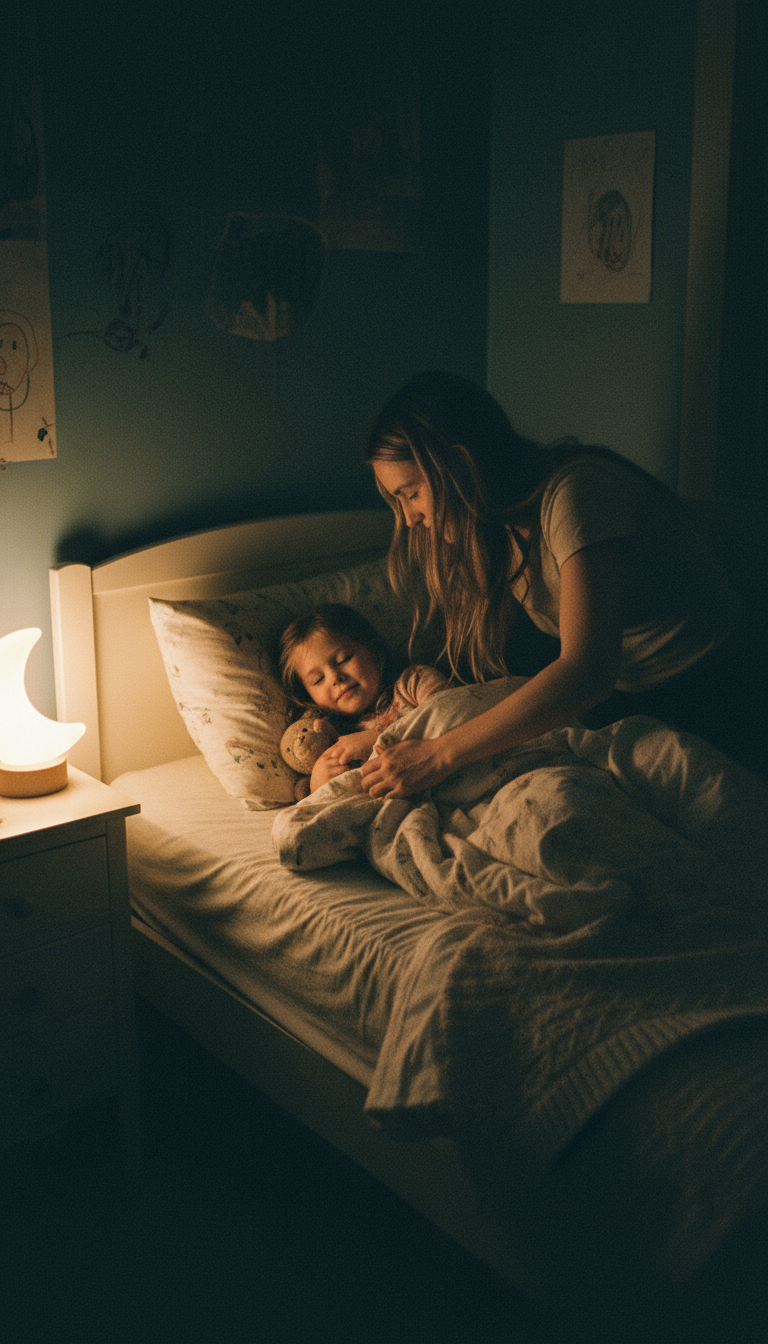
My daughter grabbed my hand with both of hers — sticky from yogurt — and something in my chest locked up. She was four. She was happy. I was in fight-or-flight. I've been trying to understand that moment ever since. I need to say the obvious thing first: I love my daughter. I love her the way that reorganizes everything — the way that makes you understand, for the first time, what the word unconditional actually means. She is four and a half and she is loud and sticky and relentless and she is the best thing I have ever done. I need to say that because what comes next sounds like the opposite of it. It isn't. That's the thing I've spent three years trying to hold together. — The yogurt moment was a Tuesday in March, 4pm, kitchen. She'd been at preschool, she was happy to be home, she ran to me and grabbed my hand with both of hers in that way she has — total commitment, no warning — and the yogurt was still on her fingers from the snack she'd been eating in the car. The texture hit first. Then the sound she made — not crying, just her regular excited voice, which is high and fast and layered over the radio I'd left on and the refrigerator hum and the dog's nails on the floor. Something in my chest locked. Not emotionally. Physically. Like a door slamming in a room I didn't know was in my body. My heart rate went up in a way I could feel in my throat. My skin went wrong. I wanted, very specifically and very urgently, to not be touched. She was still talking. She was telling me about a painting she'd made. She was happy. I stood there and managed my face and waited for it to pass. — This has been happening, in different forms, for three years. The high-pitched scream she does when she's excited — not distressed, excited — that goes through me like something structural has failed. The wet hands. The specific frequency of her crying that I cannot locate in my body as sound; it lands somewhere below that, somewhere that bypasses the ears entirely and registers as alarm. The way three things happen at once and my brain tries to process all of them simultaneously and just — stops. Buffering. The spinning wheel. The inability to answer a simple question because there are too many inputs and they've all been assigned the same priority. After these moments I get a migraine. Or I go very quiet for a long time. Or I leave the room and stand in the bathroom with the light off and my back against the cool tile until something recalibrates. My husband calls it needing a minute. I've let that stand because I don't have better language. — The story I told myself for three years was that I was a bad mother. Not in a dramatic way — not neglect, not cruelty. In the quiet way where you watch other mothers and they seem to absorb the noise and the chaos and the relentlessness of small children without visibly fragmenting, and you wonder what is wrong with you that you cannot do the same thing. I read the parenting books. I went to therapy. I tried to be more patient, more present, more whatever the books said I should be more of. The sensory stuff didn't care about any of that. It wasn't a patience problem. It wasn't an attitude problem. It was happening in my body before I had any say in it. — The diagnosis came sideways. My daughter's preschool flagged some things — sensory sensitivities, difficulty with transitions, the way she needs to know the plan and recalibrate badly when the plan changes. They referred us to an assessment. I sat across from the specialist and listened to her describe my daughter and felt something happening in my chest that was different from the locking feeling. Something opening. Because she was describing me. Not my daughter. Me. The child version of me. The adult version of me. Every item on the checklist that I had spent thirty-one years calling personality quirks or anxiety or just the way I was. I asked if I could take the checklist home. — AuDHD. Autism and ADHD, co-occurring, which is apparently common and apparently very frequently missed in women and girls because the presentation doesn't match what clinicians were trained to look for. The sensory processing piece is not a metaphor. It's not sensitivity in the soft sense of the word. It's a nervous system that processes sensory input differently — that assigns urgency to stimuli that other nervous systems filter out, that can't turn down the volume on the world the way most people can without thinking about it. The yogurt on my daughter's hands registered as threat. Not because I thought it was dangerous. Because my nervous system, processing texture plus sound plus proximity plus the end-of-day accumulated input, had hit its threshold and responded the only way it knows how. It wasn't about her. It was never about her. Three years. I needed three years and a specialist and my daughter's assessment to get to that sentence. — Liven came from an article about nervous system regulation in neurodivergent adults — something about the specific way an AuDHD nervous system runs hotter than average, about the cumulative load of a day, about why sensory overload doesn't just feel bad but physically crashes the system. The quiz asked things I recognized from the inside: whether I felt wired and exhausted at the same time, whether recovery took longer than it seemed like it should, whether my body stayed on high alert even when nothing was actively wrong. It wasn't asking if I was broken. It was asking how my nervous system was running. That distinction mattered more than I expected. — I still leave the room sometimes. I still need the bathroom with the light off. But last week my daughter grabbed my hand — clean hands, she'd just washed them, warm and dry — and pulled me toward something she wanted to show me in the garden. I followed her. The chest thing didn't happen. I didn't make a thing of it. I just followed her. She showed me a snail she'd named Gerald. I told her Gerald was excellent. She agreed. — Liven has a quiz. It doesn't ask about parenting or patience or whether you're a good mother. It asks about your nervous system — how it processes the world, what it does when it hits its limit, whether it knows how to come back down. If the yogurt moment sounds familiar — or the bathroom with the light off, or the migraine, or the managing your face while your child is happy and you are somewhere else entirely — It's not a character flaw. It's a nervous system that needs a more accurate map. Link is below. 💙
THIS IS what you need to do
LEARN MORELike this ad? Make it yours.
Crush rebuilds this exact creative around your product — your brand, your colors, your offer — in about a minute.