
Inactive· since Apr 26, 2026
- 101
- days it ran
- 0
- relaunches
Ad copy
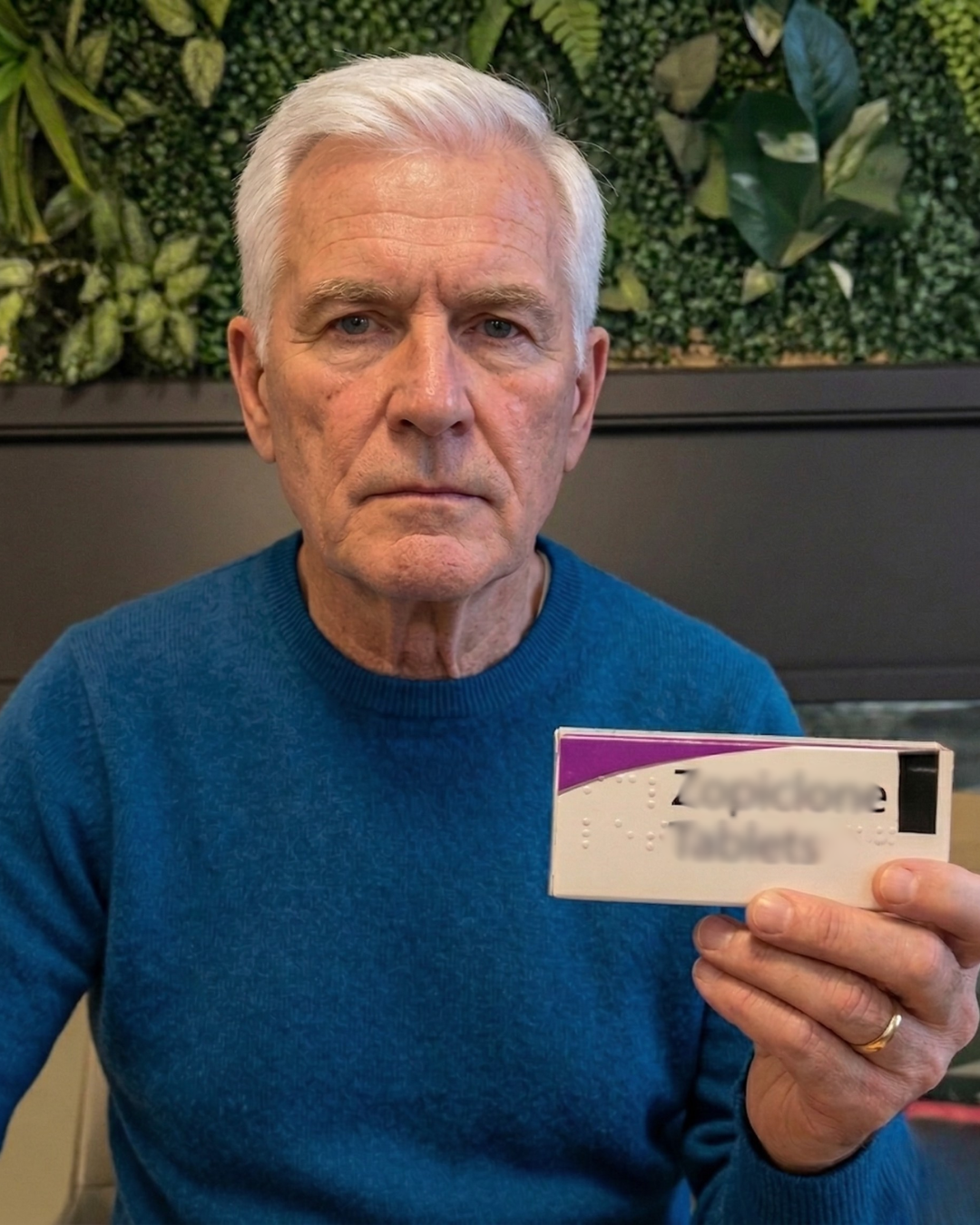
I spent 12 years lying to my wife. Every morning, when she’d look at me across the kitchen table and ask how I slept, I’d just shrug. "Fine," I’d say, forcing a smile while clutching my third cup of black coffee. "Just a bit tired, Sarah. You know how it is at our age." But I was lying. And the truth was eating me alive. The truth was that at 3 AM, I was wide awake, staring at the ceiling of our bedroom, feeling my heart race for no reason at all. I felt like a ghost in my own house. I was 58, but I felt 80. My brain was in a constant, suffocating fog, and I had started snapping at the people I worked with over the smallest things. I thought it was just "part of getting older.” I thought that as a man, I just had to "tough it out.” I thought that if I just worked harder during the day, my body would eventually give up and let me sleep. I was wrong. And that realization almost cost me my career and my safety. For thirty years, I was the rock. The provider. The man who handled the long drives, the high-stakes meetings, and the stressful decisions. My family and my company counted on me to be the steady hand. But the insomnia was changing me. It was stealing my "function." The breaking point didn't happen in the middle of the night. It happened during my morning commute, a forty-minute drive I’d done for fifteen years. I was on the motorway, keeping pace with traffic. Suddenly, the "fog" hit. My eyes felt like they were filled with sand. For a split second, the car drifted toward the rumble strip. The sound of the tyres hitting the edge of the lane jolted me awake, but the cold sweat that followed stayed with me for the rest of the day. I pulled into the office car park, my hands shaking on the steering wheel. I sat there for ten minutes, realizing that I was no longer safe behind the wheel. I was becoming a liability. It didn't stop there. In the office, I was a shadow of my former self. During board meetings, I’d find myself staring at my notes, unable to follow a complex conversation. I’d lose my train of thought halfway through a sentence. I was irritable, defensive, and constantly worried that my colleagues would notice my lack of sharpness. I felt useless. And that's the one thing a man in his 50s never wants to feel. I wasn't the man my family could count on anymore. I was just a tired man trying to survive the day. Being a practical man, I treated my sleep like a broken engine. I figured I just needed the right "tool" to fix it. I started with the basics. Melatonin. Magnesium. Valerian root. I spent a small fortune on high-end teas that tasted like dirt and "calming" sprays that made my pillow smell like a lavender field but did absolutely nothing for the electrical storm happening inside my head. To me, melatonin felt like trying to stop a runaway freight train with a piece of wet string. It was a "lightweight" solution for a heavyweight problem. So, I went to my GP. I did what most men do when they’re desperate—I asked for the "strong stuff." He handed me a prescription for Zopiclone. "This will knock you out, Paul," he said with a dismissive pat on the shoulder. He wasn't lying. It did knock me out. But it wasn't sleep. It was a chemical blackout. I’d take the pill at 10 PM, and by 10:30, I was "gone." But the moment 3 AM rolled around, I was wide awake again. Only this time, I wasn't just awake, I was "manhandled" by the chemicals. My head felt like it was wrapped in lead. I had a metallic taste in my mouth that wouldn't go away. When the alarm went off at 7 AM, I felt like I’d been hit by a truck. I was there physically, but mentally? I was a zombie. I’d spend the first four hours of my day in a trance, unable to make a decision, unable to focus, just waiting for the "hangover" to lift so I could start drinking coffee again. I felt like I was wearing chemical handcuffs. I was sleeping, but I wasn't rested. And the worst part? Within three weeks, the pills stopped working altogether. I needed a higher dose just to get the same three hours of "blackout." I realized then that the medical system wasn't trying to fix me. They were just trying to silence me. I was ready to give up until I came across the work of Dr. James Harris, a specialist who focused on the physiology of chronic insomnia. Unlike my GP, who just wanted to hand out prescriptions, Dr. Harris was interested in the why. I remember our first conversation. I told him about the motorway incident, the brain fog at work, and the uselessness of the Zopiclone. “Paul, the reason your GP’s approach failed is that he was treating your sleep as a symptom, not a system. He was trying to force your brain into unconsciousness, but he wasn't addressing why it was refusing to stay there." "I don't understand," I said. "I’m exhausted. Why won't my brain just let me sleep?" "Because your nervous system is stuck in 'Alert Mode,'" Dr. Harris explained. He described the autonomic nervous system as having two primary modes: the Sympathetic (Alert/Fight-or-Flight) and the Parasimpatico (Rest/Digest). For a healthy person, the body naturally transitions from Alert to Rest as the evening progresses. "But in people with chronic insomnia," Dr. Harris continued, "that transition is broken. Your Sympathetic nervous system, the part designed to keep you alive during a crisis, is permanently switched ON. Your heart rate stays slightly elevated, your cortisol levels don't drop, and your brain stays in a state of 'scanning' for problems. This is why you wake up at 3 AM. The moment your initial fatigue is slightly relieved, your 'Alert Mode' takes over and snaps you wide awake." "So the pills..." I started. "The pills are just sedatives," Dr. Harris said. "They are like putting a heavy blanket over a screaming alarm. You can't hear the alarm as clearly, so you 'fall asleep.' But the alarm is still screaming underneath. Your nervous system is still in a state of high alert, which is why you wake up feeling unrefreshed, groggy, and 'hungover.' You haven't had real sleep; you’ve just had a chemical blackout." Dr. Harris then explained something that made perfect sense to my practical mind. "If you want to fix a dysregulated nervous system, you can't just throw a chemical bomb at it once a night. You need to 'dialogue' with it. You need a slow, steady, and constant signal that tells the 'Alert Mode' it’s safe to stand down." He explained that the digestive system is a terrible way to deliver sleep support. When you swallow a pill or a supplement, the liver destroys up to 80% of the active ingredients before they ever reach your bloodstream. This is why pills have to be so “heavy”, they have to overwhelm your system just to get a result. "This is where Transdermal Delivery changes everything," Dr. Harris said. "By delivering a precise blend of natural ingredients we bypass the liver entirely. It’s not an assault on the system. It’s a steady, calming signal that works with your body’s natural rhythms to soothe the nervous system and allow for a natural transition through all four phases of sleep, including the deep, restorative REM sleep that cleanses the brain of toxins and restores cognitive function. I’ll be honest: I was skeptical. After 12 years of failure, I didn't believe in "miracles" anymore. But the first night I tried the Vitalisys Sleep Patch suggested by Dr Harris, something strange happened. I didn't feel "drugged." I just felt... quiet. For the first time in a decade, the "static" in my head vanished. I woke up at 7 AM. No metallic taste. No leaden head. No 3 AM ceiling-staring marathon. I walked into the kitchen, and for the first time in 12 years, I didn't have to lie to my wife. "How did you sleep, love?" she asked, her eyes searching mine. "I actually slept," I said. And the look of relief on her face was worth more than every penny I’d ever spent on failed solutions. Over the next month, my "function" returned. The fog lifted, I could drive to work with total confidence, my eyes sharp and my mind clear. During meetings, I was the one leading the conversation again, my brain firing on all cylinders. I was no longer the "irritable ghost" in the office. I was back to being the man my company and my family could count on. If you’re reading this, you probably know exactly what I went through. You know the frustration of the 3 AM wake-up. You know the "useless" feeling of being a shadow of yourself during the day, struggling to focus at work or stay safe behind the wheel. The reason everything you’ve tried hasn't worked is simple: You were trying to hide the alarm. You weren't trying to turn it off. I’ve spent the last few months working with Dr. Harris and the team at Vitalisys to share this message with men and women who are tired of being "just tired.” We’ve helped over 12,400 people across the UK. I want to help you do the same. Dr Harris and Vitalisys have put together a 60-second Sleep Profile Quiz. It’s the same diagnostic tool that helped me understand the "Alert Mode" mechanism. It will help you identify exactly what is keeping you awake and whether your nervous system is the real culprit behind your exhaustion. This isn't about "selling you a pill." It’s about giving you the information you need to take back your function, your focus, and your life. Don't settle for being "sedated." Don't accept that this is just "part of aging." You deserve to be the person your family and your career need you to be. Tap the link below to start your 60-second Sleep Profile and find out how to solve your 3 AM problem for good. https://vitalisys-quiz-uk.lovable.app/
Here's how you can get your 1st full night's sleep in years
Answer 8 quick questions. We'll tell you exactly what's keeping you awake — and whether there's something you haven't tried yet.
LEARN MORELike this ad? Make it yours.
Crush rebuilds this exact creative around your product — your brand, your colors, your offer — in about a minute.