Angela Johnson
Angela Johnson Facebook ad: “Why your appetite changed after 40”
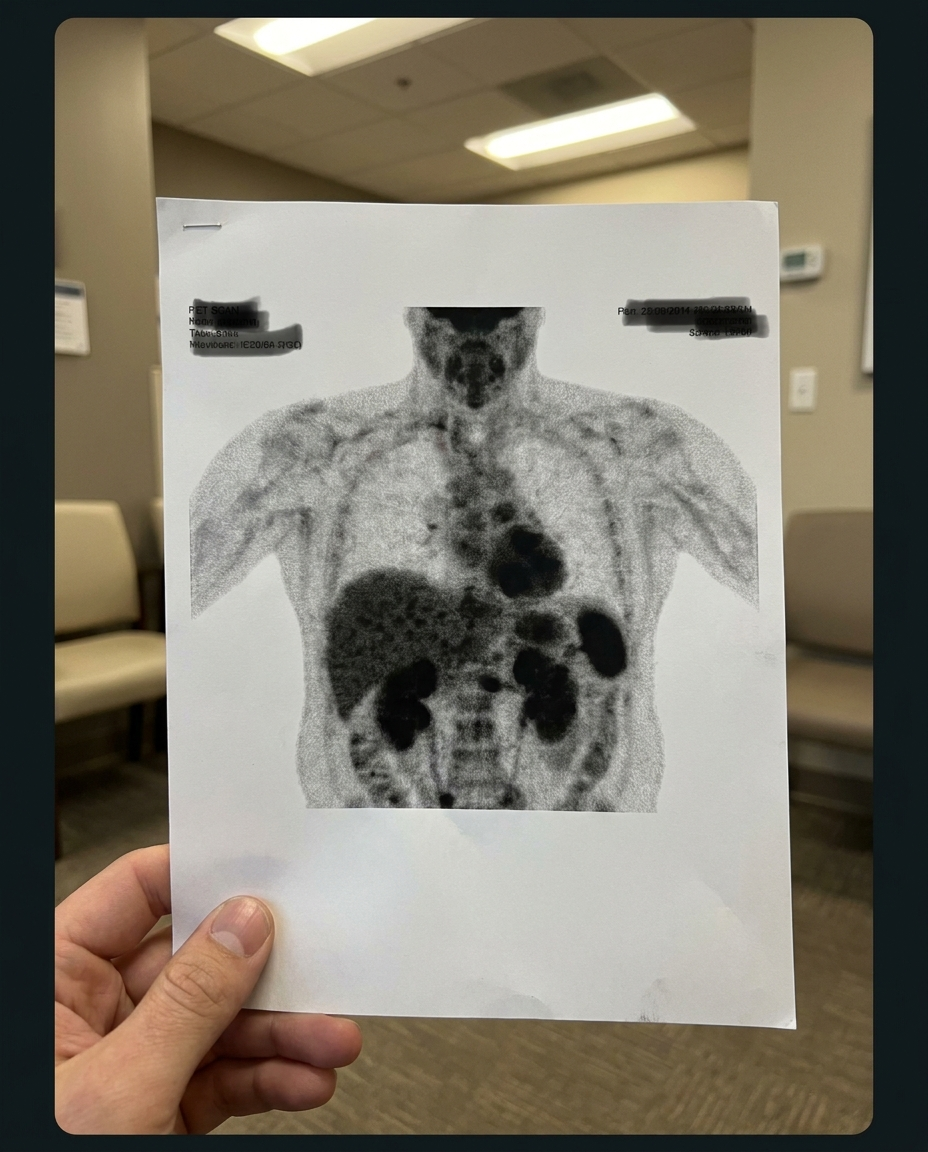
Ran for 4 days, from May 11 to May 15, 2026, the last day Crush saw it.
Run by Angela Johnson on Facebook. Crush is not the advertiser and does not verify its claims. See this ad in Meta's Ad Library(opens in a new tab)
Want an ad like this for your product?
Crush makes new ad images for your product from this ad: your logo, your product photo, your offer.
Trials from $19.95 USD, then $79.95 USD a month. Cancel anytime.
About this ad
- Meta Ad Library ID
- 943004521905943
- Platforms
- Facebook and Instagram
- Relaunches
- 0
Ad text
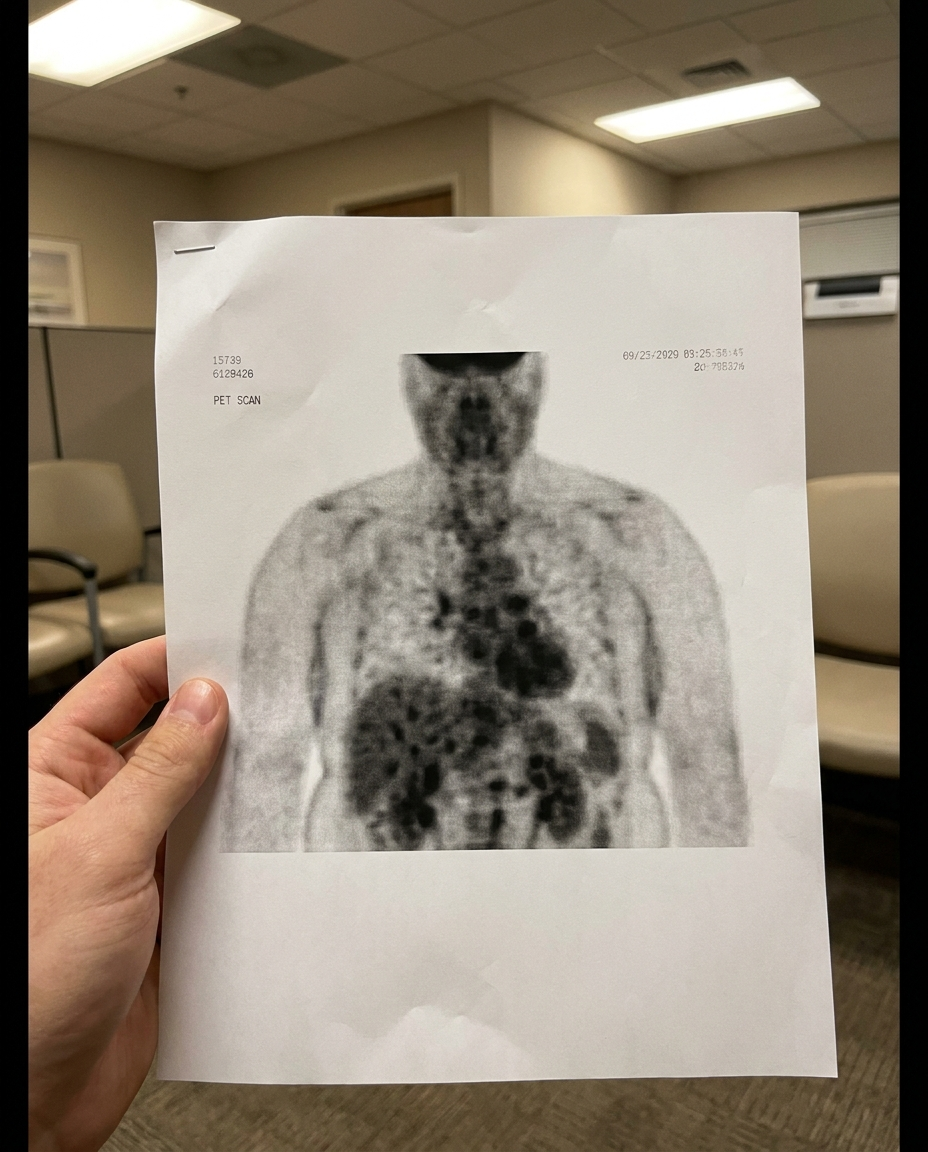
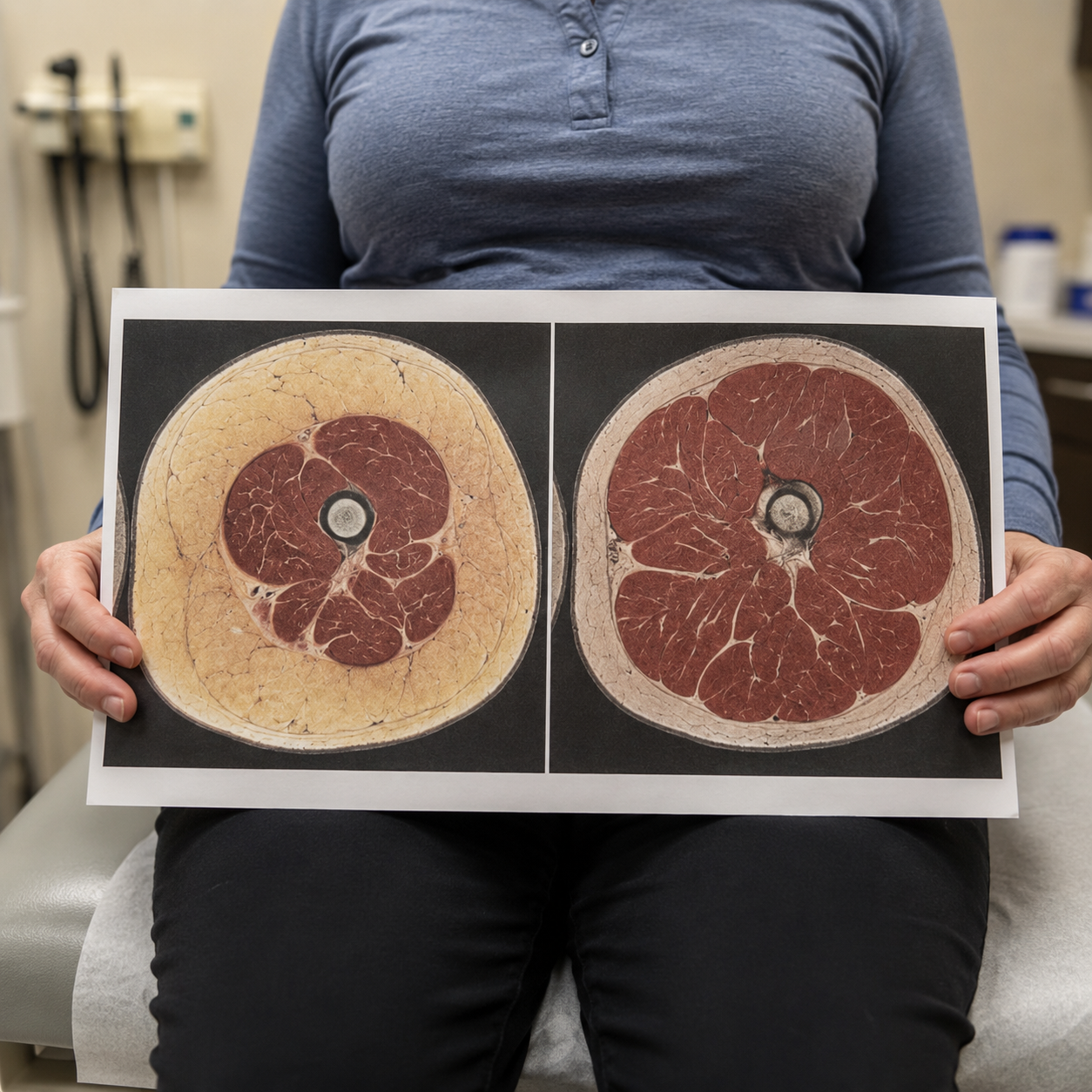
At 9pm, my husband walked into our kitchen and found me in socks, eating dry Raisin Bran out of the box with one hand. Standing — because sitting makes it a meal. And if it becomes a meal, I have to admit I'm doing it. He said, "Still hungry?" I said, "I barely ate dinner." Inside my head: please leave. Please don't look at me. Last Thanksgiving, my 14-year-old daughter asked me why I'm never in the family photos anymore. I didn't have an answer I could say out loud. I'm 45. I run HR for 400 people. I've handled layoffs, lawsuits, and a merger without flinching. And for over a year I had been losing a private war to a box of dry cereal in my own kitchen. And the reason I'm sharing this is that four months ago, I finally found out why. Here's what no doctor or hormone specialist told me. There's a name for what's happening to women after 40. For the 9pm food noise and uncontrollable cravings. For the jeans that fit last year and don't now. And every woman I know in this stretch of her life is living with the fallout and calling it the WRONG name. Calling it “I let myself go.” Calling it “I don't have willpower anymore.” Calling it “this is just what midlife looks like.” It isn't any of those things. It's a specific, dateable shift in how midlife appetite works. And once I knew it had a name, the whole thing stopped being my fault. Now I have more energy at 7pm than I've had since I was 38, and the black dress I wore to my 40th birthday is back in rotation. But before I tell you how I found that name — let me back up to last spring. — Last spring I donated the jeans I wore in 2023 to Goodwill. Not the old ones. The recent ones. The ones that buttoned in February and stopped buttoning by October. I couldn't bear pulling them out of the drawer every morning and doing the calculation. Every morning — the calculation. Which shirt covers. Which angle in the mirror. Which version of me walks out of this room today. 18 months of that. And I was running out of tops that covered. I started spending maybe a third of my daily bandwidth managing how I felt about my body. Rearranging the napkin over my lap at dinner. Turning slightly in Zoom calls so my side wasn't in the webcam frame. Sucking in when I caught my reflection in a store window. A second job nobody sees. And the scariest part wasn't what my body was now. It was that I couldn't see what would stop it from being WORSE in five years. — For six months I told myself it was stress. Then weakness. Then willpower. Each story lasted about a day. The next morning I'd be "good" again — protein for breakfast, a walk at lunch — which I used as proof that last night was a one-off. Until 9pm happened again. Crackers from the box… Chocolate chips from the baking drawer… Dry cereal, because somehow dry counts less. I was back in the pantry light, promising myself it would be the last time. YES, I'd tried the greatest hits. Noom for four months — I could control calories, I couldn't control the voice. Intermittent fasting — a weapon that had worked in my thirties; by 45, I couldn't make it to 11am without the shakes, and the 8:47pm voice came back louder. Berberine capsules, twice — two different brands, both upset my stomach, neither moved the pantry voice a single decibel. (Later I'd understand why: oral berberine spikes and clears in two hours. Long gone by 9pm.) Magnesium. Protein-first at breakfast. A seven-week experiment with no wine, which helped my sleep and did nothing for the pantry. I'd read every midlife metabolism article The New York Times had published in the last three years. I'd done everything designed for a younger body. That's the part that hurt — not that I was lazy, but that I wasn't. — For about two weeks I seriously considered getting injections. My college roommate Ruth was down 40 pounds on them. I was happy for her. And I was jealous — not of the pounds. Of the quiet. She said food had stopped talking to her. I wanted that more than I wanted anything. But Ruth had stopped her shots at Christmas and gained 28 of the 40 back by Easter. And I didn't want to be on something I'd still be injecting at 60. I wasn't sick enough for shots. I was past the point where "try harder" was working. There had to be a middle lane. — It was 2am on a Tuesday. I hadn't slept in two hours. I gave up and opened my laptop. I typed: "menopause night cravings." Then: "why am I starving at 9pm but fine all day at 45." Then: "can hormones cause cravings if labs are normal." Every mainstream result said the same thing. Cut sugar. Eat more protein. Practice mindfulness. Be patient with your body. I'd done ALL of that. I was about to close the laptop when I found a long post buried four pages deep — a substack, written by a woman named Meredith Cole. A nurse practitioner who'd spent 22 years in women's hormone health before leaving clinical practice to write about what the training system was behind on. Her byline photo was a woman about my age — silver bob, reading glasses pushed up into her hair, the kind of face you'd trust across an exam room table. The post was titled: "Your appetite isn't failing. Your signal is." I read it standing at the counter with my coffee going cold. Here's what Meredith wrote… — Cortisol is the hormone that keeps your appetite quiet during the day. It's your body's built-in "I'm not hungry" trigger. That's why you can "be good" at breakfast and lunch — cortisol runs high. Then in the evening, cortisol drops. Blood sugar drops with it and you’re pulled to the kitchen. In your thirties, estrogen acted like a cushion underneath the whole system. When cortisol dropped at night, the hormone keeping you full (estrogen) was there to catch it. It kept you from snacking. It kept your brain from panicking. You didn't need willpower at night. But in early menopause, estrogen quietly disappears so there is no safety net. By age 45, when cortisol drops in the evening — and it drops every single night like clockwork — it doesn't ease down. IT PLUMMETS! Six p.m. — the path you've walked for thirty years is suddenly a cliff. Eight p.m. — you're stepping off into space. By 9pm you're free-falling, and your brain is doing exactly what brains are designed to do when they detect a fall: It fires an emergency signal. Find fuel. NOW. Eat anything. That's the 9pm voice. It isn't hunger. It isn't preference. It isn't a character flaw. It's the same alarm system that would fire if you were stranded in the woods. Your body thinks it's stranded. Meredith called the whole event the “Cortisol Cliff.” For 18 months I had been using willpower to try to override a 911 call. OF COURSE I was losing. Willpower is what you use to ignore a signal. It's not what you use to turn one OFF. — Then Meredith wrote the part that made me angry. This research isn't new, she said. It's been sitting in endocrinology journals for almost a decade. Peer-reviewed. Not fringe. The reason my doctor didn't mention it isn't that she's a bad doctor. It's that the medical training system is roughly thirty years behind the research on midlife women — because women were excluded from federally funded clinical trials until 1993. That's not a misprint. 1993. That's how a 45-year-old woman who walks five miles a day ends up blaming herself for losing to a box of cereal at 9pm. The mechanism was sitting in a paper. The paper hadn't reached our doctor’s exam room yet. And every diet book, every wellness influencer, every "just eat less" doctor's appointment for the last thirty years has been built on the wrong starting data. Meredith's post ended with a paragraph I almost missed. "And stop calling this vanity," she wrote. "Caring about feeling recognizable in your own body isn't shallow. Using a tool designed for the body you actually have isn't desperation." "It's the first sensible thing most of us do in a year." "The women I know who figured this out didn't figure it out by trying harder. They figured it out by stopping trying to fix the wrong thing." She went on. “The appetite signal is the leverage point. We DON’T fix midlife weight by attacking the weight. We fix it by quieting the signal that's driving the 9pm cereal handfuls. Stop those, and the midsection accumulation stops with them. The appetite isn't the side effect of the weight. The weight is the side effect of the appetite.” I read those two sentences three times before they landed. — A week later, following a link from Meredith's substack, I found a private group for women aged 40 to 58. Fifteen thousand of them. The competent, skeptical kind. Women who run teams. Who've tried everything designed for a younger body. Who aren't ready for injections and are tired of being told it's just aging. The Cortisol Cliff came up constantly. Meredith's framework was the group's vocabulary. And one product kept getting mentioned. Not as a miracle. More like a protocol. A thing women were using to bridge the evening window while their signal reset. A comment from a woman named Linda — 49, pediatric nurse, two teens — stopped me cold: "I used to stand at the counter eating handfuls of cereal at 11pm so nobody would see. It's not that I have willpower now. It's that the voice that used to scream at night just… got quieter. I make tea. I go to bed." That was my 9pm scene. Word for word. I scrolled further. A physician assistant in Denver, 44: "I thought I was developing an eating disorder. Turns out I had a signal problem." A marketing director in Minneapolis, 47: "Not the bread at lunch. The cereal at 10pm. Exactly that." A litigator in Charlotte, 51, answering a post about shame: "We're not losing to willpower. We're losing to a mechanism nobody named for us." Six months ago I'd assumed I was the one doing something wrong in a world of women who weren't. I was now reading dozens of women doing the exact same thing, at the exact same hours, with the exact same shame. And then I read about women who'd been on the protocol for three months saying the same thing… That the voice they thought was uniquely theirs was a mechanism, and the mechanism could be quieted. The Cortisol Cliff wasn't a theory anymore. It was the shape of a thing we were all climbing out of. That was when I stopped thinking I was the exception. — The product Meredith recommended was called the Reset Patch. Made by a brand called Alma Protocol. I'd never seen it in a drugstore. Not in the supplement aisle at Whole Foods. That was the first good sign. It wasn't a capsule. Capsules spike and wear off — they'd miss the whole 9pm window, and that was the window that mattered. This was a transdermal patch. Same delivery mechanism as the nausea patches they give you before surgery. Doctors call transdermal a legitimate drug-delivery category, and so do the surgeons using it on patients every day. The active ingredient was berberine — Meredith explained how well it works. “Berberine supports the glucose-insulin signal that cortisol disrupts at night.” “It does downstream what estrogen used to do — keeps your blood sugar floor steady before the cliff arrives." “Which means at 9pm, the cortisol cliff lands soft. The 911 food alarm doesn't fire.” In capsule form it spikes for two hours, misses most of the evening drop, and tears up a lot of women's stomachs. Through the skin, Meredith wrote, the math changes completely. Transdermal delivery bypasses the stomach entirely — no GI hit, no spike. The compound runs steady across the whole evening window. Enough to stop the evening food noise and cravings. The rest of the formulation was pomegranate, cinnamon, glutamine, and chromium. Each one supports the AMPK cellular switch. They tell your body to use the fat it’s been storing for energy, instead of waiting for the next meal to refuel. And it’s hormone-free — which mattered because I wasn't on HRT and wasn't ready to start. The basics checked out — third-party tested, vegan, made in the US. Applied in the morning — right next to where I brushed my teeth, so I couldn't forget — and removed before bed. A daily habit. Not a lifestyle overhaul. For 18 months I'd been waiting for a solution that didn't require me to build another full-time job on top of the two I already had. This looked like one. I sat with the order page open for maybe twenty minutes. I'd been burned before… I'd been the woman with the supplement cabinet my husband walked past without asking about. I'd been the woman who bought another thing, then quietly threw out the bottle six weeks later so nobody would see it. Ordering this meant becoming that woman one more time. UNLESS… Unless this was the one I'd been looking for. But this was the first thing I'd read in 18 months that treated me like I wasn't the variable. I ordered the 90-Day protocol on a Tuesday. It arrived on a Saturday. Saturday morning I applied the first patch to the inside of my left wrist, right after brushing my teeth. Nothing happened. I was disappointed. I was expecting what the shots are supposed to do — some kind of on/off switch in my brain. This wasn't that. Saturday night. 9:15. Mark and I were watching something on the couch. I got up to get water. Walked past the kitchen. Sat back down with a glass. About twenty minutes later I got up to refill it. Walked past the kitchen again. Sat back down. That was when it hit me. I hadn't gone in. Not "resisted." Not "white-knuckled." Hadn't thought about going into the kitchen. For 18 months, 9pm had been an event. A war I lost standing up in pantry light. That Saturday, nothing happened. That was when I knew something was different. Week 1: Mostly the same. Some nights, 9pm hunger was quieter. Some nights it wasn't. I almost called it a placebo. Mark said I seemed less snappy after dinner but I thought he was being nice. Week 2: The second Tuesday was the first night I made tea instead of cereal. I put the kettle on before I registered that I hadn't opened the pantry. Then four nights in a row. Then most nights. Week 6: Thursday night, going to bed. I was getting changed in the bedroom — not the bathroom — and Mark was already in bed with a book. I caught him watching me in the mirror. Not in a comment-on-it way. Just… looking. I hadn't undressed in front of my own husband in this room in over a year. I hadn't realized I'd stopped. Month 3: Annual physical. Same doctor who'd told me a year before to "just be patient with my body." She took my weight. Looked at the chart twice. Looked at me. "Have you been doing something different?" I told her about the patch. She wrote it down. She didn't say I was wrong. That was the closest thing to vindication I'd gotten from a doctor in five years. — That was the night I called my sister Jen. Jen is 48. She runs a physical therapy practice in Charlotte. Same 9pm problem for three years. Same "eating standing up" ritual. She ordered the 90-Day protocol that weekend. Three weeks in she texted me at 10:17pm: "Made tea. Went to bed. Didn't even think about it. Is this what normal is supposed to feel like?" She's four months in now. Neither of us tracking. Neither of us on a plan. Both of us back in the jeans we donated. I've since sent the link to two women in the group, my college roommate Ruth (the one who rebounded off injections), and one of my direct reports who mentioned "food noise" to me in a 1-on-1. Every one of them has ordered. I'm at month five now. When someone asks what I'm doing differently, I tell them: it's not a diet. It's a midlife appetite-support protocol. There's a difference. The women in the group said most of them use it for three to six months while the pattern resets, then taper off. That's how it's designed. A bridge across the evening cortisol cliff while the regulation catches up. Not something you stay on forever. A tool. Not a subscription. I've started skipping days. The 9pm voice doesn't come back on skip days — which is how I'll know the pattern has actually reset, not just quieted. This isn't "kills hunger." It doesn't make me skip dinner. It doesn't flatten my appetite into nothing. It just makes the evening food noise quieter. And with that, the scale moved. — Jen is the reason I'm writing this down. She keeps telling me more women need to know this has a name. That the reason it took me 18 months to find it is that nobody's writing the part we needed to read. So here it is, on a Sunday afternoon, from a woman in Raleigh who spent a year and a half eating cereal in the pantry light. If the 9pm pantry scene sounds familiar… If you're doing everything you did in your thirties and getting a different body anyway… If your doctor told you to be ‘patient’ with your body… If you've had your own 2am search-bar moment and still feel like the only one who typed it in… If you've watched a friend lose tens of pounds on injections and felt something you didn't have a word for… This is for you. I'm not the woman who eats cereal in the pantry light anymore. I'm not the woman in the back of the Christmas photo. I'm not the woman my daughter is learning to apologize to about her own body. I'm not the woman who got told "be patient" for a year and a half and believed it. I found another way. And every woman I know who found it found it the same way I did — by stopping trying to fix the wrong thing. — The fastest way to find out if this is what's happening to you is the same assessment Meredith built. A three-minute walkthrough that maps your specific cortisol curve, where your body is storing the changes, and what your 90-day projection looks like if you bridge the cliff. I took it on a Saturday morning at my kitchen table. By the end I had four answers I'd been looking for since the previous spring. It costs nothing. It doesn't ask you to buy anything. It's the part I wish someone had handed me 18 months ago instead of another article telling me to cut sugar. I left the link here. Same one I used: https://almaprotocol.com/pages/assessment Take three minutes. Find out if you have a Cortisol Cliff — and what your version of it looks like. — Laura, 45, Raleigh, NC P.S. The arc, in case you skim: Saturday night, 9:15pm — first night I walked past the kitchen and didn't go in. Week 2 — first night I made tea instead of cereal. Week 3 — voice was demoted, like a song in another room. Week 6 — I undressed in my own bedroom. Month 5 — back in the jeans I donated. The diagnostic that pointed me here is below. https://almaprotocol.com/pages/assessment
Where the ad sends people
almaprotocol.com
Why your appetite changed after 40
Alma Protocol
Learn more: almaprotocol.com(opens in a new tab)