
Inactive· since May 12, 2026
- 28
- days it ran
- 1
- relaunches
Ad copy
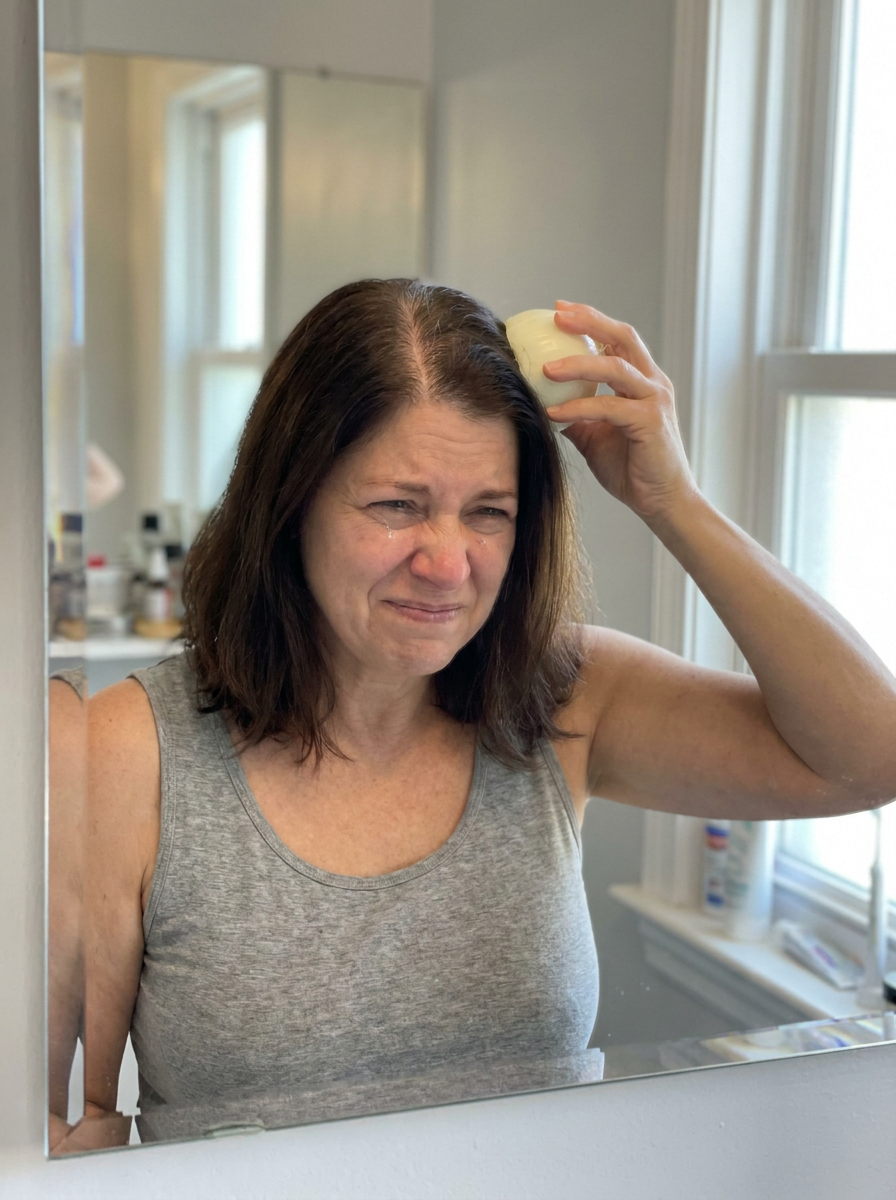
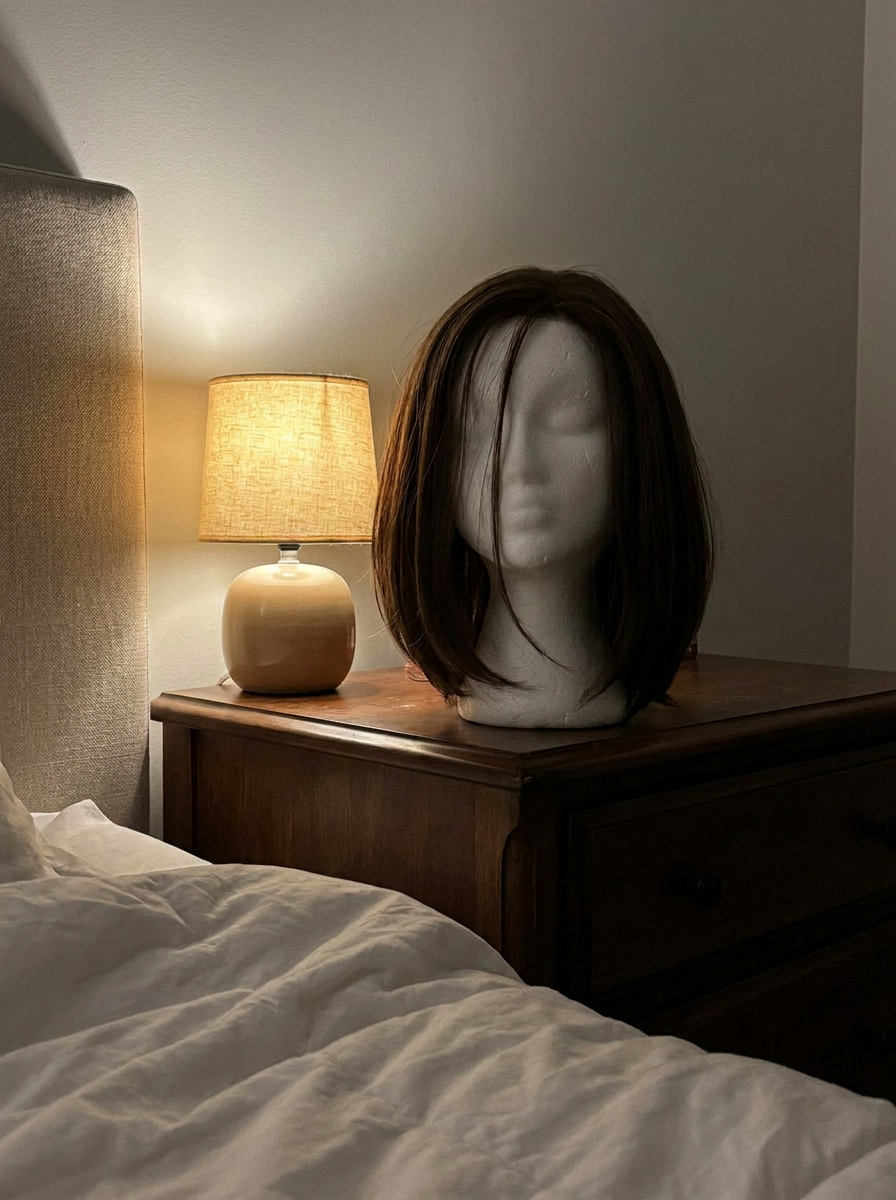
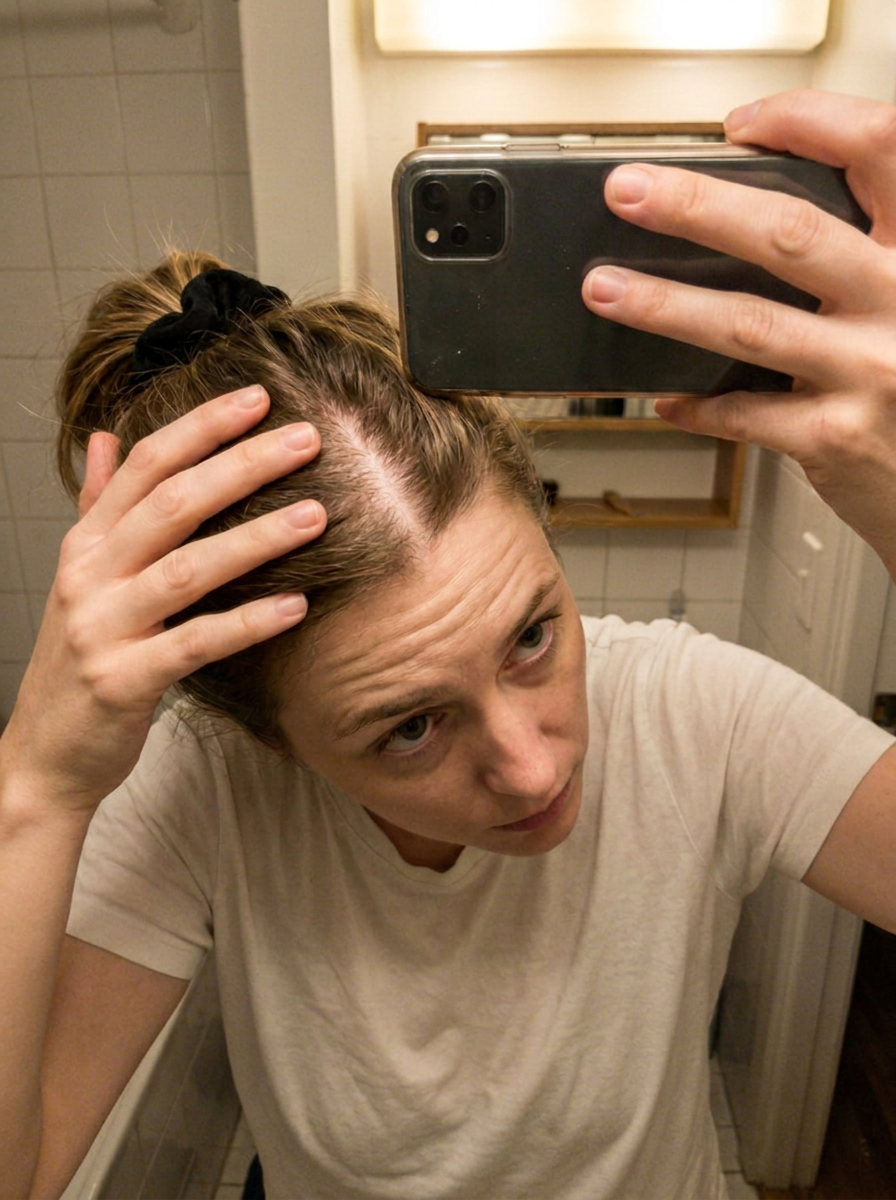
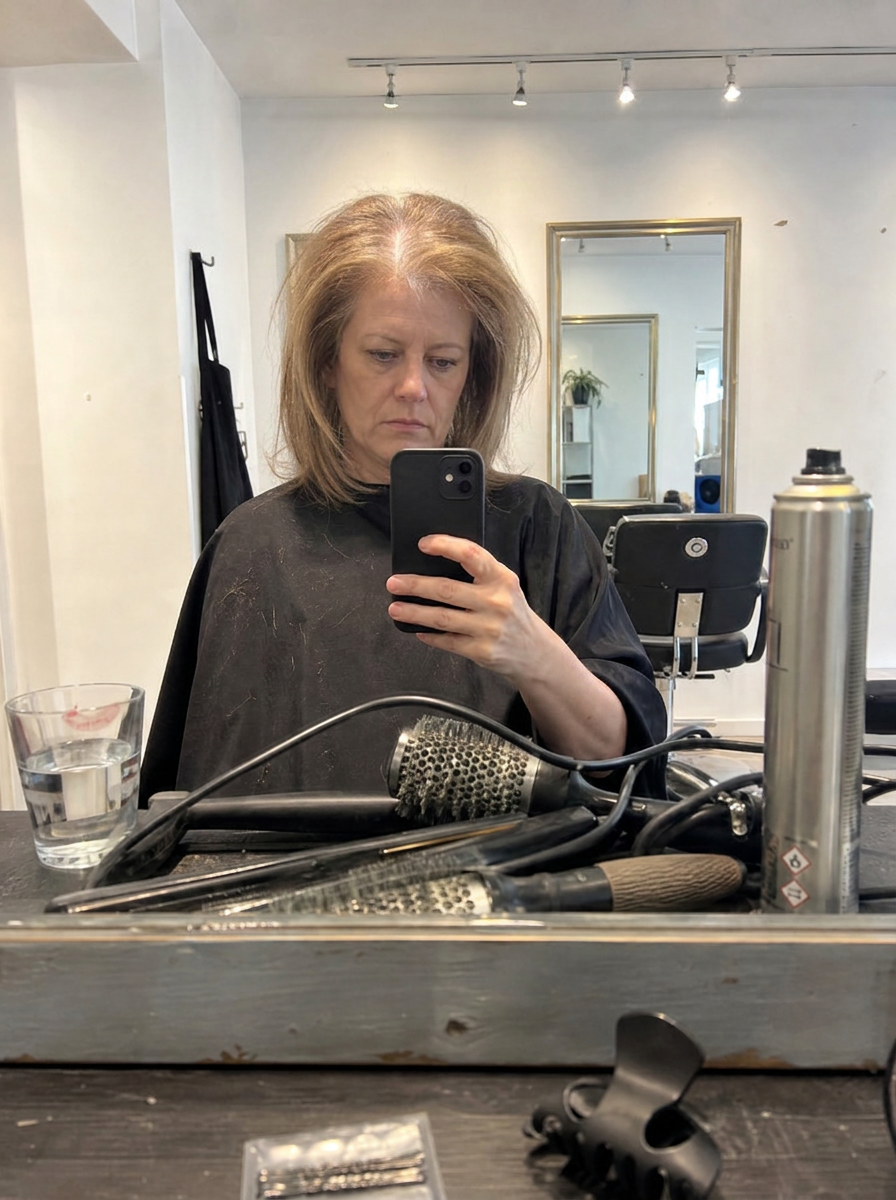
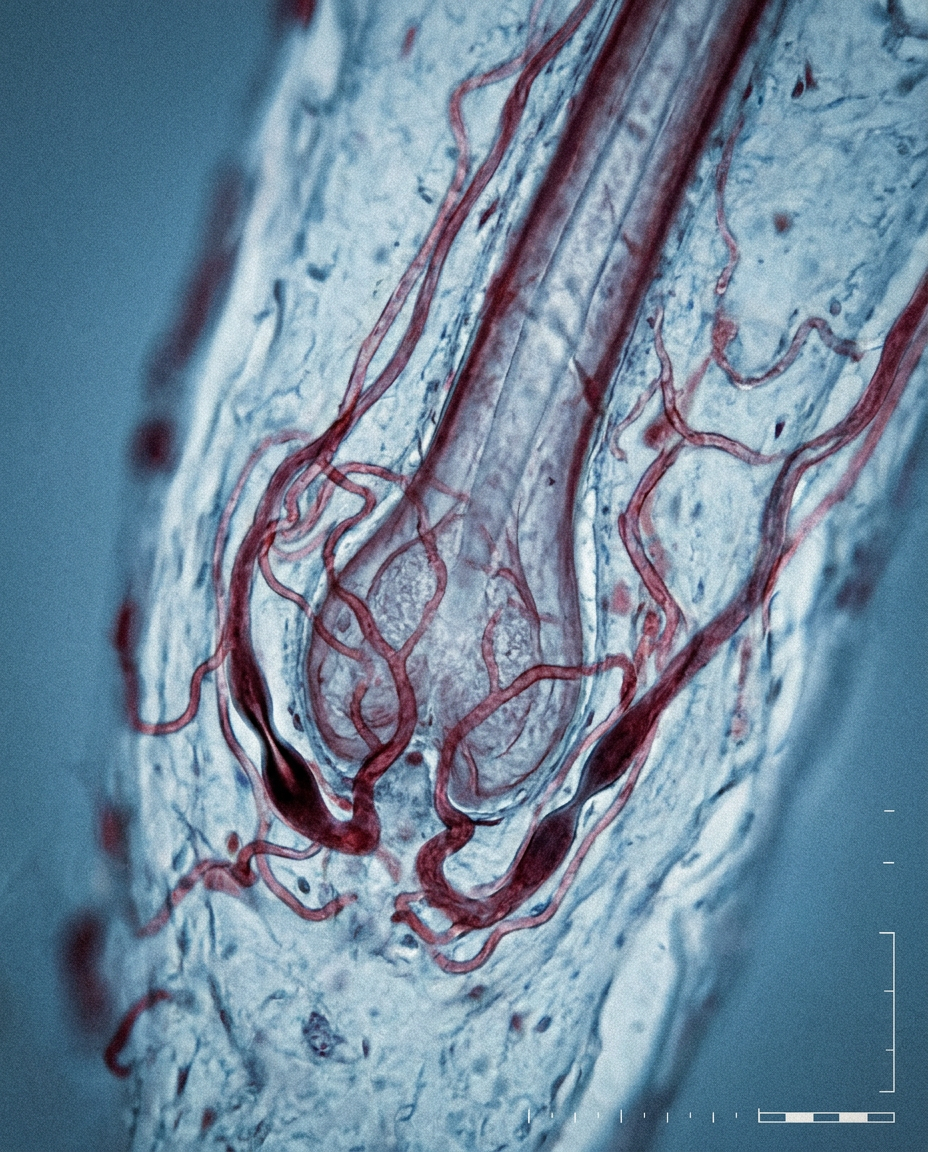
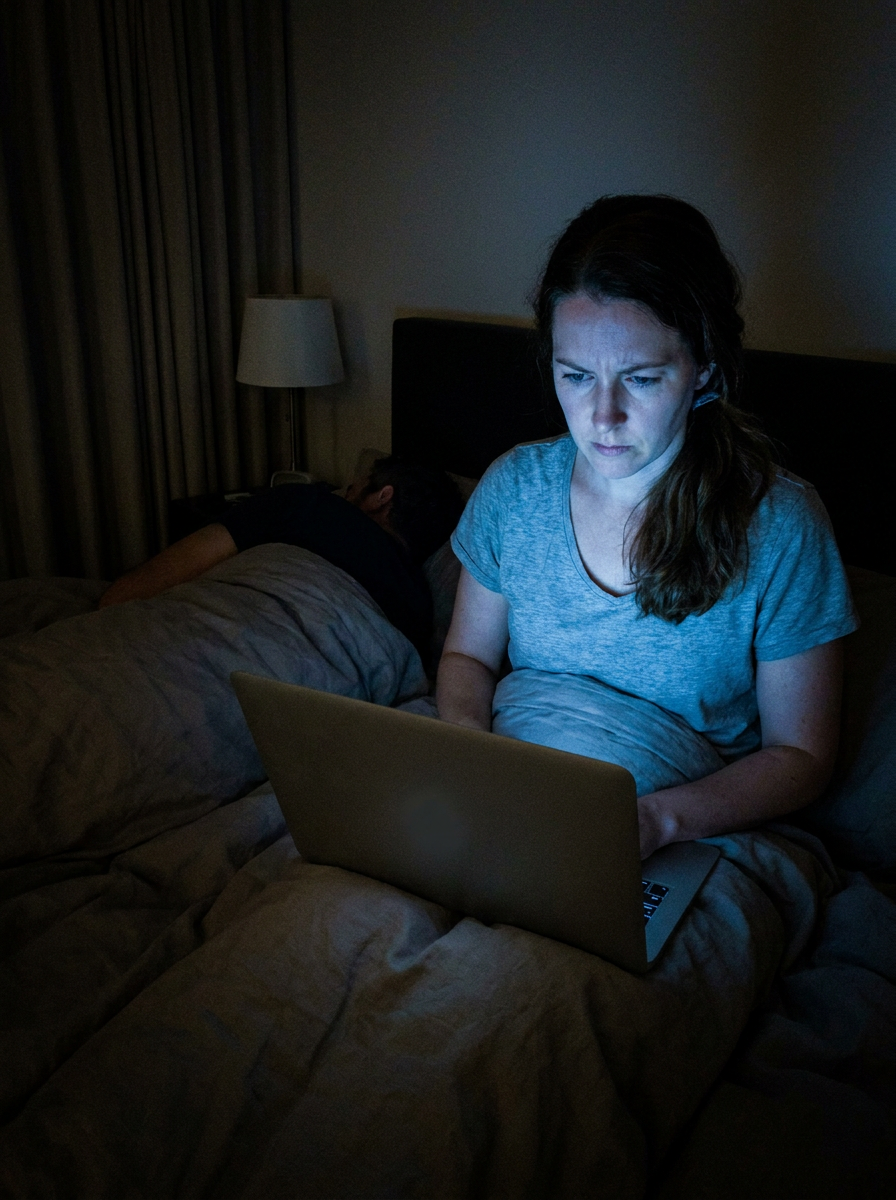
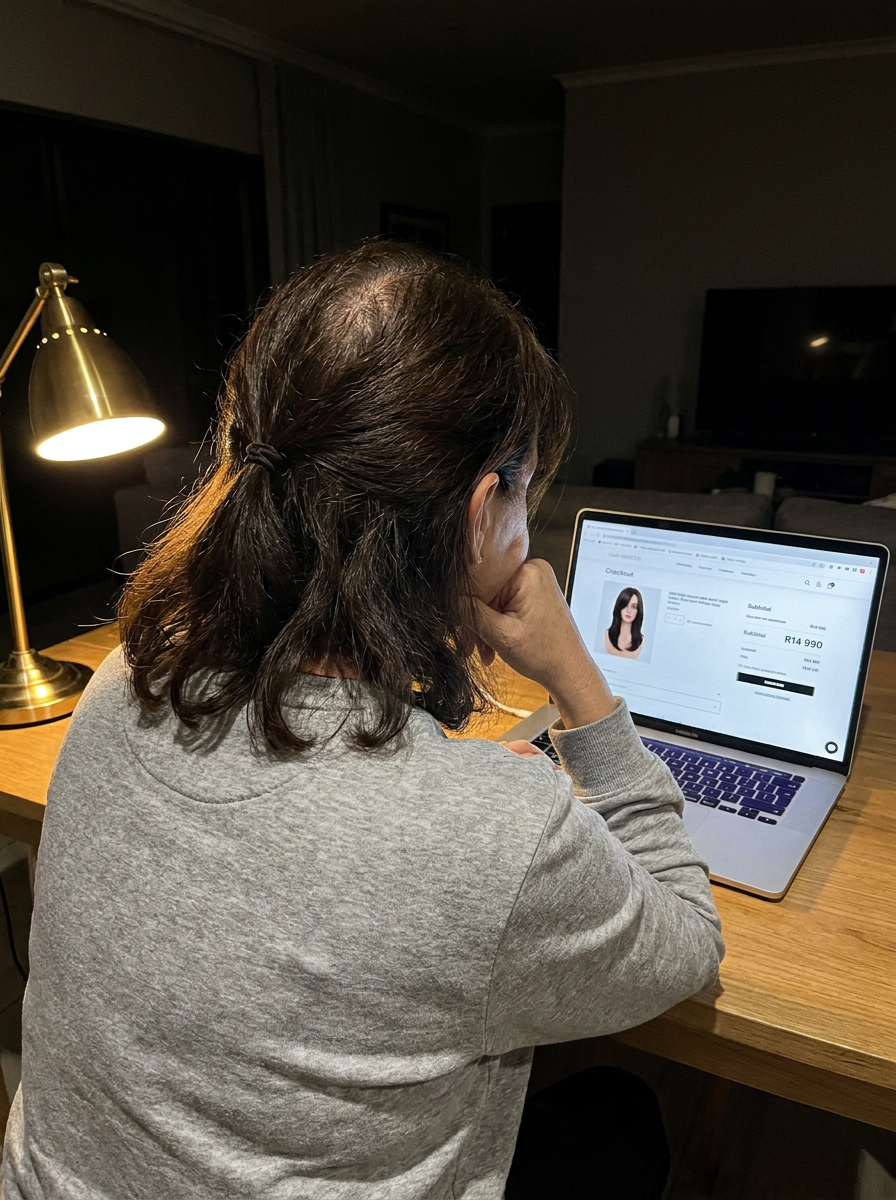
I was about to buy a wig because I could see straight through to my scalp at 45. Not 65. Not 75. 45. And I was so ashamed I could not even bring myself to walk into a wig shop in person and buy one. So I sat propped up in bed at 11:47pm with the laptop angled away from my husband, my dog snoring at the foot of the bed, and I shopped for someone else's hair in the dark, in a private browser tab, with the volume off so the rest of the house couldn't hear what I was doing. I had a R14,990 lace front sitting in the online checkout. My card details were saved. My finger was on the trackpad. I was 30 seconds away from clicking confirm. And if a single thought hadn't stopped me right there in the blue glow of the laptop, I would be sitting here typing this in someone else's hair. I would have charged almost fifteen thousand rand of my own family's money to a card I share with my husband, and explained it to him the next morning as a "salon thing." And I would never have known how close I had been the entire time to the actual fix that finally turned my own hair around. This is for every South African woman who is reading this and already feels seen. I want to talk about the shame, because I think the shame is what almost got me, more than the hair did. I am 45 years old. My hair started thinning at 43. The perimenopause came early in my family. My mother went through it in her early forties too, but in her case it was hot flushes and irritability, not the hair. Nobody warned me about the hair. My gynae mentioned it in passing as "possible thinning, very common, nothing to worry about" and moved on to HRT options. It was something to worry about. Within eight months I was finding hair on my pillow every morning. Within a year I had a parting you could see across a room. Within 18 months, I could see my own pale scalp through the top of my head under any kind of overhead light, and the first thing I checked every single morning when I woke up was how much hair I had lost overnight. What I want you to understand, if you have not been there, is what the shame does to you. You stop being a woman in your own life. That is the only way I can describe it. You are still going to work. You are still making lunches. You are still showing up to your sister's birthday. You are still cooking dinner. From the outside, you are absolutely fine. But on the inside, you have quietly stepped out of your own body, and you are watching this woman go through the motions of your life from somewhere about a metre behind your own shoulder, with a permanent hand reaching up to make sure your hair is still covering your scalp. Here are the things the shame stole from me. It stole intimacy with my husband. We had not done it with the lights on in over a year. I would only let him come close to me with my hair down on my shoulders, never tied back, never under bright lights. If his hand drifted up towards my head during a hug or a kiss, I flinched away so fast he eventually stopped trying. I told him my scalp was sensitive. He pretended to believe me. We both knew. It stole my own daughters. We have two girls, 16 and 18. They are at that age where they do their own hair in the mirror with me sometimes, in my bathroom in the morning, chatting before school. I started making excuses. I would do my hair the night before, or earlier than them, or in another bathroom, anywhere they couldn't see me lift sections of my own hair to add hair fibers to my pink scalp underneath. I was hiding from my own children in my own house. It stole photos. Every family WhatsApp group has the photo problem now. After every event there's the flurry of pictures and someone always sends them around. I started messaging my sister privately afterwards asking her to delete the ones with me in them, especially the ones where the flash had hit my parting. I told her I just don't photograph well anymore. She said okay. She knew. She is a kind woman and she said okay. I had also stopped looking myself in the eye properly in the mirror. Brushed my teeth looking at the tap. Did make up one cheek at a time. The thing the shame does not let you do is talk to anyone about it. I have a sister. I have a best friend I have known since I was 19. I have a mother who is still alive and well in Cape Town. I have a husband I share a bed with every night. I did not say a word about this to any of them. Because what would I have said? That I was 45 and losing my hair? That I was avoiding mirrors? That I was avoiding my own husband and my own children? That I was so ashamed I could feel it in the back of my throat when I caught my reflection in a shop window? You don't say those things out loud. You just keep going. By month 19, I started looking at wigs. It did not feel like giving up at the time. It felt like rescue. It felt like the kindest thing I could do for the woman I had become. Stop fighting. Stop trying. Stop hoping. Just buy the hair. Put it on. Go back to being a normal person at family events. Stop making my husband flinch when I pulled away from his hand on my head. But I could not bring myself to walk into a wig shop in person. The thought of it made me feel physically sick. Sitting in a chair in a boutique somewhere, with a consultant fitting hair to my actual scalp, in a room where I might bump into someone I knew. The Sandton boutique had a discreet reputation, but discreet still means a human being looking at your scalp in good lighting and pinning hair to it and saying "this looks lovely." I could not. I genuinely could not. So I started shopping the way I had been doing everything else. Quietly. Online. Late at night. With the laptop angled away from my husband's side of the bed, the volume off, an incognito tab open. I spent about three weeks on it. I read 300 wig reviews. I learned about cap construction, density, hair length, lace types. I picked a R14,990 lace front. I added it to the cart. I left the cart open for two days, then closed the laptop, then opened it again three days later. On a Tuesday night at 11:47pm, with my husband asleep next to me and the lights off and the dog snoring at the foot of the bed, I went to checkout. My card details were saved. My address was filled in. The laptop screen was the only light in the room. My finger was on the trackpad. And the thought that stopped me, the only thing standing between me and almost fifteen thousand rand of someone else's hair, was this. I am 45. I am 45 years old. I have a husband who has not seen me with the lights on in over a year. I have two daughters who I am hiding from in my own house. I have a sister who deletes photos of me out of family WhatsApp groups because I asked her to. I have not looked myself in the eye in 19 months. I am sitting in the dark in my own bed at midnight buying someone else's hair on a hidden tab, and I have not even bothered to find out what is actually happening to my own scalp. I have walked into Clicks and Dis-Chem and Wellness Warehouse and bought what was on the shelf in the order it was recommended, and when none of that worked I started shopping for wigs in the dark in my own bed. I haven't read a research paper. I haven't asked one proper question. I have just panicked and shopped and panicked and shopped for almost two years, and I am 45 and I cannot, I cannot click confirm on this without trying one more time. I closed the laptop. I lay in the dark for an hour, staring at the ceiling, with my heart pounding. The next morning I opened it again, but for something else. For research. I made a cup of rooibos at the dining room table, and for six hours straight I read everything I could find about menopausal hair loss in women in their forties. What I found made me close the laptop and cry into my hands. Because here is what nobody had told me. The reason women lose hair during perimenopause and menopause has very little to do with hormones in the way we are told. The hormones are the trigger, not the actual cause. What the hormones do, specifically the drop in oestrogen, is cause something physical to happen underneath the scalp. And it is that physical thing that is making your hair fall out. Underneath your scalp, every single hair follicle is fed by a tiny blood vessel, smaller than a single strand of hair. These are called micro capillaries. They are the supply line. They carry oxygen, amino acids, peptides, growth factors and nutrients from your blood, all the way up to each individual follicle. That is the entire feeding system for your hair. In your twenties and thirties, those micro capillaries are wide open. Pumping. Flowing. Your follicles are well fed. Your hair grows thick, stays attached, and sheds at a normal rate. Then your hormones drop. And the studies show those tiny micro capillaries start to constrict. They narrow. They lose elasticity. By the time you are 50, the vessels feeding your follicles can be up to 50 percent thinner than they were at 30. Half closed. The road feeding your follicles, half closed. Your follicles are not dead. They are not gone. They are starving. They are still there. Still attached. Still alive. Still ready to grow hair the moment they are fed properly. But the supply line is half closed and the food is not getting through. I sat at my dining table reading this and I started laughing through tears, because suddenly every single product I had wasted money on for almost two years made sense. Every supplement, every collagen powder, every biotin gummy, every marine peptide. They were all hitting my bloodstream perfectly. They were all being absorbed into my body just fine. They just couldn't get up the last few millimetres to my actual follicles. Because the road was half closed. It was not the brand. It was not the dosage. It was not that I needed a different kind of biotin or a more expensive collagen. The whole approach was wrong. You cannot feed a starving follicle from the inside if the delivery road is half closed. The food has to be applied directly to the scalp, where the follicle can absorb it on the spot, locally. You also need to reopen those capillaries. That is what I went looking for next. I needed something that did two specific jobs at the same time. One, something that would help relax the constricted micro capillaries and bring blood flow back to the starving follicle. Two, something that would deliver clinically backed nutrients directly into the scalp where the follicle could absorb them on the spot. That is when I found Alyra. Alyra is a topical mist made for South African women experiencing exactly the kind of thinning I had been quietly dealing with for almost two years. The first active is caffeine, which has been shown in human studies to help relax constricted scalp capillaries and bring blood flow back to the follicle. The second is hydrolysed rice protein, which in a 16 week placebo controlled trial increased both hair density and hair strand diameter. Then panthenol to strengthen the hair shaft and the scalp barrier. It does both jobs at the same time. It opens the road. And it delivers the food directly to the follicle on the spot, no detour through the bloodstream. You spray it on dry or damp scalp twice a day. Twenty seconds. No washing out. No greasy residue. I read every review I could find. I read the ingredient list three times. I cross checked the mechanism against everything my gynae had mentioned and everything I had read that night, and it lined up. I ordered two bottles before I lost my nerve. The bottles arrived two days later. I started spraying twice a day, morning and evening. I had to stand in front of the bathroom mirror to do it properly, the one I had been avoiding for almost two years. I want to be honest with you about what happened next, because the slowness of it is part of why it actually worked. This was not a transformation. This was a slow turn. And it took months. The first month I felt almost nothing. The mist had a faint cooling sensation. It absorbed in 30 seconds. It smelled clean, slightly herbal. I sprayed and went on with my day, with no idea whether anything was happening underneath. Around the end of month one I started to notice, in a vague way, that the hairs in my brush each morning were slightly fewer. Not a single dramatic morning. Just a slow shift over weeks, where the small ball of fluff I usually pulled out of the brush after a blowdry was getting smaller. By the start of month two, my scalp felt different. Just calmer. The dry, slightly tight feeling I had lived with for almost two years had quietly softened. I noticed I had stopped scratching the back of my head at my desk in the afternoons. Halfway through month two, I caught myself in the bathroom mirror with wet hair after a shower, and I noticed the hair clumped together when wet looked thicker than I remembered. I did not trust myself yet. Month three was when the change became something I could not quite explain away. I was blowdrying my hair on a Saturday morning and I noticed it was taking longer than it used to. There was more hair to dry. Not a lot more. Just enough that the routine I had perfected over almost two years of less and less hair was starting to feel slightly off. Around the middle of month three, I leaned in close to the bathroom mirror in good morning light and I saw the first baby hairs along my hairline. No tears. I just touched them with my fingertip, confirmed they were real, and stood there for a while looking at the hairline I had not allowed myself to look at properly in almost two years. By the end of month three, my parting was not narrower yet, but the scalp showing through it was less. The skin underneath looked less exposed. Like something was filling in just below the surface. Month four was when I started believing it. The baby hairs along my hairline were no longer just at the front. They were coming through along the side parting too. I could pull it back, actually, without the loose strands at the temples sliding straight out. By month five, my parting had visibly narrowed. I took a photo of the top of my head in the same bathroom light I had been avoiding for two years, and I compared it to a photo I had taken in shame ten months earlier, and I sat on the edge of the bath and cried for the second time in this whole story. Not the dramatic cry of two years earlier. A quiet one. A relieved one. By month six, I had stopped wearing the brown powder. The headbands stayed in the drawer. I started wearing my hair down again. Slowly. On weekends first. Then to work. Then to family events. Somewhere around month six I realised, almost in passing, that I had been making eye contact with myself in the bathroom mirror for weeks without thinking about it. She was back. I want to tell you something I needed someone to tell me two years ago, when I was 43 and watching my hair fall onto a black t shirt and quietly losing my mind. You are not the only one. You are not the only woman in her forties in this country whose hair started thinning earlier than she expected. You are not the only one hiding from her own daughters in her own house. You are not the only one who has flinched away from her husband's hand on her head. You are not the only one shopping for wigs at midnight in private windows. You are not the only one who has not looked herself in the eye in months. You are not failing at something every other woman has figured out. The reason it feels like that is because nobody talks about it. Hair loss in your forties is one of the loneliest experiences a woman in this country can go through, and the silence around it is the cruellest part of it. But you also do not have to buy the wig. Alyra are running a 3 for 2 deal at the moment, which is roughly the supply you need to give the mechanism enough time to actually work. They also back it with a 120 day money back guarantee. The 120 days is genuinely the right amount of time to give it a real chance, and if it doesn't work for you, you get a full refund. If your parting has been getting wider please give your own follicles four to six months. They are not dead. They are starving. Feed them. And if you have not properly looked yourself in the eye in a while, I promise you, she is still in there. She is waiting. Tap below to try Alyra for yourself https://alyra.co.za/products/alyra-hair-enhancer-mist
If your hair is thinning after 40, read this ☝️
The 30-second scalp mist that targets the hidden root cause of thinning hair. Follicle Starvation. Using 5 clinically studied botanicals that reopen shrunken blood vessels and rush nutrients directly to your starving roots.
LEARN MORELike this ad? Make it yours.
Crush rebuilds this exact creative around your product — your brand, your colors, your offer — in about a minute.