Patriot Training Center
 Facebook ad: “Could you get to it in time?”
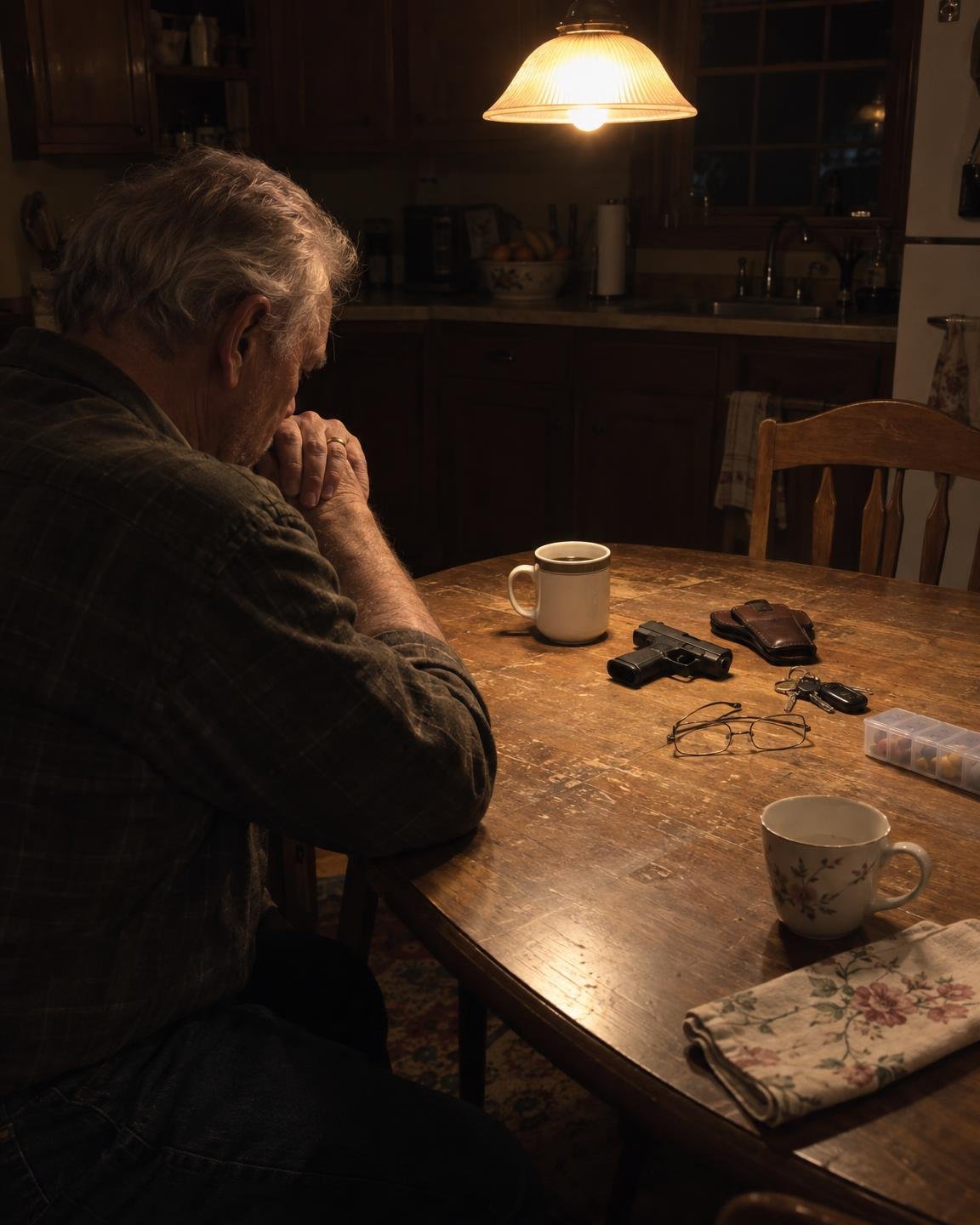
Ran for 32 days, from October 10 to November 11, 2026, the last day Crush saw it.
Run by Patriot Training Center on Facebook. Crush is not the advertiser and does not verify its claims. See this ad in Meta's Ad Library(opens in a new tab)
Make your own version of this ad
Crush makes it, launches it in your own Meta ad account, scales the winners and pauses the losers.
About this ad
- Meta Ad Library ID
- 943655575075415
- Platforms
- Facebook and Instagram
- Relaunches
- 0
Ad text
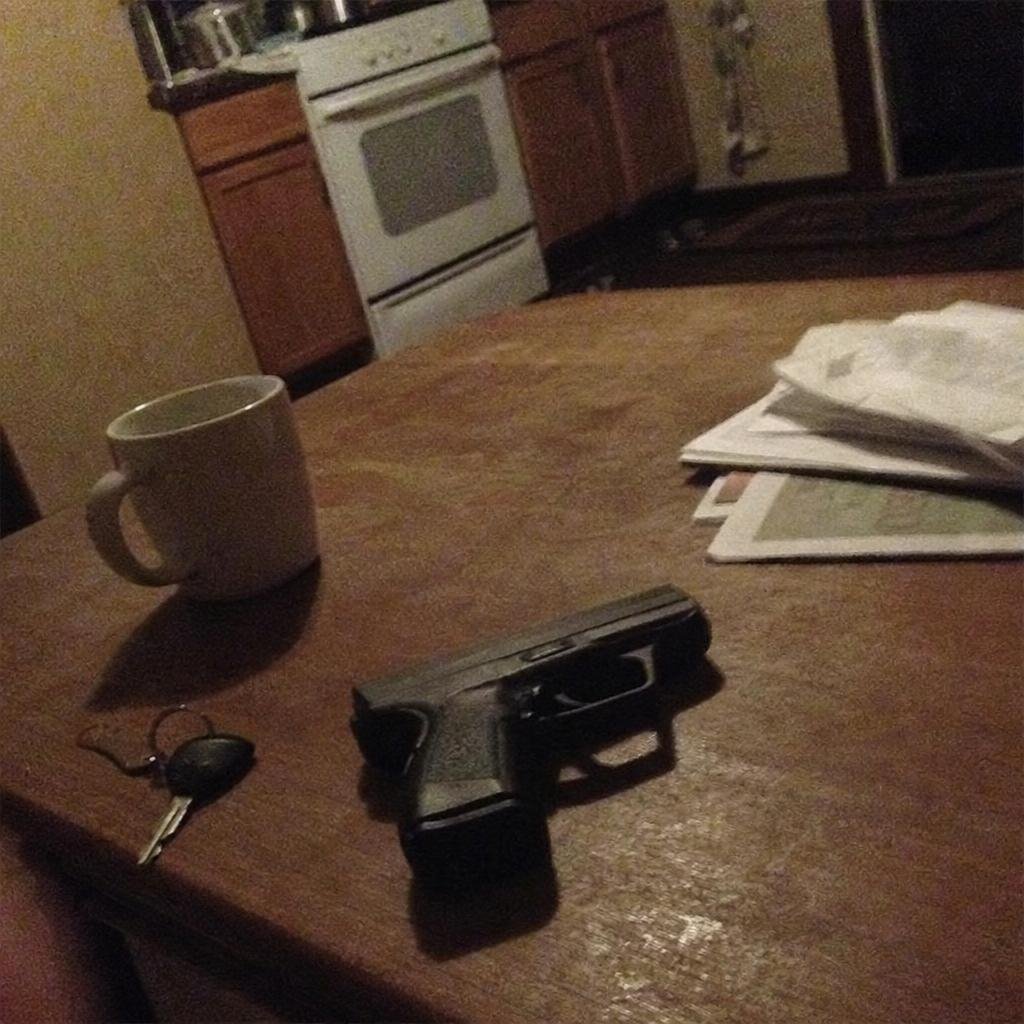
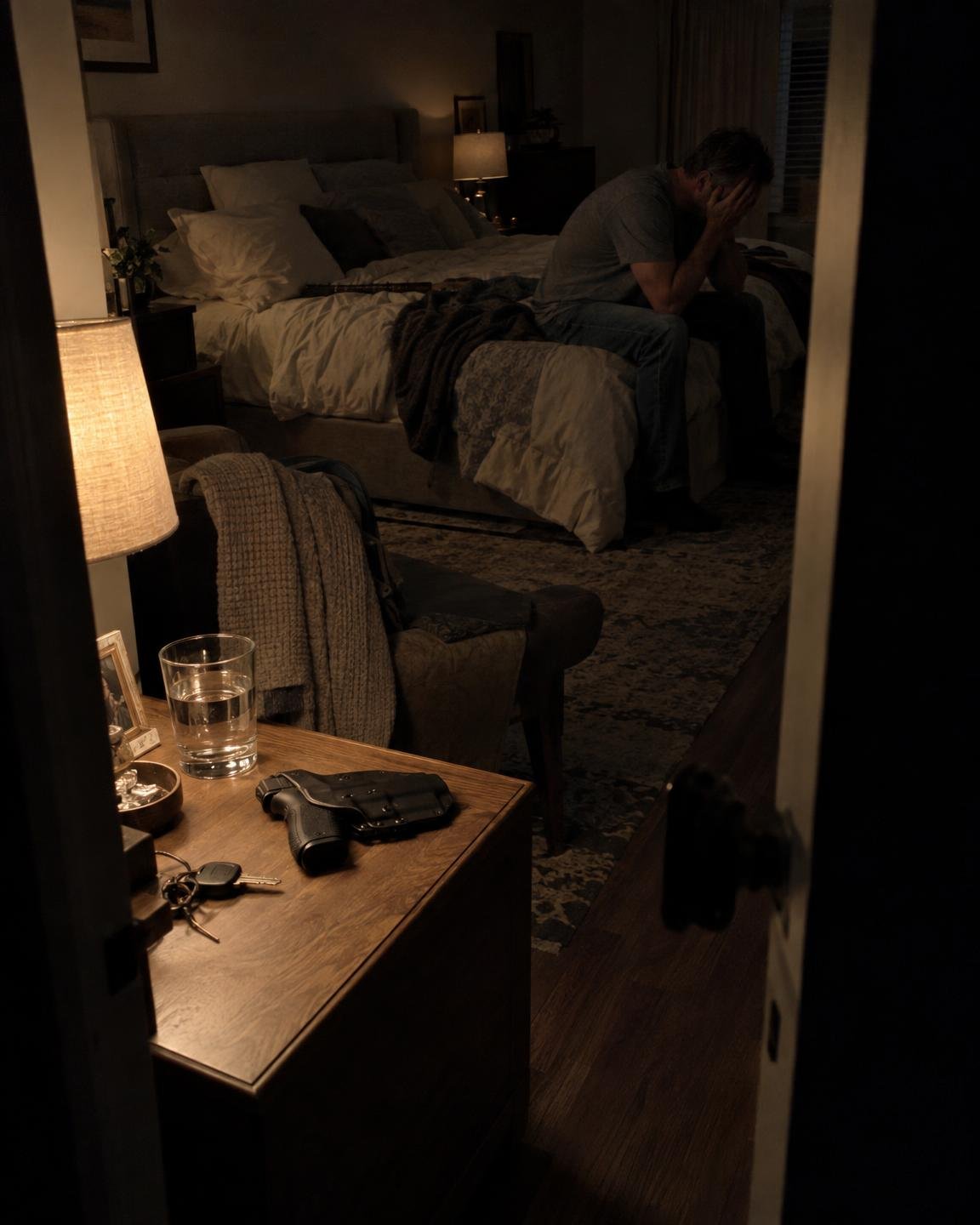
My wife asked me one question about the gun I carry, and I couldn't answer it... "If you had to - could you actually get to it in time?" I opened my mouth. Nothing came out. And in that silence, we both heard the answer. It just wasn't the one I'd been telling her for two years. Let me explain how I ended up sitting at my own kitchen table, unable to answer the most important question anyone's ever asked me. I'm 45. Married almost twenty years. Two kids still at home. I'm not a cop. Not military. I never served. I'm a regular guy with a mortgage and a minivan and a job that has nothing to do with any of this. I want you to understand that up front, because nothing I'm about to tell you comes from some tactical background. It comes from the opposite. It comes from being exactly the kind of guy who buys a gun, tells his family it makes them safer, and never once checks whether that's actually true. Here's the part that matters most, and it's the part I'm least proud of. My wife - I'll call her Karen - never wanted the gun. Not because she's naive. Because of the opposite. She grew up believing that a gun in a house full of kids makes that house more dangerous, not less. She'd read the stories. She had the statistics ready. And for years, every time I brought it up, the answer was no. I understood it. I didn't agree, but I understood it. So when I finally decided I wanted to carry - when the world started feeling a little meaner and I started thinking harder about the drive home, the parking garages, the gas stations at night - I didn't just go buy one. I had to sit across from my wife and make a case. And I made her a promise. I told her I would take it seriously. That I'd get trained. That I wouldn't be some clown with a gun on his hip and no idea what he was doing. I told her - I remember the exact words - "I'm not going to carry something I can't use. If I do this, I'll know what I'm doing. It'll make us safer. I promise." That promise is the only reason the gun is in our house. She didn't cave because I wore her down. She agreed because she trusted me. Because I looked her in the eye and told her I'd be the kind of man who could actually protect his family, not just the kind who owns the equipment. Hold onto that. Because everything that comes next is about the day I found out I'd broken that promise without even noticing. So I bought the handgun. A 9mm. Nothing fancy. I live in a state that still requires a permit to carry, so I got one. Filled out the paperwork, paid the fee, sat through the class. And I'll say this for anyone reading who's in one of the many states that don't require any of that anymore - more than half the country is constitutional carry now - you might have skipped a step I didn't. But don't think for a second that permit made me capable. The class was almost entirely legal. Where you can carry. Where you can't. What the law says about using deadly force. Important stuff. But nobody in that room ever watched me draw the gun. Nobody put me on a clock. Nobody checked whether I could actually do the one thing the gun exists to let me do. I walked out with a certificate and a permit. And I told Karen I was trained. That word. Trained. I used it like it meant something. In my head, I'd done the responsible things - bought it legally, got the permit, took the class, kept it secured, went to the range a few times. I'd checked the boxes. So I got to feel like the safe one. The prepared one. The husband who had it handled. For two years, that's the story I told my family and myself. Dad's got it covered. I believed it right up until the night Karen asked her question. It was an ordinary evening. Dishes done, kids doing homework in the other room. The news was on low in the background - one of those stories, a carjacking a few towns over. Guy pulled out of his car at a stoplight in front of his family. It was on for maybe thirty seconds. And Karen muted it. Turned to me. And she wasn't angry, and she wasn't picking a fight. That's what made it so hard. She just looked at me the way you look at someone when you genuinely need to know something. "That gun you carry," she said. "If something like that happened to us. If you had to. Could you actually get to it in time? Could you actually do it?" And I froze. Not because I didn't want to answer. Because I went to answer yes - the automatic yes, the one I'd been saying for two years - and for the first time, I couldn't get it out of my mouth. Because right behind it, a truer voice in my head said: you have no idea. I'd never drawn that gun under any kind of pressure. Not once. I'd never put a shot on target against a clock. I didn't actually know if I could clear my shirt, get the gun out clean, get my grip, get on target, and press - in the second and a half a real situation would give me. I had truly never tested it. I'd been carrying a symbol. And my wife just asked me to cash it. The silence went on a beat too long. And Karen - she didn't push. She just nodded, a small nod, and looked back at the TV. But I saw it. That flicker. The thing I'd spent two years promising her she'd never have to feel. Doubt. She'd let a gun into our home on the strength of my word. And in about four seconds of silence at the kitchen table, my word fell apart. I didn't sleep that night. And somewhere in the small hours, I stopped feeling embarrassed and started getting honest. Because the more I sat with it, the more I realized the problem wasn't that I'd lied to her. I hadn't, exactly. The problem was I'd lied to myself first, and she was just the one who finally said it out loud. Here's the lie. It's a comfortable one, and I think a lot of gun-owning husbands are living in it right now. The lie is that owning the gun and getting the paperwork makes you ready. That "I've got it handled" is a thing you can feel your way into instead of a thing you have to prove. I'd confused buying the tool with building the skill. I'd confused legal with capable. And I'd never tested the difference, because some part of me didn't want to know the answer. It was more comfortable to be the guy who "had it covered" than to stand on a line, put myself on a clock, and find out I couldn't. That's the truth nobody says at the gun counter. The gun doesn't make you the protector. It just makes you look like one to the people who love you and trust you. And the gap between looking like it and being it is exactly the gap my wife's question dropped me into. So I tried to fix it the way most guys would. I went to the range. And I got better - at standing in a lane, in good light, gun already in my hand, no clock, no stress, punching holes in a paper target that was kind enough to stand perfectly still for me. Which, when I actually thought about it, was nothing like the carjacking on the news. Nothing like what Karen was asking about. In the lane, the gun's already out. My heart rate's at 70. I've got all the time in the world. In the real thing? The gun's under my shirt, in a holster. My hands are shaking. My heart's going 160. And I've got maybe a second and a half to go from "hand moving" to "on target." The entire problem was that stretch - the draw, the grip, the sights, the press, under pressure. And the range never touched it. I was practicing the easy ten percent and ignoring the ninety percent that actually decides whether I could answer my wife's question yes. That's when I stopped asking "what's wrong with me" and started asking "what am I actually practicing?" And that question is what led me to a man named Caleb Lee. Some of you know the name. Caleb founded the Patriot Training Center down in Alabama. He wrote a book called Concealed Carry 101 that hit number one on Amazon. He runs live two-day and four-day courses that cost fifteen hundred dollars and sell out anyway - because regular people walk out of them passing the same shooting qualifications police officers have to pass. I found him the way you find anybody now. Up late, reading everything I could. And something Caleb teaches stopped me cold. I'm paraphrasing, but it was basically this: under real stress you don't rise to the occasion, you sink to your level of training. And if a skill was never wired into you as automatic, it vanishes the instant your heart rate spikes. That was my kitchen table in one sentence. Everything I "knew" about my gun lived in the front of my brain - the thinking part. The part that reads the manual and remembers the four rules. And the thinking part is the very first thing that shuts off when adrenaline hits. It goes offline. Which is exactly why I could explain a good draw to you all day at my kitchen table and still have nothing when Karen asked if I could actually do it. The skill was in the wrong part of my brain. Here's the picture that finally made it click for me. Think about the light switch in your bedroom. You walk in at night, in the dark, and your hand finds that switch without a single thought. You don't look for it. You don't calculate. Your hand just goes. It's automatic. It's wired in. Nobody's born knowing where that switch is. You wired it through pure repetition - same motion, same spot, hundreds of times, until your thinking brain was cut out of the loop completely. That is exactly what a draw is supposed to be. Your hand should find the gun, clear the shirt, get the grip, bring it up, and put the sights on target the same way it finds that light switch in the dark. No thinking. No deciding. The body moving before the mind catches up. I'd never had that. Not because I was hopeless - because I'd never once practiced the way you wire a light switch. Range trips didn't build it. The class didn't build it. Both skipped the wiring entirely. Caleb has a name for the way you actually build it. He calls it Neural Imprinting. And the mechanics are almost stupidly simple, which is why it works. You don't need the range. You don't need live ammo. You don't need to burn through fifty-dollar boxes of practice rounds. Live fire is actually one of the slowest ways to build this - you get a handful of reps between all the loading and noise and resetting, and you spend the whole time thinking. You wire it through structured dry practice. At home. The gun unloaded and checked, and checked again. The same core motion - draw from concealment, sights on target, press - repeated correctly, in the right order, in short focused sessions. Ten minutes a day. That's the whole thing. Ten minutes a day of the right reps, and the motion starts sinking out of your thinking brain and down into your body. Out of the part that freezes. Into the part that just does. And it isn't in some tactical fantasy world. It happens at your kitchen table. The exact table where I'd had no answer for my wife - that's where I started building the answer. The standard Caleb builds you toward isn't a competition-shooter trick, either. It comes straight out of studying what actually happens in real defensive encounters. Three shots. In three seconds. From three yards. Into an eight-inch circle. That's the benchmark that means you can actually protect the people with you. Not showing off. A clean, fast, repeatable response to a threat close enough to hurt you - which is where these things actually happen. Close. Fast. No warning. When I first heard "three shots in three seconds," it sounded impossible for a guy like me. I could barely draw without fumbling. But here's what I didn't understand yet: three seconds is an eternity once the motion is wired. It only feels impossible while you're still thinking your way through every step. Wire the light switch, and three seconds is plenty. The people who go through Caleb's live two-day course - regular folks, plenty of them no better with a pistol than I was - walk out that weekend passing law enforcement qualification standards. In two days. Because he isn't teaching a hundred things. He's wiring in the handful that actually matter, the right way, until they run without thought. That live two-day course is fifteen hundred dollars, and honestly it's worth every penny. It's the thing I want to do next - the mountaintop. But not everybody can drop fifteen hundred dollars and fly to Alabama for a weekend. I couldn't, not right then. Not with a question hanging over my kitchen table that needed answering now. Which is the whole reason the thing I'm about to tell you about exists. It's called 7 Days To Ready. Caleb and his team took the core of that fifteen-hundred-dollar live course - not the whole thing, the core - and pulled out the handful of foundational skills that matter most. The draw from concealment. The sights on target. The press. The three shots, three seconds, three yards, eight-inch circle standard. The 80/20. The stuff that, once it's wired, changes everything. Then they built it into something you do at home. Ten minutes a day. Seven days. It is not the live training crammed onto a screen. I want to be clear about that, because it matters. The live two-day and four-day courses are their own thing - that's the summit, where you go to get pushed hard in person and go deep. This isn't that. What 7 Days To Ready is, is the on-ramp. The distilled core, pulled from the live experience, arranged so a regular guy at his own kitchen table can wire in the skills that actually let him answer his wife's question yes and mean it. Each day you get a short video that teaches one piece. Then a guided ten-minute dry practice session that wires that piece in through Neural Imprinting. Day one is the grip, the draw from the holster, and getting the gun up on target. The exact things I'd never actually built. The exact things my permit class and my range trips both skipped. From there it builds. The trigger press for real accuracy. The three-second standard and where it comes from. Getting faster. Putting it all together. Day by day, ten minutes at a time. No range trips. No live ammo for the first six days. Just you, your unloaded gun, and ten minutes of the right reps until your hand starts finding that gun like it finds the light switch. Let me tell you who this is really for. Because I recognize these people. I was one of them. You carry, or you tell your family you do, but nobody's ever seen you prove you can actually use it. There's a promise you made to somebody - a spouse, a kid, yourself - to get that gun in the door, and if you're honest, you're not sure you're keeping it. You'd freeze if someone put you on a clock right now and asked for three shots in three seconds from the holster. You catch yourself steering the conversation away from your training whenever it comes up, because you don't want to admit there isn't much. And underneath all of it, there's the thing you don't say out loud: you don't actually know if you could do it if it came down to it. I know that feeling. I lived in it for two years without admitting it. And here's the most important thing I learned. That doubt isn't weakness. It's honesty. It's the responsible part of you telling you the truth - that owning a gun and being able to run it are two completely different things, and right now you only have the first one. The good news is the gap closes faster than you'd think. Because it was never about talent or nerve or being some kind of natural. It's about wiring one small set of motions correctly, a little every day, until they're automatic. Now let me be straight with you about urgency, because I won't insult you with a fake countdown. Nothing about this is urgent because some timer is ticking. It's a digital course. It'll be there tomorrow. What's urgent is the gap itself. Every day you carry a gun you can't actually run is another day your family's safety rests on a promise you haven't really kept. My wife's question didn't go away because I couldn't answer it. It sat there. And the next time a question like that comes up, it might not be at the kitchen table with the news on low. It might be at a stoplight, in a parking garage, at a gas station at night - the exact places you carry for. The gap doesn't close on its own. It closed for me in about a week of ten-minute sessions. I just wish I hadn't made my wife wait two years and one terrible silence to see it close. 7 Days To Ready is twenty-seven dollars. Sit with that for a second, because it embarrassed me. Twenty-seven dollars. That's less than one box of decent defensive ammo. Less than a single trip to the range - the range that taught me the wrong thing anyway. For less than the cost of one more range trip that skips the part that matters, you can spend seven days wiring in the part that matters. The part my wife was actually asking about. And it's backed by a full 60-day money-back guarantee. No questions. Go through all seven days. Do the ten minutes. If your hand isn't finding that gun cleaner and faster than it ever has, if you don't feel the difference between owning a gun and being able to use one, you email them and you get every dollar back. The whole risk is on them. That's how sure they are about what ten minutes a day does. I'll leave you with the night it came full circle. A few weeks after I started, Karen and I were in the kitchen again. Same table. And I brought it up myself this time - because I finally wanted to. I told her what I'd been doing every night after the kids went down. The ten minutes. What it was for. And then I told her the truth, the real one this time. "You asked me if I could get to it in time. If I could actually do it. Two years ago I told you yes and I had no business saying it. I've spent every night since fixing that. And now the answer's actually yes." I watched her face. That flicker of doubt I'd put there at the kitchen table? It was gone. Replaced by the thing I'd promised her two years earlier and never actually delivered until now. She believed me. Because this time it was true. That's what twenty-seven dollars and ten minutes a day bought me. Not a feeling. Not a story I tell myself. The ability to look my wife in the eye and answer the only question that ever really mattered - and mean it. If there's a gun in your house on the strength of a promise you're not sure you're keeping, don't wait for someone you love to ask you the question out loud. Close the gap first. Take a look at 7 Days To Ready. Give it the seven days. Worst case, you're out nothing, because they'll refund you. Best case, you become the man you already told your family you were. Tap the link and start with Day One. P.S. My wife's question was really two questions hiding as one. "Could you get to it in time" and "could you actually do it." Both of them live in the same place - not the thinking part of your brain that reads the manual and then vanishes the second your heart pounds, but the wired-in part that moves before you think. The part that finds the light switch in the dark. That's what Neural Imprinting builds, and it's what 7 Days To Ready wires in, ten minutes at a time. Twenty-seven dollars, 60 days to change your mind. It's the cheapest, fastest way I know to turn the promise you made into a promise you can keep.
Where the ad sends people
funnels.patriottrainingcenter.com
Could you get to it in time?
And I couldn't get it out.
Learn more: funnels.patriottrainingcenter.com(opens in a new tab)