UK Water
UK Water Facebook ad: “Read if you've quietly stopped doing certain things.”
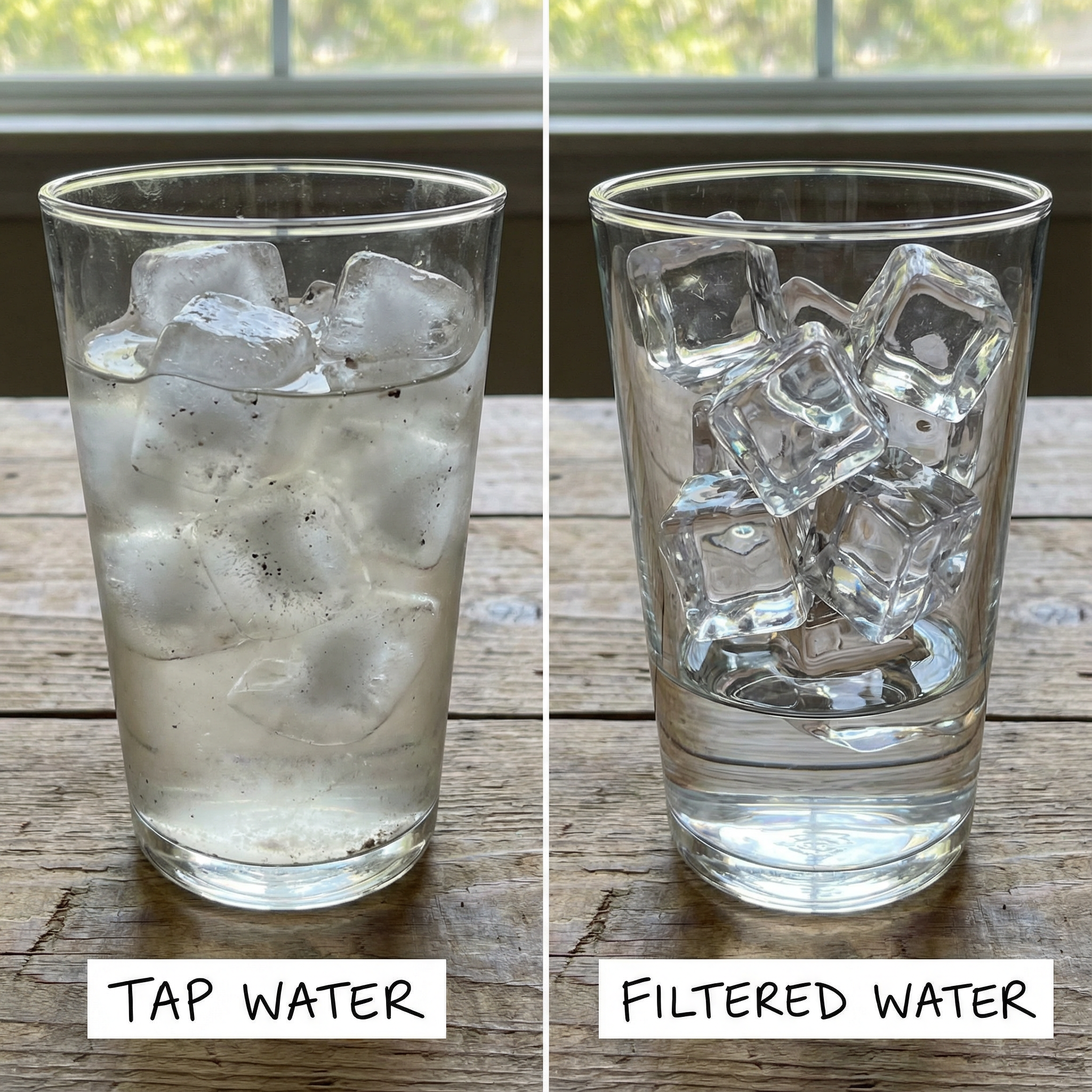
Ran for 9 days, from March 26 to April 4, 2026, the last day Crush saw it.
Run by UK Water on Facebook. Crush is not the advertiser and does not verify its claims. See this ad in Meta's Ad Library(opens in a new tab)
Want an ad like this for your product?
Crush makes new ad images for your product from this ad: your logo, your product photo, your offer.
Trials from $19.95 USD, then $79.95 USD a month. Cancel anytime.
About this ad
- Meta Ad Library ID
- 944374928181053
- Platforms
- Facebook, Instagram, Audience Network, Messenger and Threads
- Relaunches
- 0
- Niche
- Fitness & Gyms
Ad text
For the past ten months, I have been taking the stairs at the leisure centre one at a time, with my right hand on the rail, and timing it so that I reach the top when the corridor is clear. I used to bound those stairs two at a time—it was a habit from school, from twenty-one years of leading by example, from the unspoken law that a PE teacher doesn't let students see him breathe hard unless it's from something worth breathing hard for. Now I time the stairs. I know the schedule. I know when the 6am spin class empties out. I'm very good at this. I'm 53. Three years ago I beat my school's Year 12 team in a bleep test. Not comfortably—I was thirty-odd at the time, not seventeen—but I finished two levels above the cut point for the squad, which I marked on the whiteboard and left there for a week. I am telling you this not to boast. I'm telling you so you understand what it means that I now manage stairs with my hand on the rail. I want to be honest about ten months because I know—I know exactly—what it sounds like. It sounds like a man in his early fifties describing what happens in your early fifties. I've told students the same thing about overuse injuries for twenty years. "The body tells you things. You listen. You adapt." I've given that speech. I know every version of it. And I know, at ten months, that this is not what that speech describes. My name is Michael. I taught PE and coached football at a comprehensive school in Sheffield for twenty-one years. I retired early—medical grounds, which I describe as "a bad knee" to most people because the full description requires a longer conversation that I prefer to have standing up, which is increasingly impractical. I now manage a leisure centre in Leeds. I am surrounded, every day, by people working on their fitness. I haven't told a single one of them what's been happening for ten months. I am aware this is not a healthy approach. I am telling you anyway. It started last spring. A fatigue that I tried for two months to train through—which is what I had always done, because that is what I knew—and which got worse rather than better. Not the good tiredness of a training block. The other kind. The kind that isn't fixed by rest. The kind that is present when you wake up and is still present at nine in the evening and that makes everything between those two points feel like it's happening at slightly the wrong speed. The joints came later, in the summer. Not the knee—the knee I know, the knee has a name and a history. This was the wrists. The hips. A persistent ache in the fingers of my left hand that I noticed when I was gripping a steering wheel and wondered, for a moment, whether I was gripping it. I gave it until September, because I had given everything until September for twenty years and September usually sorted things out. September came. It didn't sort things out. I saw my GP in October. I'd been putting it off because I know what a GP appointment for a man in his early fifties who is tired and achey looks like from the outside, and I didn't want to be that. She—I'd not met her before, new to the practice—ran blood tests that came back within range and suggested I "try to reduce stress where possible" and "make sure I'm getting adequate rest." She mentioned that fatigue was "extremely common in men around this age" and that it "often responds well to lifestyle adjustments." I have been managing my lifestyle since I was nineteen. I did not find this useful information. I saw a private sports medicine consultant in November—£220—who was more specific. He identified elevated hsCRP, which he described as "a marker of systemic inflammation, non-specific, but worth noting." He ruled out the obvious causes. He mentioned testosterone—low-normal—and offered a monitoring referral. He said something that I've thought about since: "Michael, in athletes, I sometimes see this pattern when the recovery environment is compromised. The training load hasn't changed, but something in the background is generating an inflammatory signal the body can't clear." I asked him what he meant by recovery environment. He said: "Everything that isn't the training. Sleep, stress, and what you're ingesting. All of it." He didn't pursue it further. He wrote the monitoring referral. I drove home. I sat in the car park outside my flat for twenty-two minutes. I'm going to tell you this because it's accurate, not because I'm comfortable with it: I'm fifty-three. I built a life around physical capability—around being the person who ran the bleep test, who set the standard, who did not require accommodation. My father played Sunday league until he was sixty-one. My older brother still cycles. I have a leisure centre full of people who know me as the former PE teacher who "still has it." I have ten months of evidence that I am no longer the person who "still has it." And I had been given no explanation that went further than "stress" and "age" and "lifestyle adjustments"—the three phrases that, in a consultation, function as a very polite door being closed. I stopped looking to the system in December. I'm a practical person. When a problem isn't being solved by the approach you've been taking, you change the approach. I read everything I could find on chronic systemic inflammation in physically active men in their fifties. The research was more specific than I'd expected: the mechanism isn't complicated, and it isn't primarily about fitness. At ten-thirty on a Friday—I'd got home from a late shift and wasn't sleeping, which had become its own problem on top of the fatigue—I found an investigative piece by a journalist who had spent eight months investigating something that nobody I'd seen had mentioned: the relationship between UK tap water quality and the kind of ongoing, low-level oxidative load that prevents the body from clearing inflammation it would otherwise resolve. I nearly closed it. I've spent my adult life in health and fitness. I know how to read past the headline. What stopped me was the source: a retired NHS consultant nephrologist who had spent thirty years advising patients to drink more water, and who had recently attended a toxicology conference in Geneva and come back—in her own words—"physically shaken." She wasn't selling anything. She was a clinician who had revised her position based on data. The data: the average Briton ingests five grams of microplastics per week through tap water. The water infrastructure—Victorian cast-iron pipes, chlorine disinfection, aging distribution networks—delivers not just water but a continuous low-level chemical load. The immune system mounts an ongoing oxidative response to process it. Not occasionally. Every day, with every litre consumed during training, during recovery, at meals. Before bed. The immune system's anti-inflammatory capacity is finite. When a significant fraction of that capacity is being used to process the water, there's less available for post-training recovery. The inflammation signal doesn't clear the way it should. The HRV stays low. The fatigue persists. The joints don't recover on the timeline they used to. Then the part I read twice: why standard interventions don't reach the site of damage. Vitamin C—176 atomic mass units—cannot penetrate the mitochondrial membrane. Glutathione—307—same constraint. These are genuine antioxidants operating at the wrong scale. The mitochondria, where cellular energy production and recovery actually happen, are protected by membranes these molecules are too large to pass through. Molecular hydrogen is 2 atomic mass units. It is the smallest molecule in existence. It crosses every biological barrier—the blood-brain barrier, the cell membrane, the mitochondrial membrane. It neutralises specifically the free radicals generated by microplastic oxidative stress and chlorine byproduct exposure, while leaving the reactive oxygen species the body uses for training adaptation intact. This is not a supplement. This is the application of molecular physics to the recovery environment. The journalist had found a biomedical engineer who had miniaturised SPE/PEM membrane technology—the same technology used in medical-grade hydrogen generation—into a portable device. A Harley Street functional medicine doctor had tested the output: 3,800 to 5,200 parts per billion of dissolved hydrogen. The therapeutic threshold in peer-reviewed clinical trials: 500 parts per billion. I read the journalist's account of her four weeks. I was looking for the gap between the claim and the evidence. What I found instead was a sentence I've been thinking about for two months: "By week three, my recovery felt proportionate to my effort again. Not better than before. Just—accurate. Like the equation was working." I am fifty-three. I know the difference between an equation that's working and one that isn't. I spent twenty-one years teaching young people how to read their own performance data. I am not credulous. I am also not willing to spend another ten months timing the stairs. If you've developed your own version of the quiet accommodation—the route that avoids the people who knew you before, the pace that doesn't give anything away, the specific techniques for managing what you haven't told anyone is being managed—and if you've been offered stress and age and lifestyle adjustments as the complete answer: read the investigation. It was the first explanation I'd found that treated the body as a system responding to specific inputs—not as a competitive asset with a use-by date. The inputs can be changed. The equation can be corrected.
Where the ad sends people
h2guardian.co.uk
Read if you've quietly stopped doing certain things.
H2
Learn more: h2guardian.co.uk(opens in a new tab)