Wellness With Jess
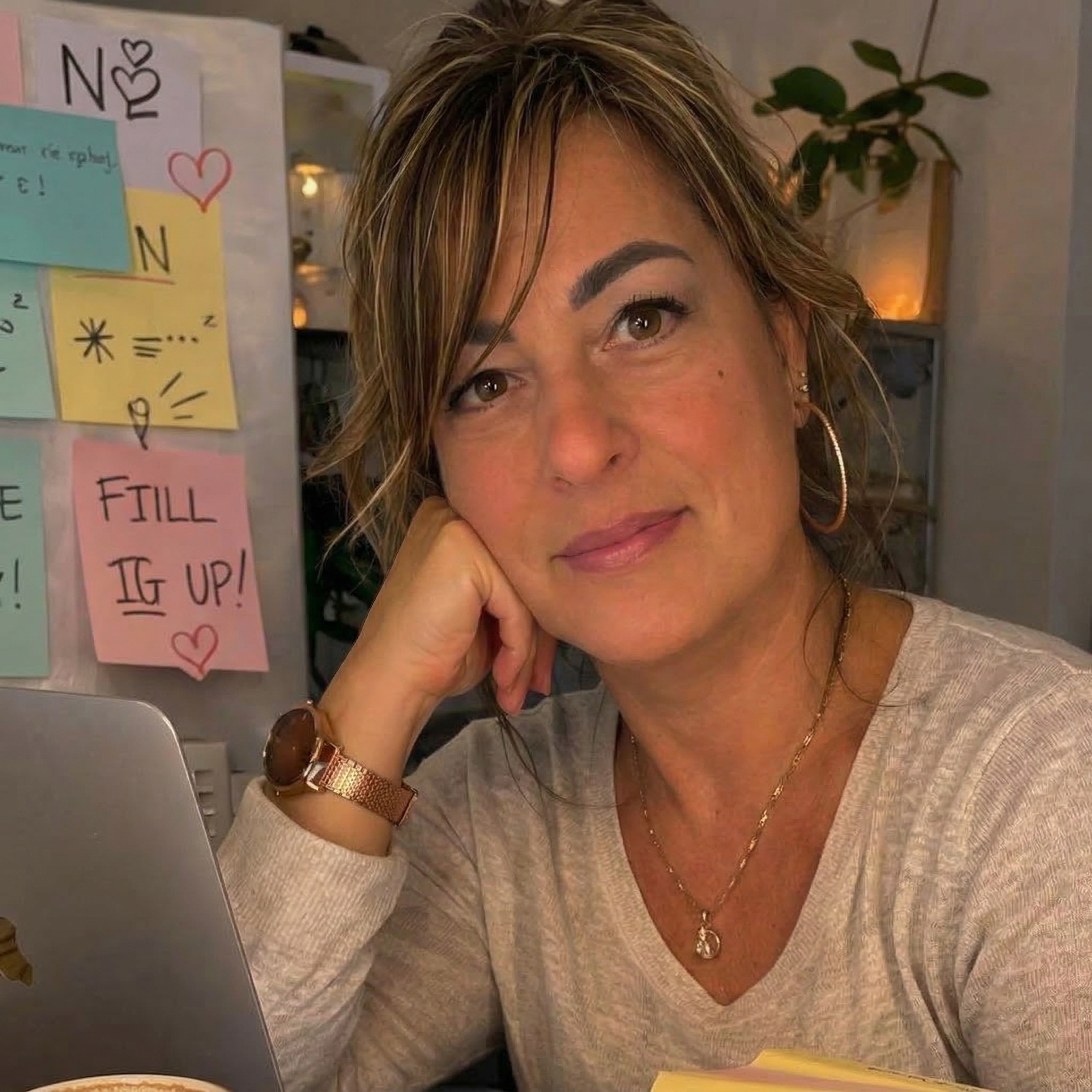
Wellness With Jess Facebook ad: “Read this if menopause didn't just change your body, it…”
Ran for 2 days, from March 20 to March 22, 2026, the last day Crush saw it.
Run by Wellness With Jess on Facebook. Crush is not the advertiser and does not verify its claims. See this ad in Meta's Ad Library(opens in a new tab)
Want an ad like this for your product?
Crush makes new ad images for your product from this ad: your logo, your product photo, your offer.
Trials from $19.95 USD, then $79.95 USD a month. Cancel anytime.
About this ad
- Meta Ad Library ID
- 949145624176202
- Platforms
- Facebook, Instagram, Audience Network, Messenger and Threads
- Relaunches
- 0
Ad text
I cry in the shower so he doesn't hear. My husband hasn't looked at me like a woman in years. This is menopause. I'm freshly 50 and in peri. And in the past few years, I've felt as if the confidence has been fully vacuumed out of me. I don't mean a little dip. I don't mean some days are harder. I mean vacuumed. Like someone reached inside my chest and extracted the thing that used to make me me. And left nothing in its place. I cringe at my social interactions. I replay conversations and gatherings and feel as if I'm no longer the fun, strong, engaging person I was. I worry that my friends and family think I'm not as fun or welcome anymore. That I've become a bit of a charity case. I throw dinner parties and spend the next few days in an intense state of flushed shame and awkwardness because I think my party was boring and people lament my having changed. Yet I have no evidence of anyone actually feeling this way. The facts of my life are largely the same. I'm doing well at my job. I have a supportive husband. But I feel different from people and judged by them. Less interesting. Less lovable. Without really having solid evidence that that's the case. What is this? And how do I fix it? That's what I posted in a menopause forum at 11pm on a Tuesday. I didn't expect anyone to answer. Within hours, dozens of women responded. And their words hit me harder than the original post. One woman, 47, wrote that she'd lost every bit of confidence she'd ever had and always feels awkward, uncomfortable, and out of place. Perimenopause had amplified her social anxiety tenfold. Another said she'd noticed about four years ago, at 46, that she was feeling intense shame she had never felt before. About any and every interaction and every memory. Even memories she once thought were fun now filled her with shame. One woman said it was by far the most crippling part of perimenopause for her. She'd lost all professional confidence and it was devastating. And one wrote something I haven't been able to get out of my head since: I always thought when I was younger that I would be a confident don't give a shit older woman. And I'm sad that hasn't happened. I feel like she's in there somewhere, but life just got the better of her. She's in there somewhere. I read that sentence five times. Because that's exactly what it feels like. Not that I became someone worse. But that the real version of me. The one who walked into rooms and just landed. Got buried under something I can't name and can't dig through. And here's the part nobody warns you about. It's not just the mirror. It's not just the bedroom. It's everywhere. I'd go to buy clothes and notice the salesgirls were sharper with me. Rude, almost. Following me around with serious faces, checking me head to toe. One of them muttered something about being tired of old ladies browsing and not buying. I'm 45. I don't feel like an old lady. But apparently, I'd started registering as one. People I'd met multiple times acted like they'd never seen me before. Not forgetting my name. No recognition at all. I'd smile and say hello to strangers and they'd look straight through me. Both men and women. Like I wasn't there. I wasn't just losing confidence. I was becoming invisible. And that invisibility was doing something terrible to my marriage. It's not fair to him, but I had very little interest in anything. My husband and I were still active, but only because I didn't want to give up that part of our marriage. I was doing it from obligation, not desire. And he could feel it. One night I reached for his hand on the couch and he flinched. Not cruelly. Almost involuntarily. Like his body had learned not to expect anything from mine anymore. I pulled my hand back and pretended I was reaching for the remote. We both knew I wasn't. It had been taking a toll for over a year. More strained than it had ever been. Some nights I'd just lie there thinking: I haven't been myself in years. And some nights I'd think something worse: maybe he's stopped waiting for me to come back. So I did what any rational woman would do. I went looking for help. I tried antidepressants. They softened the edges of the sadness, but I still felt like a stranger in my own skin. I tried mood stabilisers. They levelled out the rage. That constant irritability, the waves of anger that came from nowhere. But the shame? Still there. The invisibility? Unchanged. I tried ADHD meds for the brain fog, the forgetfulness, the feeling of drowning in my own overstimulated mind. They helped me focus. They did not help me feel like me. I tried HRT. My doc started me on it and I had hope. Real hope. It helped with the hot flushes. Helped with sleep. But the confidence collapse? The social erasure? The feeling that I'd been swapped out for a faded photocopy of who I used to be? HRT didn't touch that. I tried therapy. I sat in that chair every two weeks and talked about my feelings until I ran out of new ways to describe the same emptiness. My therapist was kind. Therapy was useful. But useful and fixed are not the same thing. I even tried a specialised menopause clinic. Was very hopeful it would be a godsend. It was not. I literally cried after my appointment. They pushed birth control, which I didn't want. None of the appointments I made with anyone seemed to care. I was always the type who was on top of hair appointments, manicures, pedicures, clothes for every occasion. Now I couldn't even force it. I hadn't had my hair done in over a year because I was afraid it would all fall out on the floor. When I finally went, I sat in the chair staring at my own reflection thinking, what's the point, I'm already so ugly anyway. I'm wasting my money even trying. I hated that I had those thoughts. I knew they weren't me. But I couldn't stop them. One woman in the forum captured it perfectly. She said her life was totally transactional. Nobody cared about her as a person. They cared if dinner was made, if the rent cheque showed up, if she did all the things everyone needed from her. I am just an appliance, she wrote. And I thought: yes. That's it. I am just an appliance that used to be a woman. But here's the thing that started to bother me. My friend Karen had been on HRT for two years. She was also in therapy. She was also on a low dose of Lexapro. She was doing everything right by every medical standard. And she told me over coffee that she'd hosted a barbecue the weekend before. And spent the next three days replaying every single conversation she'd had, convinced she'd been boring and nobody wanted to be there. That stopped me. She wasn't untreated. She wasn't ignoring the problem. She was doing everything the doctors said. And the invisibility. That specific, gut-level feeling of being socially erased. Was still there. I started paying closer attention. In the forums, in conversations with friends, in the responses to my own post. And I noticed a pattern. Woman after woman was reporting the same split. The HRT helped the physical symptoms. The antidepressants helped the mood. The therapy helped the thinking. But the social piece. The way other people responded to them, the way they'd become transparent in rooms they used to light up. That piece wasn't budging. It wasn't that the treatments were failing. Each one was doing what it was designed to do. But there was clearly something else going on. Something that none of those treatments were reaching. If estrogen fixes the hormones, and SSRIs fix the mood, and therapy fixes the mindset — what explains the fact that women on all three still walk into rooms and feel like ghosts? I couldn't let that question go. I started reading outside the menopause forums. Into the biology of social presence. How humans perceive each other before a word is spoken. What makes someone register in a room. Or not. And I found something that stopped me cold. A reproductive biologist named Dr. Winnifred Cutler had spent decades studying the chemical signals human bodies produce. Specifically, how hormonal shifts during menopause alter the pheromone output that other people unconsciously respond to. Her research showed that the hormone and consequent pheromone changes around menopause directly increase that sense of invisibility women describe. Not metaphorically. Biologically. Your body produces a chemical signature. A broadcast. It's not a scent you can smell, exactly. It's a signal that operates below conscious awareness. It's part of what makes someone feel present in a room. Warm. Magnetic. Noticeable. And when estrogen declines during perimenopause, that broadcast changes. Not your personality. Not your worth. Not your effort. The signal. That's why the salesgirls were rude. That's why acquaintances looked through me. That's why I could throw a perfect dinner party and spend three days drowning in shame. Because the invisible thing that used to make people lean toward me had gone quiet, and the world was responding to the silence. I went back through every treatment I'd tried and looked at what each one actually addressed. HRT: estrogen for hot flushes, bone density, vaginal dryness, sleep. Antidepressants: serotonin for mood stability. ADHD meds: dopamine and norepinephrine for focus. Therapy: cognitive patterns, emotional processing. Not one of them addressed pheromone signaling. Not one of them was designed to restore the chemical broadcast that makes other people respond to your presence. That's when it clicked. The woman I used to be wasn't gone. She'd been chemically silenced. And everything I'd tried had been treating everything except the signal. I want my mojo back. That's what I'd written in one of those late night posts. And now, for the first time in years, I understood why I didn't have it. And why nothing I'd done so far could return it. It wasn't a confidence problem. It wasn't a mindset problem. It wasn't an estrogen problem. It was a broadcast problem. And here's the part that scared me. The longer the broadcast stays silent, the more your world adjusts to the silence. People stop expecting you to light up a room. Your husband stops reaching across the couch. Your friends stop saving you a seat at the centre of the table. The absence becomes the new normal. And the longer the new normal sets in, the harder it is to remember that it wasn't always this way. I'd already lost three years. I wasn't willing to lose a fourth. I only learned about Pheromone Gummies because a woman in one of the forums — someone I'd been talking to for months about HRT side effects and therapist recommendations — mentioned in passing that she'd started taking something new. I feel like people are responding to me again, she wrote. Not like before. Better than before. I went to a work event last week and three separate people told me I seemed different. One of them said I was glowing. I haven't heard that word directed at me in six years. I asked her what she was taking. She told me about a supplement. A daily gummy. Formulated to support the body's natural pheromone production. The exact chemical signaling layer that perimenopause suppresses and that no other treatment addresses. I was skeptical. I've been skeptical of everything since the menopause clinic appointment that made me cry. I felt like I was wasting my money even trying. That was my default setting by then. But she kept talking. She said the first thing she noticed wasn't anything anyone else did. It was how she felt walking into the room. She wasn't performing confidence for the first time in years. She was feeling it. Like the fog between her and the world had thinned. I ordered a three month supply that night. Here's what happened. The first few days, I didn't notice much externally. What I noticed was a subtle internal shift. Like the volume on my own presence had been turned up half a notch. I wasn't anxious getting ready. I didn't dread going out. I didn't rehearse conversations in advance. By the end of the first week, my husband said something I hadn't heard in years. We were getting ready to go to a friend's house and he looked over at me and said, You look really good tonight. Not because I looked different. Because something in the way I was carrying myself had shifted. He could feel it before I could name it. By week three, I went to a work event. A colleague I'd worked with for two years stopped mid conversation and said, What's different about you? You seem. I don't know, more you than usual. I didn't know how to answer that. But I knew exactly what she meant. By month two, the dinner party shame was gone. I hosted a gathering and woke up the next morning and just. Didn't replay it. Not because I forced myself not to. Because there was nothing to replay. I'd been present. I'd been warm. I'd been the version of myself I thought had disappeared somewhere around my mid 40s. She's in there somewhere, that woman had written. She was right. She was in there. She'd just been waiting for the broadcast to come back on. That's what Pheromone Gummies do. One gummy a day. Strawberry flavour. No prescription. No side effects. No sitting in a therapist's chair describing the same emptiness for the fourteenth time. 29.99 for a 30 day supply. Or 54.99 for a 90 day supply (buy 2, get 1 free). That's what I'd recommend, because the shift builds over time and month two was when the world really started responding differently. 30 day money back guarantee. If you don't feel a difference in how you carry yourself. In how people respond to you. Send it back. Full refund. I spent three years trying to think my way out of a chemical problem. You don't have to. Either the broadcast comes back on — and you start feeling like the woman who's still in there somewhere — or you get your money back. The choice is yours.
Where the ad sends people
valentostudio.com
Read this if menopause didn't just change your body, it changed who you are.
pheromone gummies
Shop now: valentostudio.com(opens in a new tab)