Ethan Cole
 Facebook ad: “Biggest Lie Plantar Fasciitis Sufferers Are Told About…”
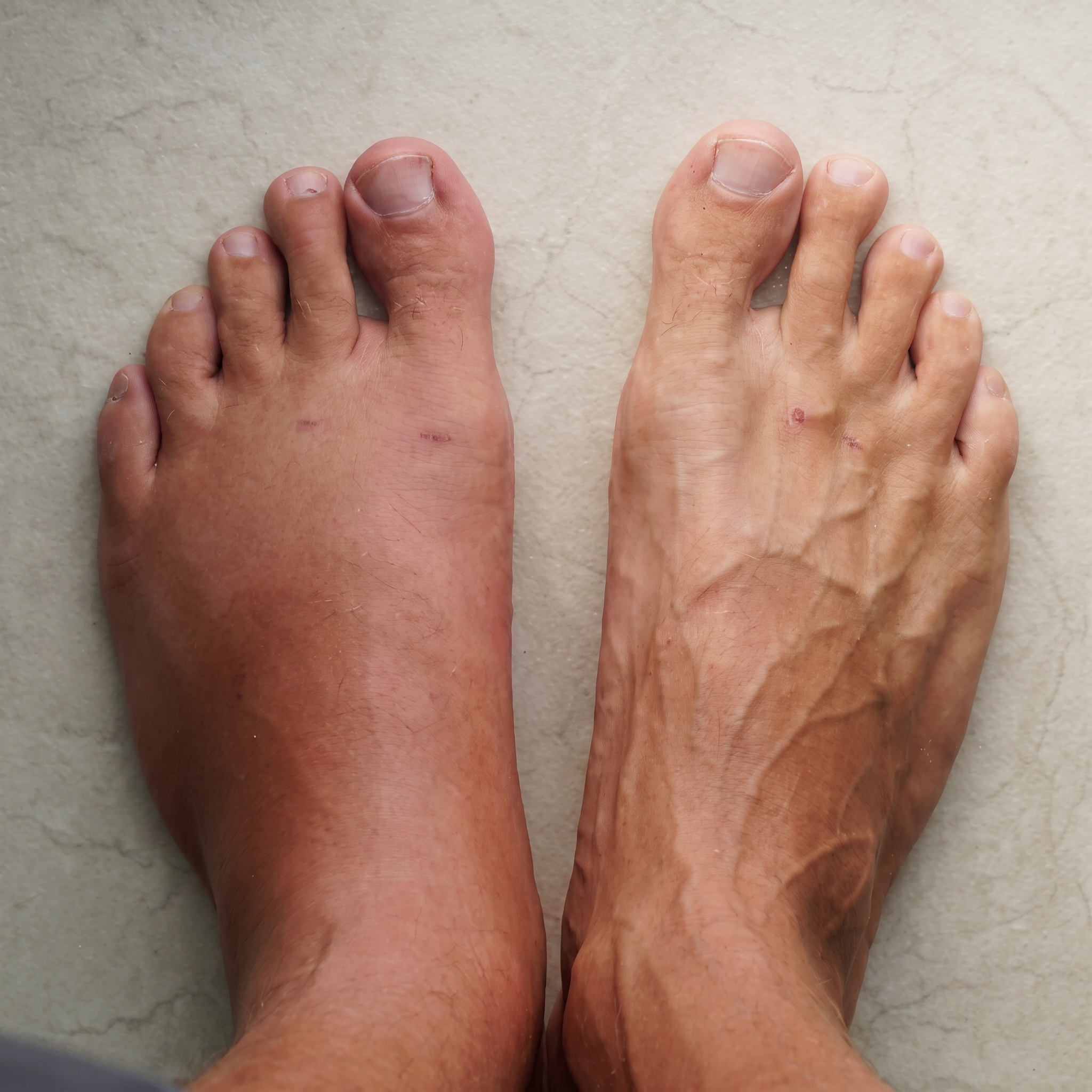
Ran for 31 days, from September 21 to October 22, 2026, the last day Crush saw it.
Run by Ethan Cole on Facebook. Crush is not the advertiser and does not verify its claims. See this ad in Meta's Ad Library(opens in a new tab)
Make your own version of this ad
Crush makes it, launches it in your own Meta ad account, scales the winners and pauses the losers.
About this ad
- Meta Ad Library ID
- 952206901275097
- Platforms
- Facebook, Instagram, Audience Network, WhatsApp and Threads
- Relaunches
- 0
Ad text
My brother died 4 months ago because his heel hurt. I know how that sounds. I know you're reading that and thinking I've lost my mind. Nobody dies from heel pain. Nobody dies from plantar fasciitis. But I'm going to tell you exactly how it happened. Step by step. Domino by domino. And by the end of this, you're going to understand that the thing you've been limping on for 6, 12, 18 months, the thing your doctor keeps telling you to stretch and ice and "give it time", is capable of taking a hell of a lot more from you than your morning comfort. It took everything from my brother. And it almost took everything from me. His name was Ray. He was 66 years old. Retired millwright out of a paper mill in northern Wisconsin. 38 years on concrete floors in steel-toe boots, crawling under presses, standing over conveyors, walking catwalks in 12-hour rotations. He walked off the floor for the last time at 63 with a full pension, 2 bad knees, and a heel that he said felt like someone had shoved a pebble under the bone. His GP said plantar fasciitis. Very common. Handed him a pamphlet. Told him to stretch his calves, ice the heel, buy supportive shoes. Ray did everything they said. He bought the Hokas. $180. He rolled a frozen water bottle under his foot every night in front of the Packers game. He did the wall stretches until his calves burned. The pain dropped from a 7 to maybe a 5 for a couple weeks. Then it came back. Like it had never left. Maybe worse. His podiatrist gave him a cortisone injection. Stuck a needle straight into the bottom of his heel, into the thickest, most sensitive tissue in his foot. Ray sat in his truck afterward and told me on the phone it felt like someone had hammered a finishing nail through his sole. But the next morning, nothing. No stab. No wince. No white-knuckle grip on the nightstand. For the 1st time in over a year, he stepped out of bed and walked to the kitchen like a normal human being. 12 days. That's how long it lasted. 12 beautiful, pain-free days where Ray was Ray again. Then the pain returned like a door slamming shut. Sharper. Deeper. Like the floor of his heel had thinned out and there was nothing between bone and ground. He got a 2nd injection 4 months later. It lasted 8 days. The rebound was brutal. His podiatrist said the next step was extracorporeal shockwave therapy, a $4,500 package, not covered by insurance, or surgical plantar fascia release. 8 to 12 weeks non-weight-bearing. Ray laughed when he told me. Not the good kind. The kind of laugh a man makes when he realizes the people he trusted have run out of answers. He never did the surgery. He never did the shockwave. He just... stopped moving. That's the part nobody warns you about. The part that doesn't show up in any podiatry brochure or orthopedic website. What happens to a man, a big, stubborn, physical man who defined himself by what he could do with his hands and his back, when his feet betray him and he decides the safest thing to do is stop using them. Ray stopped walking the dog. He'd done it every morning for 13 years, him and Biscuit, a gray-muzzled beagle mix, 1.5 miles through the neighborhood before the sun cleared the tree line. After the 2nd cortisone shot failed, he handed the leash to his wife and said, "My heel can't do it anymore." He stopped going to Fleet Farm on Saturday mornings. Stopped walking to the mailbox. Stopped doing the thing that had kept him sane in retirement, working in his shop, standing at his bench, building walleye lures and Adirondack chairs and wooden trucks for his grandkids. He started sitting. All day. Recliner to kitchen table to recliner. He gained 35 pounds in 10 months. His blood pressure, which had been borderline for a decade, went through the roof. His doctor added a 2nd medication. His A1C crept from 5.7 to 6.5. Pre-diabetic. His knees started buckling from the weight. His back, which had never been great, became constant. All of it. Every single domino. Started with a heel that nobody could fix. I watched my brother go from a man who built Adirondack chairs and walked a beagle before sunrise to a man who couldn't get out of his own recliner without grabbing both armrests and exhaling through clenched teeth. And the whole time, 2.5 years, his podiatrist kept saying the same thing: "Keep stretching. Keep icing. We're monitoring it." Monitoring it. The word doctors use when they've run out of answers but can't bring themselves to say so out loud. Last November, Ray got up in the middle of the night to use the bathroom. 2 a.m. Dark hallway. Half asleep. His heel seized the instant his foot hit the hardwood, that white-hot, 1st-step stab that plantar fasciitis people know in their bones. His foot buckled. He grabbed for the wall, missed, and went down hard on his right side. He hit the baseboard with his head and fractured his left hip on the floor. 66 years old. High blood pressure. Pre-diabetic. 35 extra pounds. A body that had been sedentary for the better part of a year. They took him into surgery the next morning for a partial hip replacement. The procedure went fine. The surgeon said it was textbook. On day 3 post-op, he threw a pulmonary embolism. A blood clot that formed in his leg migrated to his lungs. They coded him at 11:40 in the morning. Got him back. They coded him again at 2:15 in the afternoon. They didn't get him back. My brother died in a hospital bed on a Tuesday in November because his foot hurt too much to walk safely in his own hallway at night. The death certificate says pulmonary embolism. The surgical report says hip fracture from a ground-level fall. But I know what killed Ray. 2.5 years of a medical system that handed him stretches and cortisone and night splints and monitoring while the tissue in the bottom of his foot quietly disintegrated. And when the system had nothing left to offer, it shrugged and let him sit in a recliner until his body shut down from the inside out. Nobody killed my brother with malice. They killed him with a protocol. A protocol designed for a problem he didn't have, applied to a condition it couldn't fix, repeated month after month after month while they called it "monitoring" and billed his insurance for the privilege. I'm telling you this because I was on the exact same path. Same heel. Same stab. Same morning limp. I'm 63 years old. Semi-retired, I still consult on commercial HVAC projects 3 days a week, which means I'm on concrete floors in work boots more often than my knees would like. I felt the 1st stab 18 months ago, stepping out of bed on a Wednesday morning. Like someone had embedded a shard of glass in the pad of my heel overnight. My GP said plantar fasciitis. Very common. Handed me the same pamphlet they handed Ray. Same stretches. Same advice. Same casual tone, like it was a blister. I did the stretches. I bought the shoes. I bought the custom orthotics, $450, out of pocket. I rolled the frozen water bottle. I strapped on the night splint that kept my ankle at 90 degrees while I slept, which meant I didn't sleep, which meant I was exhausted on top of everything else. The pain dropped from a 7 to a 5 for about 3 weeks. Then it came back. Full force. My podiatrist gave me a cortisone injection. 11 days of relief. Then it returned worse than before. Sharper on the 1st step. Deeper through the day. And now with a new trick: every time I sat in my truck for more than 20 minutes and stepped out, the heel lit up like I was starting the whole cycle from scratch. Every rest-to-weight-bearing transition was a punishment. My podiatrist said the next step was the shockwave therapy package or surgery. I looked at the price tag. I looked at the recovery time. I looked at my schedule. And then I looked at my brother in his recliner and I thought: that's where this road goes. I've already seen the ending. Because here's the thing nobody talks about. The heel pain isn't the disease. The heel pain is the 1st domino. And every domino after it falls in the same order. You stop walking. You stop moving. You sit. You gain weight. Your blood pressure goes up. Your blood sugar goes up. Your joints go bad from the load. Your balance goes because you haven't been on your feet. You fall. And then something else kills you, the clot, the fracture, the cardiac event, and nobody connects it back to the heel that started the whole cascade because plantar fasciitis isn't a "serious" condition. It's the most serious condition nobody takes seriously. And I'm done being quiet about it. After Ray's funeral, I stopped accepting the standard protocol. I stopped pretending that stretching and icing were going to fix something that had been getting worse for 1.5 years. I stopped treating the instructions on the pamphlet like scripture. And I started reading. Not blog posts. Not "Top 10 Plantar Fasciitis Remedies" listicles written by content farms who've never had a shard of glass in their heel. I read the clinical literature. Orthopedic surgery journals. Sports medicine papers. Histopathological analyses of chronic plantar fascia tissue from cadaveric studies. And what I found made me want to drive to every doctor's office I'd ever sat in and throw their stretching pamphlet on the floor. Here's what nobody told me. What nobody told Ray. What nobody is telling you right now. Plantar fasciitis, the thing on your chart, the thing they diagnosed you with, the thing they're "monitoring", is the wrong word for what you have. The suffix "-itis" means inflammation. Acute plantar fasciitis, the kind that shows up, hurts for a few weeks, and resolves with rest and ice, is inflammatory. That version responds to the pamphlet protocol. That version is what the pamphlet was written for. But if your heel has been hurting for more than 3 or 4 months, you almost certainly don't have fasci-itis anymore. You have fasci-osis. Degeneration. Not inflammation. The tissue isn't hot and swollen and angry. It's structurally disintegrating. The clinical literature is not ambiguous about this. Histopathological studies of chronic plantar fascia tissue, tissue taken from patients who'd had heel pain for 6 months or longer, show the same findings over and over: disorganized collagen fiber architecture. In a healthy plantar fascia, the collagen fibers run in tight, parallel, load-bearing bundles, like the cables in a suspension bridge. They absorb and distribute the force of every step across the entire span of the arch. In chronic plantar fasciosis, those cables have come apart. The organized parallel structure has been replaced by tangled, randomly oriented scar tissue that can't handle load. The collagen architecture isn't inflamed. It's collapsed. And it gets worse. The degenerated tissue develops neovascularization, abnormal new blood vessels growing into the damaged zone. Sounds like healing, right? It's not. In tendinopathy and fasciosis, those new vessels bring nerve fibers along with them. The tissue is literally growing its own pain wiring. That's 1 reason chronic plantar fasciitis becomes more sensitive over time, not less. And at the enthesis, the exact point where the fascia anchors into your heel bone, the exact spot where you feel that thumbtack every single morning, the tissue undergoes myxoid degeneration. The collagen matrix breaks down into a mucoid, structurally incompetent mess. The anchor point isn't inflamed. It's dissolving. Now here's the part that should make you furious. Because it made me furious. And if I'd known it 18 months earlier, my brother might still be alive. Every night, when you're lying in bed, your body is trying to repair the damage. While you sleep, fibroblasts, the cells responsible for producing new collagen, are laying down fresh repair tissue across the damaged zone at the enthesis. Those new fibers are fragile, immature, and disorganized. They haven't had time to orient into load-bearing architecture. They need time and the right mechanical signals to mature into functional tissue. The moment you swing your legs over the side of the bed and load your heel, you rip them apart. That's not a metaphor. That's the mechanism. The 1st-step-of-the-morning pain isn't stiffness loosening up. It's the sound of your body's overnight repair attempt being torn apart at the fascial anchor point because the full force of your body weight just slammed into tissue that was trying to heal. Then you sit at your desk. Or your truck. Or your recliner. And the fibroblasts start laying down repair tissue again. And then you stand up, and you rip it apart again. Every transition from rest to weight-bearing is a re-injury event. Every day. For months. For years. Your body builds. You tear it down. It builds again. You tear it down again. An endless demolition cycle disguised as a "chronic condition." This is why it doesn't get better. This is why the stretches don't work long-term. This is why the cortisone shot gave you 12 days and then abandoned you. About that cortisone. Here's the part your podiatrist probably didn't mention. Corticosteroid injections don't just suppress inflammation. They inhibit fibroblast activity and collagen synthesis. The injection that erased your pain for 12 glorious days did so by chemically shutting down the very cells that were trying to repair the fascia. The tissue was structurally weaker after the injection than before it. The rebound was worse because the drug poisoned the fire department while it turned off the alarm. That's what happened to Ray. That's what happened to me. That's what is happening to you right now if you've had more than 1 cortisone injection and you're wondering why each one works for a shorter window and the rebound hits harder. Your doctor is not stupid. Your podiatrist is not incompetent. They are working from a treatment protocol that was designed for acute inflammation, and it works beautifully for acute inflammation. But you don't have acute inflammation. You have chronic collagen degeneration in an avascular zone with inadequate blood supply, compounded by intrinsic foot muscle atrophy that has been silently overloading your fascia for decades. And the standard protocol doesn't address a single 1 of those 3 problems. Not 1. Let me break them down, because this is where everything changed for me. Understanding these 3 failures is the difference between staying on the hamster wheel for another 2 years and getting off it. Failure 1: your intrinsic foot muscles have gone dormant. The plantar fascia was never designed to be the primary stabilizer of your arch. That job belongs to a group of small muscles in the sole of your foot, abductor hallucis, flexor digitorum brevis, quadratus plantae. In a human walking barefoot on varied terrain, these muscles fire constantly, dynamically adjusting the medial longitudinal arch with every step. But you don't walk barefoot on varied terrain. You wear shoes on flat surfaces. You've done it for 40, 50, 60 years. And those muscles have atrophied to the point of functional dormancy. They're still there. They still have motor units. But they've gone offline. Checked out. Silent. When those muscles go offline, the fascia absorbs the entire arch-stabilization load. A ligament doing a muscle's job. Every step. Every stand-up. Every shift of body weight. The fascia was never built for that kind of sustained mechanical demand. So it starts failing at its weakest point, the enthesis, where it anchors into the calcaneus. Your heel bone. That's the thumbtack. That's the morning shard of glass. That's the tissue that's been degenerating for months because it's carrying a load it was never designed to carry alone. No amount of calf stretching fixes this. No orthotic fixes this. No cortisone injection fixes this. You can stretch and ice and support and inject until the day you die. The fascia will keep failing because the muscles that are supposed to be sharing the work are asleep. Failure 2: the repair site is starving. The calcaneal enthesis, the exact point of maximum degeneration, the exact spot of your worst pain, sits in what the literature calls a watershed zone. Notoriously poor blood supply. Healing requires blood flow. Oxygen. Fibroblasts. Growth factors. All delivered via arterial perfusion to the damaged tissue. But this zone doesn't get adequate perfusion on its own, especially not in a foot that's been crammed into an orthotic all day and strapped into a rigid night splint all night. Your fascia is trying to rebuild itself in a desert. The construction crew can't get to the job site because the road is closed. You can stretch and ice and rest all you want. If the blood isn't reaching the enthesis, the tissue isn't healing. Failure 3: nobody is telling the repair cells what to build. This one broke my brain when I read it. And it should break yours, because it's the mechanism that explains why chronic plantar fasciitis stays chronic. Fibroblasts, the cells laying down new collagen at the repair site, are mechanosensitive. They don't blindly produce collagen in whatever shape they feel like. They respond to mechanical signals. Controlled, rhythmic, low-level mechanical loading tells fibroblasts to produce organized, parallel collagen fibers. The architecture of healthy fascia. The cable structure. The kind that can bear load. In the absence of that mechanical signal, they produce disorganized scar tissue. Tangled. Random. Weak. The architecture of fasciosis. The kind that tears every morning. This is the principle behind eccentric loading protocols, the gold standard in tendinopathy rehabilitation. The controlled mechanical stress isn't just "strengthening" the tissue. It's telling fibroblasts how to orient the new collagen. A cellular instruction set delivered through mechanical force. But here's the trap. How do you deliver controlled mechanical loading to a fascial enthesis that explodes in pain every time you put weight on it? Eccentric heel drops on a stair edge, the textbook exercise, require you to load through the exact tissue that's degenerating. For most people with chronic plantar fasciosis, it's too painful to do consistently. For someone like Ray, sedentary, overweight, deconditioned, it was impossible. The tissue needs mechanical stimulus to heal properly. But the only way to deliver that stimulus is to load the tissue, which re-tears it. The treatment and the injury are the same motion. That's the trap. That's why people stay stuck for years. That's why the protocol fails. Not because the biology is wrong. Because there's no delivery mechanism that sends the right signal without causing the wrong damage. I found 1. It was a Thursday night, 5 weeks after Ray's funeral. I was sitting on the couch with a bag of frozen corn under my heel because the ice roller had stopped doing anything months ago and I'd moved on to just pressing frozen things against my foot like some kind of caveman hoping for magic. My heel was a dull, grinding 4 out of 10. Not the worst it had been. But constant. That low, ugly ache that sits underneath everything you do, like a bass note you can't turn off, coloring every step, every stand-up, every moment on your feet with a hum of dread. I was scrolling through a Facebook group for chronic plantar fasciitis. Thousands of members. Most of the posts were the same despair loop I'd been living for 1.5 years: "Has anyone found anything that actually works?" 50 comments saying "Following." 3 comments recommending the same stretches everyone already tried. But there was 1 thread that was different. A guy in Florida, retired postal carrier, plantar fasciitis for 2 years, tried everything, had posted a 7-week update about an EMS foot mat. Electrical muscle stimulation, applied directly to the soles of his feet. He said the morning stab had gone from an 8 to a 2. He said he was walking his neighborhood again. He said his wife cried when she saw him put on sneakers and head for the door without hesitating. I expected the comments to tear him apart. Gadget. Gimmick. Snake oil. But they didn't. Other people started replying. Then more. Then more. All saying variations of the same thing: it worked. Not overnight. Not like a switch flipping. But week by week, session by session, the morning stab receded and the function came back. I went looking for the mechanism. Because I'd spent enough time in the clinical literature by then to know that "it worked for me" isn't science. I wanted to understand why. And what I found wasn't woo. It wasn't placebo. It was the exact 3-failure framework I'd just spent weeks understanding, addressed simultaneously by a single intervention that works from a seated position with 0 weight on the foot. EMS, electrical muscle stimulation, applied to the plantar surface of the feet does 3 things that stretching, icing, orthotics, cortisone, night splints, and shockwave therapy do not do. Not 1 of those interventions addresses even 1 of these mechanisms. EMS addresses all 3 at the same time. 1st: it wakes up the dead muscles. The intrinsic foot muscles that went dormant decades ago, the ones that should be sharing the arch-stabilization load with your fascia, are forced into involuntary contraction by the electrical pulses. Not the voluntary contraction you'd get from toe curls or marble pickups, which requires you to consciously engage muscles you can't feel and probably didn't know existed. Involuntary contraction that bypasses the brain entirely and fires the motor units directly. The muscles contract. They rebuild. They begin regaining the contractile strength they lost over 40 years of shoes on flat ground. As those muscles come back online, they progressively take mechanical load off the fascia. Not from the outside, like a passive arch support that props up the structure. From the inside, like the muscles that were supposed to be doing the job all along finally showing up for work. The fascia gets unloaded. The enthesis stops being crushed under forces it was never designed to absorb alone. The tissue can heal because it's no longer being overloaded every single step of every single day. You do this sitting in your chair. No weight on the foot. No 1st-step re-tear. No pain. 2nd: it pumps blood into the desert. The rhythmic contraction of the intrinsic foot muscles and the flexor compartment of the lower leg acts as a mechanical pump. It forces arterial blood into the plantar microvasculature, the tiny vessels feeding the calcaneal enthesis. Oxygen. Fibroblasts. Growth factors. The raw materials for tissue repair, delivered directly to the zone that has been starving in a perfusion dead zone for months or years. The device doesn't passively support your arch. It actively perfuses the repair site. It opens the road to the construction zone and lets the crew through. Night splints don't do this. Orthotics don't do this. Frozen water bottles sure as hell don't do this. 3rd, and this is the mechanism that changed everything for me, it sends the building instructions. The pulsed EMS contractions transmit low-level mechanical force through the foot's musculotendinous structures to the fascial enthesis. Not the high-impact, re-tearing force of a weight-bearing step on a degenerated anchor point. Controlled, rhythmic, sub-threshold mechanical loading, exactly the type of stimulus that mechanosensitive fibroblasts need to shift from producing disordered scar tissue to producing organized, parallel, load-bearing collagen. It's the same principle behind eccentric loading protocols. The same biological mechanism. But delivered passively, without weight-bearing, without pain, without re-injury risk. The trap is broken. You can deliver the repair signal without causing the repair damage. You're not massaging your foot. You're not buzzing the pain away. You're sending a cellular instruction to the fibroblasts in the exact tissue that has been degenerating for a year while your doctor handed you a pamphlet and said "we're monitoring it." 3 structural failures. 3 mechanisms of intervention. All delivered simultaneously, from a seated position, in 20 minutes, with 0 re-injury risk. I ordered a Vivah Mat that night. Wireless. 6 EMS modes. USB rechargeable. You set it on the floor, put your bare feet on it, and it delivers controlled, patterned electrical pulses directly to the intrinsic muscles and fascial structures of your plantar surface. No prescription. No appointments. No $200 clinical visits 3 times a week. No $4,500 shockwave package. No surgical consult. Just you, your feet, and a mat on the floor of your living room. I started on the lowest setting. 2 times a day. Morning and evening. 20 minutes each session. Week 1. The 1st session felt strange and, I don't have a better word for this, honest. A deep, rhythmic pulse spreading through the sole of my foot and up into my arch, my toes, the deep structures I'd never consciously felt move before. Like the muscles in the bottom of my foot were waking up from a decades-long sleep and trying to remember what they were for. The session ended and my foot felt warm. Loose. Like it had been clenched into a fist for 18 months and finally let go. The next morning, the 1st step was still bad. Maybe a 6 instead of the usual 7. I told myself not to read into it. But I noticed. Week 2. The morning stab dropped. Not all at once, not like the cortisone injection where 1 day it was there and the next it wasn't. This was different. A slow, honest bleed. The white-knuckle, grab-the-nightstand, 1st-5-steps agony dialed down to a wince. Still there. Still real. But the shard of glass had become a dull bruise. And the post-sitting stand-up pain, that re-loading stab every time I climbed out of my truck at a job site, started softening too. I stood up from a chair at a client meeting and didn't brace. Didn't grimace. Didn't reach for the table edge. Just... stood up. Like a person. I couldn't remember the last time I'd done that. Week 3. I walked across a parking lot and realized I wasn't thinking about my heel. If you've lived with chronic heel pain, you know exactly what I mean. Your brain runs a constant background calculation: How bad will this step be? How far to the door? Is there a place to sit when I get there? Can I make it back to the truck? The absence of that calculation felt like someone had turned off a noise that had been running so long I forgot it was there. Week 4. I walked into the grocery store. Through the whole store. Produce, deli, frozen foods, checkout, parking lot, truck. 40 minutes on my feet on a hard floor. My heel ached mildly at the end, a 2 out of 10. A month earlier, that trip would have been a 6 by aisle 3 and I would have been limping by checkout. My wife looked at me when I carried the bags in and said, "You're walking different." I hadn't realized it. Week 6. I took the dog out. Ray's dog, Biscuit, she's mine now. 1.5 miles through the neighborhood. On pavement. In sneakers that aren't even particularly supportive. My heel was quiet. Not 0. Not perfect. But quiet. That grinding bass note that had been the soundtrack of every waking hour for 18 months had faded to something I had to concentrate to hear. I stood on my driveway after that walk and I cried. Not because of the pain. Because of the absence of it. And because I was standing in my sneakers on a concrete driveway, holding a beagle's leash, doing the exact thing my brother couldn't do anymore. The thing that was taken from him by a system that stretched and injected and monitored him until he couldn't walk, and then let him sit until he died. Week 10. I walked 18 holes at the public course. Rode the cart on the long stretches, walked the approaches and greens. My heel was sore at the end, a 3, maybe, but it was the honest soreness of a foot that had worked hard, not the degeneration pain I'd been living with. The next morning, my 1st step was a 2. Not a 7. Not a 6. A 2. The kind of thing a normal 63-year-old man feels when he gets out of bed. Stiff. Tight. Human. Not the broken-glass ambush that had been waiting for me at the edge of every bed, every chair, every truck seat for 1.5 years. I think about Ray every single day. Not because he was weak. He was the toughest man I've ever known. He did 38 years in a paper mill and never called in sick. He rebuilt the engine in his '88 Silverado in his driveway in January. He went through knee surgery and was walking unassisted in 3 weeks because he refused to use the walker any longer than he had to. The tragedy of Ray wasn't weakness. It was a system that treated a degeneration problem with an inflammation protocol for 2.5 years while the tissue in the bottom of his foot structurally collapsed. They stretched him. They iced him. They injected him with a drug that weakened the tissue it was supposed to heal. They strapped a night splint to his ankle. They charged him $450 for custom orthotics. They monitored his chart. They nodded sympathetically. And the fascia kept degenerating. And the muscles kept sleeping. And the blood never reached the enthesis. And the fibroblasts never got the signal to lay down organized tissue. And he stopped walking. And he gained 35 pounds. And his blood pressure went up. And his blood sugar went up. And he fell in a dark hallway at 2 a.m. And he broke his hip. And a blood clot traveled to his lungs. And my brother died. Because his heel hurt. And nobody fixed it. So let me talk directly to you. Because I know who you are. I know you're reading this at 6 months, 10 months, 14 months, and your heel still stabs you every morning. I know you've done the stretches. I know you've bought the shoes. I know you've rolled the frozen bottle and worn the night splint and maybe gotten the cortisone shot that worked for 12 days and then betrayed you. And I know your doctor is still saying "keep stretching, keep icing, we're monitoring it." You are on the same path my brother was on. The stretches are not addressing the structural degeneration. The cortisone is actively weakening the tissue. The night splint is not delivering blood to the enthesis. The orthotics are not reactivating the muscles that have gone dormant. And every month that passes without addressing the 3 actual failures, muscle atrophy, perfusion deficit, and absence of collagen remodeling stimulus, the tissue degenerates further. The collagen architecture becomes more disorganized. The repair window narrows. Not because the solution stops working. Because the surviving tissue you're trying to reach is the tissue you're losing right now, today, while you "give it time." You don't have time to give. My brother thought he did. He gave it 2.5 years. It cost him everything. I know what you're thinking. "Maybe mine will resolve on its own." Maybe. But Ray thought the same thing. And I thought the same thing. And neither of us improved until we stopped treating an inflammation problem that didn't exist and started addressing the structural failures that did. Ray never got that chance. I got mine. And it's sitting on my living room floor right now, plugged into a USB charger, waiting for my evening session. Your podiatrist is good at diagnosing heel pain. I'm not disputing that. But podiatrists are working from a treatment protocol that hasn't caught up to the clinical literature on chronic plantar fasciosis. Stretch, ice, inject, orthotic, night splint, monitor, that protocol was designed for acute inflammation. You don't have acute inflammation. You have chronic collagen degeneration with muscle atrophy and perfusion failure, and the standard playbook doesn't have an answer for that. That's not a criticism of your doctor. It's a structural gap in the system. And you are currently falling through it. The same gap my brother fell through. Literally. I'm not a doctor. I'm not a physical therapist. I'm a 63-year-old semi-retired HVAC consultant who buried his brother because a heel problem nobody could fix turned into a chain of events that ended in a hospital bed. What I've shared is my own experience and my understanding of the research I've read. Talk to your own medical team. Make your own decisions. But make them with the information your podiatrist didn't give you. Because no stretch rebuilds degenerated collagen. No cortisone shot reactivates a dormant muscle. No night splint perfuses an avascular enthesis. And nobody is going to fix your feet for you. The Vivah Mat is available for $59.99 right now (50% off their regular price). It comes with a 90-day risk-free trial. If it doesn't work for you, send it back for a full refund. No questions. No hassle. You have nothing to lose except 3 more months of continued tissue degeneration if you do nothing. P.S. Get the Vivah Mat directly from tryvivah. That's the only place that sells the real one. Anything you see on Amazon or eBay with a similar name is a knockoff with no quality control. I ordered mine from the official site and it arrived in 4 days. P.P.S. If you're wondering about the timeline: I noticed the 1st real change in week 2 (the morning stab dropped from a 7 to a wince and the post-sitting stand-up pain started softening). By week 4 my wife told me I was walking different. By week 6 I walked the dog 1.5 miles on pavement with a quiet heel for the 1st time in 18 months. Don't wait. Start now. The earlier you begin, the more intact collagen architecture you have to work with. P.P.P.S. Biscuit is lying at my feet right now while I type this. She's 11 years old. She was Ray's dog. Now she's mine. I walk her every morning, the same route he used to take, through the neighborhood, before sunrise. She still looks for him at the turns. I still think about him at every 1. The man who built Adirondack chairs and walked a beagle at dawn and died in a hospital bed because a heel problem nobody could fix took his mobility, his health, and then his life. I refuse to stay quiet while the same system that failed him fails you.
Where the ad sends people
tryvivah.com
Biggest Lie Plantar Fasciitis Sufferers Are Told About Chronic Heel Pain
Read more
Learn more: tryvivah.com(opens in a new tab)