
Stopped· since Apr 13, 2026
- 81
- days it ran
- 0
- relaunches
Ad copy
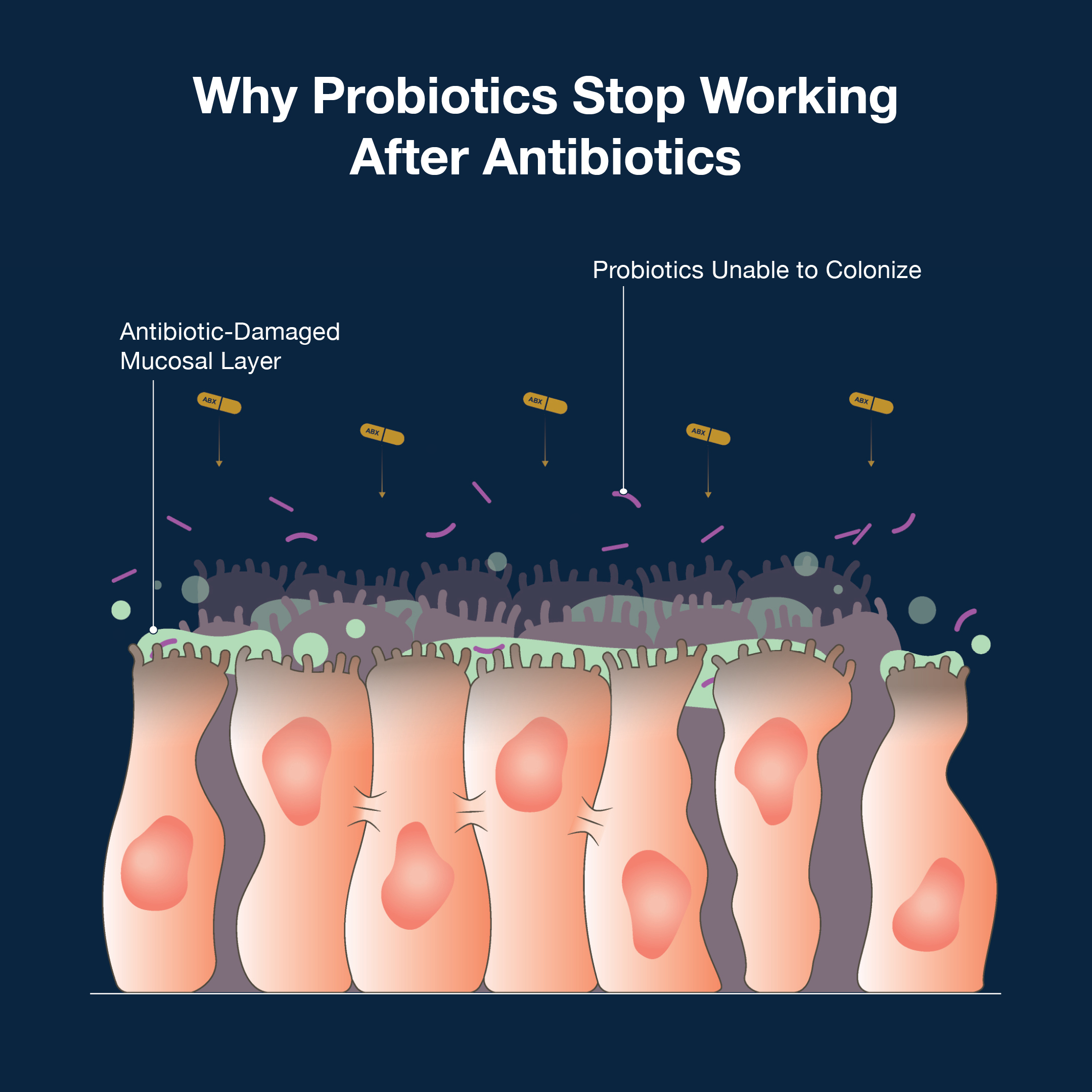
There's a pattern I see over and over in my practice, and I think it explains why so many women are frustrated with their probiotics. It goes like this. She takes a course of antibiotics — for a sinus infection, a UTI, a dental procedure. She knows antibiotics disrupt gut bacteria. So she does the responsible thing: she starts taking a probiotic right away. And for a while, it seems to help. The digestive issues that appeared after antibiotics start to ease. She thinks she's on the right track. Then after a few weeks or months, the improvement stalls. The bloating comes back. The irregularity returns. And she's confused because she's still taking the probiotic consistently. Here's what's happening. The antibiotics didn't just disrupt her beneficial bacteria. They can also compromise the mucosal layer that lines the gut wall — the protective surface where beneficial bacteria need to attach and colonize. When that mucosal layer is thinned or compromised, probiotics struggle to establish themselves. It's like trying to plant a garden in soil that's been stripped of its topsoil. You can keep adding seeds, but they won't take root without a healthy foundation. This is why I approach post-antibiotic gut support differently. Instead of just replacing bacteria, I focus first on supporting the gut lining itself — the mucosal layer, the tight junctions, the gut barrier cells. Once that foundation is supported, beneficial bacteria have a place to thrive. I wrote about this two-part approach in detail. Link in comments.
Why Probiotics Stop Working After Antibiotics
The connection between antibiotics and probiotic failure that no one explains.
LEARN MORELike this ad? Make it yours.
Crush rebuilds this exact creative around your product — your brand, your colors, your offer — in about a minute.