Julias Mom Hacks
Julias Mom Hacks Facebook ad: “One of my kids is fine. The other is falling apart.”

Ran for 24 days, from April 16 to May 10, 2026, the last day Crush saw it.
Run by Julias Mom Hacks on Facebook. Crush is not the advertiser and does not verify its claims. See this ad in Meta's Ad Library(opens in a new tab)
Make your own version of this ad
Crush makes it, launches it in your own Meta ad account, scales the winners and pauses the losers.
About this ad
- Meta Ad Library ID
- 959329713254775
- Platforms
- Facebook, Instagram, Audience Network, Messenger and Threads
- Relaunches
- 0
- EU reach
- 6,762
Ad text
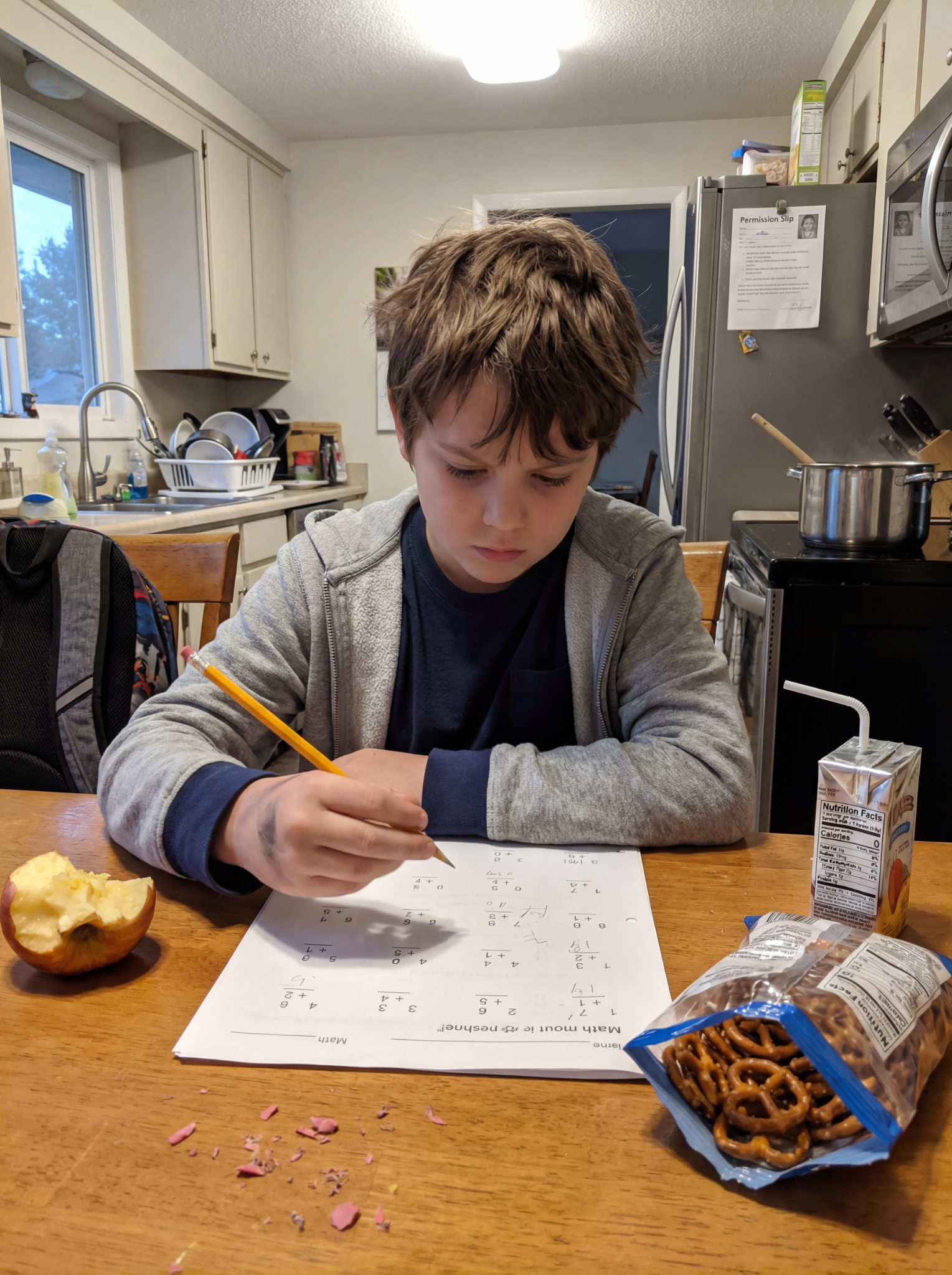
Same house. Same parents. Same food. Same rules. Same bedtime. Same school. One of my kids is fine. The other is falling apart. And for two years I couldn't figure out why. I need to tell you what finally made sense. Because if you have more than one kid and one of them is struggling in a way the other isn't, this might be the thing nobody has explained to you yet. — I have two boys. Ethan is 10. Carter is 7. Raised the same way. Same rules about screens, homework, bedtime, all of it. Ethan is easy. I hate saying that because it feels like a betrayal to Carter, but it's the truth. He gets up, gets dressed, does his homework, handles "no" with a grumble, and moves through his day. He's not perfect — he's 10. But his hard days are normal hard days. Carter's hard days shut the house down. He cannot get dressed in the morning without me walking him through every step. Shirt. Pants. Socks. I stand in his doorway and say each one. If I walk away, he freezes. He'll stand there holding a sock, staring at the wall, for ten minutes. Not refusing. Not being defiant. Just stuck. Like his brain can't figure out what comes next without someone narrating it. Homework is a war that lasts two hours every night. A twenty-minute worksheet takes the entire evening. He can't stay in the chair. Can't hold a thought long enough to finish a sentence on paper. He starts, stops, gets frustrated, melts down, and we start over. By the end both of us are in tears and the worksheet is still half done. Transitions destroy him. "Time for dinner" triggers a meltdown. "Turn the TV off" triggers a meltdown. Every shift from one thing to the next is a negotiation that turns into a standoff that turns into screaming. Things that are so small I can't even explain them to other adults without feeling like I'm exaggerating. Same house. Same rules. Same parents. Why is one kid fine and the other falling apart? — For a long time I thought I'd done something differently with Carter. Maybe I was softer with him because he was the baby. Maybe I'd given him screens too early. So I got stricter. Same rules for both boys. Enforced equally. Carter got worse. Way worse. The stricter I got, the bigger the meltdowns became. Every boundary I set was a wall he couldn't climb, and instead of trying, he'd just collapse at the bottom of it. I tried everything. Reward charts — he'd earn two stickers and then have a meltdown so big on day three that we'd have to start over. Timers and warnings — the countdown itself became the trigger. He wasn't calmer with a warning. He was worse. Removing screens entirely — I took the iPad away from both boys for two weeks. Ethan shrugged and went outside. Carter melted down for three straight days and then the meltdowns just moved to other things. Getting dressed. Brushing teeth. Being told it was time to eat. It wasn't about the screen. Taking it away proved that. Every strategy I tried worked on Ethan and failed on Carter. Same intervention. Same household. Opposite results. If the strategy works on one kid and fails on the other — same house, same parents, same rules — then the strategy isn't the variable. The kids are. Something was different about Carter. Not his environment. Not his parenting. Something inside him was different from his brother in a way I couldn't see and didn't know how to fix. — The night that changed everything was a Thursday. Both boys were on the iPad after dinner. Same game. Same couch. Side by side. I said: "Ten minutes, guys. Then screens off." Ethan said "okay" without looking up. Carter didn't respond. Ten minutes later: "Time's up. Turn them off." Ethan closed his game, set the iPad on the coffee table, and went to get a snack. Carter's hands tightened around his iPad. I could see his knuckles going white. "Carter. Time's up." "FIVE MORE MINUTES." "We did the warning. Time's up." What happened next took maybe four seconds. The iPad hit the couch. He stood up. His face went red. He started screaming — not words, just sound. Then he kicked the coffee table so hard Ethan's cup of water went everywhere. Ethan looked at me. Not surprised. Not scared. Just tired. He grabbed a towel from the kitchen, wiped up the water, and went upstairs to his room without a word. He's 10. He has a system for this. He knows what happens next and he knows to leave. Carter was on the floor screaming. Fifteen minutes later he was curled up on the couch, exhausted, staring at nothing. I sat on the other end and looked at both iPads sitting on the coffee table. Same iPads. Same game. Same time limit. Same warning. Same words from the same parent in the same room. One kid set it down and got a snack. The other one kicked a table and screamed for fifteen minutes. If this was a parenting problem, both kids would be struggling. If this was a screen problem, both kids would be addicted. If this was a discipline problem, the consequences would work on both of them. But only one of them was falling apart. And I had no idea why. That night after both boys were in bed, I sat at the kitchen table and stared at the wall. The house was quiet but my head wasn't. I kept replaying it. Same couch. Same iPad. Same game. Same warning. Same mom saying the same words. One kid set it down. The other kicked a table. I started Googling things I'd Googled a hundred times before. "Why is one child harder than the other." "Same parenting different kids." "Why does my child overreact to everything." The same articles came up. The same advice. Be consistent. Set boundaries. Stay calm. I was consistent. I set boundaries. I stayed calm until I couldn't anymore. None of it explained why the same approach worked on one of my kids and destroyed the other. I brought it up at Carter's next pediatrician visit. Told her everything — the meltdowns, the homework, the mornings, how Ethan is fine with the exact same rules. I asked her directly: "Could this be ADHD?" She did a quick screening. Said he showed some traits — the focus issues, the impulsivity, the difficulty with transitions — but didn't fully meet the criteria for a diagnosis. "Borderline," she said. "He's got some ADHD tendencies but it's not clear-cut. A lot of kids his age are like this. He could grow out of it." She told me to keep being consistent and give it time. So I had a kid who was struggling in every way that looked like ADHD but didn't technically "have" ADHD. No diagnosis. No treatment plan. No explanation. Just "borderline" and "give it time." I'd been giving it time for two years. — A few weeks later, my friend Danielle was over. Both our kids were in bed. We were on the back porch, and I wasn't planning to talk about it, but she asked how Carter was doing and I couldn't hold it together. I told her about the iPad night. About the kicked table. About Ethan quietly grabbing a towel and going upstairs because he already knows the drill. About how I'm doing everything the same for both kids and getting completely different results and I don't know what's wrong with my son. She got quiet. Then she said: "I need to tell you something. Because what you're describing is exactly what I went through with Dylan." Danielle has three kids. Her oldest is like Ethan — easy, regulated, moves through life. Her middle, Dylan, is like Carter. Same meltdowns. Same inability to focus. Same explosive reactions to small things. Same pattern in the same house with the same parenting. Six months ago she'd taken Dylan to a pediatric neuropsychologist. And what this specialist told her is the thing that made the last two years of my life finally make sense. "She said the difference between my easy kid and my hard kid isn't parenting. It isn't discipline. It isn't screens. It's brain chemistry." The specialist explained it like this. Every brain produces dopamine. Dopamine is the chemical that powers focus, impulse control, the ability to start a task, the ability to stick with a task, emotional regulation, and the ability to handle transitions. It's behind basically everything we ask kids to do all day. But not every brain produces the same amount. It's a spectrum. Some kids produce plenty — they focus fine, handle transitions, regulate emotions without much trouble. Some kids produce so little that it's obvious early and they get a full ADHD diagnosis. And then there's a huge group in the middle — kids whose brains produce less than they need but not so little that it's clear-cut. These are the kids who get called "borderline." "Spirited." "Intense." The ones the pediatrician says might have ADHD but don't quite meet the criteria. The ones who get told to "give it time." But whether the label is ADHD, borderline ADHD, or no label at all — the underlying issue is the same. The brain isn't producing enough dopamine to do what we're asking it to do. Ethan's brain produces enough dopamine to regulate. When I say "turn off the iPad," his brain has the chemical capacity to handle the frustration of stopping something enjoyable and shifting to something else. It doesn't feel good — no kid loves turning off a game — but his brain can process the shift without crashing. Carter's brain doesn't produce enough. When I say "turn off the iPad," his brain doesn't have the dopamine to manage that transition. The frustration comes in at full force with no buffer. His nervous system doesn't have enough serotonin to regulate the emotional response, so a small request — "time's up" — registers as a crisis. Not because he's dramatic. Not because I raised him wrong. Because his brain literally does not have the chemical capacity to handle it the way his brother's does. "That's why the same rules get opposite results," Danielle said. "Ethan's brain has the fuel to respond to structure. Carter's doesn't. You're giving them the same tools but one of them is trying to build with an empty tank." I was staring at her and my whole body went still. Because she had just described the last two years in our house. Why the reward charts worked for Ethan and failed for Carter. Why the timers helped one and triggered the other. Why removing screens fixed nothing — Carter's brain was struggling with or without the iPad because the iPad was never the problem. His brain chemistry was. Why homework was easy for Ethan and impossible for Carter — not because Carter is less smart, but because his brain doesn't produce enough dopamine to sustain focus on tasks that aren't inherently rewarding. The game produces dopamine externally. The worksheet doesn't. And Carter's brain doesn't have enough of its own to compensate. "But why?" I said. "Why does Carter's brain not make enough? We feed them the same food. They live the same life." Danielle nodded. "I asked the same thing. And the answer is two things happening at once." — "First — it's partly genetic. Some kids' brains just produce less dopamine naturally. The same way some kids are predisposed to need glasses or have allergies. It's not damage. It's variation. Carter's brain runs on a lower baseline. It always has." "But the specialist said there's a second layer that's making it worse for this generation of kids specifically. And this is the part that made me angry." She explained it like this. Dopamine and serotonin aren't just chemicals that appear out of nowhere. The brain has to BUILD them. And it builds them from specific raw materials — B6, B12, magnesium, amino acids. These are the actual building blocks the brain needs to manufacture its own dopamine and serotonin. Thirty years ago, kids were getting most of these from food. Vegetables had more magnesium because the soil hadn't been farmed to depletion. Meals were made from whole ingredients. The raw materials were in the diet. Today? The food is different. The soil is depleted — measurably less magnesium, less zinc, less B vitamins in produce than a generation ago. And most kids aren't eating produce anyway. They're eating the beige diet. Chicken nuggets, goldfish, granola bars, pasta with butter, fruit snacks, juice boxes. Enough calories. Plenty of calories. But almost none of the specific nutrients the brain needs to produce dopamine and serotonin. So a kid like Carter — who already produces less dopamine genetically — is ALSO not getting the raw materials his brain needs to manufacture what little it can. It's a double deficit. His brain is wired to produce less, AND it's not getting the building blocks to produce even that. "Meanwhile," Danielle said, "Ethan's brain produces enough dopamine at baseline that even with the same diet, he functions fine. He's got a bigger tank genetically. Carter's tank is smaller AND he's not getting the fuel to fill it. Same food. Same house. Completely different outcome." Then she said: "And on top of all of this, school makes it worse." Carter sits at a desk for almost seven hours a day. Every single thing school asks him to do — sustain attention, control impulses, switch between tasks, sit still, follow multi-step instructions, raise his hand instead of blurting out — runs on dopamine. School is seven hours of high-demand dopamine spending. And they give him what — twenty minutes of recess? Maybe twenty-five? Twenty minutes of movement to replenish what seven hours of executive function demands drained. For Carter's brain, the math doesn't work. He starts the day already low. School drains what little he has. Twenty minutes of recess barely makes a dent. By 3 PM he's completely empty. Every meltdown, every homework war, every explosive reaction to a small request — that's a brain that's been running on fumes since noon and has absolutely nothing left. "That's why it's always worse after school," I said. "Always. And it's why weekends and summer are usually a little better — less demand on the tank." She was right. I'd noticed that. Summers were never as bad. I thought it was because I was less stressed. It wasn't me. It was him. His brain wasn't being drained for seven hours before he had to do anything at home. Everything was clicking into place. Every fight, every meltdown, every failed strategy — all of it suddenly had an explanation that had nothing to do with my parenting and everything to do with brain chemistry I couldn't see. "So what do we do?" I asked. "I can't change his genetics. I can't change the school system." "You don't have to," she said. "You just have to give his brain the building blocks it's missing so it can produce more of what it doesn't have enough of." — Danielle told me what the specialist had recommended for her son. And what she said next is the reason I'm writing this. The specialist told her about saffron extract. Not the cooking spice — a clinical-strength extract that contains two specific compounds called crocin and safranal. She explained how it works, and this is the part that made it click for me. Saffron doesn't force dopamine into the brain the way ADHD medication does. Medication works by artificially flooding the system — that's why it causes side effects. Appetite gone. Sleep destroyed. Personality flattened. The brain gets overridden instead of supported. Saffron does something different. Crocin and safranal support the brain's OWN natural production of dopamine and serotonin. It helps the brain make more of what it's been running low on. Doesn't force anything. Doesn't override anything. Just supports the production process that's been struggling. Dopamine — so Carter's brain can sustain focus on things that aren't instantly rewarding. So homework doesn't take two hours. So "turn off the iPad" doesn't trigger a crisis. So he can get dressed in the morning without me narrating every step. Serotonin — so his nervous system can handle transitions and frustrations without everything coming in at a 10. So "time for dinner" registers as a normal request instead of an emergency. So the meltdowns that shut our house down stop happening, not because he's suppressing them but because his brain finally has the capacity to process small frustrations the way his brother's always has. "There's a study," Danielle said. "The specialist showed it to me. Clinical trial. Saffron extract compared head-to-head with Ritalin in children with ADHD. Same measures — focus, attention, behavior — rated by parents and teachers." "And?" "The results were comparable." I made her repeat it. "Comparable. Saffron performed the same as Ritalin on every measure. And since then there have been more studies confirming it. Without the appetite loss. Without the insomnia. Without the personality changes. Because it's not overriding the brain. It's feeding it." "But I've tried supplements," I said. "I bought focus gummies from Amazon. Calm drops. Magnesium chewables. Nothing worked." "That's what the specialist told me too. Most supplements on the shelf are underdosed filler. A sprinkle of an ingredient on the label. The saffron study used a specific clinical concentration — below that concentration, it doesn't cross the threshold where brain chemistry actually changes. And the magnesium in most kids' supplements is oxide, which barely absorbs. Your body passes it before it ever reaches the brain." "But here's the other thing," she said. "Saffron supports the production process. But the production process still needs the raw materials — the B6, the B12, the magnesium — to actually run. If the building blocks aren't there, saffron alone can't do its job. That's what the specialist told me to look for: the saffron at the right dose PLUS the raw materials the brain needs." She told me the one the specialist recommended. The one she'd been giving her son for four months. Mood Balance. Clinical-dose saffron extract — the actual concentration from the study, not a fraction of it. Magnesium glycinate — the form that actually crosses the blood-brain barrier, not the oxide that sits in your gut. Lion's mane for cognitive clarity. L-theanine. B6 and B12 to fuel the dopamine and serotonin production chain. The production support AND the raw materials. Together. In one gummy. "Does he take it?" I asked. Because I've tried giving Carter supplements before. Chewable tablets he gagged on. Liquid drops he spit out. Powder in smoothies he refused to drink. "It's a gummy that tastes like candy. He asks for it every morning." I looked at her. "How is he now?" She got quiet for a second. Then she said: "He's the kid I always knew was in there. The one I couldn't reach. He's focused. He's calmer. He handles 'no' without it being a disaster. He does his homework without a war. And he's still completely himself — still loud, still wild, still him. Just regulated. His teacher emailed me last month and said he's like a different kid." I ordered it on my phone before I went inside. Didn't tell my husband. Didn't tell Carter's teacher. Didn't tell my mother. Because I have tried so many things and watched every single one of them fail, and I could not handle another audience for another disappointment. — Carter chewed the first gummy Monday morning. Said it tasted like candy. Ethan asked if he could have one too. I gave him one. It's not going to hurt a kid whose brain already works fine — and honestly, the B vitamins and magnesium aren't going to hurt anyone. I told myself not to watch for changes. Not to hover. Not to turn this into another thing I'm desperately monitoring. — Week one. Small things. Tuesday after school. Carter walked in, dropped his backpack, went to the kitchen. Normal. But when I said "homework first, then screens" — he didn't argue. He didn't happily skip to the table. He's 7, not a robot. But he sat down without the negotiation. Without the buildup. Without the fifteen-minute standoff that usually precedes any transition. He did his worksheet. It took thirty-five minutes, which is still long. But there was no crying. No thrown pencil. No "I CAN'T DO THIS." Just a kid working slowly through something hard. I stood at the counter making dinner and kept my mouth shut. Because I didn't want to jinx it and I didn't want to make it a thing. Thursday morning. Getting dressed. I gave him the same instruction I give every morning: "Get dressed, come downstairs." I waited at the bottom of the stairs for the freeze. The stalling. The sock-in-hand, staring-at-the-wall paralysis that's been our every morning for two years. Six minutes later he came downstairs. Dressed. Shirt on correctly. Socks matching. No one narrated the steps. Small things. But in our house, those aren't small. — Week two. The iPad test. Both boys on the couch after dinner. Same game. I said: "Ten minutes, guys." Ten minutes later: "Time's up." Ethan closed his game and set it down. Normal. Carter looked up. I saw the flash — that familiar tension in his jaw, the tightening of his hands around the iPad. The fuse that always leads to the explosion. "Can I finish this one part?" "One minute." He finished. Set the iPad on the couch. Stood up. "Can I have a popsicle?" I stood in the kitchen doorway and I couldn't move. Because I was looking at the same couch, same iPads, same boys, same request. And for the first time in years, the same response. Both of them turned it off and moved on. Like brothers. Like two normal kids on a normal night. No scream. No kicked table. No remote thrown. No Ethan quietly retreating upstairs because he knows what's coming. Just two boys who wanted popsicles. I gave them popsicles. They sat at the table and argued about which Pokémon would win in a fight. Normal brother stuff. The kind of moment I used to watch other families have and wonder why we couldn't. — Week three. The one I can't talk about without crying. Saturday morning. I told both boys to clean their rooms before we went to the park. Ethan went upstairs. Done in ten minutes. Normal. Carter went upstairs. I waited for the meltdown. The "I don't know how." The standing in the middle of his room unable to start. I heard things moving. Drawers opening. The closet door. He came downstairs eight minutes later. "Done." I went up. Not perfect. But done. Clothes in the hamper. Toys off the floor. The bed made. He'd done it by himself. Sequenced the steps. Started the task, stayed with the task, finished the task. Without me standing in the doorway feeding him each instruction. We went to the park. Both boys on their bikes. Carter was ahead the whole time, looking back to make sure I was keeping up. They played for an hour. I sat on a bench and watched them run around together. Arguing, laughing, racing, being brothers. Not the dynamic I was used to — Ethan carefully managing Carter's mood, me managing both of them, everyone walking on eggshells around the next meltdown. Just two boys playing. And I sat on that bench and cried behind my sunglasses. Because for the first time, our family felt like one unit instead of two separate teams organized around Carter's next explosion. — Week four. His teacher called. I almost didn't answer. That's what two years of bad news does to you — the school's number on your phone triggers a physical reaction before your brain even processes what's happening. "I wanted to talk to you because I've noticed some significant changes with Carter over the past few weeks. He's completing his work in class without constant redirection. He raised his hand during group discussion three times yesterday. He transitioned from recess to math without any issue — and honestly that's been one of our biggest challenges all year." She paused. "And during independent reading yesterday, he sat and read quietly for twenty minutes. I've never seen him do that. Whatever is going on, please keep doing it." I thanked her, hung up, and sat in my car for five minutes. Because his teacher just described a kid whose brain could sustain attention, handle transitions, and regulate behavior throughout a full school day. The same brain that four weeks ago couldn't get dressed without someone narrating each step. — It's been three months. Carter is still Carter. Still loud. Still intense. Still asks a million questions. Still wants to argue about bedtime every night. He's 7 — he's not a different kid. And I didn't want a different kid. I wanted THIS kid with a brain that could keep up with who he is. That's what happened. Homework takes fifteen to twenty minutes. He does it at the kitchen table while I make dinner. Sometimes he needs help. Most of the time he doesn't. Mornings work. Gets dressed by himself. Comes downstairs. Eats breakfast. Brushes teeth. Grabs his backpack. Walks to the car. Same routine Ethan's always had. Now both of them do it. The iPad has an off switch again. He still grumbles when I say time's up. He's 7, he's supposed to grumble. But the meltdown is gone. The scream is gone. The kicked table is gone. He feels the frustration, it passes through him, and he moves on. The way Ethan always has. Transitions happen. "Time for dinner" gets an "okay." Not always immediately. Not always happily. But without a crisis. Without the rest of us bracing for impact. Ethan doesn't retreat to his room anymore when Carter gets told "no." Because there's nothing to retreat from. The explosion that used to follow every boundary just... isn't there anymore. My husband said it last week: "It feels like we have two kids now instead of one kid and one emergency." That's exactly what it feels like. — Here's what I need you to hear if this sounds like your family. If you have one kid who handles life and another who falls apart — same house, same rules, same parenting — the difference isn't what you're doing. It's what's happening inside their brain. Some kids' brains are just different. That's not a flaw. That's not a failure. That's variation. And when that lower baseline gets combined with a modern diet that's been stripped of the nutrients the brain needs to manufacture dopamine and serotonin, and a school system that drains seven hours of dopamine reserves with twenty minutes of recess to replenish — the math doesn't work. No amount of stricter rules, better charts, or removed screens fixes a neurochemical gap. I know because I tried all of it. Same interventions, applied equally, to both kids. One responded. One got worse. Because the problem was never the parenting. The problem was a brain that needed more than it was getting. One gummy. Every morning. Ten seconds. Clinical-dose saffron to support the brain's natural dopamine and serotonin production. B6, B12, and magnesium glycinate to give the production line the raw materials it's been missing. That's what closed the gap between my two boys. Not perfectly — Carter still has a busier brain than Ethan and probably always will. But the gap between "fine" and "falling apart" closed. And for the first time, our house runs on one set of rules that works for both kids. That's what changed our family. EDIT: Everyone keeps messaging me asking what the gummy is. Here's the exact one — clinical-dose saffron extract, magnesium glycinate, lion's mane, L-theanine, B6, B12. Real concentrations, not the filler from the vitamin aisle. This is what both my boys take every morning. [uselumexa.com/pages/saffron-2]
Where the ad sends people
uselumexa.com
One of my kids is fine. The other is falling apart.
Lumexa
Learn more: uselumexa.com(opens in a new tab)