
Hannah Young
Inactive· since Jul 4, 2026
- 34
- days it ran
- 0
- relaunches
Ad copy
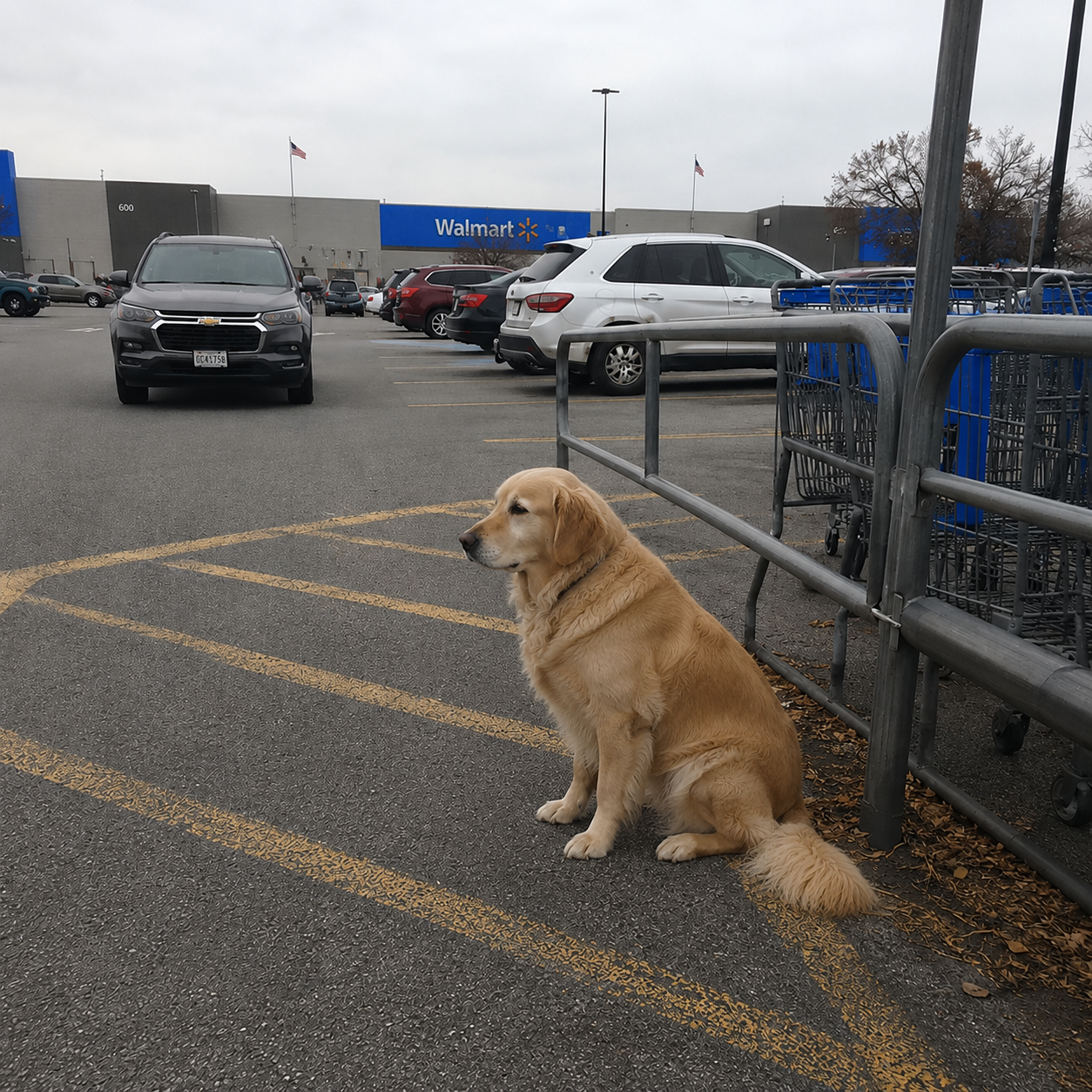
I found a dog in the Walmart parking lot last Tuesday. Knocking on the door it belonged to changed how I look at my own husband. Small thing. Brown and white. Sitting by the cart return like it was waiting for someone who wasn't coming. If I'd known what was on the other side of the door I was about to knock on, I'd have sat in my car a little longer and gathered myself. I didn't know. So I walked up that porch with a stray dog at my heels. I almost drove past. I was loading bags into the trunk — laundry detergent, garbage bags, nothing exciting — when I saw him out of the corner of my eye. Not barking. Not running. Just sitting, checking every car that drove by like he was waiting to see if this one was the right one. My husband says I can't walk past anything that needs help. I tell him somebody has to care. He had a collar. Faded red. A handwritten tag in shaky permanent marker. The name Benny. An address. No phone number. The address was thirty minutes away. The shelter was on my way home; that dog's home was not. But he was old — gray around the muzzle, cloudy at the edges of his eyes, careful the way he stood up. And whoever wrote that tag had hands that didn't work as well as they used to. That handwriting was somebody's last attempt to keep the only thing they had left from getting lost. I opened the back door. Benny climbed in like he'd been waiting for a ride and put his chin on his paws. The house was small and white. Tired the way a yard gets tired when one person used to keep it up and now nobody can. The side gate hung off one snapped hinge — the kind of thing a husband fixes in twenty minutes on a Saturday. Nobody had fixed it. Benny was sitting up now, tail sweeping. He knew this place. I knocked. Slow footsteps. A chain sliding. The door cracked open four inches and a small woman with white hair looked through. I didn't get to introduce myself. Benny pushed through the gap, and she went down to her knees the slow careful way old knees go and had her dog in her arms before she was even on the floor, saying his name into his fur over and over. She looked up eventually. Her eyes were wet. "That gate's been broken two months," she said. "Gene would've had it mended before lunch." "Gene?" "My husband. Eight months now." She pressed her face into Benny's neck. "He got me Benny the year before he passed. Said he didn't want me alone in this house." She looked up again. "Benny still sits by Gene's chair every morning. He's the only thing here that still waits for him. I can't lose him too." Then she looked at me — a stranger who'd driven thirty minutes to bring back a dog she could have dropped at a shelter — and said, please come in. Let me make you coffee. Ruth The kitchen was clean the way a kitchen is clean when one person uses it. One mug on the rack. A table with two chairs, only one worn. Benny walked straight to the second chair and lay down beside it, chin on the floor, looking up at the empty seat. Waiting. Her name was Ruth. Seventy-eight. She made coffee in a stovetop percolator that filled the whole house with the smell, and while it brewed, she talked. She didn't start with the sad part. That's how you know somebody really loved somebody. "Gene was a plumber. Forty-one years. The kind people called at 2 a.m. on Christmas when a pipe burst, because they knew he'd come. Boots on, truck running, didn't matter the hour. He could carry a water heater up a flight of stairs by himself. Hands twice the size of mine." She held up her own — small, thin. "Fifty-two years married. People say that like it's a number. It's not. It's every Tuesday morning for fifty-two years where he had my coffee made before I woke up. Two sugars, splash of cream. He never once got it wrong." She looked at the empty chair Benny was still guarding. "That was his." You don't say anything in that moment. So I didn't. "The last few years, he slowed down. I mean really slowed. He was a five-a.m. man his whole life — up before the sun, coffee on, out the door. And near the end I was the one making the coffee. Some mornings I'd be dressed and he'd still be under the covers. Not sleeping. Just… not getting up." "His hands stopped cooperating. The man who held a pipe wrench for eight hours couldn't open a jar of peanut butter without running his fingers under hot water first. His mind would go — mid-sentence he'd stop and look at me like he was reaching for the whole thought and couldn't find it. One night at dinner he asked me what he'd done that day. He'd worked a full one. He couldn't get any of it back." "I kept telling myself, he's sixty-five, he's sixty-six, men slow down. The doctor said the same. 'It's his age, Ruth.' So we accepted it. We called it getting older and we let those years be what they were." She wrapped both hands around her mug. "He passed in his sleep. Peaceful. I'm grateful for that. But I think about those last few years — how tired he was, how dimmed, how much of him was already gone quiet before he went. And I wonder how many of those mornings he could've had back. How many more Saturdays in that garage. How much more of him. Nobody ever told us it could be anything other than age." Benny lifted his head, looked at her, put his chin back down. Still waiting. The drive home I drove home in silence. No radio. Just Ruth's voice. I pulled into my driveway at 4:15 and through the kitchen window I could see my husband Ray at the table. iPad. Reading glasses on the tip of his nose. A glass of water he'd probably been ignoring for an hour. He looked tired. He always looks tired lately. Ray's sixty-one. And standing in that driveway I finally let myself see what I hadn't let myself see for three years. Ray used to coach our son's baseball team. Used to sprint the bases in the parent-kid games. Built a pergola over the back patio the neighbors still bring up. He hasn't built anything in three years. There's sawdust on the workbench from his last project and nothing's moved since. I stopped asking when the next one was starting, because the answer was always one of these days — I'm just tired. He's always tired. Not sick. Not bad enough to make a fuss. Just dimmed, like somebody turned his brightness down and walked off. Home from work, he sits. Saturday morning, he sits. His hands. I've watched him use both to open a jar and think I don't notice. The morning stiffness — he thinks I'm asleep when he sits on the edge of the bed at 5:30 flexing his fingers, open, close, open, close, negotiating with his own hands. I'm not asleep. I've been watching him do that for two years. The fog. He forgot our nephew's birthday last month. We'd talked about it that morning. By four he looked at me like I'd spoken a language he didn't know when I said we had to leave. He's sixty-one. He's not old. And he's becoming somebody I don't fully recognize — and everybody keeps calling it aging. Standing in that driveway, I saw Gene. The hands. The fog. The chair. And I decided I was not going to spend the next ten years watching my husband go quiet and calling it normal. What I actually found That night, after Ray was asleep, I sat at the kitchen table with my laptop. I stopped searching "supplements for energy" — I'd wasted months on that. I started searching why. Why is he this tired? Why does more sleep never fix it? Why did the coffee stop working? And I found the piece nobody had ever mentioned to us. The heaviness in the morning was never really about how long he slept. Between about 1 and 3 a.m., the liver runs its deepest cleaning cycle of the whole day — everything from the last eighteen hours, the food, the drinks, the stress, the load it quietly filters. To finish, it burns through one compound: glutathione, its master antioxidant. With enough of it, the cleanup completes and you wake up clear and light. Without it, the job stalls and you wake up carrying the load. And here's the part that stopped me: after thirty, your body makes about 10% less glutathione every decade. Add years of processed food, stress, and ordinary living, and the liver simply runs out before it finishes overnight. The cleanup stalls. And every system it supports starts running on a deficit — the energy your muscles use, the clarity your brain leans on, the sleep it's supposed to deepen. The heavy mornings, the fog, the 2 p.m. collapse, the stiff hands — not separate problems. One depleted engine. Nobody had ever said the word help. Only manage, or it's your age. Two compounds refill that engine. NAC — the direct precursor your body makes glutathione from, the same compound hospitals reach for to support a liver under stress. And NAD+ — the fuel the cells need to actually finish the repair, the difference between waking up less foggy and waking up with real energy. NAC cleans. NAD+ recharges. You need both. The one formula that put the clinical 600mg NAC and NAD+ in a single softgel — in an MCT oil base so it actually absorbs and doesn't give you that sulfur smell — was Kozhypes NAC600 Morning Recovery. I ordered it that night. Ray I didn't make a speech. I just handed him one softgel with water that Friday. "What's this?" "Something new. Try it. For me." He looked at me, swallowed it, went back to his iPad. I set one out every night after that. He stopped asking. He just took it — alongside his normal routine, not instead of anything. By the second week, his mornings were different. Not gripping the edge of the bed as long. Up by 6 instead of 6:30. One night he stayed up for a whole game past nine instead of fading at 8:15. I notice everything. Week three, Saturday morning, he went out to the garage. I watched from the kitchen window. He wasn't building anything yet — just standing at the workbench, moving tools around, visiting a room he used to live in. "The miter saw needs a new blade," he said when he came in. I said I'd pick one up. Week four, he mowed the whole lawn and didn't spend two days recovering on the couch. He mowed it like a chore again instead of an expedition. Our son called that weekend and I heard Ray laughing on the phone — that deep-in-the-chest laugh I'd forgotten the sound of. I went into the bedroom and closed the door. Not because I was sad. Because what I was feeling needed a room to itself. He was coming back. Somewhere in there he said something he hadn't said in years. Not "I'm fine." He said, "I haven't felt fine in a long time, Susan. I knew it. I just didn't want it to be true." At his next routine checkup, his doctor looked at him and said, "You look better than you have in a while — whatever you're doing, keep doing it." First time in years the appointment wasn't just a shrug. I went back to see Ruth Three weeks later. Brought banana bread because I didn't know what else to bring. The percolator was going. Benny met me at the door, the whole back half of him wiggling. And the second chair was clear now — she'd moved the mail off it. Benny was lying at her feet instead of beside the empty seat. Something in him had settled too. I told her about the overnight cleanup. About glutathione. About Ray in the garage with sawdust on his shirt. She listened, didn't interrupt, held her coffee. When I finished she was quiet a long time. Then she said, "I'm glad you didn't wait like we did." I reached across and held her hand — the one that had been held by a plumber's hand for fifty-two years. "I can't give you those years back with Gene," I said. "But maybe I can help somebody not spend theirs watching." She squeezed back, harder than you'd expect from seventy-eight. "Then tell them." I'm telling you. If you've been watching someone dim If your husband — or your father, or you — has been slowing down, sitting more, foggy in the mornings, flattened by mid-afternoon, and everyone keeps calling it just getting older — maybe it isn't. Maybe it's a liver running out of what it needs to finish its job overnight, and no amount of coffee or extra sleep refills it. Two compounds can. NAC and NAD+, at the clinical 600mg dose, in one softgel before bed. It works inside the liver, overnight, where the heaviness actually begins. Alongside your normal routine and your doctor's care — not instead of them. I didn't get to set a bottle on Gene's counter. But I can set one on yours. Don't spend another year watching someone you love go quiet and calling it normal. P.S. Ray's been on it three months. He's in the garage most weekends — built a mudroom shelf last Saturday, nothing fancy, four hours out there with sawdust on his shirt and a look on his face I hadn't seen in years. Up at 5:45 without an alarm. Last week he asked our son if he wanted to go fishing. P.P.S. You'll feel it before anyone confirms it. For Ray it was the mornings first — easier to get up — then the energy, then the fog clearing like somebody slowly wiping a windshield you didn't know was dirty. When someone starts coming back, even a little, you notice. Because you remember who they were. And you realize they're still in there. P.P.P.S. Kozhypes has a 30-day money-back guarantee. If your mornings don't change, every dollar back, no questions asked. They make it in small batches and sell out, so if this is you, don't sit on it. I keep a spare in the house now. After watching Ray come back, I started taking one myself. I'm not waiting to be Ruth.
My doctor said permanent abstinence. I refused.
✚ Your Liver Is Still Working At 7am — That's Why You Feel Like That ✚ Restores Glutathione So Your Liver Finishes Processing Overnight ✚ Same Compound ERs Use for Tylenol Overdose — Now In Daily Softgel Form ✚ Wake Up Recovered, Not Just Rested ✚ Clinical 600mg Dose In MCT Oil — Zer...
SEE DETAILSLike this ad? Make it yours.
Crush rebuilds this exact creative around your product — your brand, your colors, your offer — in about a minute.