Daily Health Insights
Daily Health Insights Facebook ad: “The Missing Piece PPIs Don't Address”
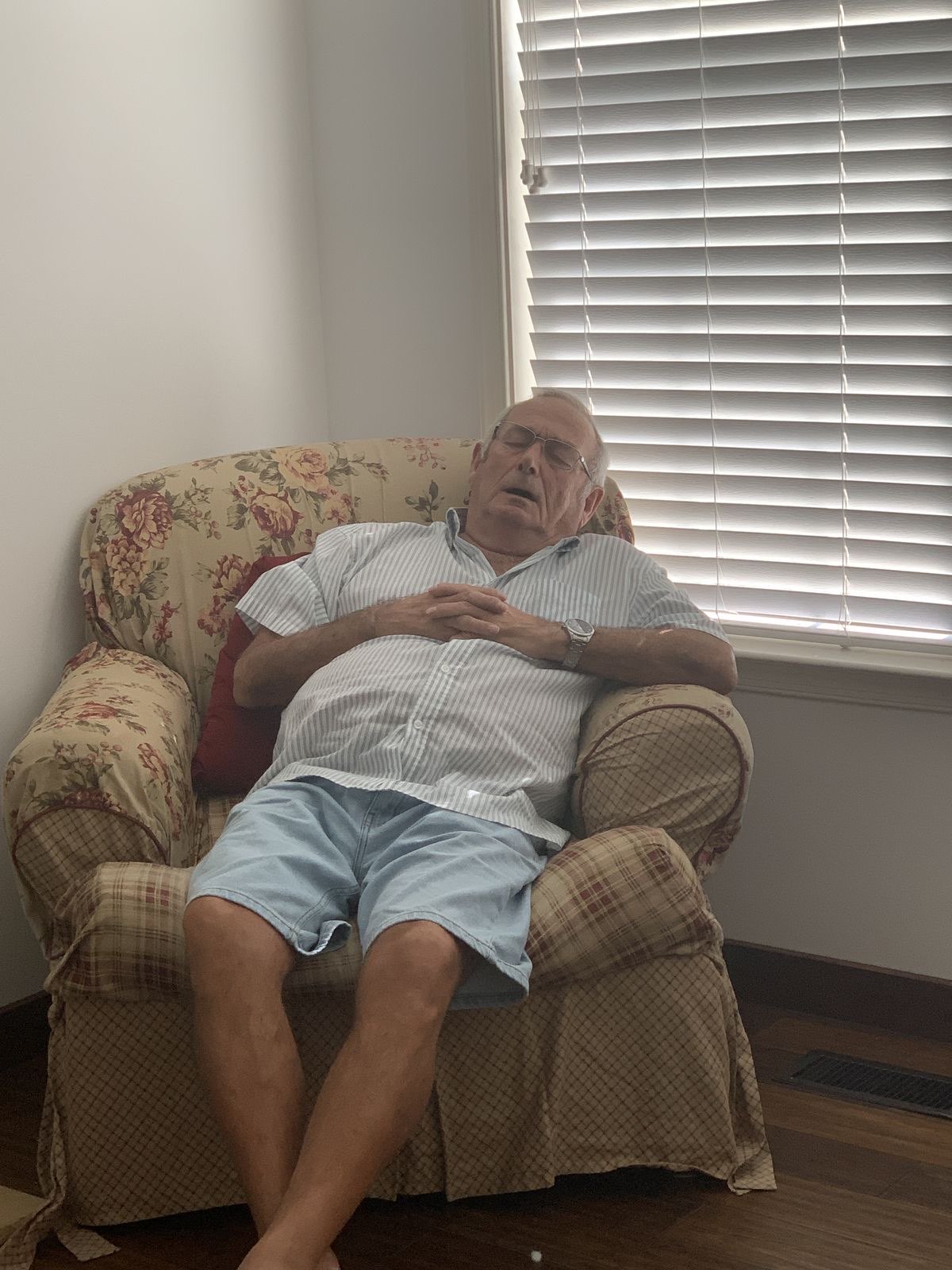
Ran for 54 days, from June 28 to August 21, 2026, the last day Crush saw it.
Run by Daily Health Insights on Facebook. Crush is not the advertiser and does not verify its claims. See this ad in Meta's Ad Library(opens in a new tab)
Want an ad like this for your product?
Crush makes new ad images for your product from this ad: your logo, your product photo, your offer.
Trials from $19.95 USD, then $79.95 USD a month. Cancel anytime.
About this ad
- Meta Ad Library ID
- 971983439224704
- Platforms
- Facebook, Instagram, Audience Network, Messenger and Threads
- Relaunches
- 0
Ad text
My reflux scope came back with the words Barrett's esophagus. I'm 61. My mother was 63 when they found hers. She died at 71. Three weeks before my appointment, my gastroenterologist closed the door behind her. She sat. Pulled up my chart without looking at me. "Patricia. The biopsies confirmed low-grade dysplasia. We need to discuss surveillance frequency and what happens if this progresses." My throat constricted. Progresses. I knew what that word meant. I'd watched my mother learn what it meant. Stage by stage. Scope by scope. Until one scope showed something that couldn't be watched anymore. She died eight years after her Barrett's diagnosis. Not from something random. From exactly what her gastroenterologist told her to watch for. I sat in my car in the parking lot for forty minutes. Couldn't turn the key. The printout sat in my lap. Barrett's esophagus with low-grade dysplasia. Recommend high-dose PPI therapy and repeat endoscopy in 6 months. High-dose PPI therapy. My mother was on high-dose PPI therapy for eight years. It didn't stop anything. That night I lay awake. Ceiling fan rotating. Clock glowing red. 11:47 PM. 1:22 AM. 3:09 AM. I gave up. Went downstairs. Opened my laptop. How to stop Barrett's esophagus from progressing naturally. Every result said the same thing. Avoid trigger foods. Elevate the head of your bed. Lose weight. Take your PPI. The exact advice my mother followed for eight years. I clicked deeper. Medical journals. "Pepsin, not acid, is the primary driver of cellular damage in Barrett's metaplasia..." "Proton pump inhibitors reduce acid but do not prevent pepsin-mediated injury to esophageal tissue..." "Physical barrier therapy demonstrated significant reduction in refluxate contact with Barrett's segment..." I sat back. Pepsin. My gastroenterologist had never once mentioned that word to me. Neither had my mother's. I started researching. Seven days straight. Printed journals spread across the kitchen table when my husband walked in one evening. "Patricia. What are you doing?" "Reading." "The doctors said the PPI should—" "The doctors told my mother the same thing. Eight years of PPIs. She still progressed. She still died." He had no answer. Two weeks later I was at a small health conference near our town. Functional medicine. Not my usual world. A presenter — a retired ENT surgeon from Johns Hopkins — was talking about LPR, Barrett's, and something called alginate raft therapy. I almost left after five minutes. Then he said something that stopped me cold. "Every patient I put on high-dose PPIs was still getting pepsin damage. The acid was lower. The pepsin didn't care. It kept reaching the Barrett's tissue. Because nothing was physically stopping it from getting there." I raised my hand. "What physically stops it?" "An alginate raft. Seaweed-derived gel that floats on top of stomach contents for four hours. When the valve opens at night — which it always does, especially in Barrett's patients — the gel is already there. The pepsin hits the gel. Not the tissue." "Why hasn't my gastroenterologist mentioned this?" He smiled quietly. "Because there's no patent on seaweed. And because most American gastroenterologists trained entirely on PPI protocols. Europe has used alginate raft therapy as a first-line intervention since the 1970s. Here, we prescribe omeprazole and hope." I pulled out my phone right there. The package arrived three days later. ZYLO. Organic alginate gel. Lemon ginger. Zero sugar. I took the first dose thirty minutes before bed. Week one: The burning I'd wake up with every morning — noticeably less. Week two: I slept through the night. Both nights. Then three nights straight. My husband watched me come downstairs one morning without immediately reaching for water to soothe my throat. He didn't say anything. Just watched. Week three: The hoarseness I'd had for two years — my ENT had blamed allergies — started clearing. Six weeks in, I had my follow-up scope. I sat in my car outside the endoscopy center. Opened the patient portal. No progression of dysplasia. Barrett's segment stable. Continue current regimen. I called my husband from the parking lot. "Stable," I said. Silence. Then a long exhale that turned into something that wasn't quite crying. "Thank God. Patricia. Thank God." My mother never had a stable scope after her diagnosis. Every six months, something had crept forward. She did everything right. Took every pill. Followed every protocol. And still watched her Barrett's progress, scope by scope, toward the outcome that killed her. Nobody told her there was something that could physically block the refluxate from reaching that tissue. Not one gastroenterologist. Not one specialist. The answer existed for fifty years. She just never found it. If you're reading this, you know why it found you. Your scope came back with words you didn't want to see. Your doctor is talking about surveillance intervals, dysplasia grades, progression risk. You've been on PPIs for months or years and you're still getting symptoms. You've Googled Barrett's esophagus progression at 2 AM and read things that kept you awake until morning. You've watched someone you love go through this. Here's what I want you to know: The PPI your doctor prescribed addresses the acid. It does not address the pepsin. It does not physically prevent refluxate from reaching your esophageal tissue at night when the valve opens and gravity disappears and saliva production drops to zero. Nothing your pharmacist sells does that. ZYLO does one thing. It forms a physical gel raft that floats on top of your stomach contents for four hours and refuses to let anything past it. That's the entire product. That's why it works when nothing else has. Why ZYLO works when standard therapy doesn't address the full picture: The Physical Barrier Your PPI Can't Provide PPIs reduce acid. They do not stop physical backflow. At night, when the lower esophageal sphincter relaxes, stomach contents — including pepsin — still reach the esophagus. ZYLO's alginate gel floats at that junction and physically intercepts what's coming up. Not chemistry. Physics. Organic Whole-Source Alginate — Not a Diluted Version American Gaviscon contains a fraction of the alginate in UK Gaviscon Advance — the version European gastroenterologists actually recommend. ZYLO uses therapeutic-level organic sodium alginate, zero sugar, gluten-free, low sodium. You can read every ingredient and pronounce every word. Pepsin Protection — The Mechanism Most Doctors Never Mention Pepsin from your stomach keeps damaging esophageal tissue even when acid is suppressed — because pepsin remains active at near-neutral pH. An alginate raft physically traps pepsin below the barrier. No PPI does this. No antacid does this. This is the mechanism that's been hiding in plain sight for fifty years. The Proof Is in Your Labs — Not Our Marketing Most people notice symptom changes within one to three weeks. The meaningful measure is your next scope. Give it an honest trial. Track your symptoms. Let your gastroenterologist's findings tell you what the product does. Try ZYLO for 30 days. If you don't notice a difference in your nighttime symptoms, your morning throat, your sleep — contact us for a full refund. No questions asked. You risk nothing. The only risk is continuing to protect your esophageal tissue with half the answer while the other half goes unaddressed. My mother never found this. I did. That difference is the only thing I think about when I take my dose every night before bed. If you're where I was — a diagnosis on paper, a family history you're terrified of repeating, a protocol that addresses half the problem — try ZYLO. Your next scope will tell you everything. [Try ZYLO — 30 Day Guarantee — Free Shipping] — Patricia Owens, 61, Nashville, Tennessee P.S. — I noticed morning throat burning ease within 10 days. Slept through the night by week two. Stable scope at six weeks. Your timeline will be different. But you won't know until the gel is doing its job every night. P.P.S. — Every night without a physical barrier is another night of pepsin reaching tissue that has already changed once. The window doesn't stay open forever. Don't wait for the next scope to show you what unprotected nights cost.
Where the ad sends people
get-zylo.com
The Missing Piece PPIs Don't Address
Zylo
Learn more: get-zylo.com(opens in a new tab)