Nuvine
Nuvine Facebook ad: “Read This If You Think You've Tried Everything”
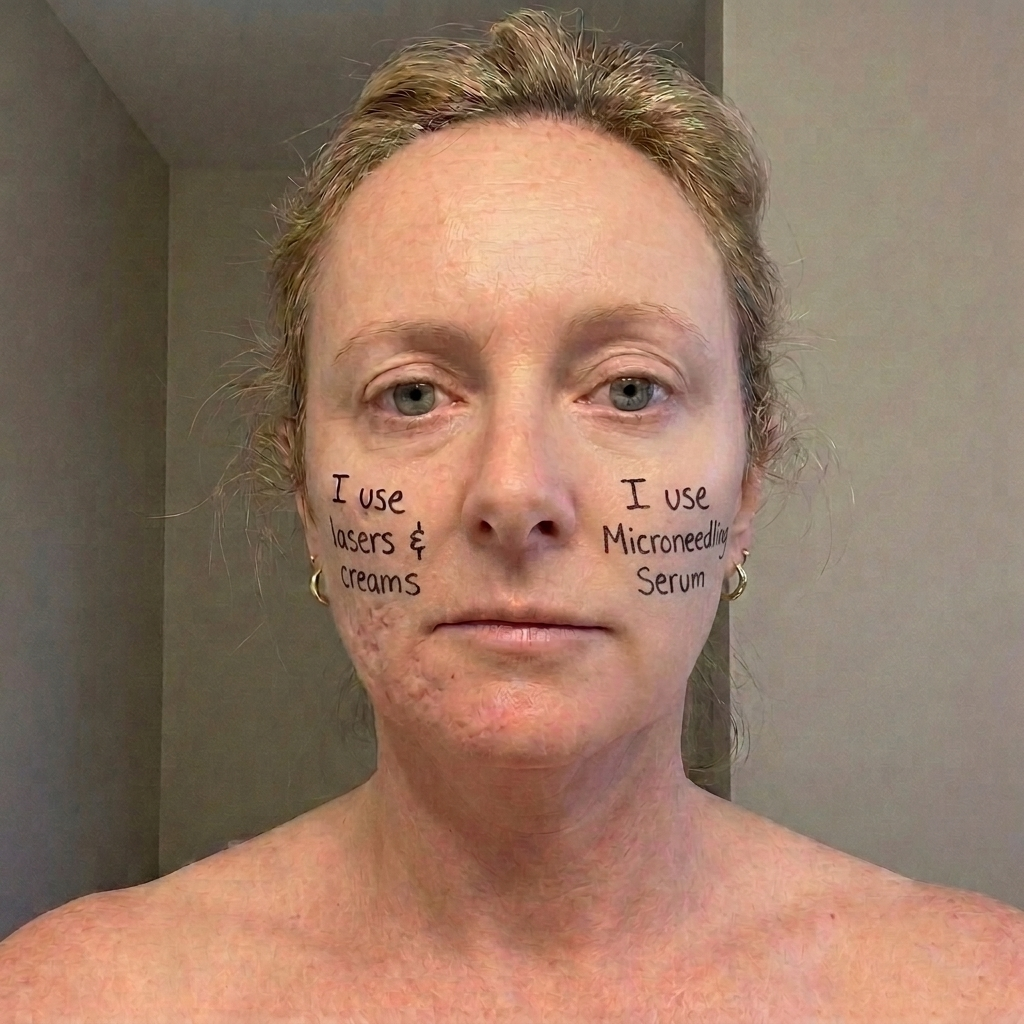
Ran for 1 day, from April 28 to April 29, 2026, the last day Crush saw it.
Run by Nuvine on Facebook. Crush is not the advertiser and does not verify its claims. See this ad in Meta's Ad Library(opens in a new tab)
Want an ad like this for your product?
Crush makes new ad images for your product from this ad: your logo, your product photo, your offer.
Trials from $19.95 USD, then $79.95 USD a month. Cancel anytime.
About this ad
- Meta Ad Library ID
- 972556445732964
- Platforms
- Facebook, Instagram, Audience Network, Messenger and Threads
- Relaunches
- 0
- Niche
- Skincare & Beauty
Ad text
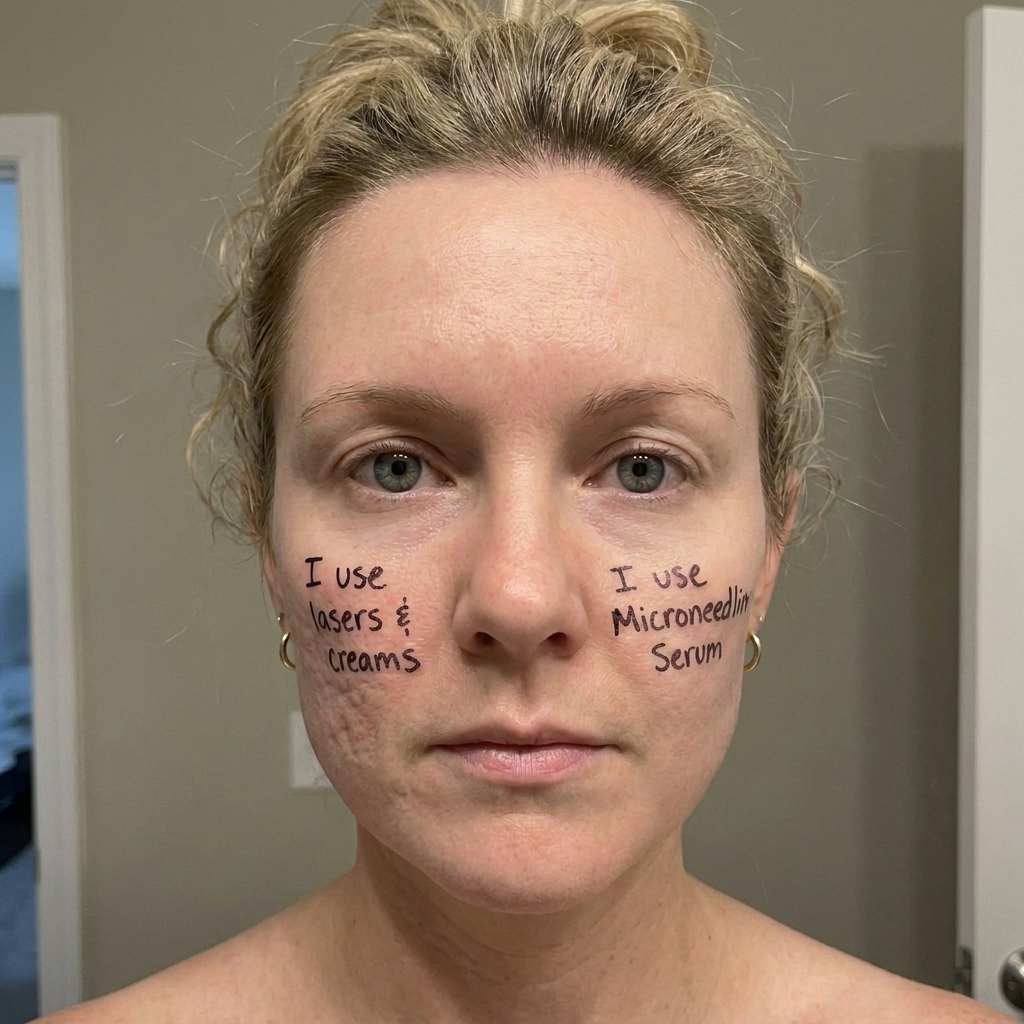
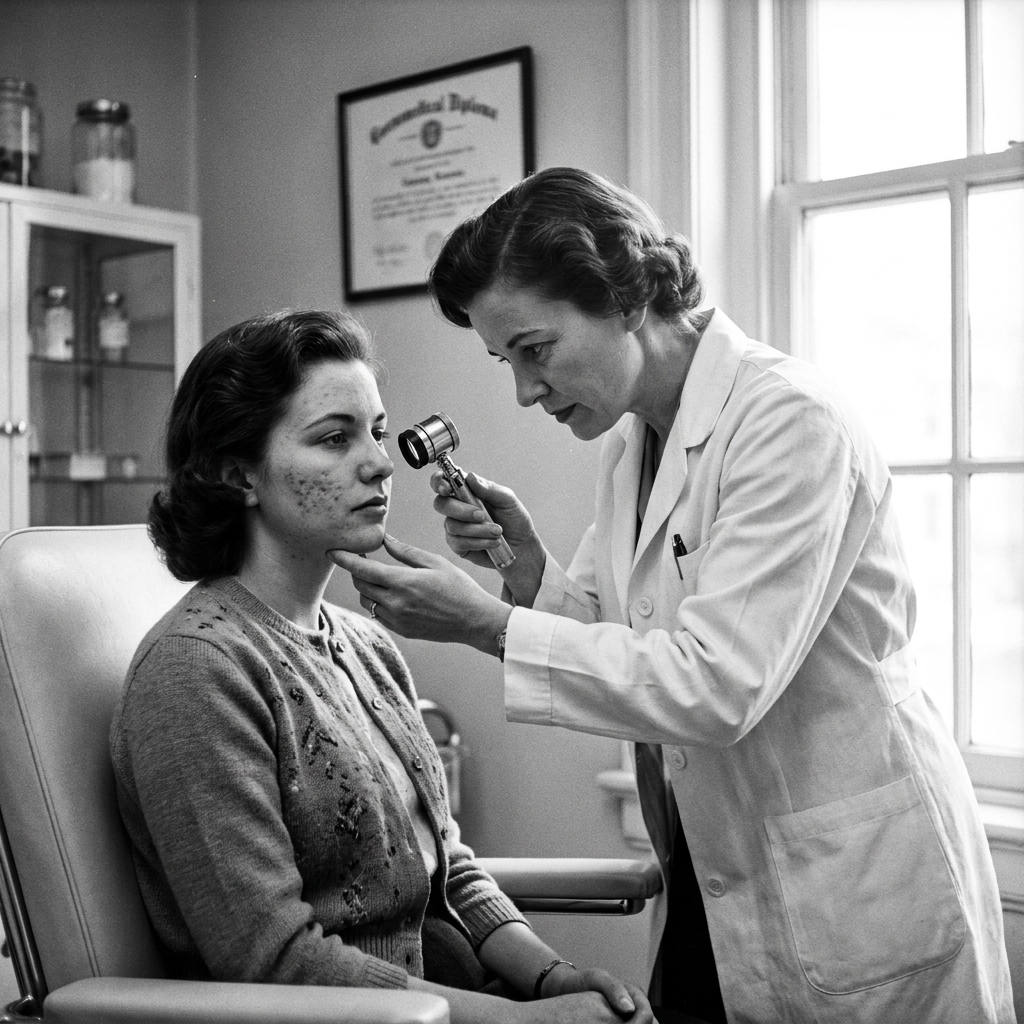
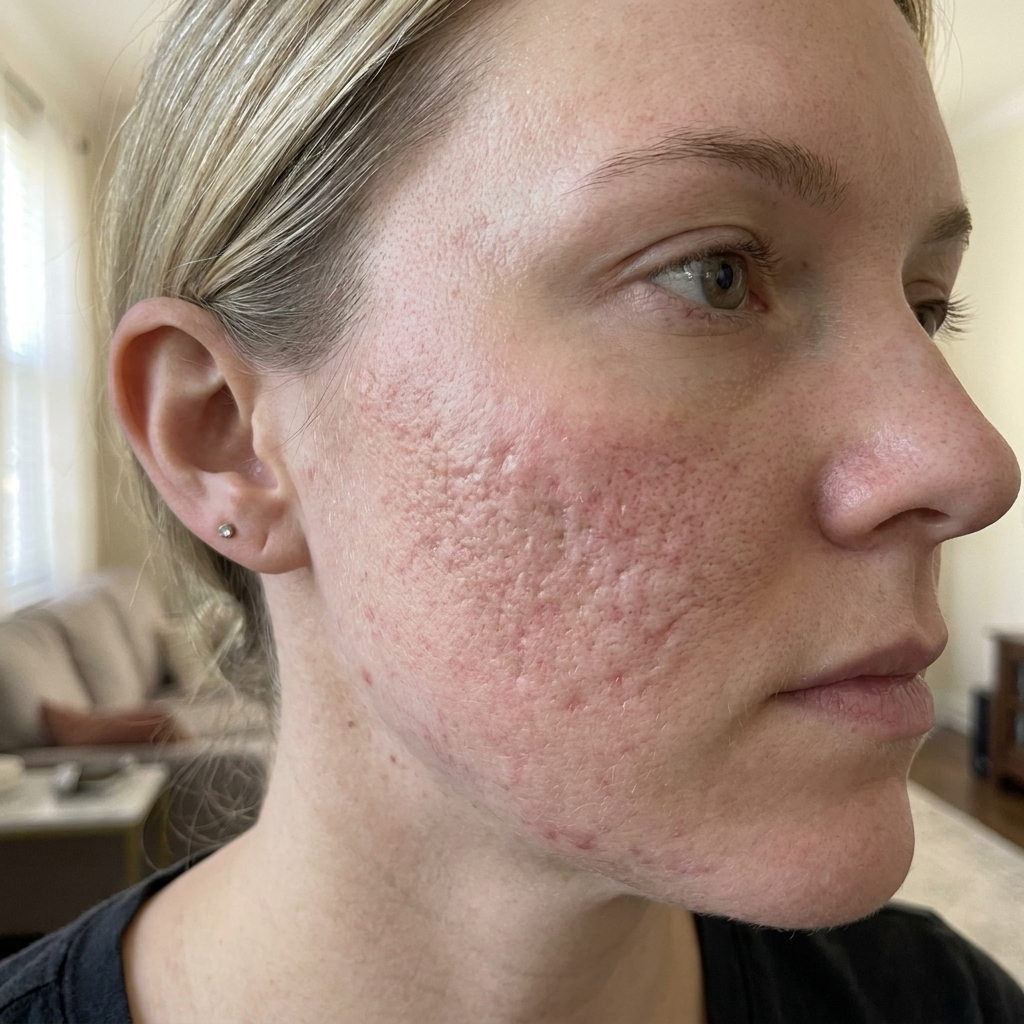
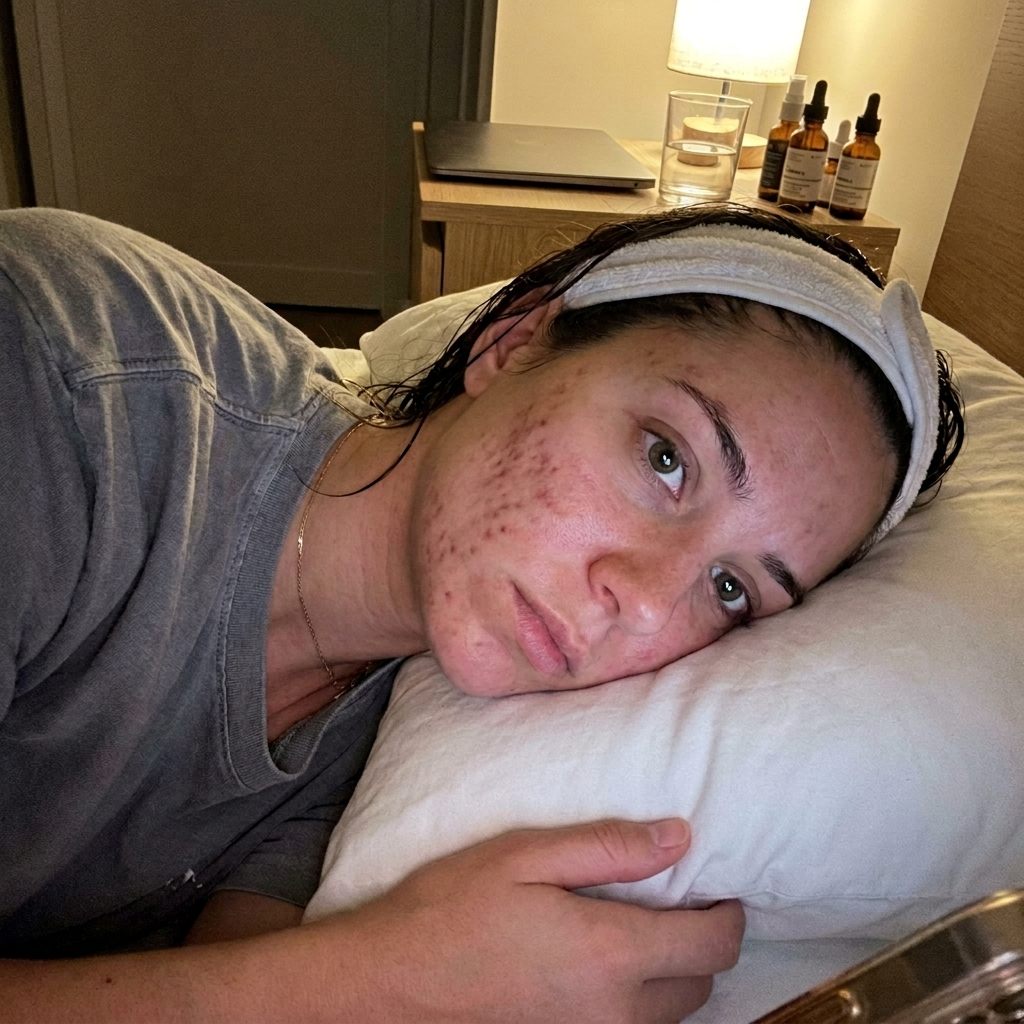
I spent three years trying to fade my acne scars… until a dermatologist explained I was treating the wrong layer. I was sitting in my car in the office parking lot, sun visor down, tilting my face in the little mirror, about to wipe off my makeup and start over for the third time that morning. Not because anything was truly wrong. Just… Tuesday. 8:47am. A video call in twelve minutes. My dermatologist called it "post-inflammatory hyperpigmentation with atrophic scarring." My derm-assistant friend sent me articles about laser resurfacing. My mother sent me her drugstore vitamin C. I tried niacinamide. I tried tretinoin. I tried cutting out dairy, sugar, anything that might be "triggering" my skin from the inside. Nothing worked. My scars weren't fading — the texture was becoming my new normal. That dim shadow across my cheekbones was always there. In selfies. In office bathrooms. In the moment right before a Zoom camera turned on and I saw myself in the thumbnail. I started thinking this was just my face now. I was stuck, and couldn't be fixed. Something in my skin had changed in my early thirties, and I was powerless to reverse it. Then a dermatologist I saw for a second opinion said something that stopped me cold: "You're not scarred because your serums aren't strong enough. You're scarred because nothing you've used has reached the layer where the scars actually live. And no amount of surface treatment is going to change that." She explained what had happened. My post-acne scars had formed in the **dermis** — the deeper skin layer, where collagen lives. That's where the damage had been done. But every product I'd ever used had been formulated to sit on the **epidermis** — the top layer. My scar tissue was stuck below. Permanently, unless something physically reached it. The tretinoin? The peels? The expensive vitamin C? They were working on the top layer. But they couldn't reach the scar. She told me about something called **silica spicule delivery**. It's a Korean dermatological technology that creates microscopic channels through the epidermis while you sleep. Most women have never heard of it. And unlike laser or in-office microneedling, there's no downtime. No burning. No appointments. What happened next changed everything. Not gradually. Not "it smoothed a little over time." I mean the first morning after, I stood in the bathroom light — the harsh one I usually avoided — and felt something strange. Not that I looked perfect. That I could look. At the mirror, head-on, without tilting. I need to back up and tell you how I ended up in that second-opinion derm's office in the first place. Because three years earlier, my skin was fine. A few normal breakouts, healed without drama. I could go to a wedding without fourteen minutes of color correction. I could sit by a window at lunch without thinking about where the light was hitting me. Then a bad year happened. Hormonal shifts. Maskne. A stretch of stress-induced cystic breakouts along my jawline that wouldn't quit. A reaction to a prescription cream that inflamed everything further. These things happen. But they stacked within eighteen months, and my skin never had a real healing window. By month six, I was editing photos before posting them. By month twelve, I was avoiding overhead lighting in any restaurant I walked into. By month eighteen, I couldn't remember what my own face looked like without concealer on. My first dermatologist ran the usual workup. Skin type, hormone panel, all normal. She prescribed a retinol regimen. It helped a little, but my skin still felt wrong. Like I was walking around with a dim filter over my face that only I could see. I'd still catch myself in elevator mirrors and flinch. I tried a second derm. She was thorough, evidence-based, did a mapping scope. We ran chemical peels — three rounds. We tried hydroquinone. She told me to be patient. It helped. A little. For maybe two weeks after each peel. But the scars kept returning to baseline. Here's why: the surface wasn't the issue. The structural damage was in the dermis. The peels were just trying to talk to a layer that wasn't where the problem lived. I tried everything else I could find online: A $180 growth factor serum. ($540 over three bottles. No measurable change.) A microcurrent wand. (Zero effect on texture.) A jade roller and gua sha routine. (Nice, but cosmetic.) Cutting out dairy. (My skin got slightly calmer. Scars unchanged.) A $600 LED mask. (Made my skin glow for the next hour. That's it.) I spent over $4,200 trying to fix myself. Nothing actually moved the needle. The money wasn't even the worst part. What really got to me was thinking this might be permanent. Maybe I'd actually locked in this texture. Maybe I'd spend the rest of my life in concealer and careful angles, faking my way through close-up conversations. That's the headspace I was in when my second-opinion dermatologist — Dr. Hana Park — pulled out her scope and looked me in the eye. She'd been examining me for the pigmentation across my cheekbones. But halfway through, she paused, pulled the magnifier back, and asked me what I'd been using on my skin. I laughed. The tired kind of laugh that's almost crying. "Everything. Literally everything." That's when she said the thing that changed everything. She told me about the **silica spicule**. It's a microscopic, dissolvable needle made from freshwater sponge silica. Think of it as a delivery vehicle — not a serum, but a physical transport system for serum. When it's applied, it dissolves over eight hours as you sleep. It creates temporary micro-channels through the epidermis. Active ingredients — niacinamide, centella, propolis, hyaluronic acid — travel down those channels **into the dermis**, where the scar tissue lives. It's the same mechanism as professional microneedling. Without the needling. Without the appointment. Without the redness. "That's why nothing you've tried has worked," she said. "Surface serums talk to the top layer. Peels burn the top layer. Even laser causes controlled damage and hopes your skin rebuilds better. But none of that actually delivers treatment where the scar tissue lives." "So what do I do?" I asked. She opened a drawer and pulled out a small glass bottle with a dropper. Not a serum. Not a cream. Something in between — slightly textured when I touched it. I'm not going to lie — my first thought was: I've seen this on TikTok. It's probably nothing. She walked me through it. The formulation has to have two halves. First, the spicules themselves — pharmaceutical-grade, dissolvable, calibrated to exactly the depth scar tissue lives at. Not silicone. Not soft plastic. Real micronized silica. Second, the right ingredient deck to *travel* through the channels the spicules open. The full Cica complex — all five asiaticosides, not two. Real propolis extract. Niacinamide at the right percentage. Sodium hyaluronate at a molecular weight small enough to actually move. A sixteen-amino-acid matrix for tissue rebuilding. And most importantly — **none** of the harsh acids most American scar products layer in. No glycolic. No retinol. With the spicule channels open, those actives would just cause post-inflammatory pigmentation and make the scars worse. "It's not about layering more," she said. "It's about delivering the right things to the right layer." I took the name down. I didn't expect anything. That first night, I pressed a pea-sized amount onto my right cheek only. A controlled test. One variable. The sensation was subtle — a gentle tingle, almost static. My first instinct was to rub it in harder. But I let it sit. Within about a minute, the tingling eased into warmth. My face didn't feel tight the way it did after a peel. It felt like something was just… moving. After eight minutes, the product had fully absorbed. No residue. No tackiness. I went to bed half-expecting to wake up to nothing. The next morning, I rinsed. The cheek I'd treated looked the same — but felt different. Not smoother yet. **Denser.** Like the skin had remembered its own structure. That afternoon on a video call, I caught the thumbnail before the camera activated. I didn't flinch. I didn't tilt. I slept seven hours straight that night. Not because of the serum. But because whatever knot I'd been carrying about my own face had loosened half an inch. I've been using it every night for nine months now. The tilted-head mirror ritual? Gone. The color-correcting concealer? Donated. The feeling that every photo is a referendum on my face? Gone. I'm not "managing" my scars anymore. I don't have to. Because the structural layer isn't ignored anymore. And here's what I need you to understand: this isn't about me having the right skin type or doing something special. This is about **anatomy.** Your scar tissue can't be reached through an intact epidermis. Your ingredients don't care how expensive they are — they care whether they can get to the layer that's damaged. Maybe you've tried everything. Spent years searching. Thousands of dollars. This might be the missing piece. It's not about finding a stronger serum. It's about using a delivery system built to reach the layer where the scars actually live. The one that gave me my face back costs less than one chemical peel. I don't know how long you've been avoiding overhead lighting, tilting your head, editing your photos, pricing out laser packages. But I know what it feels like to believe you'll never look like yourself again. And I'm telling you: there's a way out. A real, physical, anatomical way out. You just have to stop treating the wrong layer.
Where the ad sends people
nuvine.shop
Read This If You Think You've Tried Everything 👆
Product information: Applicable skin type: Universal Category: facial essence Applicable people: general Specifications: Standard specifications Net content: 50ml Packing list: Essence liquid x1 Product Image:
Shop now: nuvine.shop(opens in a new tab)