David Miller
 Facebook ad: “Love your wine? Give your liver a hand.”
Ran for 8 days, from November 1 to November 8, 2026, the last day Crush saw it.
Run by David Miller on Facebook. Crush is not the advertiser and does not verify its claims. See this ad in Meta's Ad Library(opens in a new tab)
Make your own version of this ad
Crush makes it, launches it in your own Meta ad account, scales the winners and pauses the losers.
About this ad
- Meta Ad Library ID
- 973431109168820
- Platforms
- Facebook, Instagram, Audience Network, WhatsApp and Threads
- Relaunches
- 2
- Niche
- Food & Beverage
Ad text
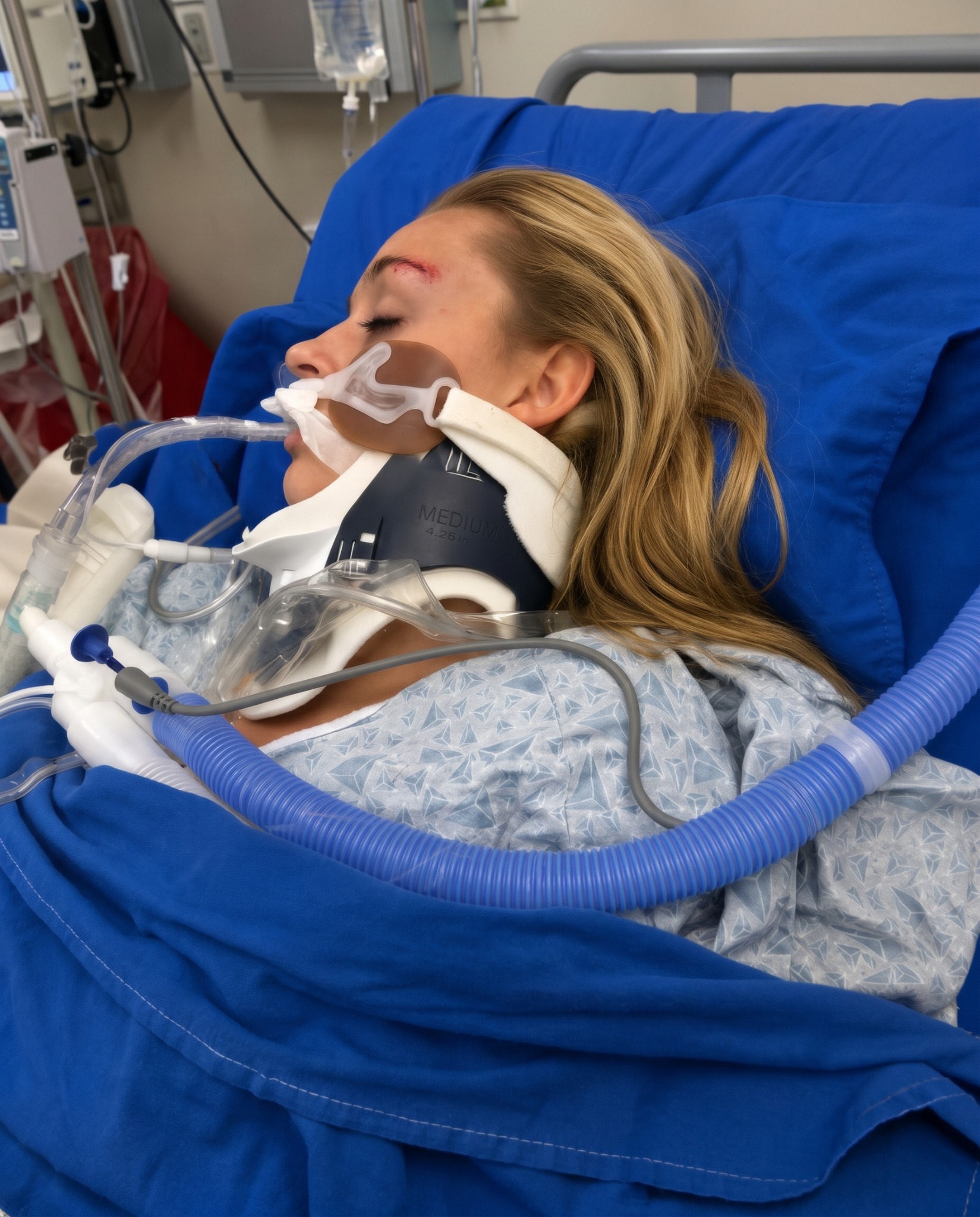
My wife quit drinking on July 8th, 2024. Poured every bottle down the sink. Went on the Mediterranean diet. Walked three miles a day. Started juicing kale, of all things. She did everything the doctor told her. She died of liver failure on October 19th at 4:17 AM. She was 58 years old. Quit drinking on July 8th. Ate nothing that wasn't approved. Lost 19 pounds. Walked three miles a day, rain or shine. The hospital bill was $63,000. The funeral was $11,200. The birthday card she gave me last February — the last one — is still in the drawer of my nightstand. I can't put it away. If I put it away, she's really gone. I need to tell you what happened to Caroline. Because I'm seeing the same posts on Facebook that I was making just months before she died — "my wife's doctor told her her liver enzymes are too high, any tips?" — and it makes me physically ill. If you're a woman over 45 who drinks wine, or someone you love is, please read this entire thing. I know it's long. I know you're scrolling. I know you have things to do. Fifteen months ago I would have given anything — everything — for someone to tell me what I'm about to tell you. Caroline went in for a routine physical on June 28th, 2024. She felt fine. Better than fine. She'd just turned 58. She still taught third-grade Sunday school. She still walked the dog every morning. She thought she had decades left and honestly so did I. Two days later her doctor called. ALT of 168. AST of 154. "Your liver enzymes are very elevated, Caroline. We need to talk about your drinking." Caroline told me the second she hung up. The way she always told me about everything — kids, mammograms, her mother's funeral, the lump that turned out to be nothing in 2019. Thirty-four years of marriage and she still told me before she told anyone else. "Tom, I think I'm in trouble." She told me about the call. The numbers. What the doctor said. "How much do you drink?" "A glass or two of wine with dinner. Sometimes three on a Friday. Maybe a little more on holidays." "That's enough to do this. You need to stop. Completely. No exceptions. We'll retest in three months." She was quiet for a long time. That night she stood up, walked to the wine fridge, and took everything out. I know because I stood there in the kitchen with her while she did it. I watched her pour out a $90 bottle of Caymus. A $40 bottle of Kendall-Jackson. The pinot grigio she liked on Sunday afternoons. The rosé our daughter brought back from her trip to Provence. The whole fridge — gone in under an hour. "That's it," she said. "I'm done." And she was. For 103 days, she didn't touch a drop. No wine. No champagne. Not at our daughter's anniversary party in August. Not at our granddaughter's baptism in September. Not at her own birthday dinner in October where her best friend Diane ordered a chardonnay right in front of her and Caroline drank sparkling water with a lemon. She stopped going to her Thursday night book club because she couldn't sit there sober while everyone else enjoyed themselves. She lost her friend Linda, who told her "you're no fun anymore" and stopped inviting her. She lost the Friday wine nights we'd had on the patio since our kids left the house. She lost a piece of herself she'd been carrying for thirty years. And she did it anyway. Because the doctor said to. She lost 19 pounds in those three months. She bought a juicer — Caroline, with the juicer, I still can't picture it. She started walking three miles every morning before work. She took the milk thistle her doctor "wasn't against." She took a multivitamin. She ate a salad every day, the woman who used to call iceberg lettuce "the saddest vegetable." She did everything right. The follow-up labs came back on October 7th. ALT: 159. AST: 148. She'd quit drinking entirely for 90 days and the numbers had barely moved. The doctor said "give it more time. The liver heals slowly. We'll retest in 6 months. Keep doing what you're doing." Caroline came home that night. Her voice sounded different when she told me. "Tom, I gave up everything. Everything. And it didn't work." I told her to give it time. I told her the doctor said six months. I told her to trust the process. I told her she was the strongest person I'd ever met and she could do this and we'd get through it together. She nodded. She kept walking. She kept juicing. She kept taking the milk thistle. Five days later — five days — she woke up at 2 AM with a pain in her right side that doubled her over. I drove her to the ER in my pajamas. I called our daughter from the parking lot at 4 AM. By the time they had her in a room at 5:30, the whites of her eyes were yellow. Not "a little off." Yellow. Like a highlighter. Like someone had switched the lights out behind them. The ER doctor — a young woman, couldn't have been 35 — looked at Caroline's bloodwork and her face did this thing. "Your bilirubin is 7.8. Your ALT is now 791. Your liver is in acute decompensation. We're admitting you to the ICU." "But I quit drinking three months ago," Caroline said. The doctor just looked at her. "I know. I'm sorry." Caroline spent 11 days in the ICU. I learned things about the liver I never wanted to know. I learned that when a liver shuts down, the toxins your body produces every single day — ammonia, mostly — start building up in your blood and crossing into your brain. They call it hepatic encephalopathy. It means your wife stops being your wife. She looks at you like she's trying to remember who you are. She says things that don't connect. On day 6, Caroline asked me three times in twenty minutes if her mother was back home from work. Her mother died in 2011. I learned that they inject something called NAC intravenously when a liver is shutting down. The nurse told me it's the same compound they use for acetaminophen overdoses. She said it forces the liver to start rebuilding the master antioxidant it uses to protect itself — something called glutathione. She said it's the only thing they've got, and at this stage they were hoping it could buy her time. It bought her 11 days. Day 8, her kidneys started failing. The doctors talked about a transplant. Then they talked about her not being a candidate because of how fast she was declining. Then they stopped talking about transplants altogether. Day 10, her belly swelled up like she was nine months pregnant. They drained 4 liters of fluid out of her abdomen. Four liters. The nurse called it ascites. I called our daughter to come back to the hospital. Day 11 — October 19th — I was in the family room down the hall. They'd asked me to step out while they intubated her. At 4:09 AM I heard the long beep. At 4:17 AM, a doctor I'd never seen walked into the family room. I knew. "I'm so sorry. We did everything we could." I drove home at 6 AM. When I walked into our bedroom, the birthday card she'd given me in February was still in the top drawer of my nightstand, exactly where I'd put it after I read it. Caroline's handwriting on the front. Tom — 60 years and I'd do it all again. Yours, always, Caroline. I stood there and I read it nine times. Where it is today. I sat at the kitchen table. I didn't move for six hours. The house was so quiet I could hear the refrigerator hum. 34 years she'd been my wife. And now the only sound in my house was the refrigerator. The funeral was January 19th. Our daughter Sarah flew in from Indianapolis with the grandkids. Caroline's youngest sister Patty drove up from Cincinnati. The grandkids wore dresses that were too big for them. Our six-year-old granddaughter asked me: "Grandpa, when is Grammy coming home?" I told her Grandma was in heaven now. She said: "Can we call her there?" I had to walk out of the room. After the funeral, I tried to go back to normal. I couldn't. Because every time I opened my phone I saw women Caroline's age — women she'd taught with, women in her book club, women I'd watched share a bottle of pinot with her on our deck for twenty summers — posting things like "doc said my liver enzymes are a little high, anyone tried milk thistle?" or "annual physical, slightly fatty liver, no big deal, just cutting back on the wine." And I knew — I KNEW — some of them were doing exactly what Caroline did. Quitting. Eating clean. Walking. Juicing. Taking the milk thistle. And dying anyway. I couldn't just sit there and watch it happen. Not when my own daughter had started saying at Sunday dinner that her last physical had come back with the same word the doctor had used on Caroline. Borderline. ALT of 64. "Nothing to worry about yet, Sarah, but let's keep an eye on it." I couldn't sit there and watch it happen to her, either. So I started researching. Not because I wanted to. Because I had to. Because if Caroline gave up everything for nothing — if I can't save even one woman from what happened to her — then I can't live with that. And because my daughter is next. I read for weeks. Medical journals I barely understood. Hepatology forums. Studies out of Japan and Germany. And one thing kept coming up, over and over, that no doctor ever told us: The reason Caroline's numbers didn't come down is that quitting drinking only stops the damage. It doesn't repair what's already gone. Specifically: glutathione. Glutathione is the master antioxidant your liver uses to filter everything that passes through your body — every medication, every toxin, every glass of wine, every greasy meal, every breath of polluted air. Every cell in your liver depends on it. And here's what no one told us. After age 40, your body produces about 10% less glutathione every single year. Modern life — processed food, medications, environmental toxins — burns through what's left even faster. By 55 most women have lost nearly half their production capacity without knowing it. And here's the part that made me sit up straight: When your glutathione is low, the wine that's supposed to be neutralized harmlessly, now starts damaging your liver. Caroline's liver wasn't damaged because she drank too much. It was damaged because she didn't have enough glutathione left to handle the wine she was having. Read that again. Her liver wasn't damaged by the pinot. It was damaged by the empty tank the pinot was being processed through. And here's why quitting alone didn't save her: stopping the drinking stops the depletion. It doesn't refill the tank. Her tank was already empty by the time the doctor told her to quit. The damage was already cascading. Eating clean, exercising, juicing kale — those things slow how fast you deplete what's left. They don't refill what's already gone. That's why her numbers wouldn't move. She gave up everything she loved to stop the bleeding from a wound that was already inside her. I sat with that for three days. And then I started looking at my daughter. Because I'd thrown out Caroline's milk thistle the week after the funeral. But I bought a new bottle for Sarah. Because she's 34. Because her labs were "borderline." Because she drinks the same wine her mother drank. Because I was scared. She took it for three weeks. Then I called Caroline's old doctor — a different one from the hepatologist, the primary care doctor Caroline had trusted for fifteen years — because I trusted her too. She laughed when I told her. "Tom, milk thistle protects the liver cells you still have working. But you can't protect cells that are running on empty. It sits on the surface. It doesn't refill anything." Then she said something I'll never forget. "If Caroline had been on something that actually rebuilt her glutathione supply, the picture might have been very different." I stopped breathing for a second. "Why didn't her hepatologist prescribe that?" She was quiet for a long time. "Because we don't prescribe supplements. And the version that works isn't a prescription." I went to CVS the next day. I stood in that aisle for forty minutes. Milk thistle. Liver detox tea. Dandelion root capsules. "Liver cleanse" 30-day program. Multivitamins with "liver support." Generic NAC capsules — $14.99, 600mg, the cheap stuff. I bought the cheap NAC. Gave it to Sarah. She took it for two weeks. No changes to her numbers. I started Googling and what I found made me throw the bottle in the trash. A compromised liver can't absorb a capsule properly. The capsule passes through the organ that's already failing before the active ingredients reach the bloodstream. Most of what you're paying for never makes it where it needs to go. You're peeing out $14.99. Liquid bypasses this entirely. Liquid hits the bloodstream directly. I had been doing the right thing in the wrong form. I was furious. I'm still furious. About a week later I was reading a thread on Facebook — one of those liver health groups, full of people like Caroline was, "elevated enzymes" people, "borderline NAFLD" people, women who'd had a glass of wine every night with dinner for twenty years and were now being told they'd done permanent damage — and a woman posted something that stopped me cold. She said her sister had been told to quit drinking at 56. She quit. Her numbers barely moved for six months — sound familiar? — and then she found a liquid formula that combined NAC with actual glutathione, plus two bitter herbs to open the drainage pathway. Her ALT went from 174 to 39 in ten weeks. Without stopping drinking. Without doing anything else different. I read that post six times. I started looking into the formula she mentioned. And what I learned is that there are five things a serious liver support has to do at the same time, or it's a waste of your money: It has to rebuild the production of glutathione from the inside out. That's NAC — the same compound the ICU was putting into Caroline's IV at the end. Not a vitamin. The actual building block. It has to replenish glutathione that's already been depleted, directly, while the rebuild is happening. That's L-Glutathione itself. NAC restarts the factory. L-Glutathione restocks the shelves at the same time. It has to package and move the fat that's already backed up inside your liver cells. That's choline. Choline is the fuel for the export pump. Without it, the fat just sits there hardening into scar tissue, no matter how much weight you lose. It has to open the drainage pathway so what the liver processes actually leaves the body instead of recirculating. That's a bitter herb blend — artichoke extract and dandelion root, working in sequence. One opens bile production. The other clears the final pathway out. And it has to be in liquid form. Because a compromised liver cannot absorb a capsule properly. Five things. All five. At the same time. In liquid form. I went through every product I'd looked at in CVS. Not one of them did all five. Most did one. The expensive ones did two. None of them were liquid. That's when I found Purelia. It was the only formula I could find that hit all five. NAC. L-Glutathione. Choline. Artichoke. Dandelion. Liquid dropper, two droppers in the morning. 60-day money-back guarantee tied to your actual labs — if your numbers don't improve, you get every penny back, no questions asked. I almost didn't order it. After the CVS aisle. After the milk thistle. After Caroline. After everything. But I had a daughter who'd been drinking a glass of wine with dinner since her kids were born. I had a sister-in-law, Patty, who drinks the same way Caroline did. And I had a house that felt like a museum full of Caroline's wine glasses and cookbooks and the birthday card in my nightstand. I ordered it. For all three of us. Sarah started on it the day the box arrived. Two droppers in the morning, every morning, no missed days. She went back to her doctor four weeks ago for the follow-up she'd scheduled. ALT: 31. Down from 64. In ten weeks. She hadn't quit drinking. She hadn't started exercising more than she already did. She hadn't changed her diet. The only thing she'd changed was the liquid she took in the morning. Her doctor stared at the screen for a long time. She said: "Sarah, whatever you're doing, keep doing it." Sarah called me from her car in the parking lot and I sat at Caroline's kitchen table and I cried for forty minutes. Because Caroline never got those numbers. Because Caroline did everything and got nothing. And Sarah did nothing and got everything. Patty. Bottle and a half a week, every week, for twenty years. "Borderline fatty liver" at her last physical. ALT of 89. Doctor told her to "cut back" — same script Caroline got, just with smaller numbers. I sent her a bottle. I didn't ask. I just sent it. Wrote a note that said "If you don't take this every day I will never speak to you again, Patty, I mean it. I am not burying another woman in this family." She took it. She kept having her glass of wine with dinner — she wouldn't quit, she's stubborn the way Caroline was stubborn — but she took it every morning. She went back to her doctor three weeks ago for a follow-up. ALT: 36. Down from 89. In ten weeks. She hadn't stopped drinking. She hadn't changed her diet. She hadn't started exercising. The only thing she changed was the liquid she took in the morning. She called me crying. My sister-in-law. 53 years old. Crying on the phone the way she did the night Caroline died. She said: "Tom, I think Caroline died because nobody told her about this." I had to hang up. Then there's Sarah, again. 34, two kids, drinks a glass of wine every night after she puts the kids to bed because that's what mothers in their thirties do now. Says her afternoon energy is back. Says the brain fog she'd been blaming on the kids is gone. Says she finally slept through the night for the first time since her mother's funeral. I told our son. I told Caroline's college roommate. I told the women in Caroline's old book club when I went to drop off the rest of her cookbooks. I told the church ladies who brought casseroles for three months after the funeral. I'm not a doctor. I'm not a scientist. I'm not selling anything and I don't get a penny from any of this. I'm a 60-year-old widower sitting at Caroline's kitchen table at 2 in the morning because I can't sleep and I can't stop thinking about my sister-in-law and my daughter and whether the same thing is sitting inside them that was sitting inside my wife. Here's what I know because I lived it: Quitting drinking stops the damage. It doesn't refill what's been depleted. It doesn't repair the damage. Milk thistle protects cells. It doesn't rebuild the tank those cells are running on. A liver running on empty cannot absorb a capsule properly. Liquid bypasses this. Caroline gave up everything she loved for 103 days and it didn't save her because nobody told her what was actually broken. I wish someone had told us before June 28th, 2024. Before the routine physical. Before the wine fridge emptied into the sink. Before the 103 days of sparkling water with lemon. Before October 19th at 4:17 AM. I can't go back. Caroline can't come back. Her birthday card is still in my nightstand and it's going to stay there. But you can still go forward. Your wife can. Your sister can. Your daughter can. Your mother can. You can. The page that explains all of this — the glutathione mechanism, why the numbers don't move when you quit, what your doctor doesn't know about liquid absorption, and what Purelia actually contains — it's the page I found at 3 AM. Not protecting. Restoring. That's the line that finally made it click for me. I want you to read it. Not for me. For whoever you'd leave behind. Or whoever would have to bury you. 👉 https://try.officialpurelia.com/liver-aj-rb Caroline used to say: "The only thing you can't fix is the thing you don't know is broken." Now you know. — Tom Brennan, age 60 Louisville, KY P.S. The birthday card is still in my nightstand. I still can't put it away. Every morning I open that drawer to grab my watch and for one second I forget. For one second I think she's about to walk in with two cups of coffee and ask if I watched Jeopardy last night. She's not. $63,000 in hospital bills. $11,200 for the funeral. 103 days of her giving up everything she loved for nothing. And a liquid that costs less than a bottle of the wine she used to drink — a liquid her own doctor told me could have changed everything if we'd known. Please. Don't end up here. Don't let someone you love end up here. 👉 https://try.officialpurelia.com/liver-aj-rb P.P.S. I don't work for Purelia. I don't get a penny from this. I'm writing this at 2:14 AM because I can't sleep and Caroline's side of the bed is cold and my sister-in-law is stubborn and my daughter is pouring a glass after the kids go to bed and I'm scared every time the phone rings. Share this with any woman you love who drinks wine. Even a glass with dinner. Even "just on weekends." Even if they already quit. Please.
Where the ad sends people
try.officialpurelia.com
Love your wine? Give your liver a hand.
Purelia Liver Restore is a four-compound liquid formula built for people whose liver enzymes are climbing and whose doctor has nothing to offer except “cut back and come back in six months.”It delivers NAC, L-Glutathione, Choline, Milk Thistle, Dandelion, and Artichoke at clinical dose - in a li...
Shop now: try.officialpurelia.com(opens in a new tab)