

Woman grace
Active· since Jul 10, 2026
- 18
- days running
- 1
- relaunches
Ad copy
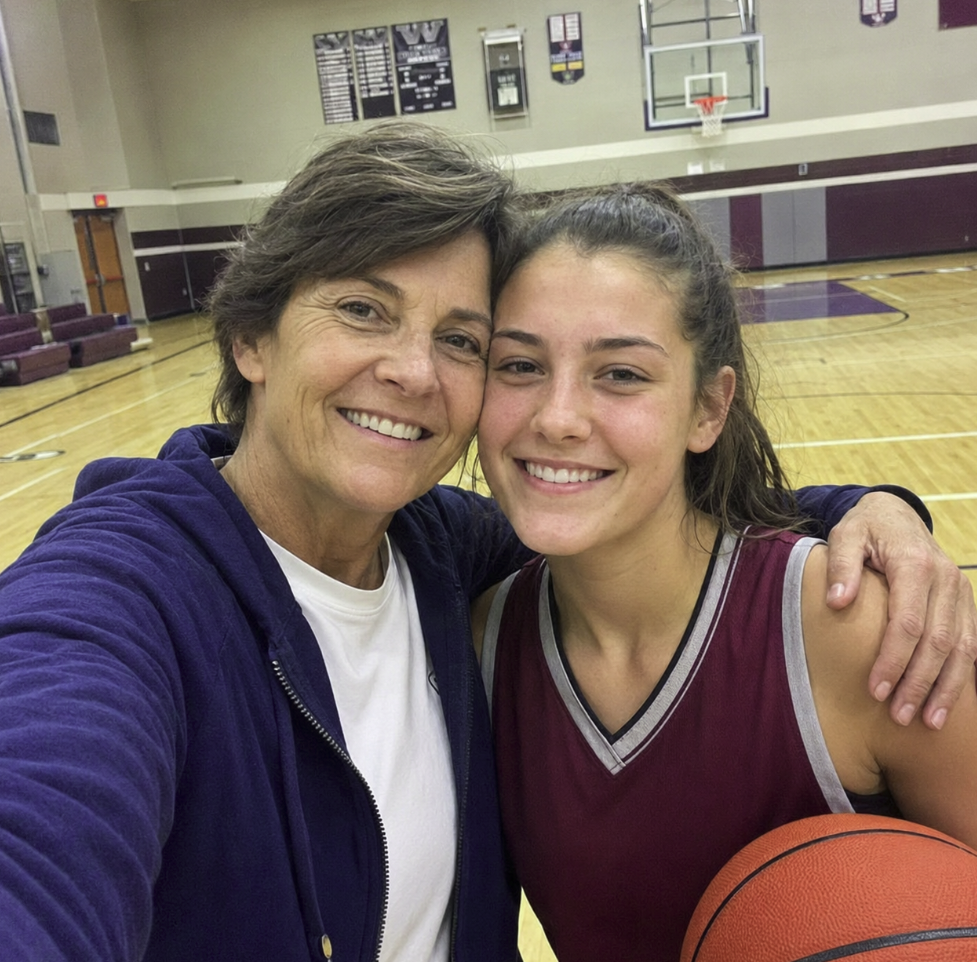
Eight months ago a doctor in Indianapolis told me that Bailey, my fourteen-year-old basketball player, would most likely never play again. And that she might never get up out of a wheelchair. Last week she made the winning shot in the finals of the state championship in Fort Wayne. My name is Carol Whitfield. I'm 61 years old, and I coach a girls' basketball team at an academy in Bloomington, Indiana. I've spent my whole life in this game. I was in the gym from the time I was six. As a teenager I made the state team, but when I grew up my body changed and I never made it any higher. By thirty my knees were so bad I couldn't run the length of the court without stopping. I quit playing and I started coaching. Thirty years now, I've been coaching girls. My paycheck is modest — about two thousand dollars a month. My husband, Gary, worked as an electrician, he's retired now. Our son lives in Indianapolis, and we have two grandkids. They come in the summer and at Christmas. Bailey came to us when she was nine years old. From a small town about eight miles outside Bloomington. Her dad drives a delivery route, her mom cooks in the school cafeteria. The family got by, but not with much to spare. And her dad drove that girl into Bloomington every single day and picked her up after practice. Year after year, five days a week. Bailey was the best player I coached in thirty years. Quick, fearless. She understood the game the way most kids her age never do. At thirteen she was already playing with the older girls, and she didn't look small out there next to them. Big colleges were already sending letters — the kind of scholarship that changes what a family like hers can even dream about. I always answered the same thing: "Let her grow up first." March 14th was an ordinary practice. Wednesday, four in the afternoon. The gym was warm. The girls were running up and down the court. I told them: "Three more times down the floor and we hit the locker room." Bailey was driving toward the basket. One of the older girls stepped in front of her. Too hard, too high. Bailey tried to jump over her. She didn't clear it. Her foot caught the floor, her body went forward, and her back bent the other way. I was standing thirty feet off. I heard the sound. To this day I can't forget it. Something tore, like a wet rag ripped in two. Bailey just lay there, and she didn't scream. She just stared at the ceiling. When they don't scream — that's the worst. I ran the length of the floor to her. Her knee was turned off to one side, in a direction a knee doesn't turn. Her left foot just hung there, like it had come loose. The ambulance came fast. Bailey's mom came running in still in her apron, the white kitchen apron. Her dad got there an hour later, off his route. They took her to Bloomington first, then sent her up to the children's hospital in Indianapolis. I rode with Bailey's dad in his truck, her mom was in the ambulance with her. Her dad didn't say a word the whole way. I didn't know what to say either. At the hospital they did the scans. It took a long time. The bone doctor came out to us in the hallway. A graying man in his fifties with glasses. Thirty years I've been in this game, I've seen a lot of injuries. Sprains, broken wrists, torn ligaments. But when this doctor started talking, I understood I'd never seen anything like this. "It's serious. The girl's knee is destroyed — every ligament torn, the cushion inside it in shreds. The shin bone is broken and out of place. There's a nerve being pinched, that's why the foot isn't working right now. You saw it — it hangs. And the worst part — a bone in her lower back is cracked, and it's pressing on the spinal cord. If we're lucky, after the surgeries and the recovery, she'll walk. With a cane, with a limp. There won't be any running. No jumping. Basketball — don't even let yourself think about it. Worst case, the nerve doesn't heal, the foot stays the way it is, and then it's a wheelchair. I'll give it to you straight. Prepare the family." Bailey's mom sat on a plastic chair and said nothing. Her dad stood against the wall and looked at the floor. And I stood there and looked at the floor too. One sentence kept turning over in my head: "Tomorrow I have to tell the team. What do I tell them." The surgeries took most of a day, more than once. Bailey came out of them awake, but she stared at the ceiling and didn't answer. She didn't cry. Her mom fed her with a spoon. Her dad went even quieter than before. The team found out at practice. The girls stood there in shock, some of them wiping their eyes. I stood in front of them and I didn't know what to say. All I said was: "Bailey is our girl. We're with her." And nothing else. I started making calls. At my age, in my life, I know people everywhere. I called all of them. A surgeon I knew at a big hospital. A sports doctor. Somebody else. They all said the same thing: "Carol, the doctor told you the truth. There's nothing else. Prepare the family." Monday evening I was sitting on the bench out in the yard. Gary came out with a mug of coffee and sat down next to me. He said: "Carol, I can't stand seeing you like this. You remember, last year you took our dog to that animal rehab place, when nobody else could help?" Our dog is an old shepherd mix named Buck. He had arthritis so bad he couldn't get up. Every vet said the same thing: put him down. A woman named Susan Miller ran a rehab center for big animals out in the country. I took him to her as a last resort. She gave me a gel — for the dog. Three weeks later Buck was running around the yard. That was a year and a half ago. Tuesday morning I called Susan. I explained the situation. She was quiet a long time. Then she said: "Carol, I'm not a people doctor. I won't take it on myself to speak about this girl. But I have a former student. He's a doctor now, but he doesn't work in a fancy clinic — he travels all over the country, to the nursing homes. His name is Dr. Ethan Carter. Together we make a cream for people. Not a medicine — it's a product, made from herbs. Hundreds of people with worn-out joints have used it. Not teenagers, not athletes — but if the girl's knee is destroyed, the formula works on the tissue no matter what. I can ask him to look at your girl." That same day I called Ethan. Young — around thirty, a calm voice. He listened and said: "Ms. Whitfield, I'm not a sports-injury specialist. I work with older folks. Arthritis, worn-out joints. But Susan's right — if someone's joint is destroyed, the formula works on it no matter the person's age. I'll come look at the girl and talk to her doctor. If he allows it, we try the cream alongside their treatment. I promise nothing. But it's the best thing I can offer." I called Bailey's parents. I asked if they'd agree to it. Her mom cried and said: "Carol, we agree to anything. What do we have to lose?" Ethan came to the hospital. He spoke with the bone doctor treating her. The man shrugged and said: "If the parents agree, I see no reason not to. This product isn't a drug, it's herbal. You can't make it worse. Just not in place of what we're doing." They started using the cream a day after the last surgery. Bailey's mom did it — morning and evening, on the knee and the lower back. The whole leg, from the hip down to the foot. The girl lay there, staring at the ceiling, and didn't react. The first three weeks — nothing. Bailey was silent. Her mom cried at night out in the hallway, so Bailey wouldn't hear. Her dad went back to his route — they needed the money. Then came the twenty-third day. Her mom was sitting beside her, rubbing the cream gently on her left foot, from the knee down to the toes — the way she did every morning, slow, the way she used to when Bailey was little and running a fever. And suddenly — the foot moved. Once. Then again. Bailey didn't notice it herself, she was turned toward the wall. Her mom thought at first she was imagining it. Then she said quietly: "Baby, move your foot." Bailey moved her good foot. "The left one, Bailey. Move the left one." A long pause. And the foot moved. Bailey looked down, saw her foot — and for the first time in twenty-three days, she cried. Her mom called me that evening. I was at practice. I walked over to the wall and listened to her sob into the phone. Then I went back to the girls and told them: "Bailey moved her foot." One of the girls, her best friend, ran the length of the court with her hands up in the air. Like she'd just won the game. Sixth week — she stood up with a walker. Tenth week — she walked the hospital hallway on her own. Sixteenth week — they sent her home. Before that, I visited her and found her in the driveway, next to a hoop her dad had lowered down for her. I said: "Bailey, put one up for me." She stood up, stepped to the ball, and shot it. Careful, but sure. I was standing ten feet away. The ball came right into my chest. Four months after the injury, Bailey came to practice. First just to warm up, nothing rough — just walk the floor and stretch. Eight months in, she was on the team for the state championship in Fort Wayne. The doctor at the hospital said at one of the checkups: "What are you doing with this girl? I have no explanation. Twenty years I've worked — I've never once seen a recovery like this after an injury like that." But that's not the story I want to tell. All through those eight months while Bailey was getting back on her feet, I was walking around that gym like a mummy myself. Thirty-five years on a basketball floor. First as a player, then as a coach. Every day in the gym — showing the girls how to move, catching them, lifting them, holding a hundred-pound kid up as she comes down off a jump. Back. Shoulders. Knees. My knees started hurting at forty. My back — at fifty. Last year I couldn't crouch down anymore to show the girls how to stand and guard. I'd sit on a chair ahead of time and call one of the older girls over to show them instead. The girls didn't say anything. But I saw them glance at each other. A coach who can't crouch down. There was one time I couldn't forget for a long while. February, right before Bailey's injury. At practice I tried to get down low to show the girls something. I got down — and I couldn't get back up. I was on one knee, trying to straighten up, and I couldn't do it. Two girls came over and lifted me up under the arms. It was embarrassing for them. For me it was shame. A coach in her twenty-fifth season, and thirteen-year-old girls are lifting her up off the floor. After every practice I'd come home, lie down on the couch, and Gary would put a heating pad on my back. Two hours at a stretch. Then dinner. Then back on the couch. And like that every day, for years. My contract was up in June. The director hinted that maybe it was time to think about stepping down. Gently, not harshly. "Carol, let the young ones have a turn." I understood. I could see it myself — I was finishing up. In June, before the championship, I went out to Susan's place to thank her for what she'd done for Bailey. I sat on the bench by the fence. I watched her work with a horse, and I thought: "I'd give anything myself, just not to have to leave for another three years at least." She saw me limping when I came up the steps to her office. She sat down next to me, looked at me, and said: "Carol, why don't you use this cream yourself? You've got the same problem as Ethan's patients. I'll call him, I'll tell him to send you some." I answered: "I figured it was for the girl. Not for me." She shook her head: "Carol, we've got to get you back on your feet too. Not just Bailey. I'm calling." The cream came two days later. Gary rubbed it into my knees and my back that evening. It smelled like herbs. My skin warmed up right away. I lay down to sleep. The first night — I woke up at three from my back pain, the way I always did. I thought, fine, I'll keep trying. The second — same thing. The third, the fourth — nothing. The ninth day. Six in the morning. I opened my eyes and I just lay there a long while. Gary was still asleep. I tried to sit up in bed — and I sat up normally. Without grabbing the edge of the bed. I put my feet on the floor — and I stood up. No pain in my knees. I made it to the bathroom without holding onto the wall. Gary woke up at the sound of my steps, rolled over, and asked: "What happened?" I said: "It's like nothing hurts." Three weeks later, at practice, I crouched down to show the girls how to stand and guard. I got down slow, waiting for the pain. There was no pain. I stood up — no help. I sat down on the floor and stretched all the way out — something I hadn't done in years. The girls watched and went quiet. One of them, Bailey's best friend, asked: "Coach Whitfield, did you use it too?" I nodded. She smiled. Six weeks later I ran the full length of the court with the team. I stopped at the end, not out of breath. The girls crowded around me. One laughed, another just yelled in amazement, a third one just grabbed my hand. The last time I ran the length of that court, I'd have to think hard to tell you what year it was. The state championship in Fort Wayne started in August. Bailey was on the team. I arranged to be right there on the bench as her coach, next to my own girls. We made it to the final. Score tied, a minute and a half left. And then Bailey took the ball away from the other team, brought it up the floor — and with a few seconds left, she stopped and shot it. It went in. We were ahead by two. I didn't sit down during the game. I stood at the edge of the court the whole time. And when Bailey made that shot — I ran out onto the floor. I ran. At sixty-one years old. Toward Bailey, who was standing near the edge of the court. She saw me, turned, and we threw our arms around each other. She was crying. I was crying. The girls piled onto both of us. The last time I ran onto a basketball court, I can't even remember what year it was. When the buzzer sounded — we'd won — I went over to the bench and sat down. Gary had been watching online. His message came through: "Carol, I saw you. You were running." I wrote back: "I know." After we got back to Bloomington I went out to Susan's again. And there, at her place, I met Dr. Ethan Carter for the second time — the young doctor who'd sent us the cream. Ethan studied under Susan about ten years back, when he was training to be an animal doctor. But then he switched to human medicine. He said he wanted to treat people. He worked a few years at a private clinic in Chicago. And last year he gave it all up. Turned down a good salary, an office, a career in the city. Now he travels the whole country — the nursing homes. Out where the old people just get left behind. The three of us sat in her kitchen. Ethan told me: "Ms. Whitfield. What happened with your girl is a rare case, sure. But every day I see people like this in the nursing homes — people everyone gave up on at seventy, at eighty. And they get back on their feet. I've got a woman, seventy years old, who hadn't left her room in two years — now she works in her garden. A man of seventy-five who couldn't lift his arm above his shoulder — now he's painting his own roof. This cream — it's not a miracle. It's just the formula Susan spent years working on. There's something in it that works on the tissue of the joints. Age doesn't matter. All that matters is what you've got left of the tissue." Susan added: "Carol, you had tissue left. So did Bailey. So do those old folks. That's why we're all on our feet." The formula worked for the horses as a liquid, mixed into their feed. For people the dose was hard to get right, and the taste was bitter. So Ethan found a way to keep the same formula, just as a cream you rub in. It soaks in the same. It works the same. You just put it on morning and evening, no help needed. Now Ethan makes this cream. Susan stayed with the horses. And the orders go through him. All across the country, by mail. I don't get a dime from Susan or from Ethan. I'm writing all this down because what I saw with my own eyes — you can't keep quiet about. If a fourteen-year-old girl with a destroyed knee and a cracked bone in her back got her leg back — if I, at sixty-one, after thirty-five years on a basketball floor, got my knees and my back back — then your joints aren't a hopeless case either. If your knees hurt. If your back or your hands hurt. If they've already said the words "surgery" or "wheelchair" to you. If you've already spent the money you saved for years on doctors and medicine. If you look at your children and your grandchildren and you're ashamed of becoming a burden to them — Don't wait. Don't wait for it to get worse. Don't wait until you can't get up your own front steps by yourself. Here's what I want you to hear. Because I know how many things you've tried that took your money and did nothing. You pay one time for one jar. No monthly plan — nobody keeps charging your card. Most people feel the first change within the first 14 days — I felt it on the ninth morning. And if after 30 days nothing has happened for you, you call in and get every dollar back, and you keep the jar. That's right — you keep it, and you can go right on using it. The risk is on them, not on you. Below this letter there's a blue button — "Learn More." Click it. Fill out the short form, place your order, and pay by card the same way you'd order anything else online. In two to three days the mail carrier brings the jar right to your door. No pharmacy. No prescription. No waiting room. Eight months ago I stood next to a hospital bed and listened to a doctor say my girl would never get up again. Last week she made the winning shot in Fort Wayne. If your joints hurt — don't believe anyone who tells you it's too late for you. If this brought back a fourteen-year-old girl's leg, and my back after thirty-five years on the court — it will get you back on your feet too. With respect, Carol Whitfield, 61 years old, girls' basketball coach, Bloomington, Indiana. P.S. If you're reading this and thinking about your mother, your husband, your sister — someone whose knees or back have been hurting, someone too proud to ask for help — order a jar for them. Just leave it on the kitchen table. Sometimes that's all it takes.
Read here >>>
LEARN MORELike this ad? Make it yours.
Crush rebuilds this exact creative around your product — your brand, your colors, your offer — in about a minute.