Thomas Wright
Thomas Wright Facebook ad: “Read This If You Had Prostate Cancer”

Ran for 23 days, from May 8 to May 31, 2026, the last day Crush saw it.
Run by Thomas Wright on Facebook. Crush is not the advertiser and does not verify its claims. See this ad in Meta's Ad Library(opens in a new tab)
Want an ad like this for your product?
Crush makes new ad images for your product from this ad: your logo, your product photo, your offer.
Trials from $19.95 USD, then $79.95 USD a month. Cancel anytime.
About this ad
- Meta Ad Library ID
- 974057585241432
- Platforms
- Facebook, Instagram, Audience Network, Messenger and Threads
- Relaunches
- 1
Ad text
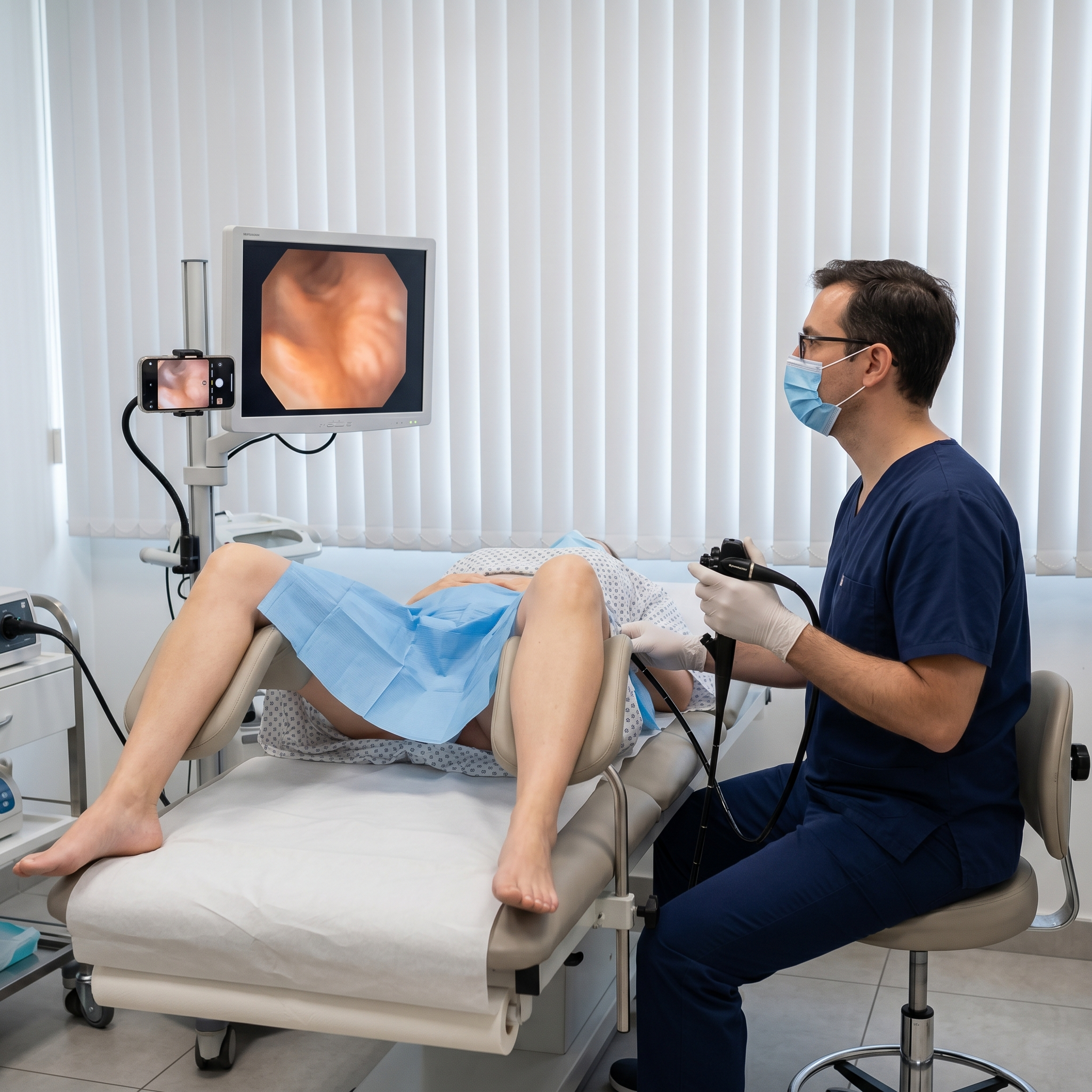
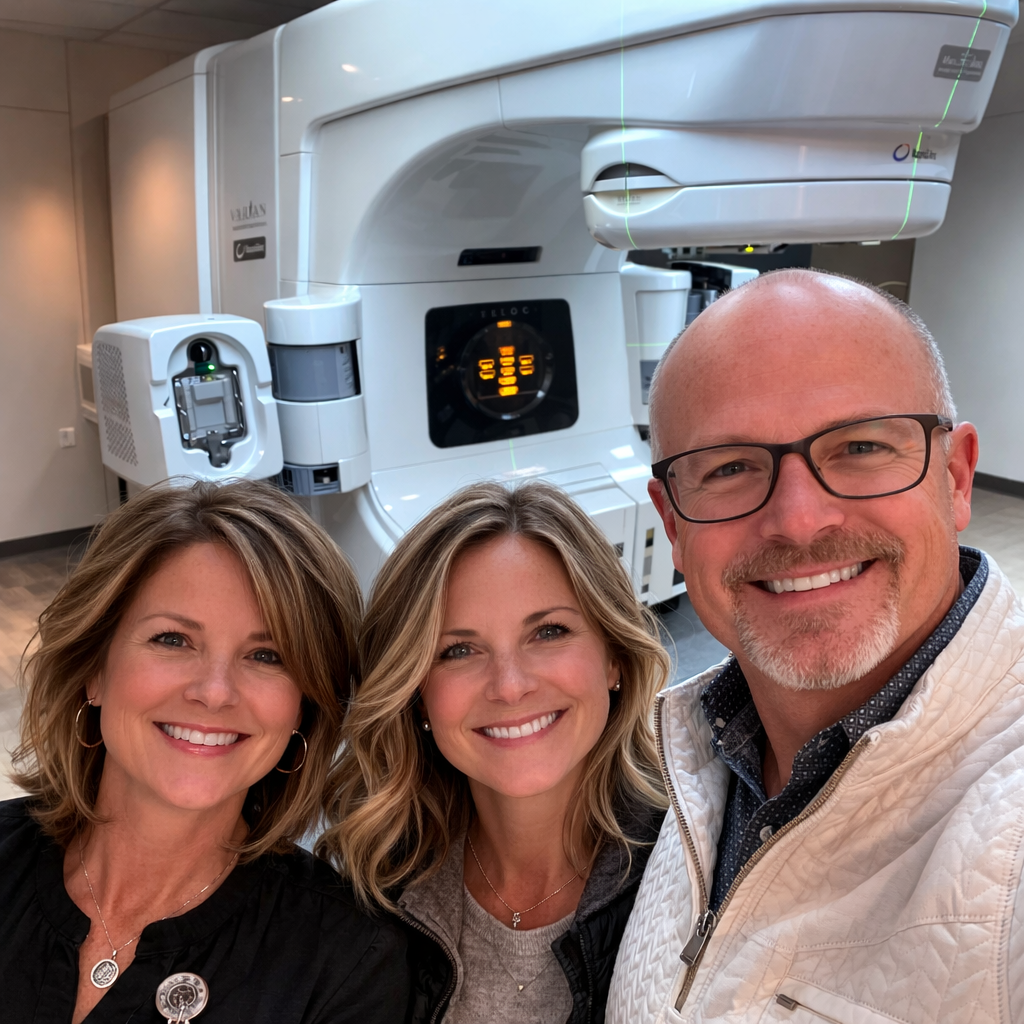
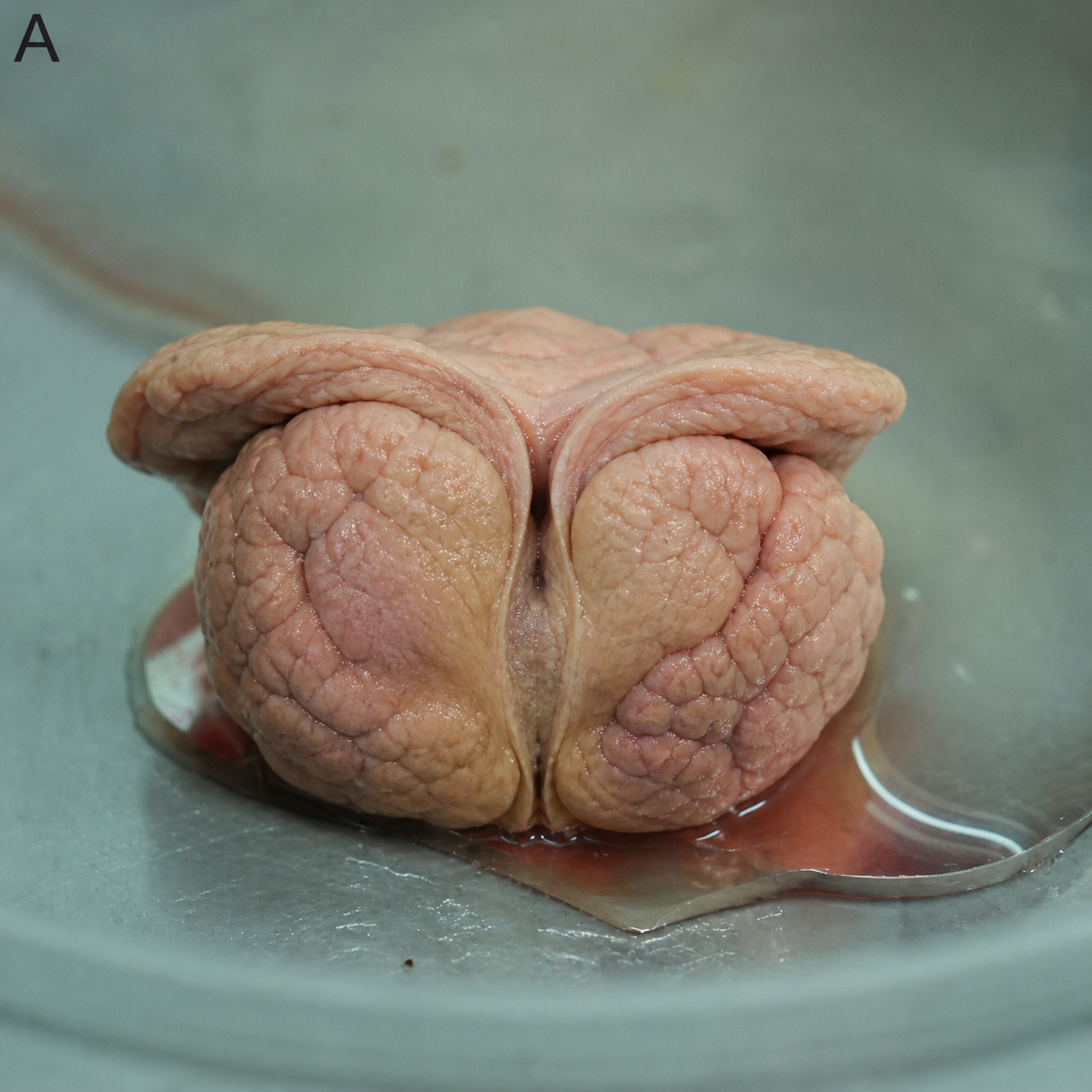
After 20 years in oncology, I can tell you something most doctors won't say out loud. For roughly half of the men we put on long-course androgen deprivation therapy, "when the drug stops" is not when this ends. I did not believe that, for nineteen and a half of those years. I had said the words "when your testosterone comes back" to roughly eight thousand men. Then my own did not come back. What I learned, I had not told my patients. No oncologist I knew had thought it through. Almost no oncologist I have spoken to since understands it. If your last Lupron, Eligard, Orgovyx, or Zoladex shot was six months ago, a year ago, or longer. If your PSA is undetectable. If your scans are clean. If by every metric the cancer cared about, you won. But you have not come back. Read this carefully. I'll start where I started. I was diagnosed at 64. Locally advanced. Gleason 8. The protocol was 24 months of androgen deprivation plus radiation. I started Lupron in March of that year. I finished, on schedule, two years later. By the metrics that mattered for the cancer, the protocol worked. PSA undetectable on the last shot. Undetectable at six months. Undetectable now. Here is what I expected next. I expected what I had been telling my patients for two decades. The drug clears. The pituitary wakes up. The testes restart. Testosterone climbs back. Energy returns. The fog lifts. The man comes back. It is what I had said, sitting on the doctor's side of the desk, more than ten thousand times. Six months out: T at 78. Castrate range still. My oncologist said: "Give it more time. It varies." Twelve months out: T at 184. Pre-ADT baseline had been 540. "Some men take longer." Eighteen months out: 217. "You may be one of the slow recoverers." Two years out: 234. That was the appointment where my oncologist said the sentence I had been listening for, and dreading, for fourteen months. "This may be your new normal, Tom." I drove home. I sat in the car in the driveway for twenty minutes before I could go inside. Anne was at the kitchen table with the newspaper. I did not tell her what he had said. I had not told her about the eighteen-month numbers either, or the year-out numbers. I had been carrying them alone, on the assumption that the next blood draw would be the one that turned. They had not turned. By every metric, I had survived prostate cancer. I had not survived the treatment for prostate cancer. There was a self who walked into the oncologist's office twenty-six months earlier and started Lupron. There was a different person sitting across from him at every blood draw since. The first one had not come back. The fog had lightened. It had not cleared. The energy had returned in the gym, and only in the gym. Outside the gym I was tired in a way I had no name for. The desire had not come back at all. Not the act, not the wanting, not the thoughts. Anne had stopped initiating sometime around month fifteen of the protocol. She had not started again. We had not talked about it. We had become, by silent mutual adjustment, what I had heard a patient call himself a year earlier in my own consult room: roommates. For the next two months, I went through the post-ADT recovery protocol my colleagues recommend. The one I had recommended. Wait longer. The first instruction, and the most common. The numbers continued to rise slowly. The man did not. PDE5 inhibitors. Sildenafil, then tadalafil daily. Some response — partial, mechanical, requiring a context the desire had not returned to. I stopped after two months because what I was producing was not erections in any sense I had previously understood the word. Exercise. Five days a week. The numbers in the gym came back. The numbers on the morning blood draws did not. An SSRI for the mood. Blunted the crying. Added sexual side effects on top of what I already had. I quit it after three weeks. TRT — the question I knew was coming. I went to a urologist colleague at twenty months. I asked him to consider it. He looked at my chart. Locally advanced disease, completed treatment less than two years earlier, residual risk of recurrence on the table for at least five years. He said no. He said it the way I would have said it. Sympathetic, firm, citing the same risk-of-recurrence literature I had cited to my own patients in the same conversation. I would have made the same call from his side of the desk. Most of you reading this have had a version of that conversation. Some of you have had it more than once. This was where I started suspecting something was wrong with what I had been prescribing for two decades. Not the ADT itself. The ADT had treated my disease. It had treated my patients' disease. It does what it is engineered to do. What was wrong was everything around the ADT — and specifically, everything after it. The protocol I had been giving men for the recovery period — wait, exercise, antidepressants, sildenafil, "this may be your new normal" — addressed almost none of what was actually keeping us from coming back. That weekend I drove to my office and pulled twenty years of patient charts. I had ordered standardized post-ADT bloodwork on most of my long-course patients — total testosterone, LH, FSH, free T, SHBG, inflammatory markers, vitamin D, B12. The numbers had been sitting in the charts for years. I had been ordering the labs and not reading them as a system. What I saw, working through the charts on a yellow legal pad, made me sit down. Two patterns. The men who came back after ADT — the ones whose T returned, whose lives returned — had something in common. Their LH and FSH had been climbing within the first six months off the drug. Their pituitary was waking up. Their endocrine axis was reconstituting itself. The men who did not come back had flat LH and flat FSH. Their pituitary had not woken up. Their testes were not the problem. The signal that was supposed to be telling the testes to produce was not coming. Two years of pharmacological clamping had exhausted the axis. For some men, it reset. For others — for me, for roughly half my long-course cohort by my count — it had not. The standard recovery protocol addressed none of this. It told us to wait. It told us our bodies would do what they were supposed to do. For half of us, our bodies would not. I went home that night and looked up my own LH and FSH. LH at 1.4. FSH at 2.1. Both at the floor of the assay. As suppressed in the post-treatment state as they had been on the drug. The drug was gone. The suppression had stayed. So I went into the literature. Over the next four weeks, evenings and weekends, I worked through everything I could pull on what happens to a man's hypothalamic-pituitary-gonadal axis after long-course androgen suppression — and on the cumulative cellular damage that builds during a course of ADT and does not reverse on its own when the drug ends. What I worked out turned out to be bigger than I had expected. Your treatment is over. Your PSA is undetectable. By every metric that mattered for the cancer, you won. And your testosterone is supposed to be coming back. That is what we told you when we wrote the prescription. It is what I told my patients for twenty years. For some men, it does come back. For roughly twenty-five percent of men in long-course cohorts, it does not. About one in ten remains functionally castrate years after the last shot. I was in that range. If you are six months out, or a year, or three years, and your numbers have nudged up some but you have not — you are in the same range I was in. The reason is not the cancer. The cancer is treated. The reason is that the signaling axis that produces testosterone has been pharmacologically clamped for two years or more. The pituitary stops sending LH. The testes stop producing. The receptors downregulate. When the drug ends, the system is supposed to wake up on its own. For some men it does. For others — for me — it is exhausted. You think the answer is testosterone replacement. I thought so too. You have probably had the conversation with at least one doctor who said no — too soon since active treatment, residual risk of recurrence, watch-and-wait. Most of you lost that conversation. I lost mine. But here is what TRT would do, and what it would not do, even if you got it. It would put a number on your lab report. It would not necessarily restore the system that is supposed to be producing that number on its own. And — this is the part I had not understood, and almost no oncologist I know has thought through — it would not address the second injury. Because there is a second injury. When you suppress testosterone to castrate range pharmacologically for six months, for two years, for longer, a cascade of damage builds at the cellular level. Mitochondrial efficiency drops, and cellular ATP production drops with it. That is the fatigue you cannot describe. Oxidative stress rises. Inflammation rises. The vascular endothelium loses its ability to produce nitric oxide on demand. The smooth muscle in the cavernous tissue of the penis, deprived of testosterone-supported maintenance for years, undergoes atrophy and partial fibrotic remodeling. The hippocampus loses synaptic density. That is the fog. That is the names you cannot find anymore. These are the legacy effects of long-course androgen suppression. When the drug ends, they do not auto-correct. If your testosterone returns fully, some of them slowly improve. Some do not. If your testosterone does not return — as it had not for me, and as it has not for many of you — almost none improve. This is the damage TRT cannot fix even if you got it. So the question was whether anything could support both injuries at once. The endocrine axis, gently, without exogenous testosterone. And the cellular legacy damage — mitochondrial, vascular, neurological — that no one had been treating for any of my patients, including me. Once I had the question framed that way, I knew what I was looking for. I expected to come up empty. What I found, in a small but rigorous randomized clinical trial — seventy-five men, double-blind, placebo-controlled, over ninety days — was something I had spent two decades dismissing as folk medicine. The compound is called shilajit. A mineral resin that exudes from rock fissures at high altitude in the Himalayas. Used in Ayurvedic medicine for roughly 3,000 years. Western oncology, including mine, had not taken it seriously. The trial changed my mind. Properly sourced and dosed, shilajit contains over 85 trace minerals plus a class of compounds called fulvic acids. Three findings stopped me. First: in that ninety-day trial, shilajit at therapeutic dose produced statistically significant increases in endogenous LH, FSH, and total testosterone in healthy middle-aged men. The trial was not in post-ADT men specifically — I want to be honest about that. But the mechanism that produced the effect, supporting pituitary signaling and Leydig cell function, is the same mechanism that is failing in our group. It was not introducing exogenous hormone. It was supporting the recovery of the signaling axis itself. That addressed the first injury. Second: fulvic acid functions as a mitochondrial cofactor. It supports the electron transport chain — the part of the cell that makes ATP. Men on therapeutic doses showed measurable increases in cellular energy production within sixty days. That addressed the cognitive fog. The fatigue. The mood. The "I have nothing in the tank" complaint that, by twenty months out, I was making to myself in the mirror in the morning. Third: fulvic acid supports nitric oxide synthesis in the vascular endothelium and supports cellular oxygen utilization in smooth muscle. Both of those address the cavernous tissue damage that builds during long-course ADT and that, even when T returns, often does not recover on its own. I read the trial three times before I believed I was looking at both injuries addressed in one compound. But there was a problem. Most shilajit on the market is contaminated. Most of it is harvested at 3,000 to 8,000 feet — near agriculture, near roads. The resin absorbs heavy metals at those altitudes. It is then heat-processed for shelf stability, which destroys the fulvic acid that does the work. Most of what is sold on Amazon, in my judgment after looking carefully, is theatrical product. Underdosed. Heat-processed. Fulvic acid content negligible. I spent two months trying to find a brand that met clinical criteria. My usual channels — compounding pharmacies, specialty distributors — did not carry shilajit. I was about to give up. Then, at the ASCO annual meeting that June, I ran into a fellowship classmate now running an integrative oncology practice in California. In line at the coffee bar I mentioned I had been looking into shilajit for post-ADT recovery. He didn't laugh. He said: "I've been recommending one brand to my post-ADT patients for two years. Let me tell you why." His criteria matched the criteria I had just worked out from the literature. Plus things I had not thought of. Harvest above 16,000 feet — above the contamination line, where mineral concentrations are highest. Cold-water purification over 60 days. No solvents. No heat. Heavy metals removed. Fulvic acid preserved. Therapeutic dose at 4,000 mg per day. Third-party Australian batch testing for heavy metals, microbial load, and fulvic acid content. Certificates published per batch. The brand was Nexora. He had been tracking informal outcomes in his post-ADT patients for two years. His clinical impressions matched what I had worked out from the literature. I went home from the conference and sat with it for a week before ordering anything. Twenty years of Western-trained skepticism do not turn off because a colleague at a coffee bar showed you a certificate of analysis. What overcame the resistance, in the end, was the literature I had already read on my own and the clinical track record my colleague had been quietly assembling. I ordered a 90-day supply. Two gummies. With breakfast. That was my entire intervention. Here is what I documented. I'll skip the parts that don't matter. Week two. I caught myself laughing at something on the radio. Not a chuckle. An actual laugh. The first one in close to two years. I drove the rest of the way to work and tried to remember when I had stopped laughing. Week four. I read a journal article. Once. And retained it. The fog was lifting. Not gone. Lifting. Week six. A morning erection. The first one in roughly twenty months. I lay there for several minutes not believing what I was looking at. I did not tell Anne. I was not ready for it to mean anything yet. Week seven. A blood draw. Total testosterone: 312. Up from 234 at my last pre-shilajit reading. LH: 3.2. Up from 1.4. The axis was waking up. Week ten. We tried. Anne and I. It worked. Not the way it had been at fifty. Not by a long way. But not nothing. Not zero. Not the absolute absence I had been living in for almost three years. Anne cried afterward. She cried because she had not believed this was possible anymore. Neither had I. I am now ten months in. Total testosterone: 487. Just below my pre-ADT baseline of 540. LH normal. FSH normal. Free testosterone normal. The fog is gone. The energy is back. We are intimate, on average, twice a week. Two gummies in the morning. That is my entire regimen. Here is the math of the window you are in. The cellular damage that built up during your ADT does not reverse passively in the post-treatment period. The mitochondrial dysfunction. The vascular endothelial damage. The cognitive changes. The body composition changes. Some of it improves slowly if your testosterone returns. Some of it does not. If your testosterone has not returned at twelve months out, eighteen months out, two years out — you are not waiting for it to come back. You are losing more of the systems it used to support. The longer you spend in the unrecovered state, the more sets. If you are six months out and still not back, you are early. If you are a year out, you have a window. If you are two or three years out, the window is narrower but it is open. I cannot tell you what your oncologist has not told you. I can only tell you what I missed for 20 years and in my own bloodwork. The men in white coats handing patients ADT consents do not have this information. They have the cancer-fighting half of the picture. I had it for two decades. I do not anymore. Nexora's high-altitude shilajit gummies are $89.99 a bottle. The company offers a 90-day money-back guarantee. Full refund. Including on opened bottles. They sell only through their website. They do not sell on Amazon, because the Amazon channel is dominated by counterfeit, low-altitude, heat-processed product that would destroy their batch testing. I started seeing changes in week two. If the compound is going to work for you, you will know within the 90-day window the guarantee covers. I am not asking you to trust me. I am asking you to read the labs you already have — your most recent total testosterone, your LH, your FSH — and consider whether what you have been told about your recovery is the full picture. It was not for me. If you want to try what I tried, the link is below. The risk is the cost of the bottle minus the guarantee. The risk of waiting is the months you spend unrecovered, while the cellular damage you could be supporting goes unsupported. I would have started this twelve months earlier if anyone had told me. No one did. I'm telling you. https://www.storenexora.com/products/10-in-1-alpha-shilajit-gummies
Where the ad sends people
storenexora.com
Read This If You Had Prostate Cancer 👆
Store Nexora
Shop now: storenexora.com(opens in a new tab)