Claire Bennett
Claire Bennett Facebook ad: “Your Child's Natural Solution.”
Ran for 1 day, from June 3 to June 4, 2026, the last day Crush saw it.
Run by Claire Bennett on Facebook. Crush is not the advertiser and does not verify its claims. See this ad in Meta's Ad Library(opens in a new tab)
Want an ad like this for your product?
Crush makes new ad images for your product from this ad: your logo, your product photo, your offer.
Trials from $19.95 USD, then $79.95 USD a month. Cancel anytime.
About this ad
- Meta Ad Library ID
- 977352478362541
- Platforms
- Facebook, Instagram and Threads
- Relaunches
- 0
- Niche
- Jewelry & Watches
Ad text
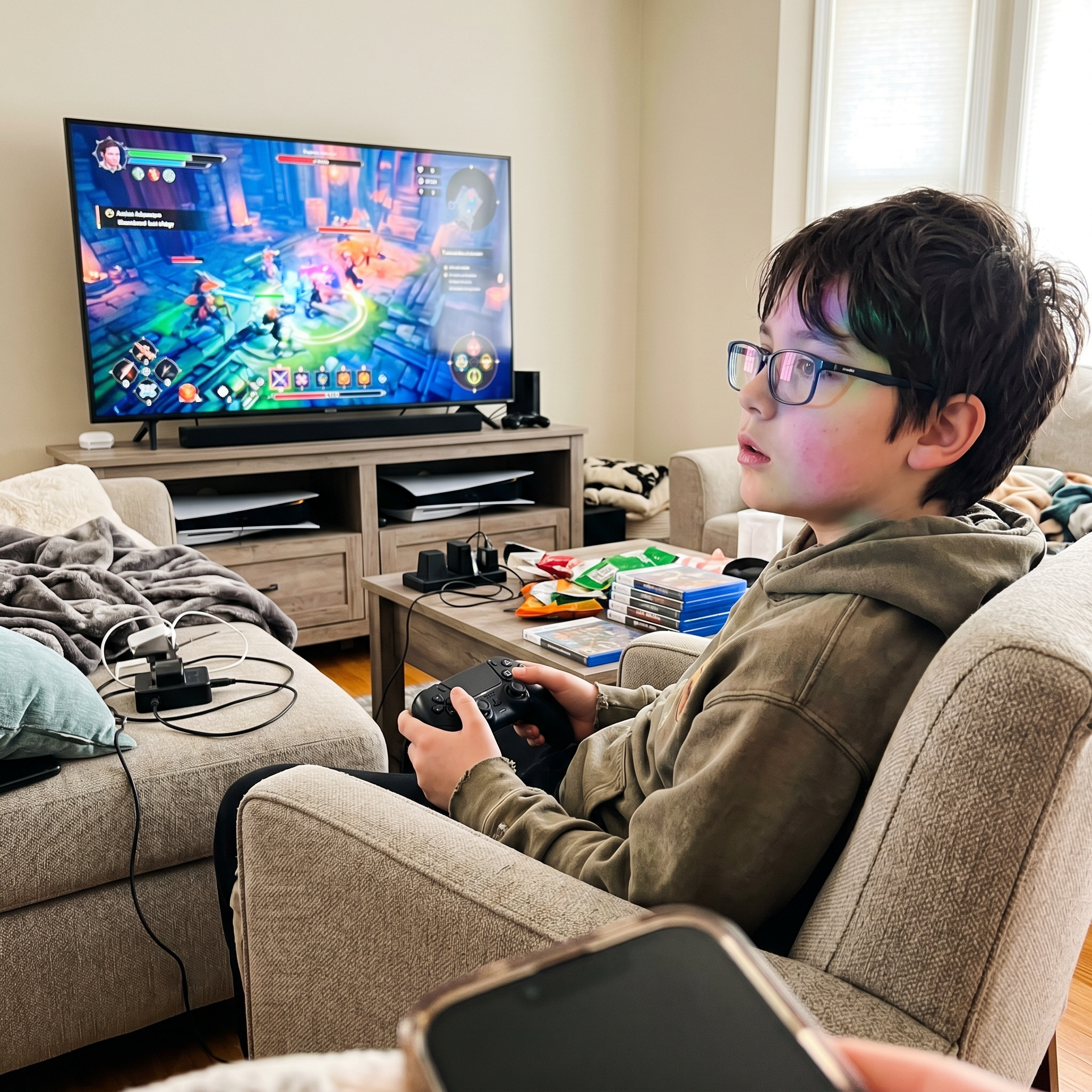
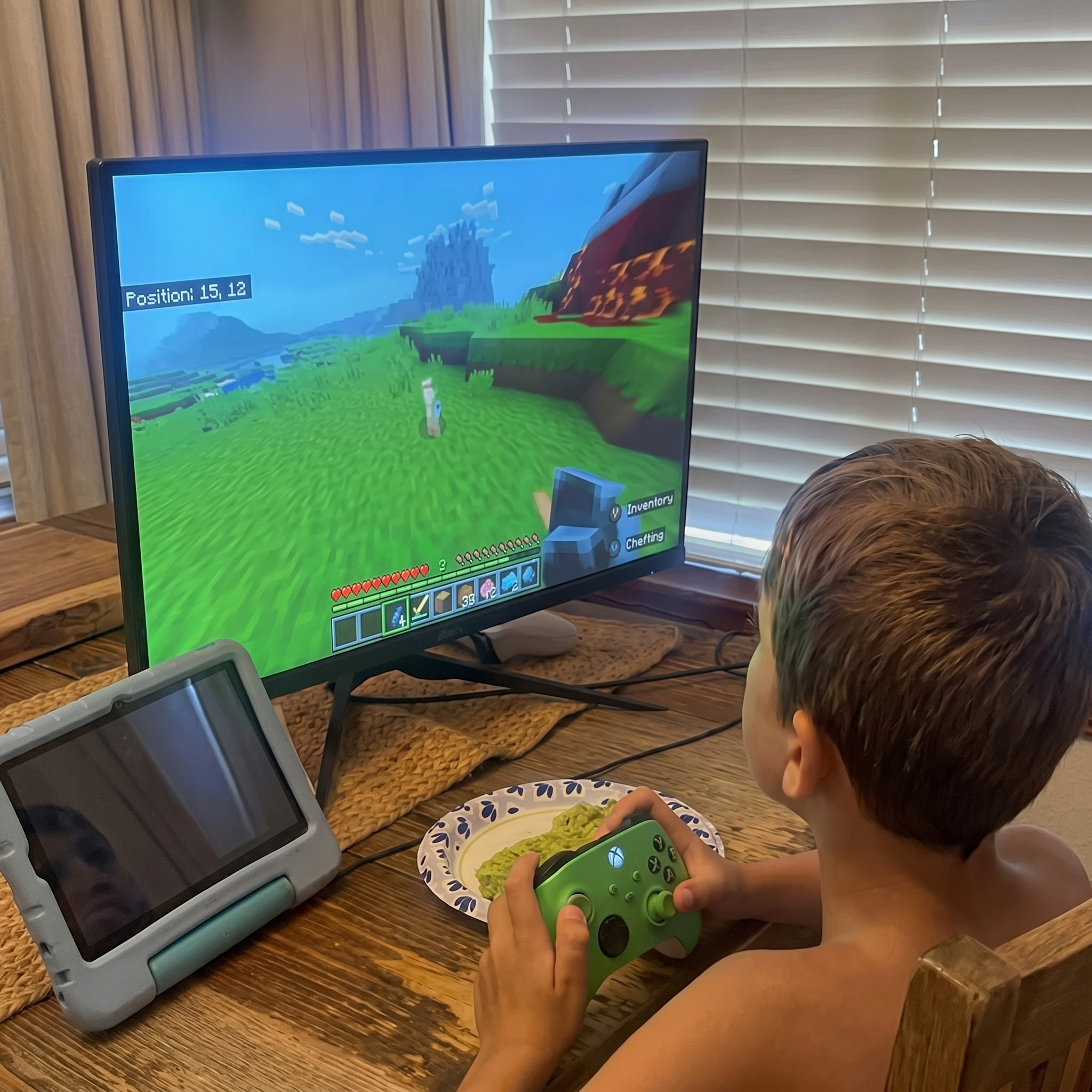
I told my son to turn off Fortnite and do his homework. Then he threw the TV remote at my head. My name is Jess. I'm 36. And I need to tell you what I finally figured out after a year and a half of getting this completely wrong. Because if someone had told me this sooner, I would've saved myself a fortune on reward charts that did absolutely nothing, hundreds of fights that didn't need to happen, and eighteen months of thinking I was a bad mum. He's 9. ADHD. And here's what every single day looked like. He walks through the door after school. Doesn't say hi. Doesn't put his bag down. Just grabs the controller and loads Fortnite. Within thirty seconds he's on the headset with his friends talking strategy, calling out positions, totally locked in. And honestly? That's the only time our house is quiet. When he's playing, he's focused. Calm. Happy. Communicating. Problem-solving with his squad in real time. This same kid can't sit at the kitchen table for five minutes without falling apart. Homework is a war every single night. He reads the same sentence three times. Stares at the ceiling. Asks for water. Forgets what question he's on. By the end we're both in tears over Year 3 maths. And I'm sitting there thinking — you just tracked six enemy players across a moving storm circle but you can't do two-digit addition? How is that the same kid? Mornings are worse. Getting dressed takes twenty minutes of me standing in his doorway repeating every single step. Brush your teeth. No, actually brush them. Put the toothbrush in your mouth. He can execute a twelve-step building strategy in Fortnite from memory but can't remember to put socks on. And then there's the part that was slowly destroying our family. — Every night. Same routine. I give him the fifteen-minute warning. He doesn't hear me. I walk in front of the TV and say it again. He hears me but doesn't react. Then I say the words: "Time's up. Turn it off. You need to do your homework." And it's like something inside him breaks. The controller hits the couch. The screaming starts. "FIVE MORE MINUTES." His face goes red. His whole body tenses up. And then it comes. Every single time. "I HATE YOU." Full volume. In front of his little sister. She's five. She doesn't say anything anymore. She just picks up her colouring book and quietly walks upstairs. She doesn't even flinch. She has a routine for this. That stopped me cold one night. My five-year-old daughter had adapted to chaos. She built a system to protect herself from her brother's explosions. That's not a normal household. The night with the remote was the worst one. I'd said "time's up" the same way I always do. Calm. Patient. And he just erupted. Grabbed the remote off the coffee table and hurled it. It hit me in the side of the head before I even had time to react. He froze. I froze. His sister was standing in the hallway holding her stuffed animal. Then he collapsed. Sobbing on the floor. "I'm sorry Mummy. I'm sorry. I didn't mean to. I don't know why I did that." And I believed him. Because I could see it in his face. He was horrified at himself. He didn't want to throw it. His body did something his brain couldn't catch in time. I sat on the kitchen floor after he went to bed that night and cried until I couldn't breathe. Not because it hurt — it did — but because I didn't recognise my son in that moment. And I didn't recognise myself either. I was walking on eggshells in my own home. Dreading 4pm every day. Tensing up every time I heard his voice from the living room because I was just waiting for the next explosion. I was exhausted. Not tired. Exhausted in a way that sleep doesn't fix. — Everyone said the same thing. "He needs structure." "He needs consistency." "Have you tried a reward chart?" So I tried a reward chart. A proper one. Laminated. Colour-coded. Ten behaviours, ten boxes per day, smiley faces for yes and sad faces for no. I sat down with him and explained it. He was excited. He helped me stick it on the fridge. Day one he earned seven out of ten. I made a big deal of it. He went to bed happy. Day two, six out of ten. Still good. Still engaged. Day three, the PlayStation went off at the right time and he earned his smiley face and I thought — this is it. We've cracked it. Day four he had a meltdown over homework that lasted forty-five minutes. Crying, screaming, kicking the chair. When it was finally over I walked to the fridge and put a sad face in the box. He looked at it. Then he ripped the whole chart off the fridge and tore it in half. I made a new one. Over the next few months I made so many versions. I tried stickers instead of smiley faces. I tried a points system where he could "buy" screen time. I tried a token jar — every good transition earned a marble, ten marbles meant a reward. I tried a traffic light system his school used. I bought a behaviour app recommended by his SENCO. I printed a morning routine checklist with little pictures and laminated that too. Each one worked for roughly two to three days. Sometimes four. Then it collapsed. Not gradually — suddenly. One bad afternoon would wipe out everything we'd built and reset us back to square one. The meltdowns would come back harder than ever, like they'd been storing up pressure while the chart was working. His therapist said I needed to be more consistent. So I was more consistent. His teacher said to tie the rewards more closely to the behaviour. So I tied them more closely. Every professional, every forum, every parenting resource said the same thing — reward the good behaviour, ignore the bad, be consistent, give it time. I did all of it. For months. And every single time, the chart would hold for a few days and then fall apart in one explosive afternoon and I'd be back on the kitchen floor wondering what I was doing wrong. That's when I stopped asking how to make the reward system work. And started asking why it kept failing. — Why does he earn stickers for two days and then suddenly can't? Why does the chart work on a good day but fall apart the moment things get hard? Why can he follow a twelve-step Fortnite strategy from memory but can't follow a five-step morning routine even with pictures on the wall? I found a video from a paediatric neuropsychologist that explained it in a way nobody ever had. And I need to tell you what she said because it changed everything. "If your child can hyperfocus on screens but falls apart everywhere else — that's not a behaviour problem. That's not a lack of motivation. That's a brain that is starving for something it can't produce enough of on its own." She explained that the brain runs on three chemicals that work as one connected system. Dopamine. Serotonin. Norepinephrine. Together they control basically everything we ask kids to do — focus, emotional regulation, impulse control, motivation, and how the nervous system handles stress. Some kids' brains produce less of these naturally. Not damage. Not disorder. Variation. The same way some kids need glasses because their eyes developed differently. And here's the part that made everything click. Reward charts work by offering future dopamine — the feeling of earning something, building towards a goal. But that only works if the brain has enough dopamine to delay gratification in the first place. If the tank is empty, the promise of a sticker tomorrow means nothing. The brain can't hold onto it. It needs relief now. School drains whatever supply they have. Seven hours of sustained focus, sitting still, following instructions, controlling impulses, switching tasks. And maybe twenty minutes of break to recover. For a brain that already runs on a smaller supply, that maths doesn't work. By 3pm the tank is empty. So the brain goes hunting for the fastest dopamine source it can find. That's Fortnite. Every elimination, every new skin, every squad win, every storm escape. The game is engineered to deliver dopamine hits every twenty to thirty seconds. His brain isn't choosing Fortnite because he's spoilt or because the reward chart isn't good enough. It's choosing Fortnite because it's the only thing filling the tank his brain has been burning through all day. That's why the chart worked for two days. At the start of the week, his tank wasn't completely empty. He had just enough to delay gratification, to feel motivated by a future reward. But by day three, four — after more school, more draining — there was nothing left. No amount of stickers could compete with a brain in survival mode. She said: "You can't reward a brain into producing chemicals it doesn't have. Behaviour systems work on motivation. But if the brain doesn't have the neurochemistry to access motivation — no chart, no system, no consequence will stick long-term." I sat there and everything made sense. Why the charts worked at first and then collapsed — the brief honeymoon period was built on whatever reserves he had left. When those ran out, the system had nothing to run on. Why the meltdowns came back harder after a good run — the brain had been white-knuckling through the chart days, and the pressure had to go somewhere. Why his sister's sticker chart worked perfectly and his never did — her brain could access delayed gratification. His couldn't. Not because he didn't want to. Because the chemistry wasn't there. Eighteen months and not one doctor, therapist, or teacher told me WHY. They just kept telling me WHAT to try. — She talked about magnesium citrate. Not a new reward system — a specific mineral in a form the body can actually absorb and use. The brain builds dopamine, serotonin, and norepinephrine from specific nutrients — and magnesium is central to all three. It's involved in over 300 processes in the body including the production of all three of those chemicals. One study suggests that 89% of children with hyperactivity and sleep problems show signs of magnesium deficiency — not because their diets are terrible, but because the body burns through it fast, and modern diets can't keep up, especially in children spending seven hours a day in sustained cognitive effort. But here's what most people don't know: the form matters enormously. Less than 4% of the magnesium oxide used in most children's supplements is actually absorbed. The rest passes straight through. So if you've ever tried magnesium gummies and thought "this did nothing" — it's not that magnesium doesn't work. It's that you never actually gave their body any. Magnesium citrate is different. Absorbed at a significantly higher rate. The body can actually use it. It reaches the bloodstream. It gets to the brain. Same mineral. Completely different result. The form is everything. — I found Bryte through a mum in a Facebook parenting group I'd been lurking in for months. She'd posted about her son's after-school meltdowns stopping. Someone asked what she changed. She linked these. I looked them up. Magnesium citrate — the form that actually absorbs — at a dose calibrated for children. Berry-flavoured. Vegan. No artificial anything. Made in the UK. I ordered them that night. At this point I had nothing left to lose. — He chewed the first one on a Monday morning. Said it tasted good. Asked for another one. I said one's enough. Week one I couldn't really tell. Maybe slightly less explosive after school. Maybe. I wrote in my phone notes: "Don't get your hopes up." — Week two. Saturday afternoon. He'd been playing Fortnite for about an hour. I said: "Ten minutes, bud." Five minutes later: "Almost done." Then: "Okay. Time's up." I braced. Shoulders tight. Jaw locked. I could already feel the adrenaline spike because my body had been trained by eighteen months of explosions to expect one. He looked up from the screen. I saw the flicker — that familiar spark of frustration behind his eyes. The one that's always been the fuse. He set the controller on the couch. "Can I have a snack?" I didn't move. Because that had never happened. Not once. Not in a year and a half. He walked into the kitchen and poured himself a bowl of cereal. Sat at the table. Started telling me about some skin his friend got in the new battle pass. I stood there holding a dish towel and I couldn't even respond for a second. Because my body was still braced for a war that didn't come. — Same week. Tuesday after school. He walks through the door and doesn't go straight for the controller. Sits at the table. Puts his backpack on the chair. "Mum, we did this cool experiment in science today with baking soda." He was talking to me. Unprompted. Present. Making eye contact. Then he said: "Can I do my homework first so I can play after?" I need you to understand what that sentence meant in our house. My son — the kid who threw a remote at my head because I asked him to stop playing and do his homework — was asking to do homework first. Because his brain had enough of its own dopamine to choose a non-rewarding task over an instantly rewarding one. He didn't need the screen to feel normal anymore. Homework went from a two-hour war to about twenty minutes. He still needed reminders — he's nine — but the crying stopped. The staring at the ceiling stopped. When he got stuck, instead of melting down he just said "Mum, is this a times or a plus?" and kept going. — Week three, his teacher emailed. I get a pit in my stomach every time her name shows up. Years of bad news trained me to expect the worst. "I don't know what's changed at home but Caleb has had an incredible few weeks. He's completing his work. He's participating in group discussion. He stayed on task for the entire reading block yesterday. Whatever you're doing — please keep doing it." I read that in the school pick-up queue and my eyes filled up. Not because of what the teacher said about Caleb. Because of what it meant for me. For the first time in a year and a half, I didn't feel like I was failing him. — It's been about two months now. He still plays Fortnite. Still loves it. I didn't take it away and I didn't need to. Because Fortnite went from the only thing that regulated him to just something he enjoys. It went from a need to a want. And a want has an off switch. He plays for an hour, sometimes two. When I tell him time's up, he puts the controller down. Not always happily — he's nine, he still wishes he could play forever. But the screaming is gone. The "I hate you" is gone. The remote throwing is gone. He feels the frustration and it moves through him instead of detonating. His little sister doesn't leave the room anymore. She sits on the couch next to him while he plays and he explains what he's building. She even has a name picked out for when she's old enough for her own account. That alone is worth everything. Homework gets done before Fortnite most days. Not every day — he's still a kid. But without the war. Without the tears. Without the two hours of staring at the wall while we both slowly lose it. — But here's the part I didn't expect. I changed too. I didn't realise how much of myself I'd lost until I started getting it back. For eighteen months I'd been in survival mode. Every afternoon was dread. Every evening was a countdown to the next explosion. I couldn't relax. Couldn't enjoy him. Couldn't sit on the couch with my kids without my whole body tensed up waiting for the switch to flip. I was short with my daughter because I had nothing left after managing him. I was distant with my husband because by 8pm I was completely empty. I stopped making plans with friends because I never knew what kind of night it would be. I wasn't just exhausted as a mum. I was disappearing as a person. Now I sit on the couch and actually watch a film with both kids. I make dinner without the knot in my stomach. I hear his Fortnite squad yelling through the headset and I don't tense up because I know that when I say "time's up," it's going to be okay. I stopped walking on eggshells in my own home. I stopped dreading 4pm. I started actually enjoying my kids again — not just managing them. Last week at bedtime he put the controller down without being asked, walked upstairs, and said: "Will you read to me tonight, Mum?" Not Fortnite. A book. My son chose a book. And chose me. I sat on the edge of his bed reading to him and I thought — this is what it's supposed to feel like. This is what I was fighting for this whole time. — The reward chart wasn't the answer. I know that now. I wasn't doing it wrong. I wasn't being inconsistent. The system was never going to work — because you can't motivate a brain that doesn't have the chemistry to feel motivated. Once his brain had the magnesium it needed — in the form it could actually absorb — motivation came back on its own. The screen stopped being a lifeline and went back to being a game. And I stopped being a referee in my own home and went back to being his mum. I wish someone had explained this to me eighteen months ago. So I'm explaining it now. EDIT: So many DMs asking what Caleb takes. It's Bryte — magnesium citrate gummies, the form that actually absorbs, at a dose calibrated for children. Berry-flavoured. He thinks they're sweets so that's a win. One gummy every morning. That's it. https://www.try-bryte.com/products/magnesium-gummies
Where the ad sends people
try-bryte.com
Your Child's Natural Solution.
Bryte Kids Magnesium Gummies - Natural Berry Flavour | 60 Gummies Getting kids to take supplements shouldn't be a battle. That's why we made these! A delicious natural berry gummy that delivers 90mg of highly bioavailable magnesium citrate, so children actually look forward to taking it every day. M...
Shop now: try-bryte.com(opens in a new tab)