
Inactive· since May 6, 2026
- 50
- days it ran
- 0
- relaunches
Ad copy
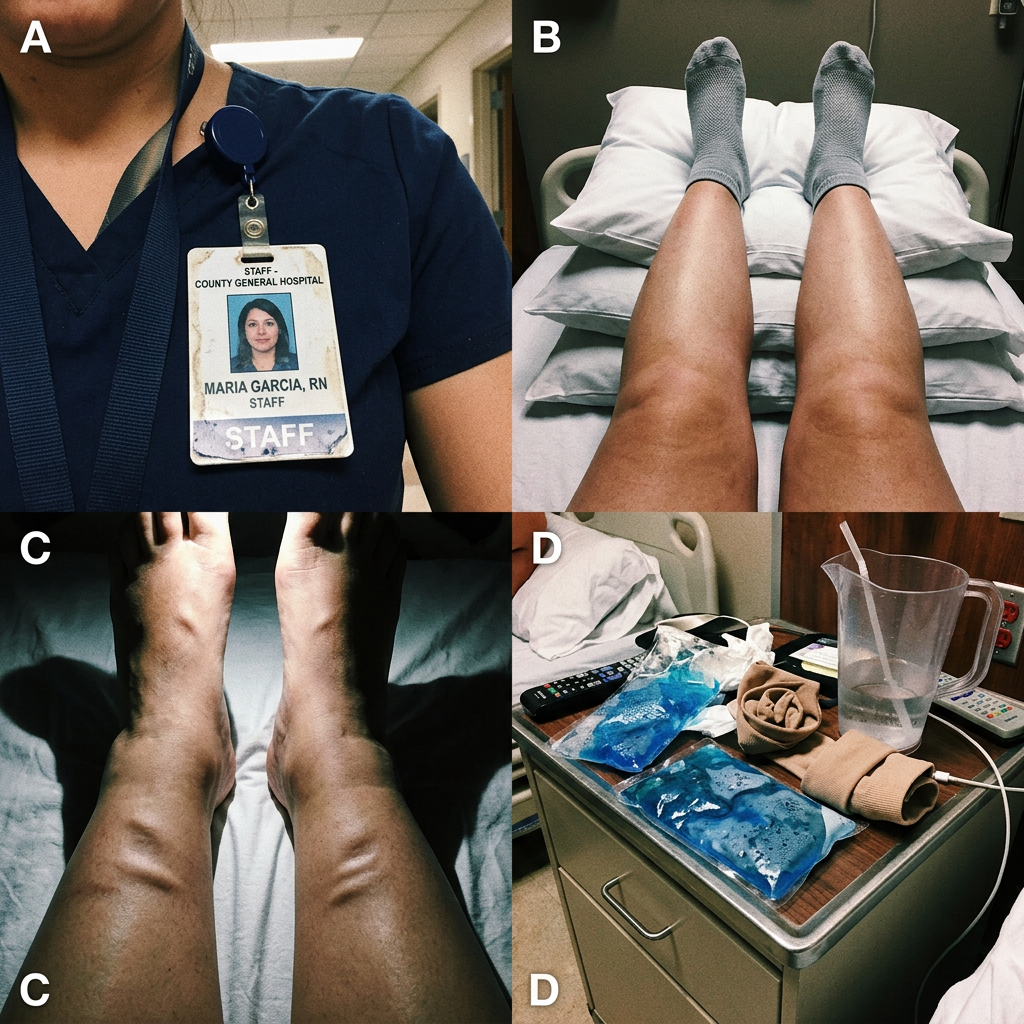
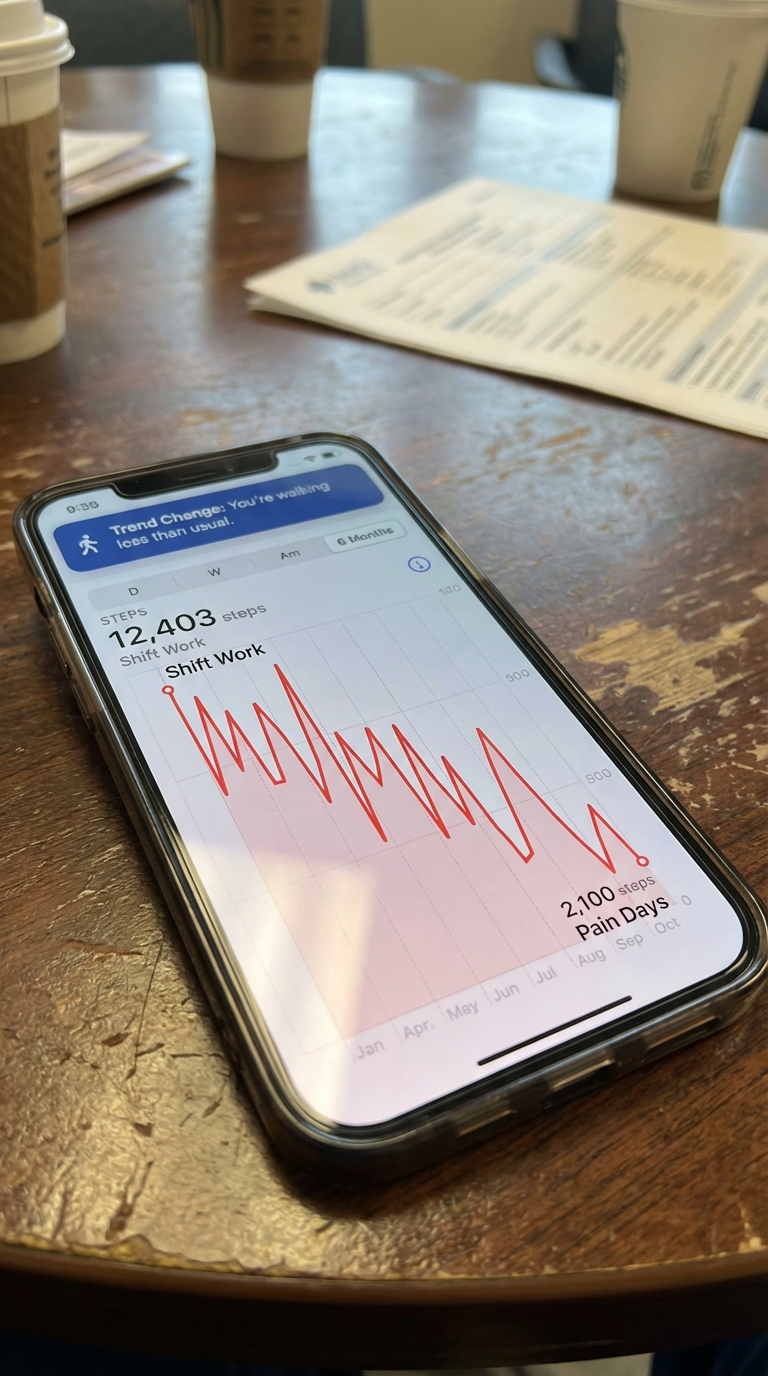
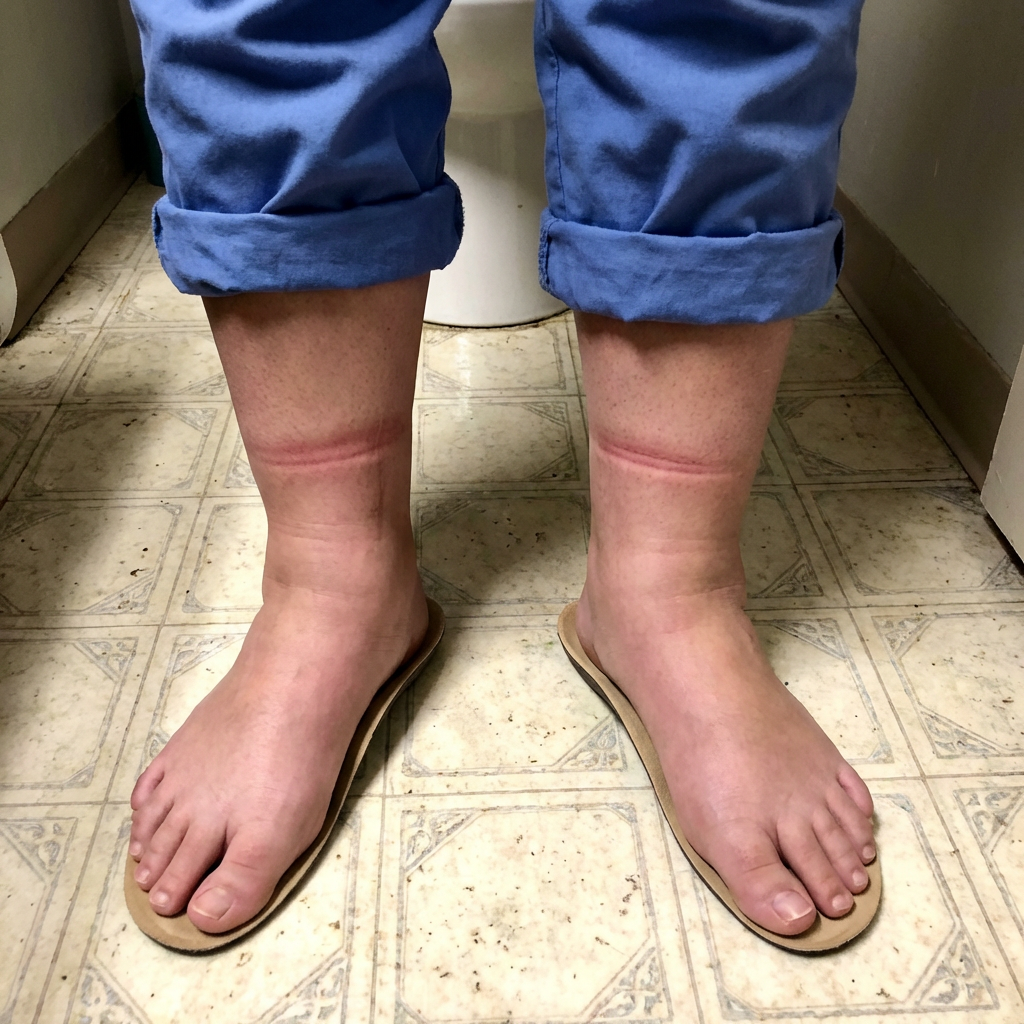
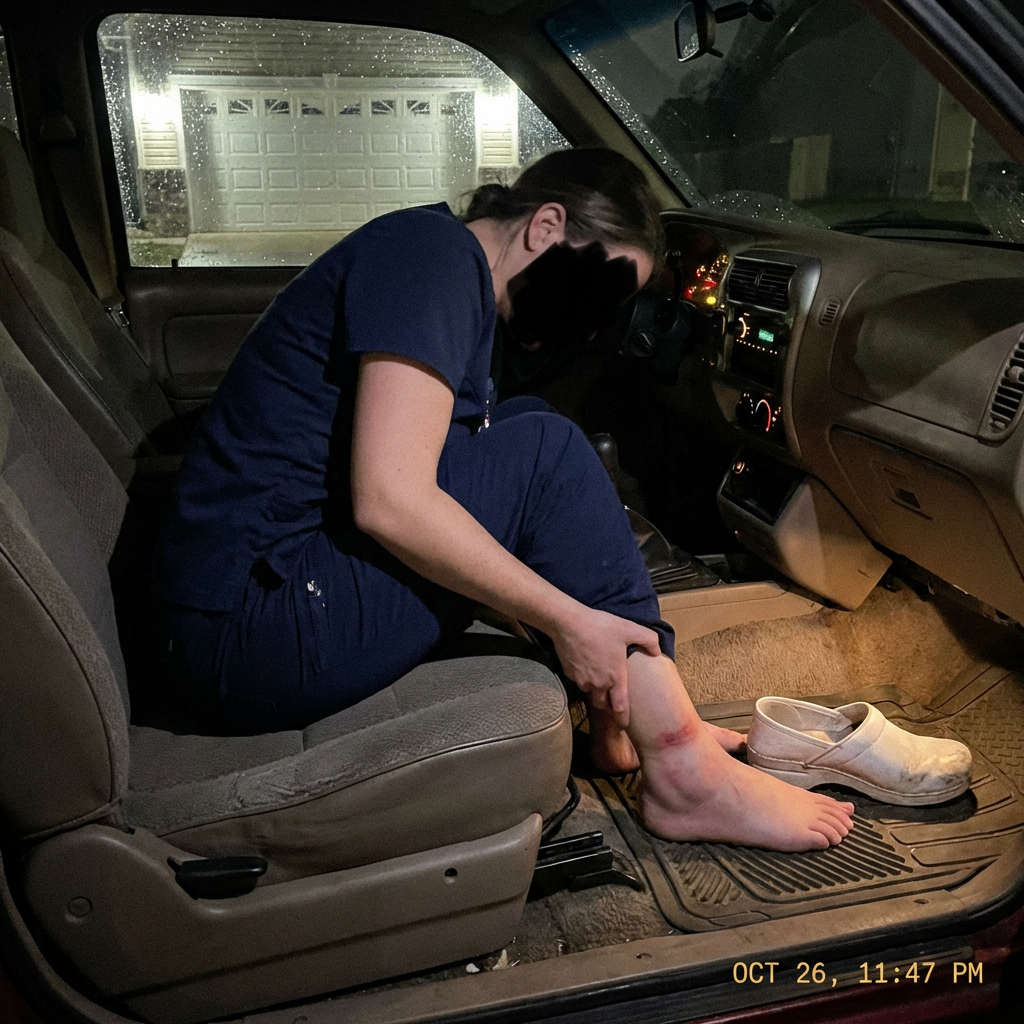
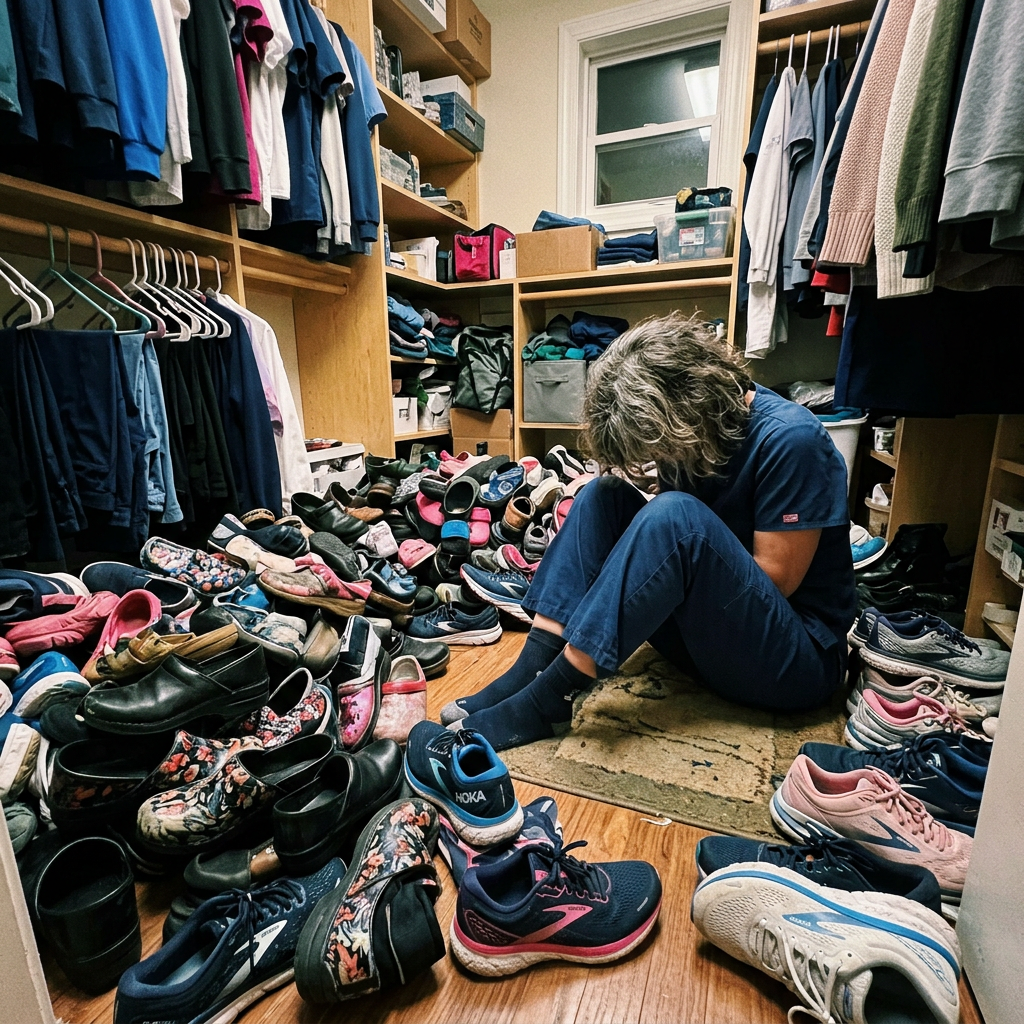
I was sitting on my closet floor at 2 AM, crying over a pile of $150 nursing shoes. I am 56 years old. I have been a floor nurse for over thirty years. I am no stranger to exhaustion. I spent my twenties and thirties working back-to-back 12s, running from room to room, and waking up the next day ready to do it all over again. But somewhere over the last few years, my body stopped bouncing back. The normal tiredness turned into something much darker and much more painful. By hour eight of my shift, my legs would start to feel like they were encased in wet cement. My calves would throb with a dull, sickening, heavy ache that radiated all the way up to my knees. My ankles would swell so severely that the tops of my feet bulged against the laces of my sneakers, making every single step feel like a punishment. When I finally got home, I couldn't even stand at the kitchen counter long enough to microwave a plate of food. I would drop my bag, collapse into my recliner, and physically freeze there. My husband would ask if I wanted to go for a walk or run to the store, and I would just shake my head, feeling a wave of intense guilt. I was completely paralyzed by the throbbing in my soles. I was surviving between shifts, but I had absolutely no life outside of the hospital. Like any desperate nurse whose livelihood depends on her ability to stand, I tried to buy my way out of the pain. I thought the problem was the harsh, unforgiving hospital floors. It made sense, right? If your feet hurt, you need softer shoes. You need more support. So, I went on a frantic spending spree, chasing every promise the shoe industry made to healthcare workers. That night, sitting on the floor of my closet, I tallied up the damage. There were the $160 heavy leather clogs that everyone swore by. They felt like walking on wooden blocks, and I nearly rolled my ankle twice during a code blue. There were the $180 maximum-cushion running shoes. They felt like standing on marshmallows for the first two hours, but by 5 PM, my calves were still burning and my feet were still swollen. There were the $300 custom, hard-plastic orthotic inserts the podiatrist swore would align my stride. There were copper-infused ankle sleeves, memory foam heel cups, and cooling gel pads. I had a $1,500 "shoe graveyard" sitting on my closet floor. Every single pair was a broken promise. I had spent a small fortune, and I was still coming home in so much agony that I was spending my weekends trapped on the couch instead of playing with my young grandchildren. I felt incredibly foolish, incredibly old, and terrified that I was going to be forced into early retirement. The turning point didn't come from a doctor or a shoe commercial. It happened three days later in the breakroom. I was rubbing my swollen ankles during a rare fifteen-minute lull, wincing as I tried to massage a tight knot out of my calf. A young, sharp travel nurse named Sarah was sitting across from me, quietly eating her lunch. She watched me struggle for a minute. She pointed her fork down at my expensive, thick-soled sneakers. "You know those aren't going to fix it, right?" she said gently. I looked up, exhausted and honestly a little defensive. I rattled off exactly how much I had spent on them, how thick the foam was, and how they had a special arch-support bridge. She shook her head, took a sip of her water, and dropped a truth bomb that completely shattered how I viewed my own body. "You're trying to fix a plumbing problem with a mattress." I just stared at her. A plumbing problem. She got called back to the floor before she could explain, but that strange phrase echoed in my head for the rest of my shift. That night, instead of just elevating my legs and hoping for the best, I pulled out my tablet. I started digging into medical journals and vascular diagrams, trying to understand what she meant. What I discovered at 2 AM changed everything. It made me realize why my $1,500 shoe graveyard was always destined to fail. I had completely misdiagnosed my own pain. I thought my feet hurt because I was standing on hard floors. I thought it was an orthopedic issue—a problem with my bones, my arches, and the impact of my steps. The reality was terrifying. It wasn't orthopedic at all. It was entirely vascular. When we stand for 12 hours straight, gravity pulls our blood downward. Our calf muscles are supposed to act like a pump, pushing that deoxygenated blood back up to our hearts. But as we get older, and after decades of working on our feet, the tiny one-way valves inside our leg veins get exhausted. They weaken. They fail to push that heavy blood upward. So, the toxic, deoxygenated fluid just sits there. It pools in our calves. It stagnates in our deep tissue. It gathers around our ankles. That "dead weight" feeling I had every night wasn't muscle fatigue from walking. It was the physical weight of trapped, uncirculated blood suffocating my veins and expanding my tissue from the inside out. Suddenly, the shoe graveyard made perfect sense. No wonder my expensive clogs weren't working. Adding two inches of premium memory foam under my heel was never, ever going to push stagnant fluid out of my leg veins. I was literally putting a cushion under a bursting pipe. To fix a plumbing problem, you need a pump. You need something to physically squeeze the heavy fluid up the calf and defy gravity. I needed true, medical-grade graduated compression. I’ll admit, when my research pointed to compression socks, I rolled my eyes. I had tried a cheap six-pack from a big box store years ago. They squeezed my legs evenly from top to bottom. They were impossible to pull over my heels, and by lunch, the top band had dug a painful, red, indented trench into my skin. They acted like a literal tourniquet, trapping the blood down in my feet and making the swelling worse. I had thrown them out and sworn off compression forever. But the medical texts I was reading were incredibly specific. It couldn't be uniform compression. It had to be a "graduated" squeeze. It has to be tightest at the extreme base of the ankle, and then slowly, mathematically release pressure as it moves up the calf. This creates a one-way street. It physically forces the toxic fluid out of the lower extremities without ever choking the leg or cutting into the skin at the knee. I started searching for a brand that engineered this specific medical gradient, but was actually designed for real-world, wider nursing calves instead of tiny athletic legs. That is when I found Nurse Yard. They bypass the sole of the foot entirely and target the actual root cause of the pain. They specialize in true 20-30mmHg graduated pressure, and they specifically promised a wider calf fit that wouldn't leave tourniquet marks. I ordered a few pairs. I felt a little crazy putting my hope into a pair of socks after dropping thousands on shoes, but I was out of options. When they arrived, I was immediately taken aback. They didn't feel like rigid, itchy sausage casings. The fabric was buttery. They stretched wide when I put my hands inside them. I didn't have to wrestle them on. They glided smoothly over my swollen heel and hugged my calf perfectly. I put on a pair of normal, cheap sneakers from my closet—the ones I used to think were "destroying" my feet—and drove to the hospital. I worked a brutal Tuesday shift. I waited for the familiar, sickening burn to set into my calves around 3 PM. It didn't happen. By 6 PM, I was doing my final rounds, and I suddenly realized I wasn't limping. I wasn't leaning on the med cart to take the weight off my heels. When 7:30 PM rolled around and I walked out the sliding glass doors to the parking lot, the adrenaline dropped like it always does. But this time, my legs felt shockingly light. There were no wet sandbags. I drove home, sat on my bed, and peeled off the socks. I just stared at my bare legs in total disbelief. There was no swelling. My ankle bones were perfectly defined. There were no angry, bulging purple veins. And most importantly, there were no red tourniquet rings cut into my calves. The deep, throbbing ache that usually kept me awake at 2 AM was completely, totally gone. The Nurse Yard socks had acted as an external pump all day long. They squeezed the fluid up and out before it ever had a chance to pool and stagnate. Because the fluid never gathered, the pain never started. It has been six months since I cleared that shoe graveyard out of my closet. I donated almost all of them. I kept one pair of basic, comfortable sneakers, and I wear my Nurse Yard socks every single shift. My back doesn't ache anymore. My knees don't shoot with sharp pain when I bend down. Because my lower legs feel weightless, my entire body moves better. I feel ten years younger on the floor. But the real victory happened last Sunday. My daughter brought my two young grandkids over for the afternoon. When they asked me to come outside and push them on the swings, I didn't have to say no. I didn't have to watch them from the living room window, trapped in my recliner by my own failing body. I spent the entire afternoon in the yard, running in the grass with them, completely pain-free. If you are a nurse who is spending a fortune on expensive footwear, desperately trying to buy your way out of the pain... please stop. Your floors aren't the problem. Your circulation is. You cannot fix a vascular plumbing problem with an orthopedic mattress. If you're tired of coming home in absolute agony, and tired of wasting your hard-earned money on promises that just sit in the back of your closet, you need to treat the actual root cause. Nurse Yard gave me my mobility back. They gave me my weekends, my family time, and my life outside the hospital back. Your legs have to carry you for the rest of your life. Do not let stagnant blood steal your golden years. Try them. It will change everything you thought you knew about your pain.
I spent $1,500 on 'comfortable' nursing shoes before I realized my 12-hour leg pain had absolutely nothing to do with my feet.
Experience all day comfort while you elevate your well-being and stay stylishly active with our premium top-quality compression socks. Designed to boost circulation, minimize pain & fatigue, reduce swelling, and enhance performance. Shop now for the perfect blend of style and support
LEARN MORELike this ad? Make it yours.
Crush rebuilds this exact creative around your product — your brand, your colors, your offer — in about a minute.