
Inactive· since Apr 12, 2026
- 7
- days it ran
- 0
- relaunches
Ad copy
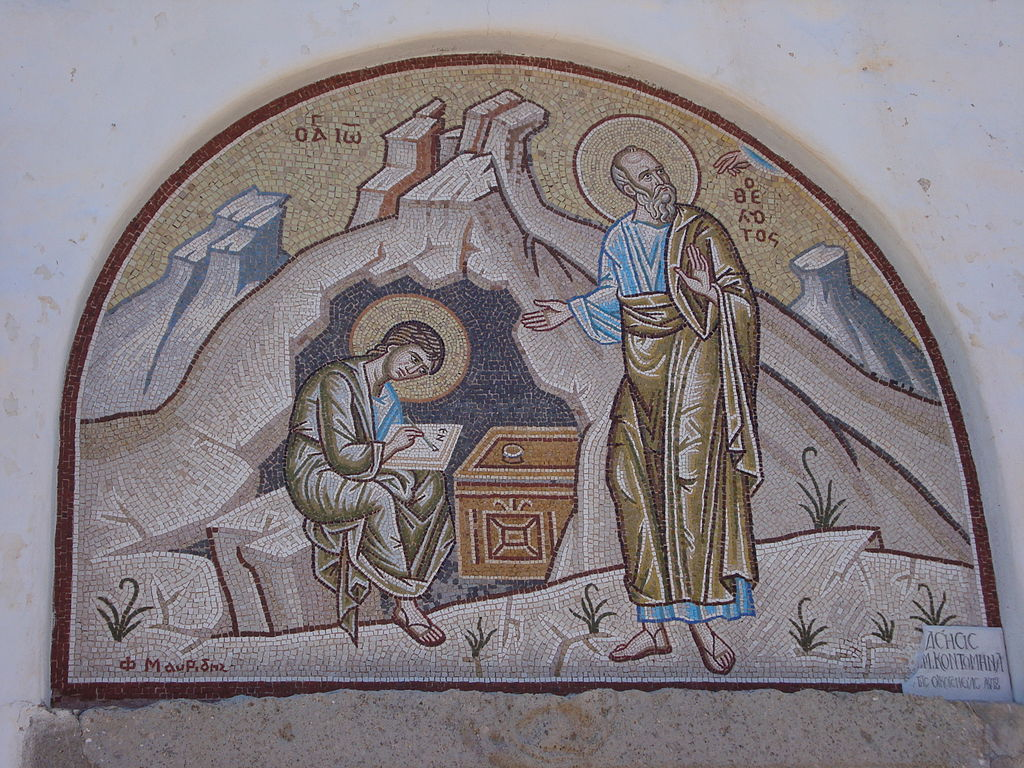
My 81-year-old host at the Monastery of St. John in Patmos has never taken anxiety medication, never been to therapy, and hasn't had a panic attack in 60 years. When I asked him how he found peace, his answer had nothing to do with prayer. I spent two weeks on the island of Patmos last spring researching something I'd been hearing about for years… A place where monks found a kind of peace that looked nothing like what we call "mental health" in America. Patmos is a small Greek island in the Aegean Sea. It's where the Apostle John wrote the Book of Revelation while exiled by the Romans around 95 AD. The monastery there has been a center of Orthodox Christian learning for nearly a thousand years. I stayed as a guest through a visiting program they run twice a year. His name is Brother Andreas. He's 81 years old. Still leads morning prayers at 5 AM in the main church. Still teaches younger monks how to read Scripture. Still walks the stone paths between the monastery and the Cave of the Apocalypse every afternoon. And here's what made no sense to me. He suffered from what we'd now call severe generalized anxiety disorder for the first 23 years of his life. Panic attacks that left him shaking. Intrusive thoughts he couldn't shut off. Sleepless nights staring at the ceiling convinced something terrible was about to happen. In 1968, at 23, he came to Patmos on the edge of a complete breakdown. He'd tried everything modern Greece had to offer at the time. He'd seen doctors. He'd done breathing exercises. He'd confessed to priests weekly. He'd fasted. He'd prayed the Jesus Prayer for hours until his voice gave out. Nothing worked. The brain noise never stopped. Then an older monk, Father Silouan, who's since passed, asked him one question that changed it all… "When you open Scripture, do you know where you are before you start reading?" Andreas said no. He'd just open to whatever passage his spiritual director assigned. Matthew. Romans. Psalms. Didn't matter. He'd read the verses, try to apply them to his life, feel like he was failing at Christianity, then close the Bible more anxious than when he opened it. Father Silouan nodded. "That's the problem. You're reading words floating in air. Your brain can't settle because it doesn't know where to land. Context first. Always context first. Then the words have a place to rest." — What Father Silouan taught Andreas was this: Before you read one verse of Scripture, you answer four questions. Every single time. No exceptions. Who wrote this book? When was it written? Why was it written? What was happening at the time? That's it. Four questions. One page. Every book of the Bible. "Your anxious mind needs a map before it can walk the path. Without context, every verse feels like a command you're failing at. With context, every verse becomes part of a story you're inside of." Andreas started with Romans. Before he read Paul's words about justification by faith, Father Silouan made him write out the answers: Who wrote it? Paul. When? Around 57 AD. Why? To introduce himself to a church he'd never met and explain the gospel before visiting. What was happening? Jewish and Gentile believers in Rome were divided over how to follow Jesus. Then Andreas read Romans. And for the first time in his life, the verses didn't feel like they were judging him. They felt like Paul was talking to a real group of people about a real problem. Andreas wasn't reading abstract theology. He was overhearing a letter. A conversation. A solution to actual human division. His brain stopped trying to make it about him. It just... listened. "The anxiety quieted because my mind finally had something to hold onto besides my own thoughts." — This practice of context before content became the foundation of everything Andreas did at the monastery. Within three months, he was sleeping through the night for the first time since childhood. Within six months, the panic attacks stopped. Within a year, he could read Scripture without his heart racing, without the intrusive thoughts spiraling, without feeling like God was disappointed in him. He's 81 now. He's lived at the monastery for 58 years. He still does the same thing before opening his Bible. Context first. Who, when, why, what was happening. Then he reads. "I haven't needed medication because I don't feed the noise. The noise comes when your brain has no anchor. Scripture became my anchor once I knew where I was standing." — I watched him live for two weeks and couldn't make sense of it. It wasn't just Andreas. Every monk I met at the monastery (and there are about 25 of them) does the exact same thing. They all learn context before content. It's part of their training. It's been part of Orthodox monastic practice for over a thousand years. And every one of them described the same shift. The Bible stopped feeling like a performance review. It started feeling like a story they were part of. One of the younger monks, Brother Christos, is 34. He came to Patmos five years ago after burning out from a tech job in Athens. Severe depression. Couldn't get out of bed most days. Stopped praying because it felt like talking to the ceiling. "I thought the problem was me. That I wasn't faithful enough. That I didn't love God enough. Then Father Andreas taught me the same thing Father Silouan taught him. Get your bearings first. Know who you're reading. Know why it was written. Then everything else follows." Christos told me the first book he learned context for was the Book of James. Who wrote it? James, the brother of Jesus. When? Around 45-50 AD, one of the earliest New Testament writings. Why? To encourage Jewish believers scattered by persecution. What was happening? Early Christians were being driven from Jerusalem, losing everything, trying to hold onto faith in the chaos. When Christos read "Consider it pure joy, my brothers and sisters, whenever you face trials of many kinds," it didn't feel like toxic positivity anymore. It felt like James was writing to people in the mess. People who'd lost their homes. People who were exhausted and confused and wondering where God was. "I wasn't reading a motivational quote. I was reading a letter from someone who understood. That's when the Bible stopped feeling like pressure and started feeling like relief." — I'm thinking about the people I know back in the States. Twenties and thirties mostly. They're drowning. Brain noise that won't stop. Doom-scrolling at 2 AM. Anxiety so thick they can't breathe. They want to be close to God but they're too exhausted to keep performing faith. They've tried the devotionals. They've tried the accountability groups. They've tried "just praying about it." And they're still spiraling. Then I look at Brother Andreas. Eighty-one years old. Suffered severe anxiety for 23 years. Found peace not through medication or therapy or ten-step spiritual disciplines, but through one practice: knowing where he was standing before he tried to read. The contrast was so extreme it felt like I was looking at two different realities. — When I got back home, I became obsessed with understanding how this worked. Why does context-first reading quiet the brain when verse-first reading amplifies the noise? That's when everything Father Silouan taught Andreas lined up with what psychologists now know about how anxiety works. Anxiety thrives on abstraction. When your brain can't anchor information to a concrete reality, it spirals. It fills in gaps with worst-case scenarios. It turns every piece of input into a potential threat. This is exactly what happens when you read the Bible without context. You open to Philippians 4:6, for example and it says, "Do not be anxious about anything," and your brain hears it as a command you're failing at. You don't know Paul is writing from prison. You don't know he's writing to a church he loves, encouraging them through their own struggles. You don't know this is a letter, not a law. So your anxious brain does what anxious brains do. It makes it about you. Your failure. Your inadequacy. Your inability to just "trust God more." And the anxiety gets worse. But when you know the context… who Paul is, why he's writing, what's happening… your brain shifts out of threat mode. It's not a command anymore. It's Paul, in chains, writing to people he cares about, sharing what's helped him. It's human. It's specific. It's story. And stories don't trigger anxiety the way abstract commands do. Your brain finally has something to hold onto besides its own noise. — When I researched the history of how ancient Christians approached Scripture, one pattern kept showing up. They always taught context first. The early church fathers, the theologians and teachers who shaped Christianity in the first 500 years, insisted that you couldn't interpret Scripture outside of its historical and communal setting. St. John Chrysostom, writing in the 4th century, taught that understanding the Bible required knowing "the occasion, the person, and the purpose" of each text. The Desert Fathers, monks who lived in the Egyptian wilderness starting in the 3rd century, required new monks to memorize the context of each biblical book before they were allowed to copy manuscripts. This wasn't about being academic. It was about spiritual survival. They knew that reading Scripture without orientation created confusion, shame, and spiritual harm. They knew that context was the difference between Scripture feeling like life and Scripture feeling like condemnation. And they practiced this for over a thousand years before the modern Bible study industry decided we could skip it. — I came home and started immediately. Before I opened my Bible, I grabbed a notebook. I wrote out the four questions for Romans. Who wrote it? Paul. When was it written? Around 57 AD. Why? To introduce the gospel to believers in Rome before visiting. What was happening? Jewish and Gentile Christians were divided over how to follow Jesus. Then I read Romans. Day 3, the brain fog started lifting. I was reading Paul's argument about law versus grace and for the first time it didn't feel like he was yelling at me. He was explaining something to a specific group of people with a specific problem. I was listening in. Week 1, I slept through the night without the 3 AM anxiety wake-up. My body wasn't tensing every time I saw my Bible on the nightstand. Reading felt like discovery instead of duty. Week 2, I tried Psalms. Before I read Psalm 23, I looked up who wrote it and when. David. Probably during his time as a shepherd before he became king. Context: a young man watching sheep in dangerous territory, writing about God as the shepherd who protects. "The Lord is my shepherd" didn't feel like a greeting card anymore. It felt like David remembering what it was like to protect vulnerable sheep from lions and wolves, then realizing God was doing that for him. The verse landed. It stayed. Week 3, a friend asked me a question about the Book of James in Bible study. For the first time in my life, I didn't freeze. I didn't say "I don't know" and hope someone else would answer. I explained who James was. When he wrote. Why he wrote. What was happening with the early church. Then we read the passage together and it made perfect sense. Week 4, I stopped doom-scrolling before bed. I was reading Scripture instead. Not out of guilt. Not to check a box. Because I actually wanted to know what happened next in the story. Week 6, full transformation. The Bible didn't feel like a weapon I was using to judge myself anymore. It felt like letters I was reading over someone's shoulder. Real people. Real problems. Real solutions. Every symptom that had been part of my daily spiritual life for years — the shame, the performance anxiety, the feeling like I was faking my faith — just wasn't there anymore. — Here's what really hit me. I'd tried everything before this. Daily devotionals. Worship music playlists. Accountability apps. Bible reading plans that promised to get me through Scripture in 90 days. Everything made the anxiety worse because everything asked me to read more without teaching me to orient first. But Brother Andreas never said "read more." He said "know where you're standing." He knew devotionals don't solve the problem. Reading plans don't solve the problem. More prayer time doesn't solve the problem. The problem is reading words in isolation and letting your anxious brain turn them into judgments. Context solves the problem. Who wrote this. When. Why. What was happening. Once you have that, your brain can rest. Scripture stops being abstract theology you're failing at. It becomes a story you're inside of. And when you're inside a story, the noise quiets. — Now. Before you try to piece this together yourself by Googling "who wrote Romans" every time you open your Bible, let me save you the frustration. I tried that. I'd spend 20 minutes reading Wikipedia articles about Pauline authorship and historical context and lose all momentum before I even started reading Scripture. Brother Andreas' system worked because it was simple. One page per book. Four questions answered. No extra information. No rabbit holes. Just enough context to orient your brain, then you read. I didn't have anything like that when I got home. I was rebuilding it from scratch every time. The guide I use now, and the one I recommend to everyone I know who's struggling with the same thing, is the Saints Label Bible Study Guide. One page for every book of the Bible. All 66 books. Each page answers the same four questions: who wrote it, when it was written, why it was written, and what was happening historically. It's the modern version of what Father Silouan taught Brother Andreas. What the Desert Fathers practiced for a thousand years. What the early church fathers knew was essential. You open the guide. You read one page. You get your bearings. Then you open Scripture and your brain knows where to land. One purchase. No ongoing subscriptions. No multi-step system. Just the orientation your anxious brain has been missing. — If you're dealing with brain noise you can't shut off… if you want to be close to God but you're too exhausted to perform faith anymore… if Scripture feels like it's judging you instead of grounding yo …if you've tried devotionals and reading plans and prayer routines and nothing has quieted the spiral… … this isn't about trying harder. It's about knowing where you're standing before you try to walk. Your anxious brain needs context. It needs to know who's speaking, why they're speaking, what was actually happening. Without that, every verse becomes another command you're failing at. With context, every verse becomes part of a story you're inside of. And stories don't create anxiety. Stories create clarity. The monks at Patmos figured this out a thousand years ago. They don't doom-scroll. They don't perform Christianity. They don't pretend they have it all together. They just get their bearings first. Every time. No exceptions. And they live with a peace that looks impossible from the outside. Brother Andreas is 81 years old. He hasn't had a panic attack in 60 years. Not because he prays harder than you. Not because he's more faithful. Because he knows where he's standing before he opens Scripture. You can start tonight. With Romans. With James. With whatever book of the Bible has been confusing you or condemning you or making you feel like you're failing. Read the context first. One page. Then open your Bible. And watch how fast the noise starts to quiet. For when you're too exhausted to pray but too anxious to sleep, this might be exactly what you've been looking for. — EDIT: I almost forgot to give you the link to get the guide. Here it is below: https://saintslabel.com/pages/5-reasons-listicle
Deepen Your Faith Every Day
Guide your walk with scripture, prayer, and reflection on every page
LEARN MORELike this ad? Make it yours.
Crush rebuilds this exact creative around your product — your brand, your colors, your offer — in about a minute.