Model Railway Reviews
 Facebook ad: “NEW REVIEW: RAPIDO UK ANDREW BARCLAY FIRELESS LOCO…”
Ran for 204 days, from April 22 to November 11, 2026, the last day Crush saw it.
Run by Model Railway Reviews on Facebook. Crush is not the advertiser and does not verify its claims. See this ad in Meta's Ad Library(opens in a new tab)
Make your own version of this ad
Crush makes it, launches it in your own Meta ad account, scales the winners and pauses the losers.
About this ad
- Meta Ad Library ID
- 980216578296118
- Platforms
- Relaunches
- 0
Ad text
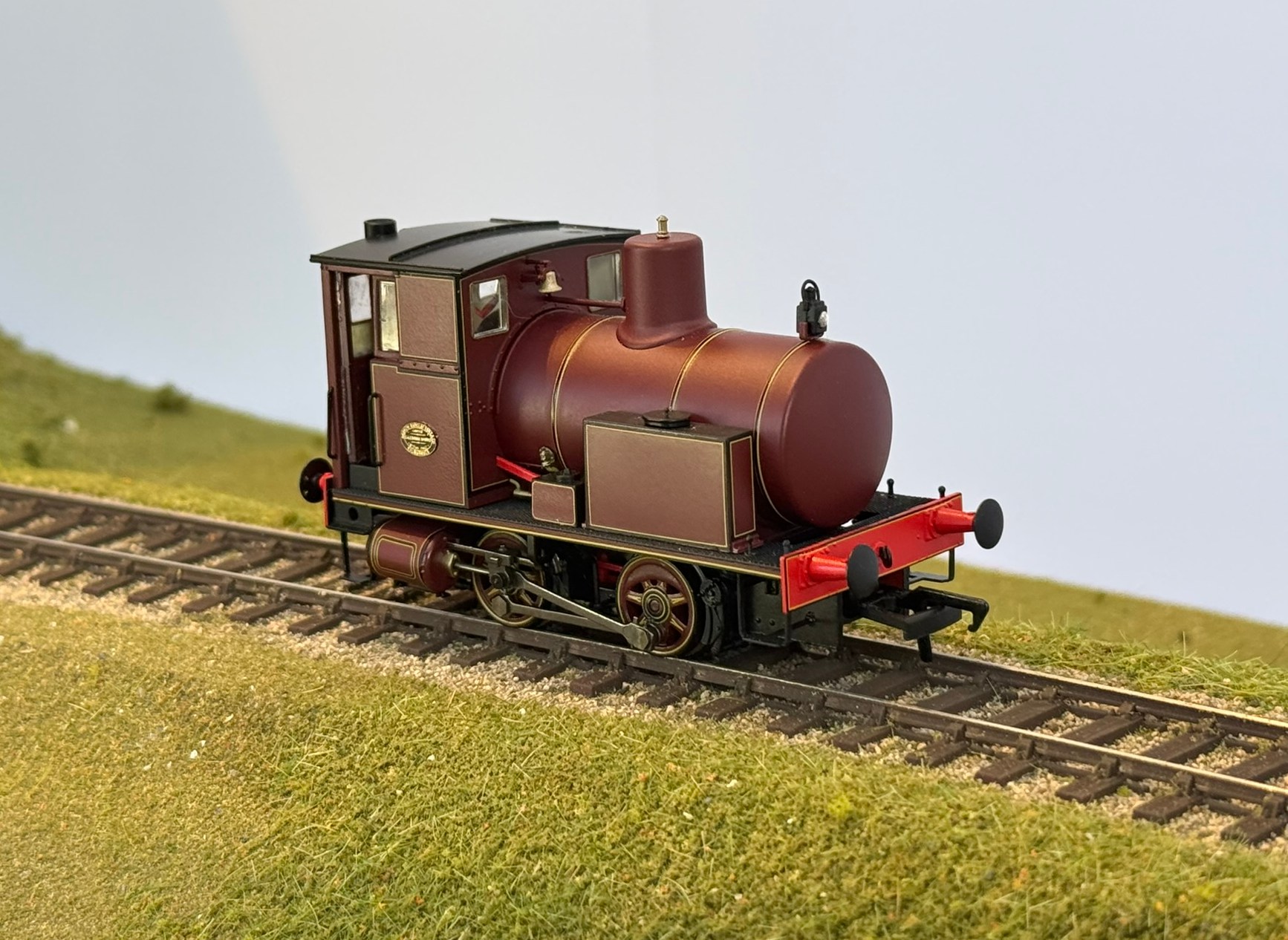
NEW REVIEW: RAPIDO UK ANDREW BARCLAY FIRELESS LOCO in Lined Maroon SKU965010 DC/SILENT RRP: £139.99 Purchase Price: £119.99 OVERVIEW: A highly unusual prototype modelled with Rapido UK’s growing confidence. Something I think never before seen in model form – I think there may have been a kit for something like this in the old K’s range but otherwise a really interesting subject. No doubt a by-product of the mechanism tooling developed for the Port of Par Bagnalls and the upcoming 009 ‘Diana’, Rapido have managed to squeeze a lot into the proverbial ‘pint pot’! I first came across a fireless loco at Sittingbourne where the ex Bowaters ‘Unique’ stood rather forlorn and neglected amongst the charmingly ramshackle 2’6” gauge equipment at Kemsley Down, I have subsequently seen one working in a factory in Germany where they were quite common until recently. The last one to work in the Uk at an industrial site was Andrew Barclay No1944 at the Croda factory near Wolverhampton. MOULDINGS AND DETAIL: Here Rapido have really excelled – the moulding is crisp and subtle and the detail robust but fine. I chose to fit the optional ‘detail pack’ of doors etc and rather regretted it – the parts delightfully delicate – especially the glazed doors but difficult to fit and stay fitted. I tried the recommended method of suing PVA but this just was not strong enough and resorted to starting over again with cyanoacrylate, which I know is risky, but I am quite comfortable with its use – especially as I use an acupuncture needle to apply drops very carefully. Even so one of the doors popped off when re-fitting the cab! Score: 9/10 RUNNING GEAR: The motion is simple (as on the prototypes) but elegantly executed with delicate rods, modelled to replicate the common split-brass type ends and single slide-bar cross-head, all in dulled gun-metal finish. There is a set of (static) motion between the frames which is incredible in such a small loco. The fine RP25 wheels are also dulled and the brake gear is perfectly placed. It may be possible to regauge to EM but I think P4 would be impossible as there is minimal clearance between the back of the crossheads and the rods in OO. The tension-lock couplings are directly mounted to the chassis block via a flexi-arm that is part of the coupling itself – there is no NEM pocket as such. The instructions do not show how these couplings could be removed without cutting them off, but I assume that the bottom keeper-plate would be removed. On balance I agree with not having a separate NEM pocket, but I think it should be possible to remove the couplings more easily – a comment to Rapido for next time! I am going to mark them down on the coupling issue alone, otherwise a fine piece of engineering! Score: 7/10 LIVERY: Absolutely superb and without blemish – I bought a ‘generic’ one and will in due course create some spurious ID for it and apply some transfers. Score: 9.5/10 TECHNICAL: The model ran well straight from the box. I adopted my common approach of running the loco on rollers at 10v for at least half an hour. The chassis is carefully designed and each wheel has an individual sprung plunger-type pickup which is really good for such a small model. Plunger pickups are in my experience more reliable than the wiper type which are vulnerable to both weakening of the springiness of the wiper arm and picking up fluff/ dirt. The model is 106g which is good for such a small model – helped no doubt by the reservoir moulding itself being a metal. I have just compared it to an ancient Dapol ‘Pug’ and that is 100g bur runs (like them all) like a geriatric three-legged dog! I have then undertaken some tests; here are the results: Dimensionally the wheels look to be very slightly undersize but being fine RP25 profiles getting a ‘true’ tread measurement is difficult I have then run a series of tests at various voltages (see attached data) The stall / restart values are really good for a loco with such small wheels and only 4 to pick up from. This is no doubt a result of the mass and pick-up design as well as a very well-engineered drive-train. Finally, I have plotted the values above graphically (attached). They are similar to other locos I have tested (more to follow in future reviews, including a comparative review of the Accurascale and Dapol GW Manor Class locos). The Rapido loco shows a healthy mid-range efficiency trough, which is what you would want to see. It is most efficient around the middle of the operating range, then less efficient at low and high extremes. That usually points to a drivetrain that is basically well matched — motor, gearing and rolling resistance are working together sensibly — but which still pays a penalty at very low speed and at the upper end of the tested range. In plain terms it is a good overall mechanical match and a healthy usable sweet spot. The data also shows the narrow band between the stall and restart voltages which at a practical ‘operating a model railway’ level is always desirable! As for the comparison (though a very different loco, I am looking at internal efficiencies) the Rapido loco clearly has the stronger drivetrain package. Its average relative efficiency is about 55%, versus about 32% for the Dapol Manor, and its curve shape is much healthier: a broad mid-range sweet spot rather than a sharp fall-off. The Manor looks more narrowly optimised and much more loss-prone once it moves beyond its best point. If you were judging purely from these curves, I’d say the Rapido drivetrain appears more efficient, more consistent, and better matched, while the Manor appears more sensitive to load and less efficient once demand rises. I will explore these comparisons more in future reviews. Score: 9/10 QUALITY: Overall excellent and apart form the fiddly ‘options pack’ absolutely no issues to report. This loco has now run for about 1.5hours on my rollers at various voltages and reveals no issues at this time. Score: 8/10 SUMMARY: Excellent addition to the hobby – well made, well-engineered and a fun loco with which to build more esoteric modelling environments. Will fit well into a small canal/industrial scene I am developing where the traction can evolve through time… AGGREGATE SCORE: 8.4/10