
Active· since Jun 1, 2026
- 102
- days running
- 0
- relaunches
Ad copy
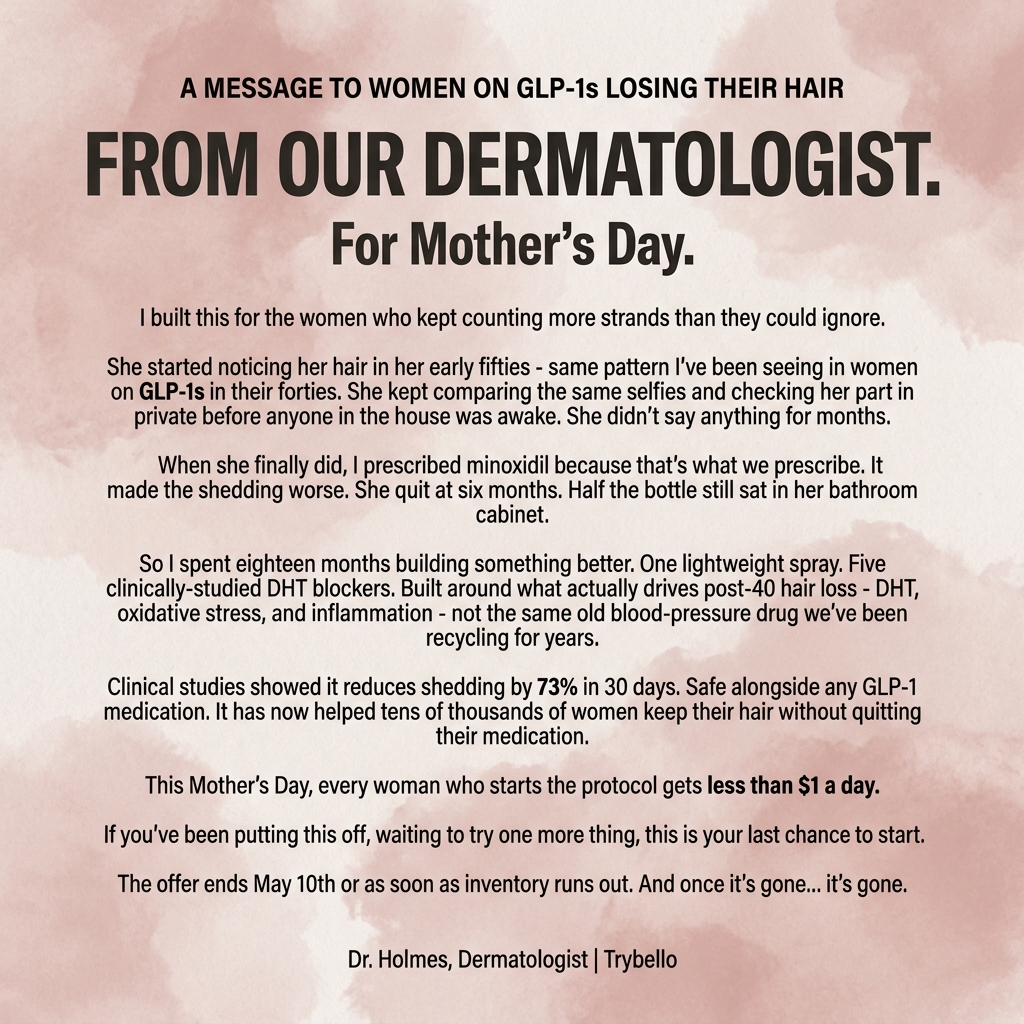
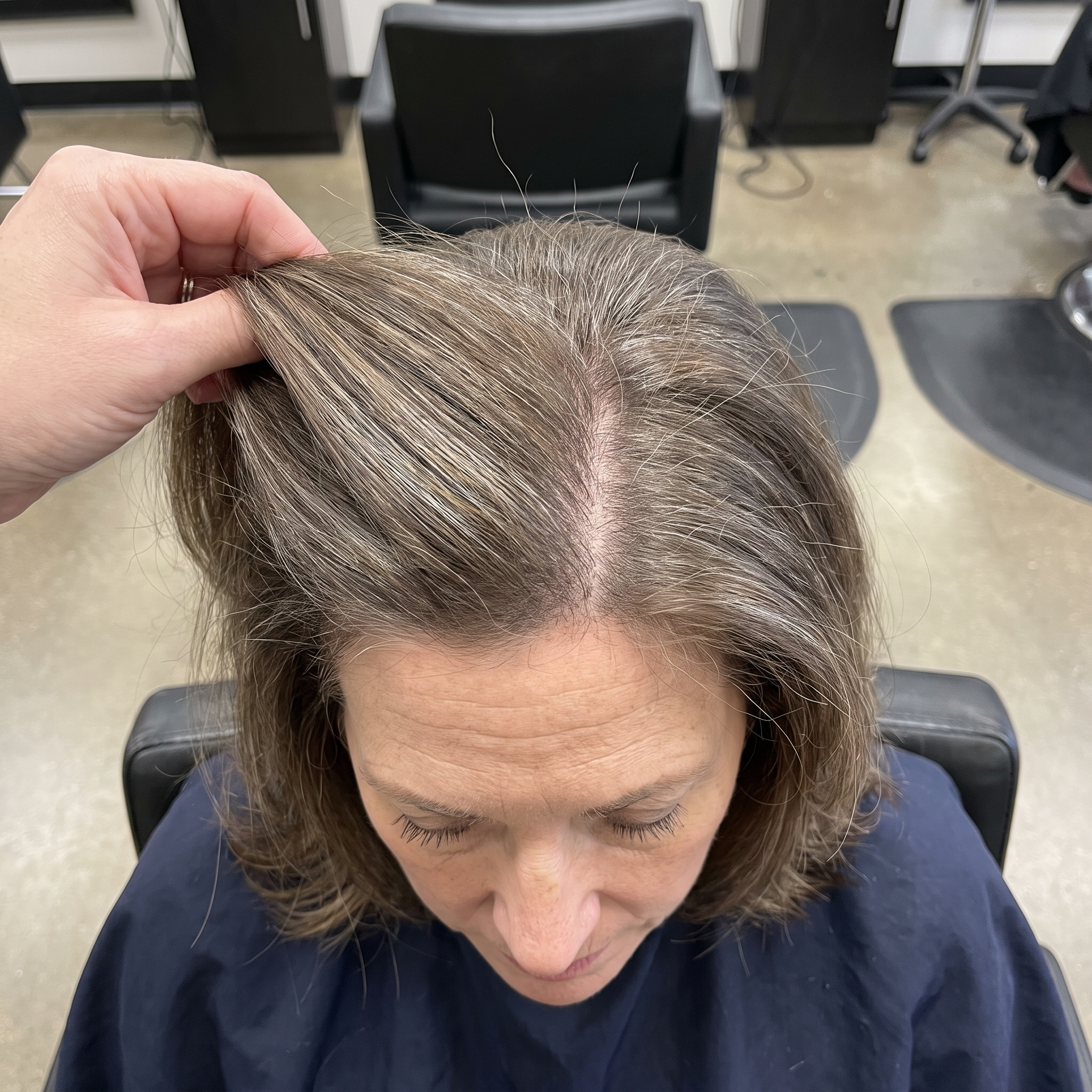
I started covering up long before I understood what I was covering. Scarves, strategic parts, the careful angles—managing how thin it had gotten instead of asking why. Then a board-certified dermatologist looked at my history and told me the failure was never mine, it was tools that were never built for my biology—and the moment that landed... The part nobody talks about is not the shed. It is the stranger feeling that shows up when a woman looks finished, put together, and still feels off inside her own skin. Hair loss does that. It does not just thin hair. It thins the version of you that used to feel effortless. Suddenly the ponytail is smaller. The styling choices change. The camera roll starts to feel like evidence. And what used to be a simple getting-ready routine becomes a quiet negotiation with the mirror, the brush, the salon chair, and the woman staring back. That is why this hits so hard after 40. It is not vanity. It is identity. It is femininity. It is the grief of feeling like your hair stopped matching the face you know. And that is exactly why the usual advice feels insulting. Biotin. More shampoo. A supplement bottle that promises the moon and delivers nothing but another month gone. If she has already tried Rogaine, Nutrafol, Vegamour, collagen, biotin, scalp oils, or a dozen other hopeful detours, she does not need more vague encouragement. She needs a mechanism. She needs to know what is actually attacking the follicles. She needs to know why the old tools did not work. The article this ad points to breaks that down in plain English. Not with medical jargon. With the kind of clarity women wish they had gotten from the beginning. After menopause, hair loss is not just a random beauty issue. It is tied to hormonal change, especially the rise in DHT sensitivity. DHT is the hormone that miniaturizes follicles over time. It can make every cycle produce finer, shorter, weaker hair until the growth pattern starts collapsing in plain sight. That is why so many women feel like the problem is accelerating. Because it is. And because the root cause is not being addressed. Minoxidil is often the first thing women are told to use. But the article explains the catch. Topical minoxidil depends on a scalp enzyme called SULT1A1 to become active. If that enzyme is not working well, the product can sit there and do very little. That is one reason so many women invest months of effort and still feel stuck. And even when minoxidil does something, it brings its own emotional baggage. The dread shed. The dependency. The fear of missing a dose. The feeling that your hair only survives if you keep feeding the same product forever. That is a brutal trade. Especially for women who already feel like they have lost too much. Trybello takes a different route. Not a cosmetic detour. A follicle-level approach built around five clinically studied DHT-blocking ingredients at therapeutic concentrations. Caffeine. Sophora flavescens. Angelica polymorpha sinensis. Rice extract. Biotin. Those are the core names, but the bigger story is the mechanism. The formula is built to help with DHT, oxidative stress, and inflammation at the same time. That matters because post-40 hair loss is rarely one single issue. It is usually a stacked problem. This is why so many women feel burned by the category. They were never given a product that matched the actual biology. They were given label dust. They were given generic solutions. They were told to be patient while their part kept widening and their confidence kept shrinking. The article also explains why natural does not have to mean weak. That is one of the oldest lies in this market. Plant-based does not mean decorative. Not when the ingredients are used at meaningful concentrations and chosen for specific follicle support. Trybello is also not trying to trap women in another maintenance loop. No dread shed. No dependency story. No panic if life gets busy and a dose is missed. That alone changes the emotional math for a woman who has already spent years feeling cornered by her own hair. And the timeline matters. Women in this market do not trust miracle language anymore. They want to know what happens first. What changes next. What actually takes time. The article walks through that too. Stabilization first. Then the shift from constant shedding to a calmer scalp environment. Then the small signs that something is waking up again. Baby hairs. Less fear in the brush. More confidence in bright light. Less checking. Less hiding. More of herself back. That is why the emotional angle matters as much as the science. Because the goal is not only more hair. It is to stop feeling like your face is being revised by something you did not choose. It is to stop feeling older before your time. It is to stop translating every photo into a loss story. It is to feel like yourself again when you pull your hair back, step outside, or sit down in front of someone who knows you well. Trybello was built for women who are tired of guessing. Women who have already spent money. Women who read ingredient lists. Women who do not want another weak promise wrapped in pretty branding. The article gives those women the why. It names the enemy. It shows why the common fixes miss. It explains why this formula is different. And it gives a real path back to a look that feels familiar again. If the hair in the brush has become a daily reminder of what is slipping away, this is the piece worth reading. Because the problem is usually not that she has failed. It is that she has been using the wrong tools for the real problem. Read the article. See why this kind of hair loss needs a different mechanism. See why the usual fixes keep disappointing women like you. Tap below to read now. https://start.trybello.com/tb-a260-adv
Doc said "it's just menopause." She was WRONG.
Reduce Shedding With All Natural Ingredients!
LEARN MORELike this ad? Make it yours.
Crush rebuilds this exact creative around your product — your brand, your colors, your offer — in about a minute.