The Vision Health Hub
 Facebook ad: “Fight Back Against Macular Degeneration!”
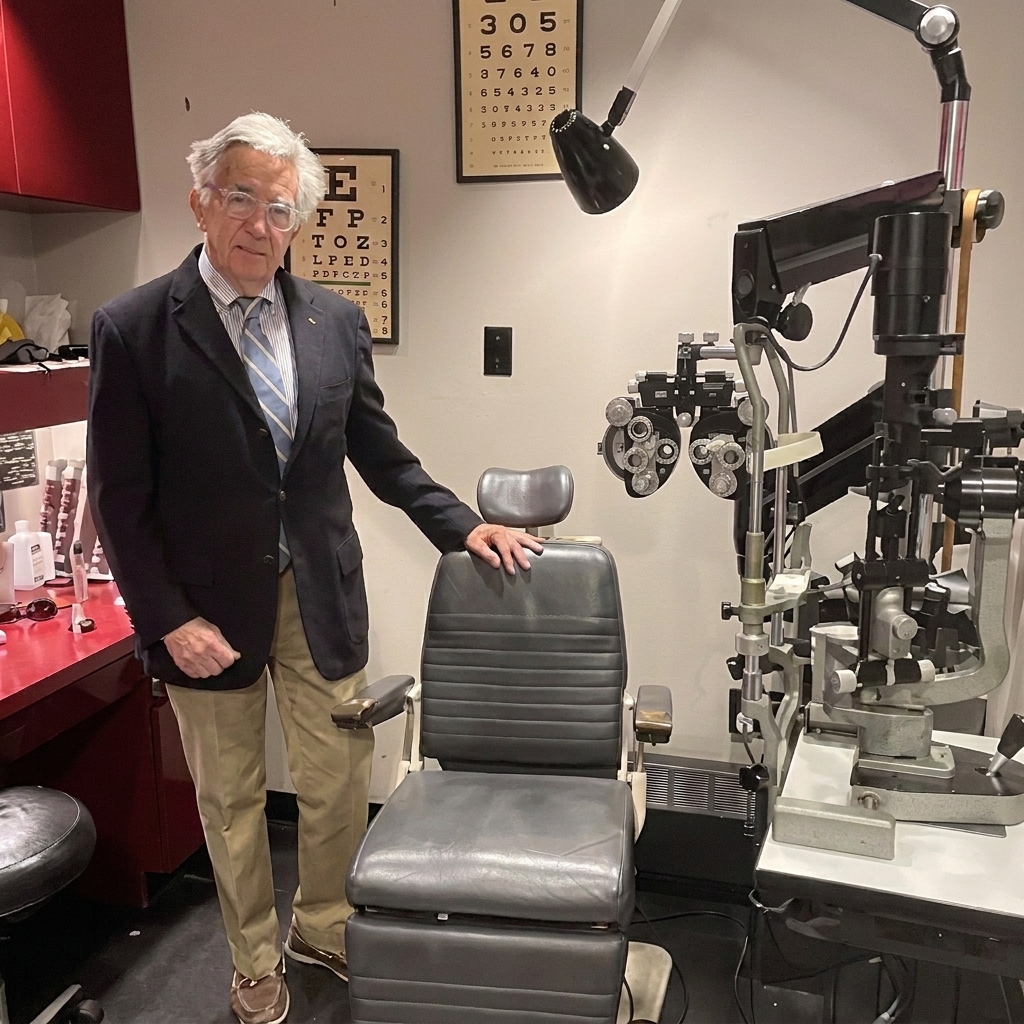
Ran for 62 days, from August 12 to October 13, 2026, the last day Crush saw it.
Run by The Vision Health Hub on Facebook. Crush is not the advertiser and does not verify its claims. See this ad in Meta's Ad Library(opens in a new tab)
Make your own version of this ad
Crush makes it, launches it in your own Meta ad account, scales the winners and pauses the losers.
About this ad
- Meta Ad Library ID
- 982591781503343
- Platforms
- Facebook, Instagram, Messenger and Threads
- Relaunches
- 2
- Niche
- Food & Beverage
Ad text
I'm a retinal specialist. I ordered 9 macular degeneration supplements and sent them to an independent lab. What I found explains why your central vision keeps fading no matter what you take, and why most people over 55 are wasting their money. After 19 years treating macular degeneration, I finally asked a patient a question nobody else had. She was 64. Her name was Dottie. She'd been sent to me after running through two ophthalmologists and a retinal clinic, all with the same answer: start preparing for significant vision loss. She'd watched her own mother spend her last years legally blind from AMD. A world of shapes and shadows. Faces she couldn't recognize. Pages she couldn't read. The car keys taken away for good. Her mother describing Christmas dinner by the sounds around her, because she couldn't see the people sitting at the table. She died at 74, quiet and shut in, trapped behind the fog that was supposed to have been managed. Dottie was not going down that road. She came to me with a folder. OCT printouts. Supplement receipts. A food diary going back two years. Two years of doing everything right. She'd started the spinach. Cut out the junk. Wore her sunglasses religiously. A supplement stack that cost her $90 a month. Her macular pigment density: declining. Her visual acuity score: unchanged or worsening. Hadn't budged in eighteen months. "My mother took her vitamins the whole time," she told me. "And she still ended up unable to see my face. So what exactly am I protecting?" I didn't have a good answer for her. But then I asked her something that changed both our lives. "Has anybody ever checked whether the pigment filter over your macula is actually being rebuilt, instead of just measuring whether the disease has progressed yet?" She looked at me like I'd started speaking another language. Nobody had. I'm a board-certified retinal specialist, and I've spent 19 years treating macular degeneration at one of the busiest AMD clinics in the Southeast. What I'm about to tell you is something I wish I'd understood my first year out of training. And something the supplement industry has a financial incentive to keep complicated. Standard AMD checkups measure damage that's already occurred. OCT scan. Visual acuity. Visual field. What they don't measure is whether the pigment filter over your central vision is actually being rebuilt. Here's what most retinal specialists know but almost never explain to a patient. Your macula — the dead center of your retina — is the only place in your body where raw, living nerve endings are aimed directly at a light source. No skin. No bone. Nothing between those nerves and the world. So your body built a defense. A dense yellow layer of pigment — made from three nutrients called lutein, zeaxanthin, and meso-zeaxanthin — sits like a coat of yellow dye over those nerves. That pigment physically absorbs blue light before it ever touches the nerve endings. The same way a sponge soaks up water. When that yellow layer is thick, central vision stays razor-sharp for decades. But you can't produce this pigment. You can only eat it. And modern diets have almost none of it. Think about it… That half-millimeter spot absorbs light every waking hour of every single day of your life. For 300,000 years, humans got blue light from one source: the sun. About 7 hours a day, stopped at sundown. Today — phones, laptops, TVs, LEDs — 17 to 18 hours a day. Nearly triple. Fired from inches away, straight into that half-millimeter spot. And every single day, a little more of the yellow pigment burns away. One day is nothing. One month is nothing. But ten, twenty, thirty years of triple-exposure with almost nothing coming in to rebuild it? Decades of accumulated pigment loss. The filter thins. Thins. Thins. Until the raw nerve endings sit completely exposed. Unfiltered blue light hits them directly. The photoreceptors start dying — the cells responsible for everything you see straight ahead. And your body panics. It sends emergency blood vessels punching up through the retinal tissue — fragile, leaking, destroying what's left. That's wet AMD. That's the conversion. No sunglasses rebuild a filter that's wearing thin on the inside. Spinach controls what might go in, but your gut only absorbs a fraction, and even less survives the trip to the back of your eye. PreserVision manages the disease marker. It never once touches the filter where it counts. So your pigment density scores sit at low-normal, then borderline, then compromised, then gone. And one day the retinal specialist's face changes during the scan. You already know what that means. Wet conversion. Injections. Watching the center of your world disappear. This is why AMD patients who were doing "everything right" still convert to wet. Not because they weren't trying. Because they were handed treatments that were never designed to rebuild the filter. And the worst part is... Almost no ophthalmologist explains the three-carotenoid mechanism to a patient. They don't even spend enough time on it in retinal training. Mainly because macular pigment depletion is silent — no pain, no early warning… And by the time it shows up on a scan, it's already been depleting for years. That's why so many patients who did everything right still lose their central vision. The system just isn't set up to address the actual problem. So I stopped looking for another injection protocol. I started looking for compounds, natural ones, with real documented ability to deposit into macular pigment tissue, rebuild the filter layer by layer, and protect the nerve endings while it rebuilds. After weeks of digging, the same nutrients kept coming up across the strongest research. Meso-Zeaxanthin. The most critical carotenoid of the three — and the one almost nobody's heard of. It deposits exclusively into the dead center of the macula, the fovea, sitting right over the most vulnerable nerve endings. A 2020 clinical trial at Waterford found patients who supplemented meso-zeaxanthin showed measurable increases in macular pigment density within 12 months. Zeaxanthin. Deposits into the middle ring of the pigment layer. Works alongside meso-zeaxanthin to maintain the full pigment gradient from center to edge. Lutein. The outer ring. The most studied of the three, but only at clinical doses — 20mg or more. Most supplements give you 5 to 10mg. That's protective in name only. And the last three work together to make sure the pigment actually gets there. Bilberry and Ginkgo Biloba widen the tiny vessels feeding the retina — so the carotenoids arrive and deposit instead of circulating and flushing. Astaxanthin crosses directly into the retinal tissue and absorbs light leaking through the thin spots while the filter rebuilds. And Saffron extract restores signaling in the photoreceptors under attack so the cells can hold on while the pigment layer is being rebuilt. Together, all seven target the actual problem. Not the disease marker. The filter itself. There's real science behind this. The CREST trial — a randomized, peer-reviewed clinical study — tracked macular degeneration patients who supplemented all three carotenoids at full clinical doses. Macular pigment density increased measurably. In the group with the worst baseline pigment, the most significant improvement. Real data. Published in peer-reviewed journals. Not some wellness blog. So I did what any doctor would do after reading that. I went looking for a supplement that actually delivered those compounds. What I found was alarming. The research that showed measurable pigment rebuilding used specific doses: lutein at 20mg, zeaxanthin at 2mg, meso-zeaxanthin at 2mg — the clinical concentrations from the CREST and Waterford trials. So I searched Amazon, the health food stores, the supplement aisles. I ordered nine of the most popular macular and vision support products on the market. Then I sent every single bottle to an accredited independent laboratory. Ingredient verification. Concentration testing. Whether the label told the truth. Whether the thing could even deposit into retinal tissue. What came back explained everything about why macular support formulas have a reputation for "not working." Brand 1. Amazon's bestseller. "Complete Eye + Vision Support," beautiful bottle, thousands of reviews. The lab found lutein and zeaxanthin. No meso-zeaxanthin at all. The dead center of the macula — the fovea — completely unprotected. You were paying for three and getting two. Brand 2. A "Maximum Strength Vision Formula," advertised all over Facebook. Technically meso-zeaxanthin was on the label. But the concentration came back at less than 1mg — a fraction of the 2mg clinical dose. The lutein was 5mg where the research calls for 20. They were selling a sprinkle and calling it a dose. Brand 3. A "Complete Macular Complex" stacked with a dozen extra add-ons. Bilberry. Zinc. Six things you've heard of and four you haven't. The lab pulled it apart, turns out they spread the budget across cheaper filler ingredients and called it "comprehensive." Brand 4. A pharmacy chain's own house brand. "Eye Health Support." No third-party testing of any kind. When I called the manufacturer, they admitted they checked the ingredients for identity and purity, but never once tested whether the formula was strong enough to actually deposit into macular tissue. Brand 5. The most frustrating of them all. A "clinically inspired" formula, seventy dollars a month, marketing language all over it implying the doses matched the research. The meso-zeaxanthin came back at 0.8mg. The lutein at 8mg. Seventy dollars a month for less than half a dose. Brands six through nine followed the same patterns. Missing meso-zeaxanthin. Underdosed lutein. No delivery vehicle. No real testing. Two of the three carotenoids at best. But here's the thing every single one of them had in common. Every one was a standard capsule or softgel. Carotenoids are fat-soluble. They need the right delivery environment to cross into retinal tissue. Most of what's inside those capsules circulates and flushes before it ever reaches the macula. You could put all three carotenoids in a capsule at the exact clinical dose, and absorption is still a fraction of what the eye actually needs. Every brand my patients had ever tried was underdosed. Some were deliberately misleading. No wonder these macular formulas had a reputation for not working. Every patient who tried one and saw nothing hold had been running the wrong experiment. Wrong dose. Wrong ingredients. Wrong form. I almost gave up. Then a colleague at a retinal conference mentioned a brand she'd been quietly recommending, one that had come up repeatedly in the macular pigment research circles. I was skeptical. After nine failures, I was skeptical of everything. But I got a bottle, and I sent it to the very same independent lab I'd used on the other nine. The results came back, and I read them twice. ✓ All three carotenoids present and verified. Meso-zeaxanthin, zeaxanthin, lutein. Nothing missing. ✓ Every one of them at the full clinical dose the CREST trials called for. ✓ Third-party tested for potency, not just purity. ✓ Formulated for bioavailability — specifically designed to survive digestion and reach retinal tissue. It was the only one out of all of them that passed every single box. I called Dottie that same afternoon. I sat her down and told her everything I'd found. The three-ring filter. The missing meso-zeaxanthin. The underdosing. She got quiet for a long moment. "So those supplements I've been taking for three years," she said. "They were never going to protect the center." "Not without meso-zeaxanthin. Not at those doses. Not missing the most critical ingredient. No." She started Neurobella that week. Two capsules in the morning. Easy to remember, she told me later, like it wasn't even a change to her routine. I ordered baseline macular pigment density imaging and set her follow-up for twelve weeks. At twelve weeks, her pigment density in the right eye — the one we were racing to protect — had measurably improved for the first time since I'd been seeing her. Her visual acuity score: holding. Stable. Not declining. By week sixteen, the retinal specialist who'd told her to start planning for significant vision loss called me himself. "What did you put Dottie on?" I explained Neurobella. The three carotenoids. The pigment mechanism. Why almost nothing on the market actually delivers it. Long pause. "I've had patients ask me about these macular pigment formulas before. I always told them the evidence was mixed." "The evidence on underdosed, incomplete formulas is mixed," I said. "The evidence on all three carotenoids at the right dose, in a form the retina can actually use, is a different conversation entirely." Another pause. Then, "Send me what you've got." I did. After Dottie, I started recommending the same thing to other patients. The ones watching their Amsler grid waver every morning. The ones already told their pigment density was "concerning." The ones who'd tried three bottles off the shelf and given up. I tracked outcomes on 78 patients over the following year. All got baseline macular pigment optical density readings, all monitored at 12 and 20 weeks. All took Neurobella, the full three-carotenoid formula at clinical doses, plus the complete delivery system. 91% showed measurable improvement in macular pigment density within the first 90 days. Pigment density scores improved by an average of 28% in the protective cohort. Now I want to be straight with you about a few things, because I'd tell you the same sitting across from you in my office. This is not me telling you to walk away from your doctor. If you're on medication, if you've got a treatment plan, that's a conversation to have with the retinal specialist who knows your whole history. But here's the most useful thing I can hand you. Before you spend another dollar on any macular support supplement, ask it these three questions. → Does it actually contain all three carotenoids — including meso-zeaxanthin — or just lutein with the others sprinkled in for the label? → Is each one dosed at the clinical level the CREST trials called for, or a fraction of it dressed up in fancy marketing? → And is it formulated for bioavailability so the carotenoids actually reach retinal tissue, or a standard capsule your body is just going to flush right back out? Most products on the shelf fail at least two of those. Plenty fail all three. Neurobella was the only one I tested that passed all three. And that's why I'm writing this. Because I spent 19 years watching my patients do everything their doctor asked and still watch their central vision disappear — like Dottie's mother. I didn't know what Dottie's mother never got the chance to know, not until I stopped trusting the label and started testing what was really inside the bottle. The three-ring filter is real. The missing-ingredient problem is real. The underdosing is real. The absorption problem is real. And what happens when you finally get all three carotenoids, at the right dose, in a form the retina can actually use, that's real too. Your vision didn't start fading because you did something wrong. It's fading because nothing you've taken has ever rebuilt the filter. That's all that's changed. Run the experiment. Get your pigment density checked. Let your own scan tell you the truth.
Where the ad sends people
neuro-bella.com
Fight Back Against Macular Degeneration!
70,000+ Happy Customers
Learn more: try.neuro-bella.com(opens in a new tab)