Capetread
Capetread Facebook ad: “Hesitant About Knee Replacement”
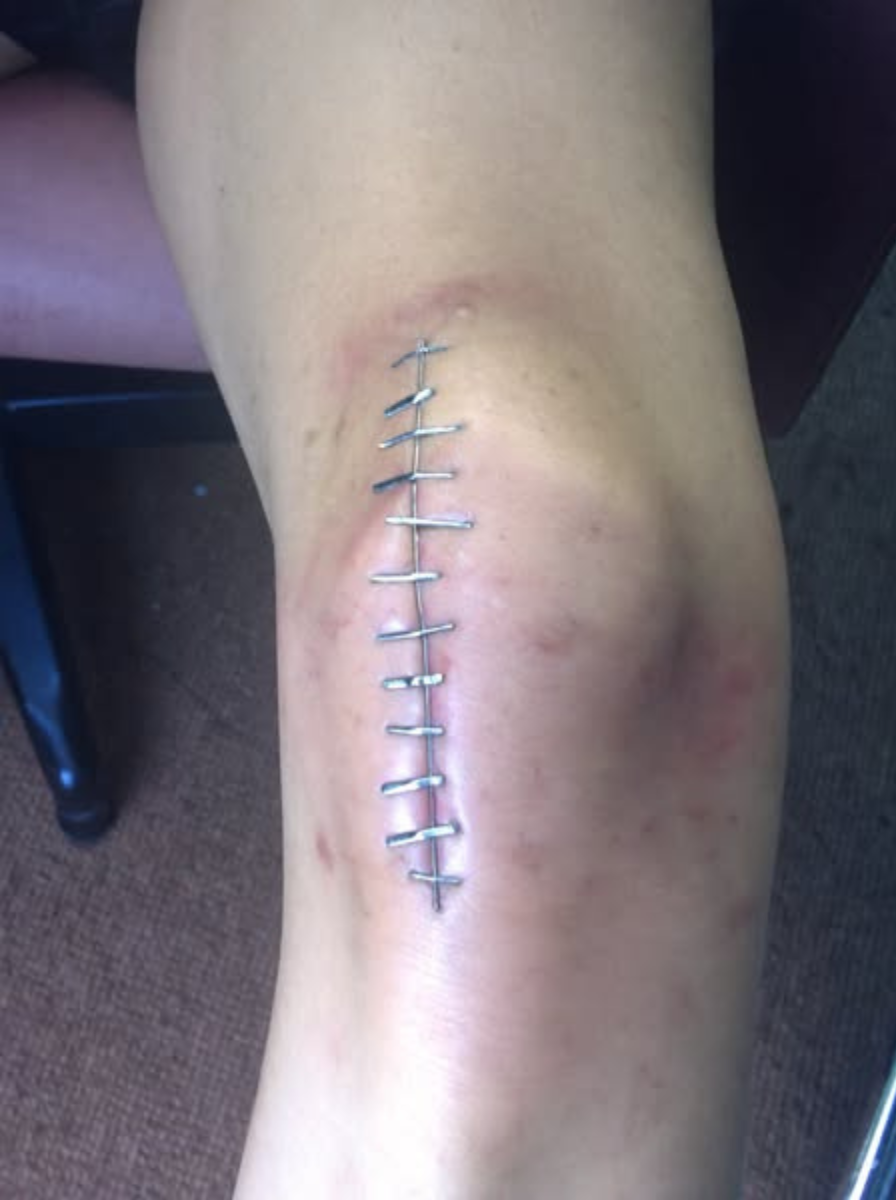
Ran for 92 days, from May 3 to August 3, 2026, the last day Crush saw it.
Run by Capetread on Facebook. Crush is not the advertiser and does not verify its claims. See this ad in Meta's Ad Library(opens in a new tab)
Want an ad like this for your product?
Crush makes new ad images for your product from this ad: your logo, your product photo, your offer.
Trials from $19.95 USD, then $79.95 USD a month. Cancel anytime.
About this ad
- Meta Ad Library ID
- 982977734184647
- Platforms
- Facebook, Instagram, Audience Network, Messenger and Threads
- Relaunches
- 0
Ad text
I refused the knee replacement my surgeon recommended. He said I'd regret it. Here's what actually happened. The orthopedic surgeon pulled up my X-ray and pointed at the screen. "You see this?" he said. "Bone on bone. The cartilage is severely degraded. Advanced osteoarthritis." He traced the outline of my knee with his pen. The narrowing. The bone spurs. The space that used to exist between femur and tibia that had nearly disappeared. "Total knee replacement is what I recommend at this point," he said. "We remove the damaged surfaces, cap them with metal and plastic components, and you're looking at three to six months of recovery before you're walking normally again." I'd heard the pitch before. I'd also read the forums. Failed knee replacements. Chronic pain at the surgical site. Permanent stiffness. Limited range of motion. "Surgery ruined me." "I'm worse now than before." "I can't kneel anymore." "I wish I'd never done it." Thirty percent of knee replacement patients report being unsatisfied with their outcomes. That's not a fringe statistic—that's from the medical literature. I looked at him. "What are my other options?" He shrugged. "Conservative management. Physical therapy. Injections. Bracing. But you've already tried those. At some point, you have to accept that the joint is worn out and you need the replacement." I didn't accept it. I walked out of that office and made a decision. I would try everything—every damn thing—before I let someone saw off the ends of my bones and replace my knee with metal and plastic. My surgeon said I'd regret it. I was determined to prove him wrong. I threw myself into treatment options. I already knew the basics. I understood the anatomy—the meniscus, the articular cartilage, the ligaments. I knew what osteoarthritis meant. I knew what bone on bone looked like. I started with physical therapy. Three times a week for four months. Quad strengthening. Leg extensions. Step-ups. Balance work. I did every exercise religiously. Showed up every session. Did the home program without fail. The instability didn't care. Going down stairs, my knee still buckled without warning. In the grocery store, that sudden shift would happen and I'd have to grab the cart to catch myself. My knee still swelled up every evening until I was icing it on the couch with my leg elevated, unable to trust it to hold me. I tried the injections. Cortisone first. Three rounds. First one gave me five weeks. Five weeks where I could walk the dog again. Where I could take the stairs without gripping the handrail like my life depended on it. Then it wore off and the instability came back worse than before. Second injection. Maybe three weeks. Third one. Nothing. Just a needle in my knee and a copay. Then my doctor recommended gel injections. Hyaluronic acid. "Lubricates the joint," he said. "Like WD-40 for your knee." Three injections over three weeks. $600 out of pocket. Insurance wouldn't cover it. It did nothing for the buckling. I tried a knee brace from the drugstore. A compression sleeve. It provided some warmth, maybe a little support. But it rolled down my leg after twenty minutes and did absolutely nothing to prevent my knee from shifting laterally when it wanted to give out. I tried a better brace. Then a custom-fitted brace from my orthopedist that cost $400. It was bulky, uncomfortable, and still didn't prevent the instability I was experiencing. It was designed for post-surgical support, not for what I actually needed. I tried daily ibuprofen. 600mg twice a day. My stomach hated me. The inflammation came back every evening anyway. Meanwhile, the surgeon's office kept calling. "Have you reconsidered? We have an opening next month. The longer you wait, the more bone damage you're risking." I ignored them. But privately, I was starting to wonder. Maybe he was right. Maybe I was just delaying the inevitable. Maybe I'd end up on that operating table anyway—just with more joint damage than if I'd done it sooner. The fear crept in at night. What if I was wrong? What if refusing surgery was the mistake he said it would be? And the other fear. The one nobody talks about. I'm fifty-eight. A knee replacement lasts fifteen to twenty years. Which means if I do it now, I'm looking at a revision in my mid-seventies. A second surgery. More complex. More dangerous. More painful. On a body that's older and weaker. I wasn't ready to start that clock. But I was running out of options. That was three weeks before my appointment with Dr. Harrison. He wasn't a surgeon. He was my physical therapist—the one who'd been working with me for over a year. I'd been seeing him three times a week. I expected the usual. Another set of strengthening exercises. Another lecture about "building the muscles around the knee." Another reminder to ice and elevate. But this time, he closed my file and looked at me directly. "I'm going to be honest with you," he said. "The strengthening exercises aren't working the way they should. You're doing everything right. Your quad strength has improved significantly. Your balance has improved. But your knee still buckles." I braced myself for the surgery referral. It didn't come. "I also don't think replacement is the right answer for you," he said. "Not yet. And maybe not ever. The outcomes aren't as good as surgeons like to claim. And at your age, you're starting a clock you don't want to start." I stared at him. A physical therapist—actually saying what I'd been thinking for months. "So what do I do?" He leaned forward. "There's something I need to explain first," he said. "Something most PTs don't emphasize because it doesn't fit the standard protocol." He pulled up an image on his screen. A knee joint. Ligaments holding the bones in proper alignment. "After about age 40, your knee ligaments start stretching," he said. "Not muscle tissue—the actual ligaments that hold your knee in proper alignment. The ones that prevent lateral movement during weight-bearing activities." He called it Ligamentous Laxity. "Your knee isn't just a hinge joint," he continued. "It needs to stay stable in multiple planes of movement. The ligaments—specifically the collateral ligaments and supporting structures—are what keep your femur and tibia aligned properly during movement. But ligaments are elastic tissue. Over decades of use, especially if you've carried extra weight or compensated for other joint issues, they stretch. They become lax. They lose their ability to hold the joint in proper alignment." He looked at me. "When your ligaments can't hold the joint stable anymore, your knee shifts laterally during normal movement. That shift is what you're experiencing as buckling. And every time it shifts, the bones grind together at abnormal angles. That creates micro-trauma to whatever cartilage you have left and triggers inflammation." He paused. "This is why the cortisone never lasted. This is why the gel injections didn't help. This is why the strengthening exercises haven't stopped the buckling. You were reducing inflammation and adding lubrication and building muscle strength—but none of that addresses the mechanical instability from stretched ligaments." "So what do I do? The braces I tried didn't work." He shook his head. "The compression sleeves and post-surgical braces you tried don't address lateral instability. They're not designed to. Compression provides warmth and general support. Post-surgical braces are designed for immobilization during healing—not for preventing the specific lateral movement that's causing your buckling." He reached into his desk and pulled out a different type of brace. "This is different," he said. "It's from Capetread. It's specifically engineered to prevent lateral knee movement—the kind of instability that stretched ligaments can't control anymore." I was skeptical. "How is this different from the braces I already wasted money on?" "It uses reinforced side panels and a patella stabilization system," he said. "Not compression. Not immobilization. Mechanical stabilization that prevents your knee from shifting laterally during weight-bearing activities while still allowing normal flexion and extension." He told me about four patients he'd recommended it to. All four had been facing replacement. Three had canceled. The fourth was still deciding—but hadn't had a single buckling episode in two months. "One of them came back last month," he said. "She'd been falling regularly because her knee would give out. She's been wearing the brace for three months. Not a single fall. She's gardening again. Playing with her grandkids on the floor." I wrote down the name. "I'm not saying it's a miracle," he said. "But if your goal is to avoid replacement and give your body the mechanical support it actually needs, this is the best option I've seen." That night, I looked it up. I was still skeptical. I'd tried braces. Compression sleeves that rolled down. Bulky post-surgical braces that were uncomfortable and didn't prevent buckling. None of it had worked. But Dr. Harrison's explanation stayed with me. Ligamentous Laxity. Lateral instability. Micro-trauma from abnormal grinding. I started digging deeper. And that's when I finally understood why nothing had worked. The problem wasn't inflammation. The problem wasn't lubrication. The problem wasn't even weak muscles. My ligaments were stretched beyond their ability to stabilize my knee. After 40, your knee ligaments begin to stretch from decades of normal use. The elastic fibers that make up ligament tissue gradually lose their tension. If you've carried extra weight, compensated for injuries, or simply used your knees for six decades, the stretching accelerates. When ligaments become lax, they can't hold the knee joint in proper alignment during movement. The femur can shift laterally against the tibia. The patella can track incorrectly. The entire joint becomes mechanically unstable. This is instability from the inside out. And here's what nobody tells you: you can't strengthen stretched ligaments back to their original tightness. No exercise, no injection, no supplement will make elastic tissue that's been permanently stretched suddenly spring back into place. That's exactly what was happening. The cortisone reduced inflammation—but my knee kept shifting laterally because my ligaments couldn't hold it in place. The inflammation came back within weeks because the mechanical instability kept creating micro-trauma. The physical therapy built muscle strength—but muscles can't compensate for ligaments that won't hold the joint stable. I could have the strongest quads in the world and my knee would still buckle if the ligaments let it shift laterally. The strengthening exercises required a stable joint to perform safely—which is exactly what I didn't have. The gel injections added lubrication—but to a joint that was moving in ways it shouldn't move. Like oiling a door hinge that's come loose from the frame. The lubrication doesn't fix the mechanical problem. The compression sleeves provided warmth and general support—but no lateral stabilization. They couldn't prevent the sideways shift that was causing the buckling. The custom post-surgical brace was designed for immobilization after surgery—not for the specific lateral instability I was experiencing during normal movement. And the daily ibuprofen? It masked inflammation while the unstable joint kept grinding at abnormal angles, creating more damage with every step. I'd been chasing symptom relief without mechanical stabilization. Treating inflammation and building strength while the structural supports of my joint continued failing. No wonder nothing lasted. When I looked at how the Capetread brace worked, Dr. Harrison's words finally made sense. It doesn't use compression. It doesn't immobilize the joint. It doesn't rely on muscle strength. It provides external mechanical stabilization through reinforced side panels that physically prevent lateral knee movement. The side panels are positioned precisely where the collateral ligaments should be providing stability—but can't anymore because they're stretched. When you put weight on your knee and it tries to shift laterally, the reinforced panels prevent that movement. The joint stays in proper alignment. The patella stabilizer keeps the kneecap tracking correctly during flexion and extension. This prevents the rotational instability that causes that "giving way" sensation. But critically—and this is what makes it different from the post-surgical braces I'd tried—it still allows normal forward and backward movement. You can walk, climb stairs, kneel, squat. You're not immobilized. You're stabilized. This is mechanical support for a mechanical problem. When your knee can't shift laterally, it can't create the abnormal grinding that causes micro-trauma. No micro-trauma means no inflammation spike. No inflammation spike means no buckling, no swelling, no pain that builds throughout the day. The brace does what stretched ligaments can't do anymore—holds the joint in proper alignment during movement. I ordered it that night. Three days later, it arrived. First day: I put it on following the sizing guide. Adjusted the side panels and patella stabilizer. Stood up from my chair. My knee didn't shift. That subtle lateral movement that usually happened when I stood—gone. The joint just held. Straight. Stable. I walked through the house. Tested it. Waiting for the buckle. It didn't come. First week: The constant hypervigilance started to fade. I wasn't monitoring every step, waiting for my knee to give out. I could just walk. By week two, I went down the stairs without gripping the handrail. The knee held. Didn't shift. Didn't buckle. Just performed like a normal joint should. I didn't trust it yet. I'd felt "better" before. By week three, I took the dog for a full mile walk around the neighborhood. The entire loop. No buckling. No having to stop and rest because my knee was unstable. That evening—no swelling. No ice pack on the couch. My wife looked at my knee and said "Where's the inflammation?" I didn't have an answer. By week four, I stopped taking daily ibuprofen. My stomach thanked me. By week six, I knelt down in the garden to plant the spring bulbs. Got back up without help. My knee held my full weight during the transition. Stable. Reliable. I started crying. Not from pain. From relief. By week eight, I deleted the voicemails from my surgeon's office. It's been six months now. I walk normally. I take stairs normally. I kneel and stand without bracing myself on furniture. I play on the floor with my grandkids and get back up without fear. No replacement. No metal and plastic. No six months of brutal recovery. No starting the prosthesis clock. No revision surgery looming in my seventies. I got my life back. Last month, I went back to Dr. Harrison for a follow-up. "How's the knee?" he asked. "Stable," I said. "No buckling. No falls. I haven't taken ibuprofen in four months." He smiled. "That's what mechanical stabilization does. You addressed the actual problem instead of just managing symptoms." I nodded. A few weeks later, I ran into my orthopedic surgeon at a community health fair. He recognized me. Asked how I was doing. "Great," I said. "Never got the replacement." He looked surprised. "And your knee?" "Stable. I'm doing everything I couldn't do a year ago." He paused. "What did you end up doing?" "Mechanical stabilization," I said. "Addressed the ligamentous laxity instead of just treating inflammation." He didn't say anything. Just nodded slowly. I walked away without limping. Without fear of my knee giving out. He said I'd regret refusing the surgery he recommended. I don't. If you've been where I was... The surgeon pushing replacement. The cortisone wearing off faster each time. The gel injections that cost hundreds and didn't stop the buckling. The physical therapy that built muscle strength but didn't prevent your knee from giving out. The compression sleeves from the drugstore that rolled down your leg and did nothing. The custom brace that was bulky and uncomfortable and still didn't address the lateral instability. The forums full of surgery horror stories. The fear of becoming one of them. The prosthesis clock ticking in the back of your mind. The adult children suggesting you move in with them because "you can't keep living alone if your knee isn't stable." The voice in your head asking: What if refusing surgery is a mistake? You're not crazy. You're not in denial. You're not "non-compliant." You're right to be skeptical. The body doesn't need surgery if you can address the mechanical problem that's causing the instability. The problem is that everything you've tried only addresses symptoms. Inflammation reduction without stabilization. Muscle strengthening without addressing the stretched ligaments. Lubrication without preventing the abnormal movement. Compression without lateral support. Temporary relief that wears off because the mechanical instability underneath is still there. But here's what I learned: there's another way. The Capetread Knee Brace provides mechanical stabilization for stretched ligaments—the specific lateral support that compression sleeves and post-surgical braces don't provide. At home. No surgeon. No metal and plastic. No $30,000 procedure with a thirty percent dissatisfaction rate. No brutal recovery. No revision surgery in your seventies. Just external mechanical support for a mechanical problem. Capetread offers a 90-day guarantee. Three full months to test it yourself. Because real stability takes time to trust—and they know it works. Track it yourself. The way you already track everything. Does your knee stop buckling when you stand up? Can you take the stairs without gripping the rail? Can you kneel and get back up without help? Is the swelling gone in the evenings? Can you walk without that constant fear of your leg giving out? You'll feel the stability within the first day. You'll trust it within the first month. You'll know within ninety days. Right now, Capetread is offering 50% off. https://capetread.co.za/products/capetread-surestep You've done the research. You've read the horror stories. You've refused to accept "replacement is your only option." You were right to refuse. Now prove them wrong. The body doesn't need surgery if you address the mechanical problem that's causing the instability. You deserve to get your life back. Without the knife. Without the metal. Without the six-month recovery. Without the regret. Just the right mechanical support.
Where the ad sends people
capetread.co.za
Hesitant About Knee Replacement ☝️
Knee Brace for Knee pain
See details: capetread.co.za(opens in a new tab)