
Inactive· since May 7, 2026
- 12
- days it ran
- 0
- relaunches
- 208
- EU reach
Ad copy
I've worked with chronic nail fungus patients for 18 years using a protocol American podiatrists never learn. When I came to the US two years ago, I couldn't believe what patients were being told. I'm a lymphatic medicine specialist. Trained in Vienna, where the Vodder method and lymphatic-drainage protocols have been clinical practice for over 80 years. I moved to the United States two years ago when my husband's company transferred him to Boston. I joined a wellness practice here. Good practitioners. Good doctors. And in my first three months, I saw something that kept me up at night. Women in their 50s and 60s coming in with seven, eight, nine infected toenails. Yellow. Thick. Crumbling. Nails lifting from the bed. Every one of them said the same thing. "My podiatrist has been monitoring it for years." Monitoring it. In Europe, we don't monitor nail fungus progression while prescribing topicals that can't reach the actual problem. We address the drainage. Because by the time the infection has spread to multiple nails, something has already failed — structurally, systemically — and painting lacquer on a waterproof surface won't fix that. It only manages what's already spreading. Here's what your podiatrist probably hasn't told you about what chronic nail fungus actually is. Your toenails are the furthest point from your heart. Every cell you have depends on lymphatic drainage — the network of vessels that carries waste out of your tissues, delivers immune cells where they're needed, and keeps your extremities clean. And the lymph has to work hardest at your feet, because gravity is pulling everything down all day. After forty, hormones shift. Sitting all day cuts off circulation. Years of inflammation harden the lymph vessels. The drainage in your lower extremities slows down. And eventually, it stops. That's when chronic toenail fungus becomes nearly impossible to clear. Two things happen at once: First, toxic waste pools in the tissue around your nail beds. The fungus doesn't just survive in that environment — it thrives. Stagnant, waste-rich tissue is exactly what a fungal colony needs to grow. Second, your immune cells can't reach the nail bed to clear the infection. Lymph carries them. When lymph stagnates in your lower legs and feet, your defense system stops at your knees. Your toes get cut off from the body's repair machinery. So you scrub. You apply lacquer for years. You take Terbinafine and crash your liver. But the underlying environment that lets the fungus grow — stagnant, waste-rich, immune-blind — never changes. Topical lacquers like Penlac, Jublia, or Kerydin don't fail because they're too weak. They fail because they're addressing the wrong layer. The surface of the nail. While the actual problem sits in your lower extremities, where your body has lost the ability to drain and defend. This is what nobody told you. Your nails aren't the problem. They're the symptom of a drainage system that's been failing for years. I want to be honest about Terbinafine. Because most patients have been told Terbinafine is their next step. Some have already done it. Some have done it twice. Terbinafine enters the bloodstream and reaches the nail bed from inside. It kills fungal cells while you're on it. That part works. What it can't do is fix the drainage problem that allowed the infection to take hold in the first place. The twelve-week course ends because liver toxicity makes it unsafe to continue. The drug clears your system. Your lymph is still stagnant. Your lower extremities are still toxin-rich. Your immune system still can't reach your toes. The fungus comes back. 25-50% recurrence within twelve months — clinically documented. Terbinafine is like draining a flooded basement while the pipe is still leaking. The water goes down. For a while. And then it floods again — because nobody fixed the pipe. This is what nobody tells you about where the problem leads. It doesn't stay behind one nail. The longer your lower-extremity drainage stays stagnant, the more nails get colonized. Each adjacent nail becomes a new infection site. The waste accumulates. The immune access stays blocked. One infected nail at month three can become four by year one. Seven by year three. Nine by year six. I've had the conversation that follows more times than I should have. With women who did everything their podiatrist told them. Who applied lacquer every night for years. Who never missed a single application. Who still, over time, watched the infection spread to every toenail. The lacquer addressed the surface. The drainage underneath kept failing. Silently, systematically — until the damage wasn't patchable with topicals anymore and the only options left were liver-toxic pills or surgical removal. When I arrived in the US, I assumed the European research on systemic drainage restoration simply hadn't made it here yet. In Vienna, we'd been working with herbal lymphatic-drainage protocols for over a decade. The protocol emerged from European naturopathic research — practitioners studying why some patients responded to topical treatment and others didn't, despite identical compliance. What they found was that non-responders had significantly more advanced lower-extremity lymphatic stagnation. The drainage couldn't deliver immune cells to the nail beds. It wasn't a treatment failure. It was a drainage failure. That research led to four-herb protocols specifically targeting lower-extremity drainage restoration. What I started using with my patients is a four-herb protocol developed in European naturopathic medicine for restoring lymphatic drainage at the lower extremities. Not antifungal. Not antibiotic. Drainage restoration. Stillingia. It breaks up the hardened protein waste that has been sitting in your lymph vessels for years. As that waste clears, the drainage pathways in your lower legs and feet open back up. Cleavers. It mobilizes the loosened waste out of your tissues — including the toxin-rich environment around your toenails that's been feeding the fungal colony. Prickly Ash. It restarts the small-vessel circulation in your lower extremities. This is the herb that gets blood and immune cells to your toes again. When circulation returns, your body can deliver the defense system it's been unable to send for years. Red Clover. It calms the chronic inflammation in your tissues. Inflammation is what hardened your lymph in the first place — and what's been keeping the fungal-friendly environment intact. Together, these four herbs do something topicals and Terbinafine can't: they restore the underlying system that was supposed to keep this from happening. They don't kill fungus directly. They give your body the conditions it needs to clear the infection on its own — and to keep it from coming back. I want to tell you about one patient. Because her results are what I see when people finally address the right system. She was 56. Had been on topical protocols since 50. Seven infected nails. Her previous podiatrist had recommended Terbinafine. She came to me for a second opinion. When I examined her, I saw what I always see: swollen ankles by sundown. Sock marks deep in her skin. Heavy legs by evening. Her lymphatic drainage was failing at her lower extremities — and her toenails were the canary in the coal mine. Her compliance was perfect. The infection was real. The drainage was the problem. In Vienna, before we ever reach for Terbinafine, we ask one question: have we addressed the drainage? I recommended 90 days of the four-herb protocol before making any Terbinafine decisions. She was skeptical. Six years of perfect compliance hadn't produced one millimeter of clear growth. She didn't believe drops could change what six years of lacquer hadn't. I explained it simply. Lacquer sits on a waterproof nail. It does not address the fact that your body cannot deliver immune cells to your toes. Your nails aren't getting worse because the lacquer is weak. They're getting worse because the drainage that's supposed to keep your tissues clean has stopped working. Week 1: Sock marks lighter at the end of the day. Cuticle inflammation calmer across all seven nails. Week 2: A thin crescent of clear, pink nail at the cuticle of her big toe. The first clear growth in six years. Week 4: Clear crescents on five toes. The crumbling had stopped. The yellow being pushed forward by healthy growth. Week 8: Over 4 millimeters of clear nail on her big toe. The crumbling stopped on all nails. No new infections. Week 12: Her podiatrist — her previous one, the one who recommended Terbinafine — measured the growth. Then measured again. "The proximal growth is completely clear. Healthy thickness. No fungal involvement." She didn't need Terbinafine. She didn't need nail removal. In Vienna, this is where we start. Not with liver-toxic pills. With the drainage. I share this because I spent two years quietly frustrated by what I see here. Women who came to me after years of being told to keep applying — while their drainage silently failed and their infections spread. Women who felt like they were failing. Like their bodies were betraying them despite perfect compliance. They weren't failing. The protocol was failing them. American podiatry training focuses on topical protocols and Terbinafine escalation. Systemic drainage restoration — addressing the actual root cause — isn't part of standard training. Most American podiatrists graduated before this lymphatic research was emphasized. They practice what they were taught. That's not a criticism. It's just where the knowledge gap sits. But the research exists. And you don't have to wait for your podiatrist to find it. If you've been painting lacquer for months or years with no clear growth — if you've done Terbinafine and watched it come back — if you've been told your infection is "resistant" but your compliance has been perfect — The answer isn't to apply more consistently. It's to restore the drainage system your treatment was never designed to address. The formula I recommend is Lymphoria. It combines all four herbs at the doses required to actually restart lower-extremity drainage. Two drops every morning under the tongue. Tastes like honey. Enters the bloodstream in fifteen minutes. 60-day money-back guarantee. If you don't see clear growth at the cuticle within 60 days, you get every dollar back. Your nails aren't failing you. The protocol treating your nails as the surface problem is what's failing you. Drain the lymph. Restore the system. Let your body do what it's supposed to do. — Dr. Lila Montgomery, PHD
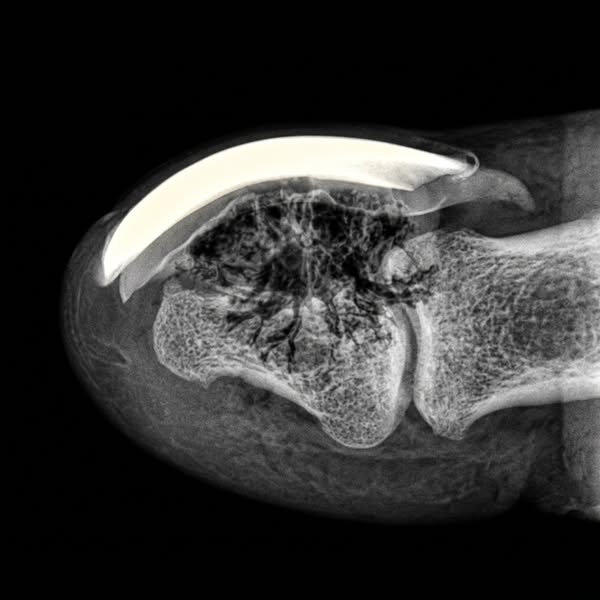
Real Reason For Nail Fungus ☝️
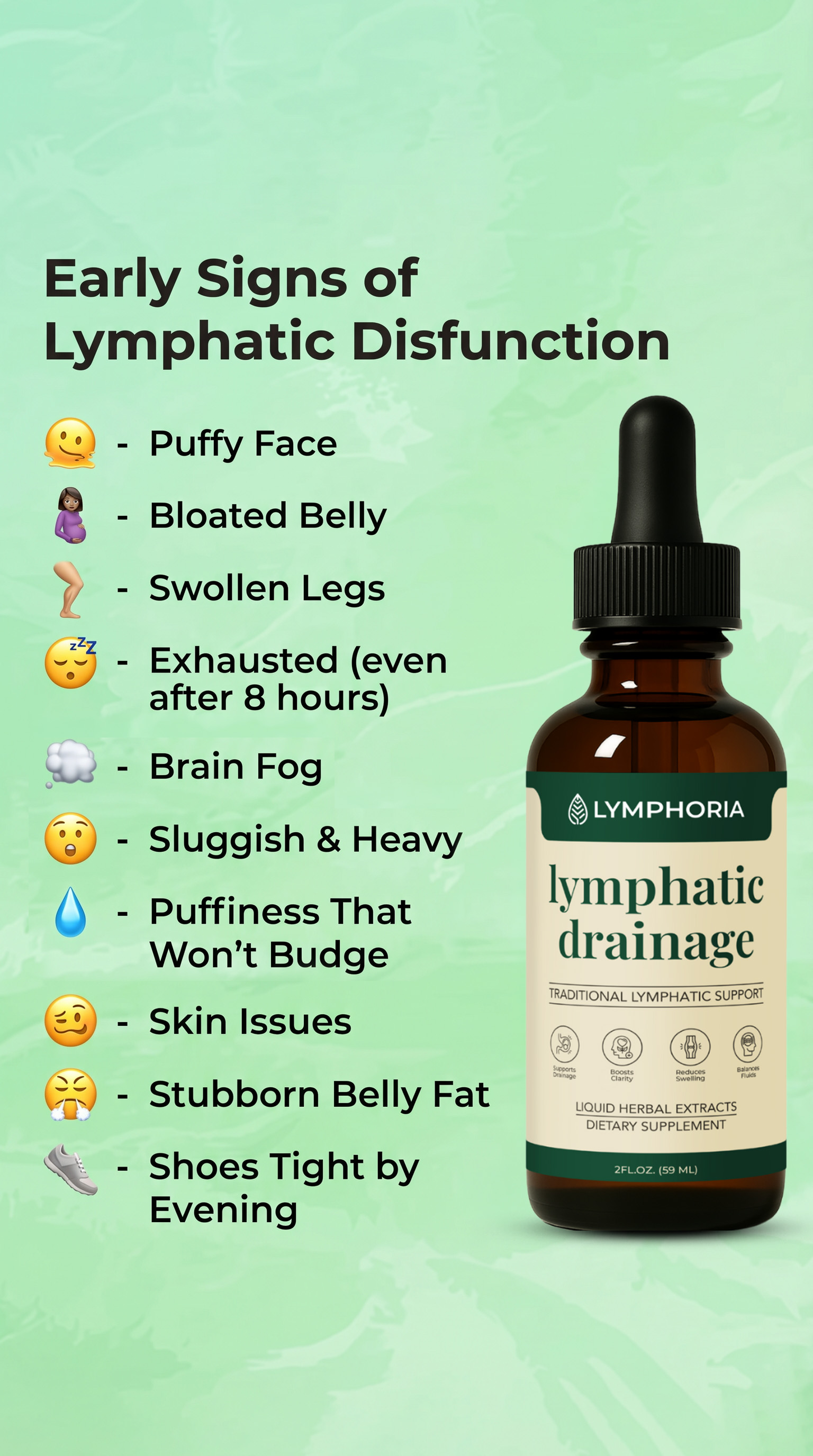
Feeling puffy, heavy, or off lately? Learn how a simple daily wellness routine may help you feel lighter in 16 days or less.
LEARN MORELike this ad? Make it yours.
Crush rebuilds this exact creative around your product — your brand, your colors, your offer — in about a minute.