Susan Bennett
 Facebook ad: “Support Your Liver Naturally”
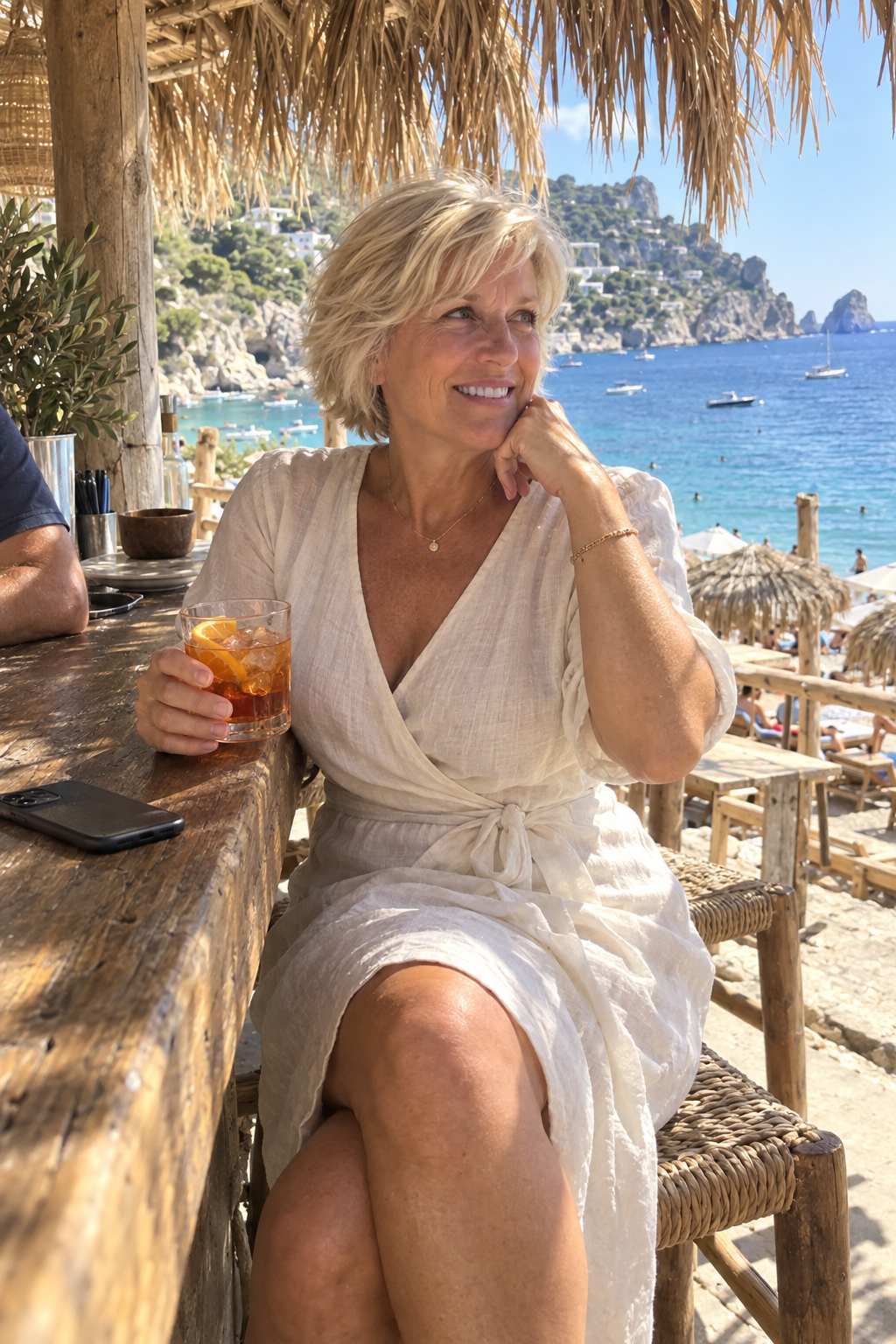
Running for 46 days since September 22, 2026. Crush last saw it on November 7, 2026.
Run by Susan Bennett on Facebook. Crush is not the advertiser and does not verify its claims. See this ad in Meta's Ad Library(opens in a new tab)
Make your own version of this ad
Crush makes it, launches it in your own Meta ad account, scales the winners and pauses the losers.
About this ad
- Meta Ad Library ID
- 990219260754010
- Platforms
- Facebook, Instagram, Audience Network, WhatsApp and Threads
- Relaunches
- 1
- EU reach
- 2,746
Ad text
After my husband died, my best friends excluded me from our annual trip to Japan. I went anyway. When their trip fell apart, they all frantically tried to reach me. I did not pick up the phone. I was sitting in a garden in the mountains, on the third morning, drinking tea I hadn't asked for. For ten years, Mark and I traveled with the same five couples. Every year, somewhere new. I'm the one who planned it. Always. I found the houses, the restaurants, the flights. I booked everything, organized the itineraries, handled the problems when they came. That was my role. For a decade. Mark died in March. Eight months later, someone in the group texts that this year's trip is Japan. Ten days. Kyoto, then the coast. I'd already started researching. I had a folder. Ryokans, train schedules, a sushi counter in Kyoto that required a reservation four months out through a concierge service only available in Japanese. I was three weeks into the planning. Then the message came from Melissa's phone. "Hey Jen. So we've been talking as a group, and we think it might be better if this year's trip stays a couples thing. Japan is a LOT. The flights, the language barrier, the trains. We just want to make sure the trip runs smoothly for everyone." Smoothly for everyone. I read it twice. Then I called her. She answered on the second ring. "Melissa. Talk to me." A pause. "It's just, Japan is complicated. International flights, connections, navigating a country where nothing is in English. Mark always handled the logistics for you two, and we just don't want you to be overwhelmed." "Mark didn't handle the logistics. I did. For all of us. For ten years." She stopped. Long enough to answer the question without words. Then her voice shifted. Warm in the specific way that arrives just before a difficult sentence. "Jen, this comes from a place of caring. You haven't seemed like yourself in a really long time. You're always so tired. And honestly, at the farewell dinner last month, you barely made it to dessert. We just didn't think you could keep up with ten days in Japan." A pause. "We didn't think you could manage it." I sat with that for a moment. I had planned every trip this group had taken for a decade. Found the villa in Portugal that Melissa still talks about. Booked the boat in Croatia that everyone calls the best day of their lives. Navigated a medical emergency in Costa Rica when Mark's partner got food poisoning and I was the only one who kept her head. Handled a canceled flight in Morocco for the whole group while everyone else stood around refreshing their phones. I did all of this. While also raising my son. While Mark traveled for work, sometimes for months at a time. I ran our household, his school, my career, and planned every trip, alone. Melissa has known me for ten years. In the last two of those years she'd watched me slow down. And she'd decided that was who I was now. And the worst part was that lately, I'd started to agree with her. "Got it," I said. "I hear you." I hung up. I'd already spent three weeks on their itinerary. The sushi counter in Kyoto. A private tea ceremony I'd found through a woman Beth knew. Walking routes through Arashiyama that avoided the tourist crush. I sent Melissa one message. "I'll let you take it from here." Then I closed the folder and put my phone in a drawer. — I called my sister Beth that night. Beth spent twenty-eight years as a flight attendant. International routes. She flew Tokyo out of JFK for the last eleven years of her career. She knows Japan the way most people know their own kitchen. I told her everything. She listened the whole way through. When I finished, she said, "Jen. You are not sitting this one out." "I wasn't invited." "That's not what I said." A long pause. "Where are they going?" "Kyoto. Then somewhere on the coast." "Then you go to the mountains. Different Japan entirely. They won't see a single one of you." She paused. "There's a village I used to visit on my layovers. Three hours from Kyoto by train, then a bus into the valley. A ryokan run by a woman named Fumiko. She's been running it alone since her husband died twenty years ago. She's eighty-something and she moves like she's fifty. I stayed there four times over the years and every time I left feeling like I'd put something back together." "Beth." "Jen. Go. Eat real food. Sleep. Come back to yourself." She paused. "Be the woman who planned every trip they ever took." I booked it that night. A small ryokan in a mountain village three hours from Kyoto. Six nights. A tatami room with a view of the valley and absolutely nothing on the agenda. — I'll tell you what I hadn't told Beth. What I hadn't told anyone. Melissa wasn't entirely wrong. I did look tired. I was tired. I'd been bloated by every afternoon for over two years. My waistband cut into me by lunch and by evening I looked pregnant, and I'm fifty-nine. I was exhausted in a way that sleep didn't touch. Eight hours and I'd wake up feeling like I'd been hit by something. And the sleep wasn't even real. Every night, somewhere between three and four in the morning, wide awake, heart pounding, staring at the ceiling in the dark. My head was full of fog. I'd lose words mid-sentence. I'd walk into a room and stand there. I forgot my own zip code filling out a form at the dentist. The sugar cravings were the worst. Not the normal kind. The kind that felt chemical. Like something inside me was pulling me toward the kitchen, and willpower had nothing to do with it. I'd been to the doctor. Twice. "It's probably hormonal." "It's grief." "This is what happens." I stopped going. So I'd gotten quiet. Started wearing loose dark clothes. Started being the one who offered to take the photo so I wouldn't be in it. I'd told myself this was just what fifty-nine looked like. This was just what grief did. And some small voice had started agreeing with Melissa. Maybe I couldn't keep up. Maybe I was the tired one now. That's the thing I carried onto the plane. — The village was the kind of place that doesn't perform for anyone. Wooden houses along a narrow road. Steam rising from the hillside where the spring came up through the rock. An old man sweeping the path to the shrine at seven in the morning. A woman who ran the ryokan named Fumiko, who was somewhere past eighty and moved like she was fifty-five. That's the thing I couldn't stop looking at. Fumiko was twenty years older than me and she put me to shame. Up before me every morning, arranging flowers in the entryway, carrying trays up a narrow staircase I got winded just climbing. Flat in her apron. Sharp. Quick. She'd lost her husband, run the place alone for decades, and she had more life in her than I'd had in years. On the third evening she found me in the garden, and she could see it on me. The tiredness. The kind you can't hide from someone who's lived long enough to recognize it. She sat down on the bench without asking and set a cup of tea in front of me. "You don't sleep," she said. It wasn't a question. "How did you know?" "Your face." She shrugged. "I know that face. I had it once. A long time ago." I asked her what she meant, and she told me, in the slow, unhurried way of someone who has never once doubted a thing she does. "Every morning of my life, I take the same herb my mother took. And her mother before her." She folded her hands in her lap. "One small capsule. With breakfast." "What does it do?" I asked. "It clears the liver." She said it the way you'd say the sky is blue. "Every woman in this village who lives a long time does this. My mother lived to ninety-seven. Her mother the same." I must have looked skeptical, because she laughed. A real laugh. "You Americans," she said. "You take one supplement in the morning and wonder why nothing changes. The liver handles everything. Your digestion, your hormones, your sleep, your energy. When it is clogged, nothing works. Not your heart, not your mind, not your waistline. The bloating, the fog, the cravings — that is not your age. That is a liver that has stopped clearing itself out." Then she said something I haven't been able to get out of my head since. "You take your supplements for the trouble that starts at midnight. But you never clear out what caused the trouble in the first place." I sat there with my tea and felt something turn over in me. She wasn't a doctor. She had no degree on a wall. She was an eighty-something woman in an apron who had outlived everyone who ever doubted her, and she was describing, in her own words, exactly the thing my own doctor had shrugged at twice. She told me about the herb. Milk thistle. Mediterranean healers used it two thousand years ago. Roman physicians wrote it down. European folk medicine had passed it from mother to daughter for forty generations. The women in this village had taken it every morning for as long as anyone could remember. Her grandmother called it the liver's daily cleaning. "One capsule," she said. "Every morning. For sixty days at least. The liver is slow to clog and slow to clear. You cannot rush it. But once it clears — the bloating goes first. Then the sleep. Then the rest." She held up one finger. "One capsule. That is the whole secret. The spring, the food, the mountain air." She waved her hand toward the valley. "That is nothing. This is the thing." — I slept ten hours that night. I don't know if it was the tea or the mountain air or just the first quiet I'd had in two years. But I lay in that tatami room and thought about Fumiko, eighty-something and unstoppable, and Melissa's voice, we just didn't think you could keep up, and for the first time the two things didn't fit together the way I'd been letting them. Maybe I wasn't old. Maybe I wasn't grieving my way into someone smaller. Maybe I was just full of something I'd never cleared out. — The fourth night, my phone was face-down on the nightstand. By morning there were twelve messages. Melissa, three times. Sarah. Two others from the group. My son Danny. I read them slowly, in the garden, with tea. The sushi counter in Kyoto I'd found required the reservation I'd never passed along. They couldn't get in. The private tea ceremony I'd arranged through Beth's contact had been released when my follow-up email never came. They'd tried to book a replacement through the hotel concierge and ended up at a tourist demonstration with forty other foreigners. Nobody could navigate the train system. Melissa had gotten them on the wrong Shinkansen out of Kyoto and they'd ended up an hour in the wrong direction. Sarah's luggage had been delayed between connections and didn't arrive until day three. The best photos from the whole trip, apparently, came from the hotel lobby. I set the tea down. I didn't feel triumphant. I just felt clear. I texted Danny back. I told him I was sorry to hear the trip had been rough. That I hoped they'd found moments to enjoy it anyway. That I was fine. Then I put the phone away and went to find Fumiko, because I wanted to know exactly what she'd been taking all these years. — She wrote it down for me on a scrap of paper before I left. The full name, exactly as she'd always known it. Silybum marianum. Milk thistle seed extract. Standardized to 80% silymarin — the part that does the actual work. Her mother hadn't known those words. She just knew the plant. But Fumiko had asked a doctor friend to confirm it years ago, and he'd laughed in the good way. "Half our liver research for the last forty years has been on this plant," he said. "Your grandmother knew before we did." I tried to find the right product when I landed. Not easy. Most of what I found at the drugstore was 250mg of weak extract, the kind that says "supports liver health" in letters so small they're embarrassed about it. Cheap filler. No standardization. Nothing like what Fumiko had described. Then I found Gevilo. Small company. The milk thistle standardized to 80% silymarin, which is the clinical-grade concentration the studies actually use. Wormwood and clove built into the same capsule — something about clearing the environment the liver is working against. Turmeric and Vitamin C alongside. One capsule a day. That's it. Week one, not much. Some movement. The sense that something was waking up. Week two, I woke up and my stomach was flat. Not flatter. Flat. I stood sideways in the mirror the way I used to look at Fumiko. I ate a full dinner that night and my stomach didn't distend afterward. That had not happened in over two years. Week three. The week that mattered. Because every supplement I'd ever tried, every protocol, every cleanse, they all crashed at week three. Two weeks of feeling better, then everything comes back. The bloating returns. The fatigue settles. Hope leaves. Nothing came back. The bloating stayed down. The sleep stayed solid. The three a.m. wake-ups stopped. Completely. I slept through the night for the first time in longer than I could remember. Week four, Beth came for dinner. She stopped in the doorway. "Jen. What happened to your face?" "What do you mean?" "You look like you did five years ago." I hadn't changed my diet. I hadn't added exercise. I hadn't done anything except take one capsule every morning and let it work. I'd ordered two bottles. I gave the spare to Beth. She called three days later. "What is this thing? I slept through the entire night. My husband noticed before I said a word." "I know," I said. "I know." — Melissa's birthday was in April. A dinner at her house. The first time I'd seen the group since Japan. I walked in flat-stomached, rested, quick the way I used to be. I wore a fitted dress and I didn't offer to take anyone's photo. Melissa watched me from across the room for a while. I could see her doing the math. Comparing the woman in front of her to the tired one she'd decided couldn't keep up four months earlier. Toward the end of the night she came and sat next to me. "Jen," she said. "Can I ask you something? You look... I don't think I've ever seen you look like this. What have you been doing?" Four months earlier she hadn't thought I could handle ten days in the country I'd just come back from looking like this. I looked at her for a second. Then I told her. About an eighty-something woman in a mountain village three hours from the Kyoto restaurant she couldn't get a table at. About a capsule she'd taken every morning since before Melissa was born. About a liver that had finally been given what it needed to clear itself out. She typed the name into her phone right there. Sarah was watching from across the table. She leaned in. "What are you two talking about?" Melissa looked at her. "You need to hear this." — Here's what I learned. Melissa looked at two years of watching me fade and decided that was who I was. She heard "tired" and "bloated" and "can't keep up" and turned it into a woman who needed to be left behind for her own good. And the worst part is I'd half believed her. I'd looked in the mirror and agreed. I wasn't past it. I wasn't too old to keep up. My liver had simply stopped clearing itself out, and everything that backed up was sitting on me like fifteen years I hadn't lived yet. The bloating, the exhaustion, the fog, the face that made my best friend of ten years decide I was finished. I didn't get younger in Japan. I found out what was aging me. An eighty-something woman in an apron knew what two doctors and a best friend couldn't see. If someone in your life has looked at everything you've carried and decided that means you need to be managed. If they've handed you a story about yourself you never agreed to. If you've done everything right and still bloat by dinner, still wake at three in the morning, still get told it's just your age, it's just grief, it's just what happens. It might not be your age. And it was never your fault. It might just be everything your liver stopped clearing out. Gevilo comes with a 90-day money-back guarantee. If you don't feel a difference, you don't pay. One capsule a day. That's the whole ask. If you go to order and they're running low, they do sell out. It's worth acting on. Book the trip you weren't invited to. Come back as the woman who planned every one they ever took. Almost forgot the link. Here it is: https://gevilo.com/pages/milk-thistle
Where the ad sends people
gevilo.com
Support Your Liver Naturally
Gevilo
See details: gevilo.com(opens in a new tab)