
Inactive· since May 12, 2026
- 120
- days it ran
- 1
- relaunches
Ad copy
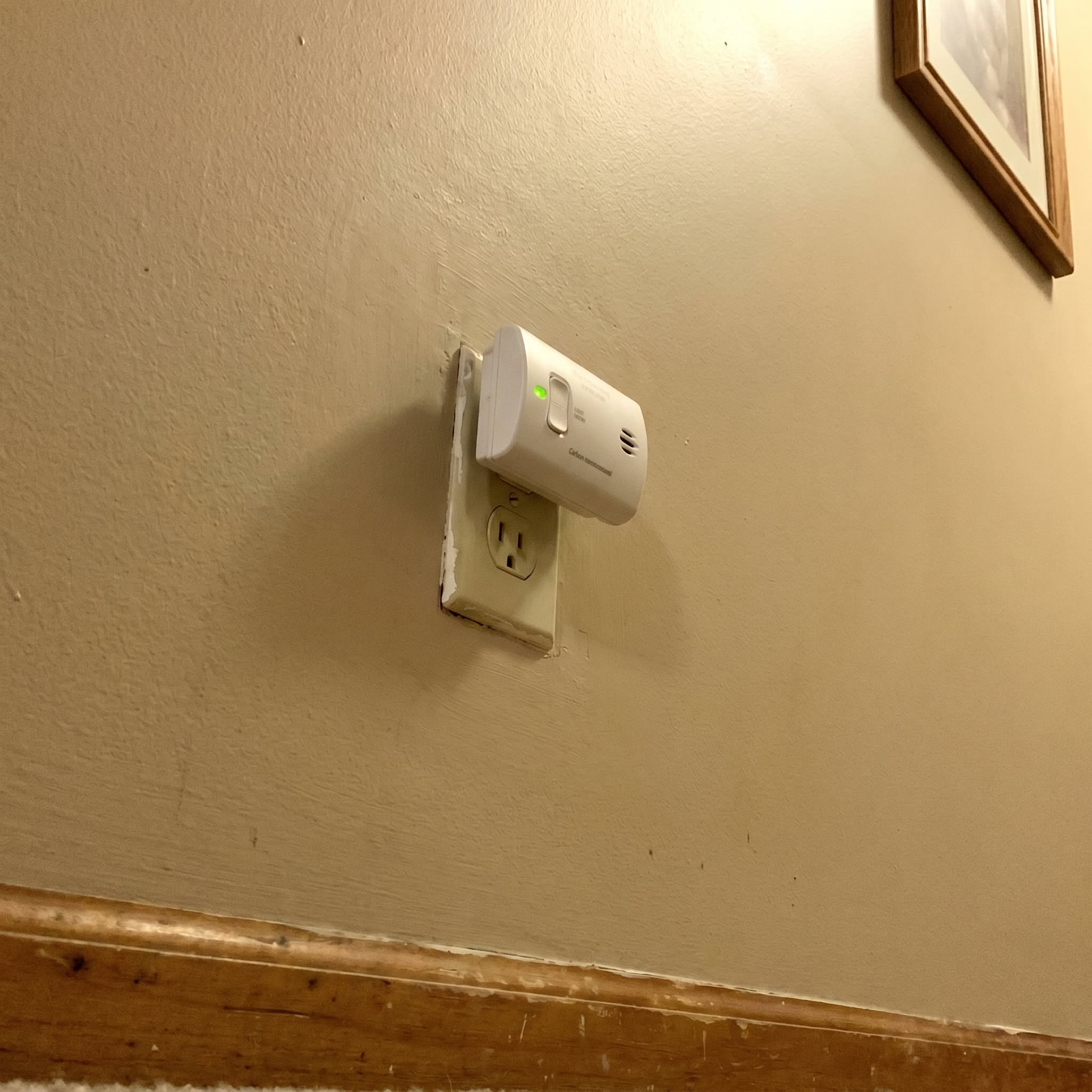
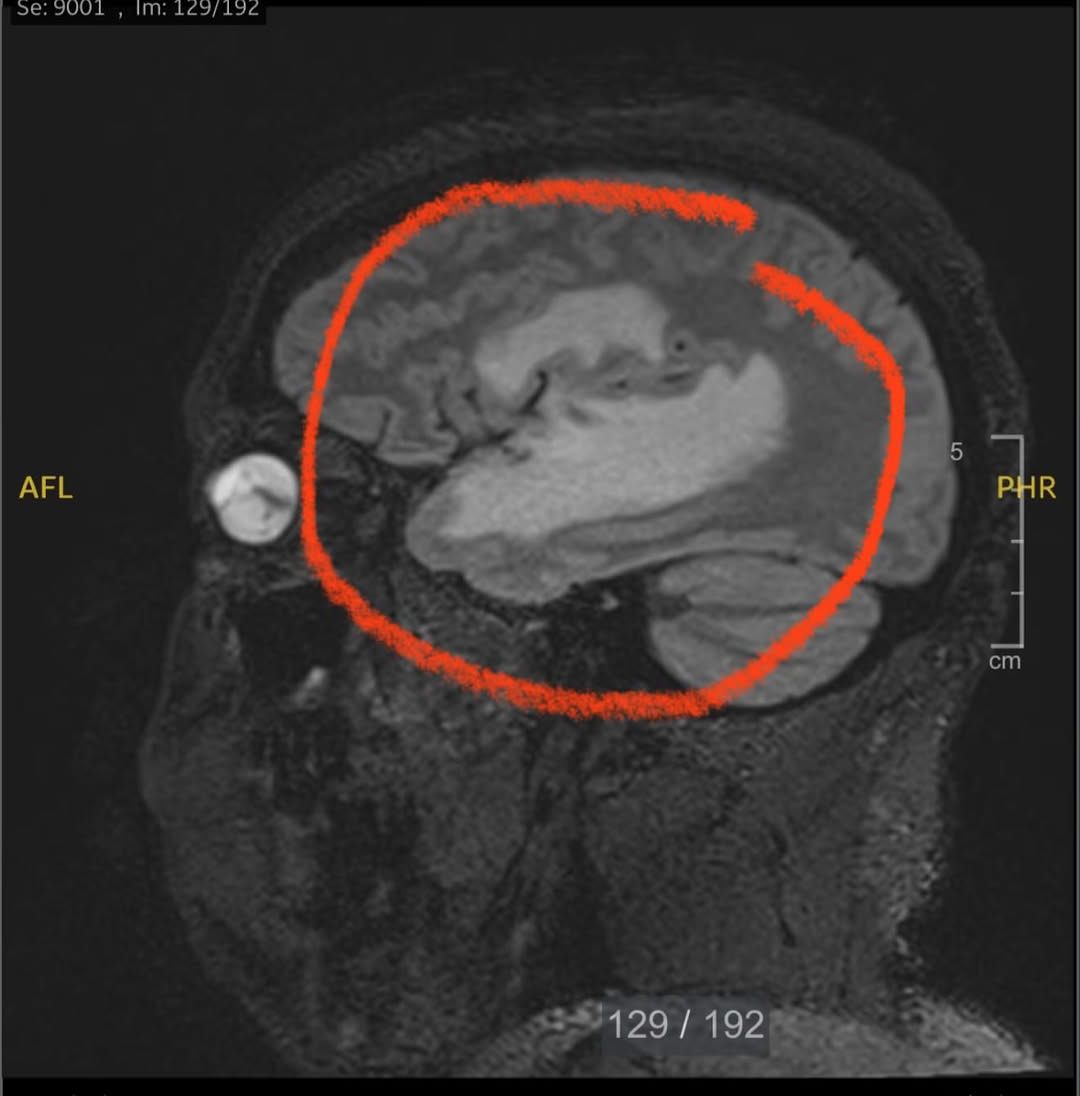
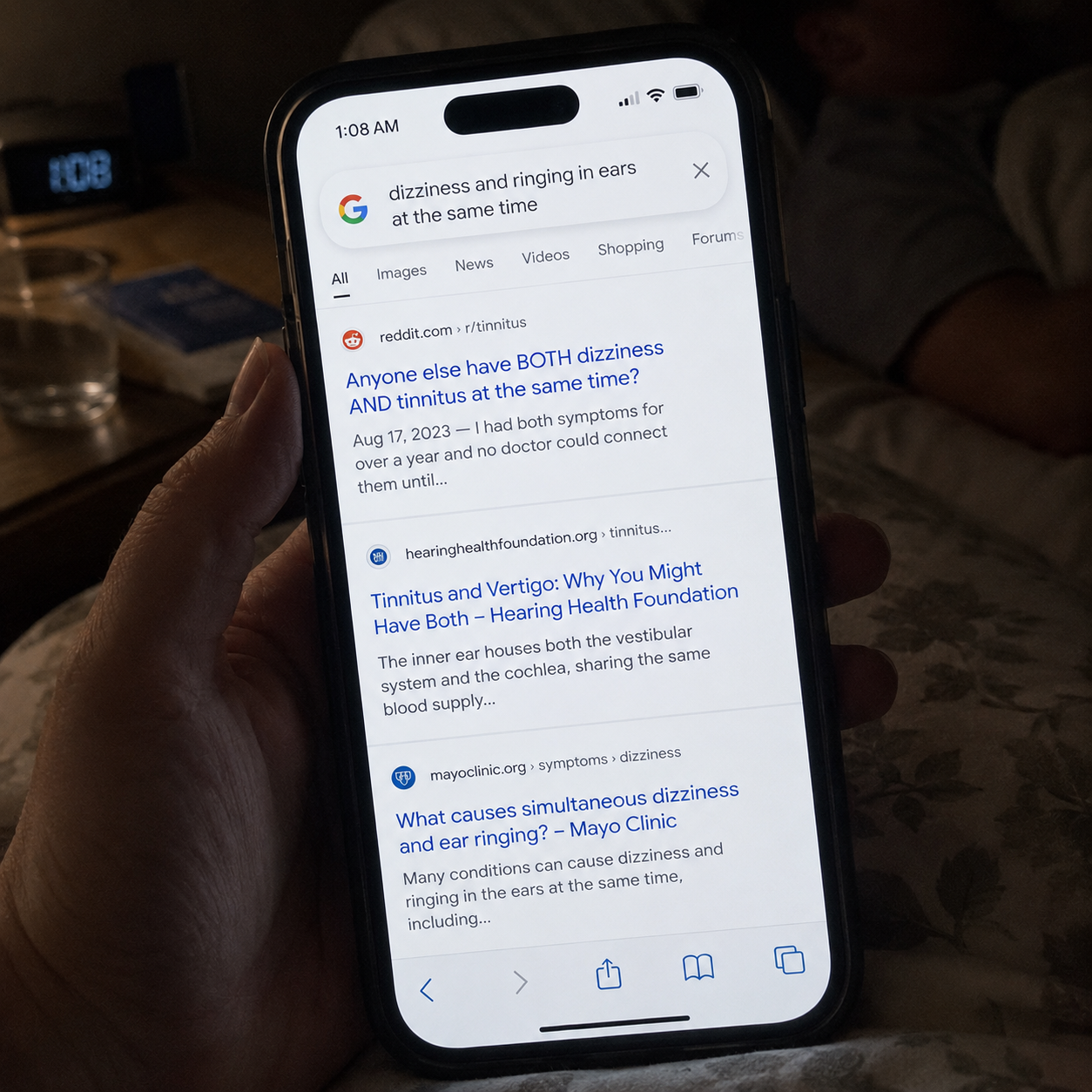
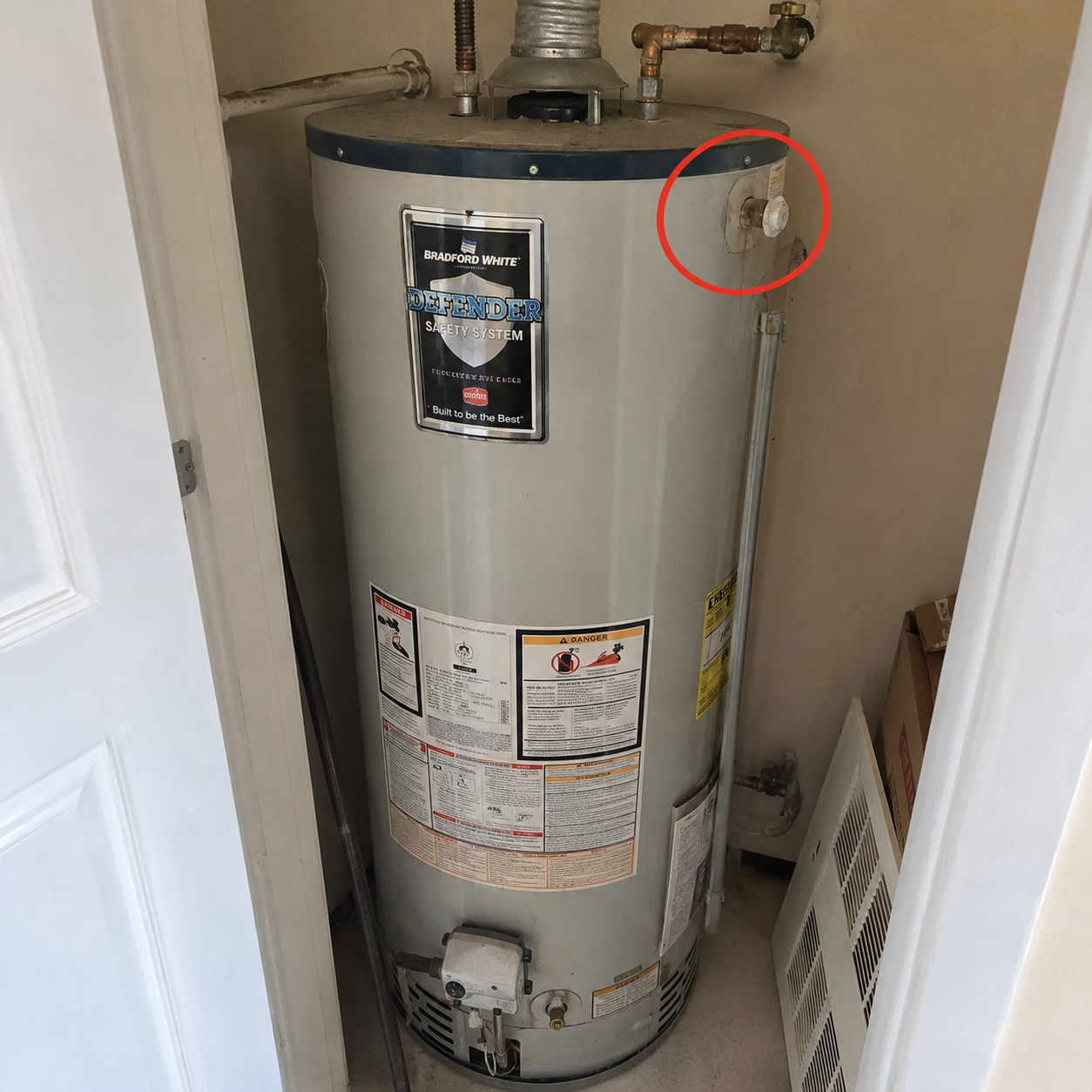
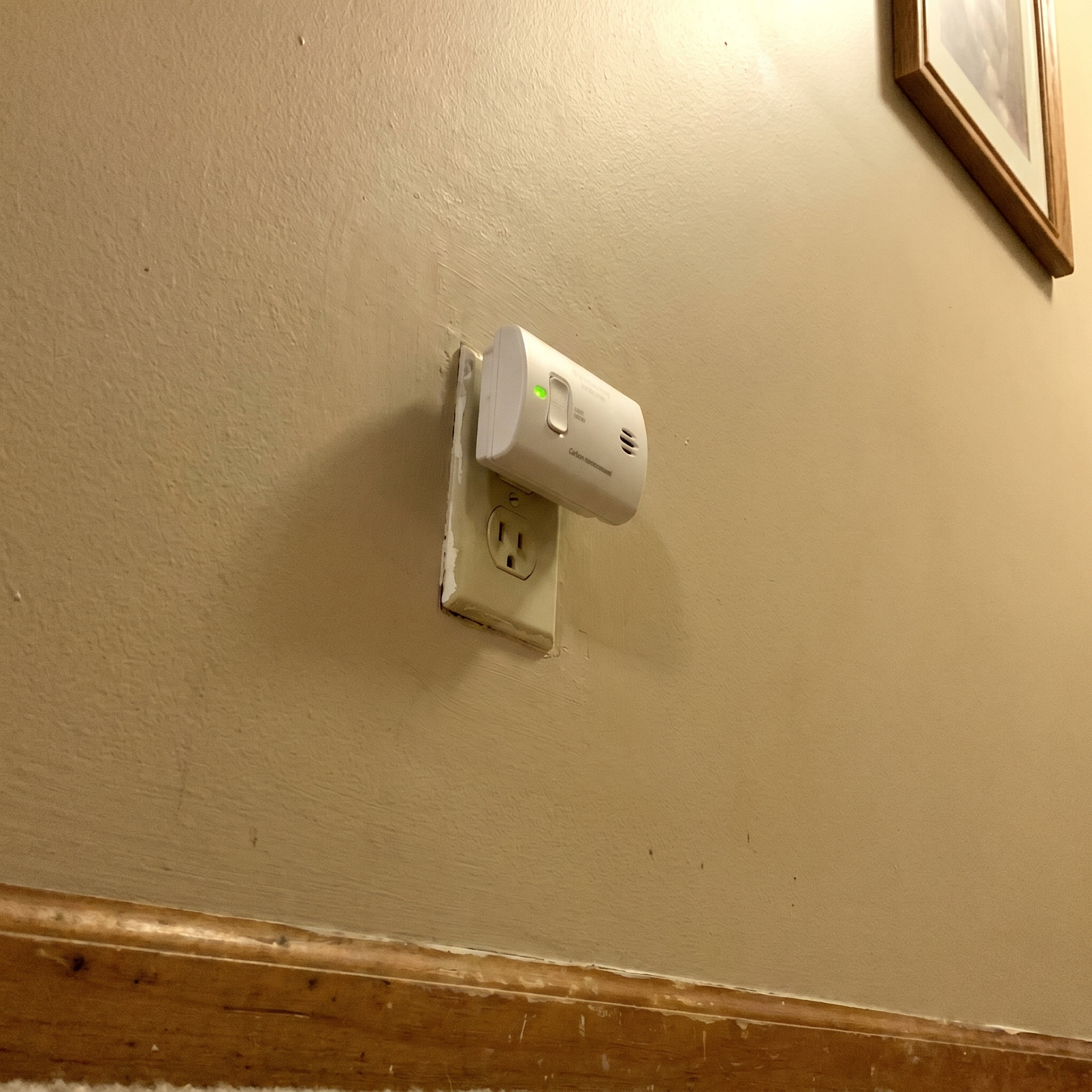
If your ears have been ringing for months and every ENT keeps saying "there's nothing we can do, just learn to live with it" — I need you to read this. Because I just spent eleven months and $4,200 learning what no doctor was ever going to check. I was sitting at the kitchen table when I realized I couldn't remember what silence sounded like. That high-pitched whine in both ears. Constant. Like a thin wire being pulled tight inside my head. I was 47. I'd had tinnitus for eleven months. I'd been to four ENTs. Two audiologists. One neurologist. Spent thousands. And every single one of them sent me home with the same answer. "Your hearing is fine. There's no medical cause. This is just something you'll have to learn to live with." Hearing test — "Within normal limits." MRI of the auditory canal — "No abnormalities." Bloodwork — "All values normal." "It's idiopathic. Try sound therapy. Try habituation." But it wasn't idiopathic. I tried the $1,800 sound therapy program. Six months of nightly white noise tracks. The ringing didn't get quieter. It got louder. I tried Lipo-Flavonoid. Three months. Nothing. I tried Ginkgo. Magnesium. Zinc. B12. I had a fan running every single night. Two white noise machines. A pillow speaker. The ringing kept getting louder. My husband found me sitting on the bathroom floor at 2am one night. I'd been crying for an hour because I couldn't sleep through the noise in my own head. "Honey, maybe we should talk to someone. About anxiety. About stress." Anxiety? I wasn't anxious before this started. I was anxious BECAUSE this started. And the doctors kept saying "it'll get better once you habituate." Eleven months in. Still hadn't habituated. The thing that finally cracked everything open didn't happen in a doctor's office. It didn't happen because I figured something out. It happened by complete accident, three months after I'd given up. My sister got married in Vermont. We drove up the day before and stayed at a small bed and breakfast for the long weekend. By the second morning, I was sitting on the porch with my coffee and I noticed something I couldn't process at first. The ringing was quieter. Not gone. But quieter. Quiet enough that I could hear birds. Quiet enough that I noticed the silence between thoughts. I assumed it was because I'd slept eight straight hours. Because I was away from stress. Because I was somewhere beautiful. Whatever the reason, I figured it was a fluke and the ringing would be back to full volume by the time I got home. We drove home Sunday afternoon. By Tuesday morning, the ringing was back, just as loud as before. The 3am wake-ups came back. So did the headaches I'd been having for months. I told myself the trip had been a brief reprieve and tried to forget about it. But I couldn't forget about it. Because two weeks later, I had to spend three nights at my mother's house while she recovered from a procedure. By the third morning there, the ringing had softened again. I drove home. Within two days it was loud again. That's when I started wondering. "Is something about my own home making me sick?" I sat down at the kitchen table that night and I typed something into Google I'd never typed before. "Why do my symptoms get better when I leave my house." The results weren't what I expected. Almost every article on the first page was about the same handful of environmental toxins. Most of them too rare to make sense for me. But I kept scrolling. And then I clicked on an article that referenced a study I'd never heard of, on a kind of poisoning I didn't know existed. The study had been published in a peer-reviewed medical journal. It found that a significant percentage of patients who came into emergency rooms with chronic, unexplained symptoms — symptoms doctors couldn't trace, symptoms that came back normal on every test — were actually being slowly poisoned in their own homes. By something I thought I was already protected from. Something I had a detector for, sitting in our hallway, for the last six years. Carbon monoxide. But not the kind I knew about. Not the levels that kill you in your sleep. Levels that quietly affect your body for months — sometimes years — without your detector ever making a sound. Levels that your body silently absorbs every day, that build up inside you. And it doesn't come from the dramatic furnace failures you see in news stories. Those are the death-level cases. The slow kind — the kind that ruins your life over months instead of killing you in an hour — comes from things you'd never notice. A hairline crack in a heat exchanger you can't see. A vent connection on your water heater that loosened over years. A gas stove that isn't combusting cleanly anymore. A gas dryer with a small flue obstruction. A gas line with a slow micro-leak behind a wall. None of it is dramatic. None of it smells. The appliance keeps running like normal. And it keeps quietly putting small amounts of carbon monoxide into your air every time it cycles. I went down a rabbit hole that night. The original article led me to a medical research site. The research site led me to a study from the Annals of Emergency Medicine, then to another from the World Health Organization, then to actual case reports from emergency room doctors. And what I learned over the next two hours explained every single thing that had been happening to me. When carbon monoxide gets into your blood, it binds to your hemoglobin — the part of your blood that carries oxygen — 200 times more easily than oxygen does. Once it binds, oxygen can't get through. Your blood is still circulating. But it's not delivering what your tissues need. And the tissue that suffers first is the one with the highest oxygen demand. The cochlea. The part of your inner ear that processes sound. The tiny hair cells inside the cochlea require constant, perfect oxygen delivery to function correctly. When they don't get it, they start firing wrong. They send signals to your brain that don't correspond to any actual sound. Your brain interprets those false signals as ringing. As buzzing. As that high-pitched whine that won't go away. The ringing isn't happening in your ears. It's happening because your ears are starving for oxygen every day. And the same lack of oxygen affects every other oxygen-hungry tissue in your body. Your brain — which uses 20% of your body's total oxygen — starts running on less than it needs. The result is brain fog. Trouble concentrating. Forgetting words mid-sentence. Walking into rooms and forgetting why. Your heart — which never gets to rest — has to work harder. The result is palpitations. Racing at rest. That fluttering feeling at night. Anxiety that came out of nowhere. Your sleep — which depends on your nervous system being able to relax — gets disrupted. The result is waking up at 3am for no reason and not being able to fall back asleep. I'd been blaming the brain fog on perimenopause. The fatigue on stress. The 3am wake-ups on the tinnitus itself. The anxiety on dealing with all of it. I'd never connected any of them. And no doctor had connected them either, because I'd been seeing a different specialist for each one. They were all the same problem. And once I understood that, everything else started making sense too. Like why it had gotten worse since spring. The second you close your windows and run the AC, your house is sealed up exactly the way it is in January. Anything that's leaking has nowhere to go. It builds up. Recirculates through your vents. Settles in your bedroom while you sleep. Gathers in your kitchen while you cook. And once it's in your blood, it stays bound to your hemoglobin for up to 24 hours. That means opening a window doesn't fix it. Going outside for a walk doesn't fix it. Your body keeps running on less oxygen long after the exposure stops. I looked over at the detector in our hallway. The one we'd had for six years. The one that had never made a sound. I almost closed everything. Because if we had CO in our house, that detector would have gone off. That's literally what it's for. But the next thing I learned was why it hadn't. The cheap detectors sold at every Home Depot, Lowe's, and Walmart use the cheapest sensors manufacturers can legally get away with. They're built to a regulatory standard that says they only have to alarm when CO hits 70 parts per million in the air. That's an emergency level. That's when somebody's about to pass out. But the World Health Organization says health effects in the body start at just 9 PPM. There's this huge gap, 9 all the way up to 70, where carbon monoxide is actively in your air, actively in your blood, actively damaging the cells in your body. And the detector on your wall stays completely silent the entire time. It's not malfunctioning. It's doing exactly what it was built to do — meet a legal minimum so manufacturers can use cheap sensors and still put it on a shelf. Manufacturers have no incentive to use better sensors because the cheap ones meet the law, and consumers can't tell the difference. So tens of millions of American homes are sitting at 10, 15, 20, 25 PPM right now. Their detectors are green. Their families are sick. And nobody is putting the two together. In fact, one study I found, published in the Annals of Emergency Medicine, found that nearly 1 in 4 patients who come into ERs with chronic unexplained symptoms — fatigue, brain fog, headaches, ringing in the ears — actually test positive for CO exposure they had no idea they were getting. 1 in 4. And one thing I read further down stopped me cold. It said that for many tinnitus sufferers, CO isn't always what caused the ringing in the first place. Sometimes it's just what made existing tinnitus dramatically worse. People who had mild ringing for years from another cause, who'd never thought twice about it — and then over the course of months or a year, the ringing escalated into something they couldn't ignore. I'd thought my tinnitus came out of nowhere eleven months ago. But sitting there reading, I realized I'd had faint ringing for years that I'd never really thought about. The kind you only notice in dead silence. Something had made it explode. I started looking for a way to actually test what was in my air. The detectors hospitals use are completely different from the ones sold to consumers. Hospitals use electrochemical sensors that detect CO accurately starting at 1 PPM and show the actual number on a digital screen. For years that technology wasn't available to families. Manufacturers wouldn't spend the extra money on it. Until a company called TrueSafety built one. A detector with the same kind of electrochemical sensor hospitals rely on. It plugs into any outlet — no installation, no wiring. It shows the exact CO level in your air in real time, updated every second. I ordered three of them that night. One for the bedroom. One for the kitchen near the gas stove. One for the utility room next to the water heater. I ordered a fourth one a few minutes later for my son's room. They arrived four days later. I plugged the bedroom one in first and went to make dinner. By the time I came back to change, the screen read 17 PPM. Seventeen. Almost double the level the World Health Organization says is harmful. The bedroom I'd been sleeping in for eleven months. I sat on the bed and I think I went a little numb. I called an HVAC company the next morning. The technician arrived by lunchtime. He tested the stove, the dryer, the water heater. He found a slow leak on the gas line behind the water heater. Said it had probably been there for over a year, and that he sees this kind of thing constantly. He fixed it in about ninety minutes. Cost me $180. That night, the bedroom read 1 PPM. Day three, the ringing was noticeably quieter for the first time in months. Day six, I caught myself standing in my kitchen and realized I'd been hearing actual silence for several seconds without noticing. Day twelve, I slept through the night without a fan running for the first time in over a year. Week three, the ringing was almost completely gone. Just a faint whisper at night when I really listened for it. Week four, I went outside on the porch with my coffee and I could hear birds. Birds. I sat there and cried. My husband mentioned his headaches had stopped too. Our son was sleeping better. None of us had realized how much we'd been struggling until we suddenly weren't. We'd been starving for oxygen for over a year. If you've had tinnitus that's been getting worse and no doctor can tell you why — please just plug one of these in. If the number on the screen is 12, 17, 22 — you've just found the thing that every doctor you've been to has been missing. One HVAC visit later, you have your life back. And so does everyone else living in your house. If the number is 1 PPM, that's incredible news. You can stop wondering whether the air in your home has been making you sick. You can rule it out and move on. Either way, you'll know. And even if your number is fine today, appliances age. Connections loosen. Cracks form. The detector keeps watching for years. The people in your house — your kids, your spouse, your parents — are breathing the same air you are. This is something every home should have whether you have symptoms right now or not. The thing I keep thinking about is what would have happened if I hadn't accidentally noticed the difference in Vermont. How much worse the ringing would have gotten. How much longer my son would have been sleeping in 17 PPM every night. How many more months I would have spent crying on bathroom floors at 2am, blaming myself for a condition that wasn't my fault. If you've been chasing the same answer through doctor after doctor — you're not a difficult case. They're just not looking in the right place. The right place is the air you've been breathing every single day at home. Check TrueDetect out here: https://truesafety.co/pages/broad-llco-2
Like this ad? Make it yours.
Crush rebuilds this exact creative around your product — your brand, your colors, your offer — in about a minute.