Brenda Hoffman
Brenda Hoffman Facebook ad: “He's 9. My husband still has to carry him to bed some…”
Ran for 1 day, from May 28 to May 29, 2026, the last day Crush saw it.
Run by Brenda Hoffman on Facebook. Crush is not the advertiser and does not verify its claims. See this ad in Meta's Ad Library(opens in a new tab)
Want an ad like this for your product?
Crush makes new ad images for your product from this ad: your logo, your product photo, your offer.
Trials from $19.95 USD, then $79.95 USD a month. Cancel anytime.
About this ad
- Meta Ad Library ID
- 991649656676865
- Platforms
- Facebook, Instagram, Audience Network, Messenger and Threads
- Relaunches
- 0
- Niche
- Parenting & Kids
Ad text
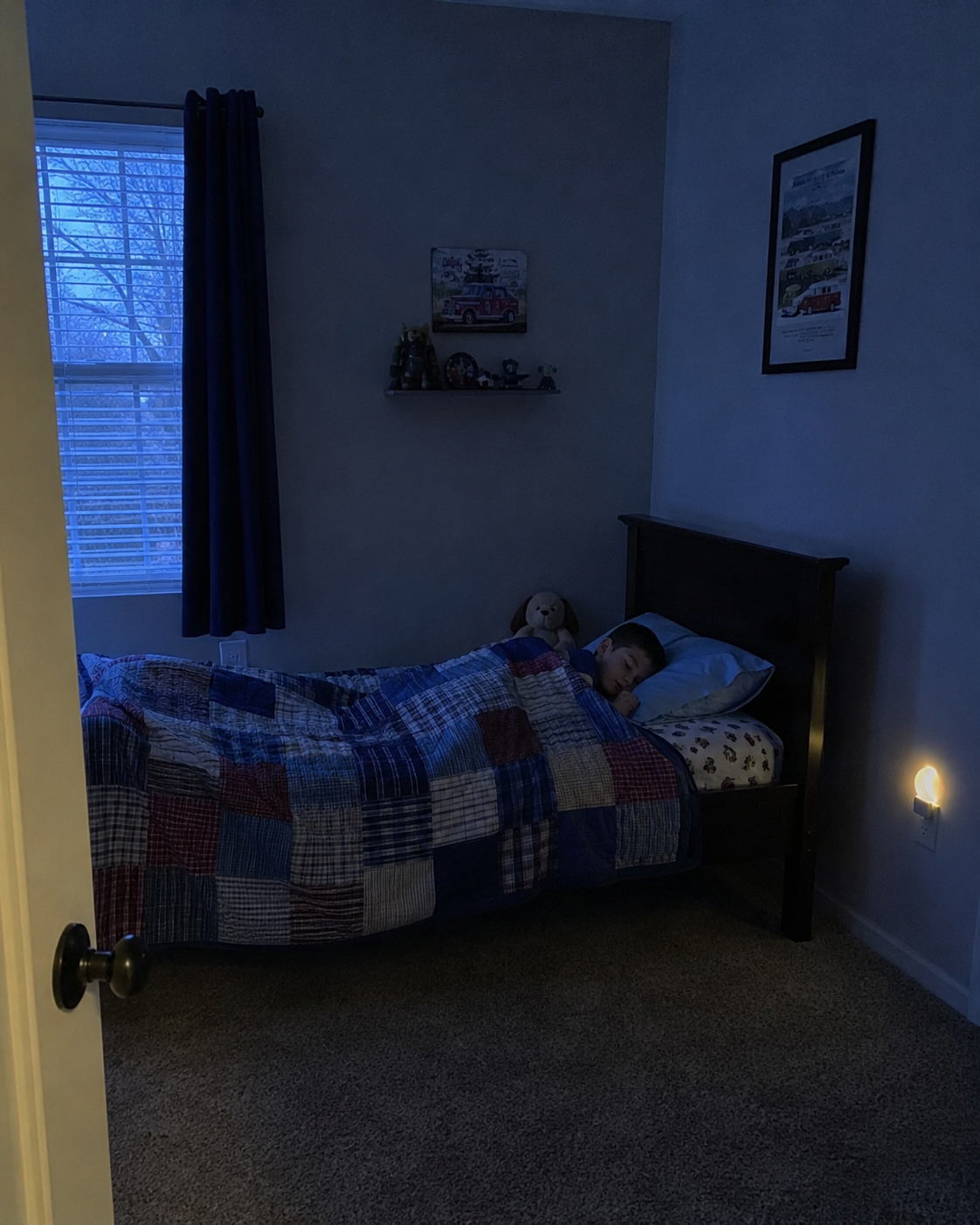
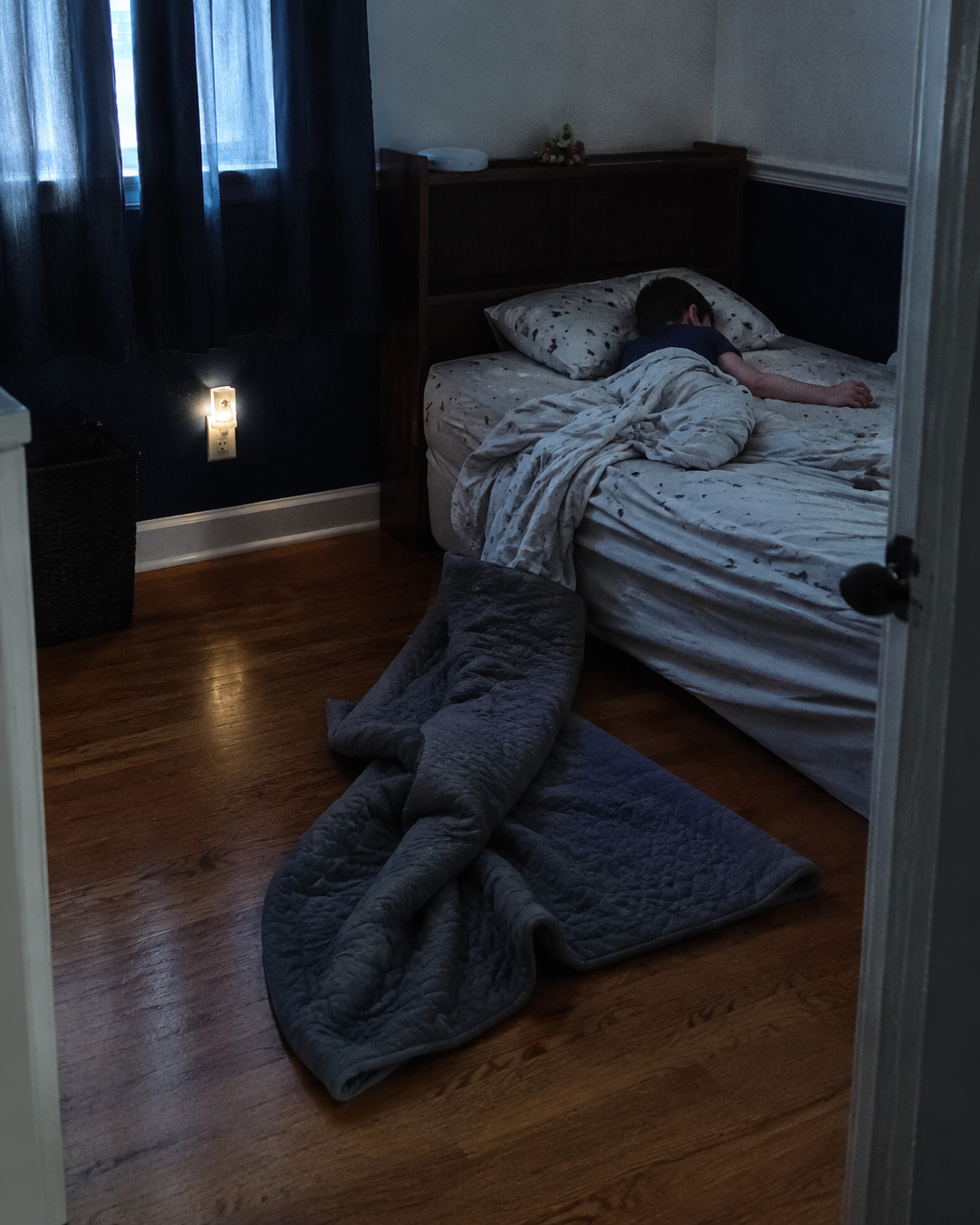
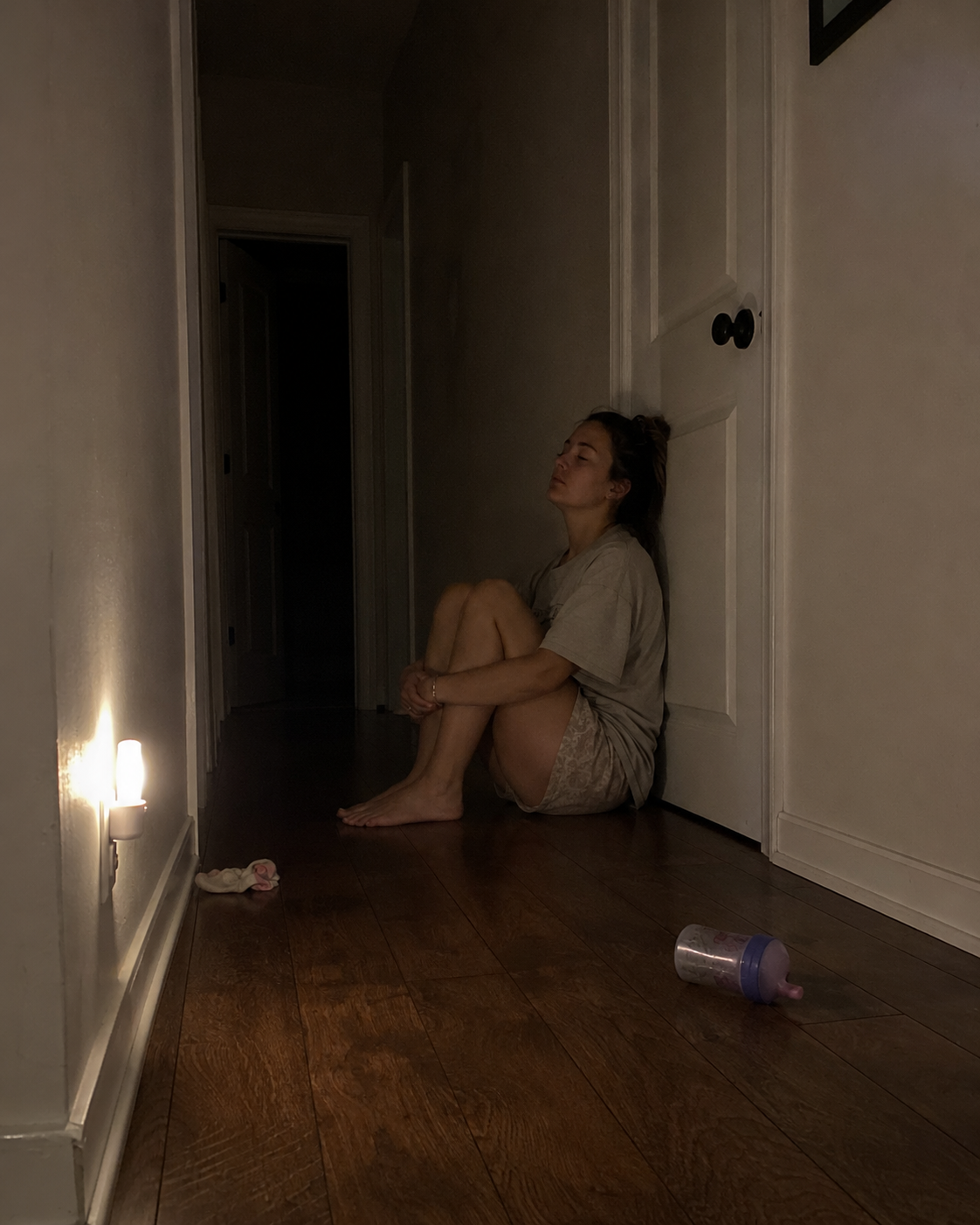
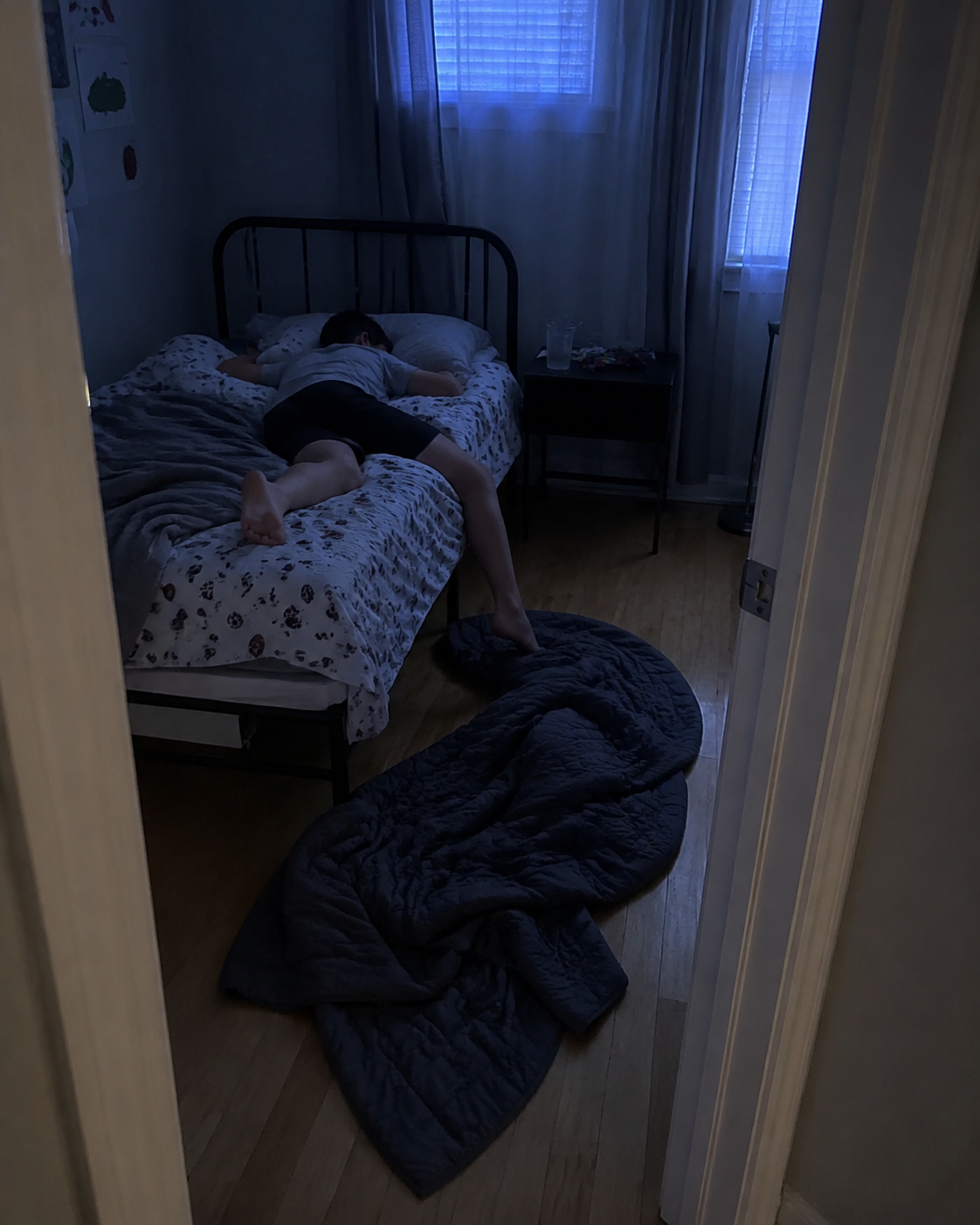
My husband had to physically carry our 9-year-old to bed last night. I sat down on the bathroom floor afterward and just stayed there. Then I opened the cabinet and started reading the labels out loud to no one. "Supports nervous system relaxation." "Supports cognitive function." "Promotes calm focus." I'd bought every promise on that counter. Not one of them had touched what was actually happening to my son. His name is Theo. He's 9. He was diagnosed at 6. I want to walk you through what happened to him — and what happened to me — because I've now talked to enough other moms to know I wasn't the only one stuck in this exact loop. And the way out was not the thing I went looking for. Theo is a good kid. Loud, hilarious, knows every dinosaur by its full Latin name, can recite the plot of every Pixar movie back to front. He's also been coming apart at the dinner table since he was 4. Not toddler tantrums. Real ones — plate on the floor, screaming into a couch cushion, completely past the point of reasoning with. Over the broccoli touching the pasta. Over losing a level. Over a sock that "feels wrong." His pediatrician diagnosed him at 6 and handed me a script for a low-dose stimulant. I sat in the parking lot and cried for what felt like an hour before I drove home with that paper folded inside my bag. I never filled it. Not because I think medication is wrong. Half the moms in my circle have made it work for their kids. But I'd watched my closest friend's son go quiet on it — not eating, not sleeping, the spark dialed all the way down. She told me one night, "I traded the meltdowns for a kid who isn't really here." And I couldn't make myself do it. So I told myself I'd find another way. I started buying supplements. This is the part I need every other ADHD mom reading this to slow down for. Because I think what happened to me is happening to a lot of you. I bought magnesium. The internet swears by magnesium. Eight weeks. Nothing. I bought fish oil — the high-DHA kids' one every parenting forum links to. Three months. Nothing. Then L-theanine. Then ashwagandha (he gagged on it, I started hiding it in smoothies). A B-complex. Zinc. A probiotic that was supposedly for "gut-brain support" and cost me $52 a month. Every bottle was a midnight search and a thirty-dollar bet. I gave each one six weeks because every label says "give it time." Eleven bottles. Eleven let-downs. Two melatonin brands and a weighted blanket somewhere in the middle of all of it. By the time Theo was 8 I added it up. About $1,400 in two years on things that did nothing. And the meltdowns were getting worse. Because school gets harder. Because his little sister was old enough now to be embarrassed of him at the park. Because nothing we tried had ever actually held. I was sitting on the bathroom floor one Tuesday night last fall — after a meltdown so bad my husband had to physically carry him to bed — and I opened the cabinet and counted them. Eleven half-empty failures lined up on the counter. I picked one up. Magnesium glycinate. "Supports nervous system relaxation." Then the fish oil. "Supports cognitive function." Then the L-theanine. "Promotes calm focus." I stood there holding three bottles in three hands and felt, for the first time, that I'd been doing something fundamentally wrong and I couldn't even name what it was. The next morning I called a friend who's a pediatric occupational therapist. I read her my whole list — every supplement, every brand, two years of it. And she said, very gently, "Honey. Do you actually know what's happening in his body at night?" I said of course. It's a focus thing. A dopamine thing. Everybody knows that. She said: "Forget the daytime for a second. Here's what I see in the kids who look like Theo. Their nervous system never switches off. It's stuck in survival mode — scanning, primed, running — long after the day is over. It doesn't power down at night, so the next morning starts already activated. Every supplement on your list is trying to top up a chemical during the day. But you can't swallow the thing his body is actually missing. It's not a chemical he's short on. It's a signal." I had to sit down. "What signal," I said. "The one that tells the body it's safe to stop. A settled nervous system gets that signal on its own and drops into rest mode at night. His doesn't. So he never fully resets. That's the part the supplement aisle can't reach — because it isn't trying to add something to his bloodstream, it's trying to tell his body it's okay to power off. And the body doesn't read that in a pill. It reads it in physical input. Steady, even pressure across the body. We've used it in OT rooms for decades. It's called Deep Touch Pressure." She explained it the way you'd explain it to a tired friend, not a patient. The reason you can't talk a screaming baby calm — you have to hold them. The held, surrounded, contained feeling tells the nervous system the threat is gone and it's allowed to switch into rest mode. OTs have leaned on it forever. It just never made it out of the therapy room. The supplements had moved. The shelf had moved. Theo's actual problem had been sitting one room over the whole time. Every magnesium gummy, every fish oil, every "focus" chewable in the supplement aisle — they were all built to add a chemical to a daytime brain. And my son wasn't responding to any of them because his wasn't a daytime-chemical problem. His nervous system was never getting the one thing that lets it stand down at night. And here's the part I'd completely missed for two years. I'd obsessed over his focus, his moods, his mornings — and never once looked at his sleep. He went to bed every night. He looked like he was sleeping. But his body never actually powered down enough to rest. And a kid who doesn't truly rest doesn't wake up with a clean slate — he starts every day already behind, already wound up, already one sock-seam away from coming apart. The breakfast meltdowns, the school notes, the dinner-table explosions weren't separate problems. They were the same problem showing up the next day: a night that never reset. I didn't fail at picking supplements. I was just never told that the thing he needed couldn't be swallowed. I want to be careful here, because the last thing I want is to sound like I found a miracle. I didn't. I found the one thing built around the signal instead of the chemical. It's called Lunève. It's a compression sheet — it wraps the mattress like a fitted sheet, and the four-way stretch fabric holds a continuous, gentle pressure across his whole body all night. He doesn't take anything. He doesn't do anything. He gets in, and the pressure is just there. And this was the part that undid me, once my friend explained it: that's exactly why the weighted blanket almost worked, all those months ago. He'd settle the second it was on him. But he kicked it off by midnight every single night, and the moment the pressure left, the signal left with it. The sheet wraps the mattress instead of lying on top of him — so it's still there at midnight, at 2 a.m., at 4 a.m. It moves with him when he rolls. It doesn't end up on the floor. The first thing I'd ever brought home that wasn't trying to change his chemistry. It was just giving his body the one input it had been reaching for, every night, without quitting. I want to tell you what happened, because it wasn't a miracle and it wasn't overnight. Week one — nothing I could point to. Maybe an easier bedtime. I told myself I was imagining it. Week two — Theo melted down over a sock. It was bad, but it lasted maybe 90 seconds and he came down on his own. Before, those ran 40 minutes minimum. Week three — his teacher emailed. Not to complain. To say Theo had volunteered to read out loud in class for the first time all year. She said he'd been coming in rested. Week four — he ate a dinner where the broccoli was openly touching the pasta and said nothing about it. I caught my husband's eye across the kitchen and we both just stood there like, did that actually just happen. Week six — and this is the one that broke me — Theo came up to me at bedtime and said, "Mom, my brain feels quieter." I didn't know what to say. I just held him. I want to be honest about my husband, too. He was the skeptic. He's an engineer. He'd watched me throw money at the supplement graveyard for two years and stayed patient through every failure. When I came home with a sheet and tried to explain a nervous-system signal, I could see him filing it under "here we go again." He didn't say anything. He just nodded. A month in, he was the one who pointed out the meltdowns had basically stopped. Said it at dinner, totally offhand. "I don't know what's going on, but he's a different kid." Then went back to his plate. A week later I found an order confirmation in our shared email. He'd quietly bought a second one for my mom's house, where Theo sleeps on weekends. This is a man who has never bought anything like this in his life. So here's what I want every ADHD mom to take from this. If you've got the cabinet I had — the magnesium, the fish oil, the eleven bottles of "this might be the one" — you didn't fail. You were sold a daytime-chemical answer to a night-time signal problem. The shelf moved on. What your kid actually needs was never on it. You don't have to fill the prescription if you don't want to. So many of us are standing in that exact spot. But you also don't have to keep buying one more bottle built for the wrong problem. You need the thing that gives his nervous system the signal to power down — and then stays there all night so it doesn't disappear the second he moves. The one we use is here: https://tryluneve.com/pages/listicle-4 It's the same kind of deep pressure occupational therapists have used with sensory kids for years — the only difference is this one stays on all night. It comes with a 30-Night Calm Kid Promise, so there's no real risk in finding out. Theo's first shift showed up around week 3, and the big one hit at week 6. That's enough time to know. If you've been where I was — the cabinet, the guilt, the parking-lot script you never filled — try it for 30 nights. If nothing changes, send it back. If something changes, you'll know exactly what I mean. I gave one to my sister last month. Her oldest is 7 and just got diagnosed. She's where I was three years ago. I sent it with a note: "Put this on his bed before you do anything else." She called me yesterday. Didn't even say hello. Just: "What did you put on that bed." That's how it goes. P.S. — I'm not a doctor. I'm not a researcher. I'm a mom who spent two years and $1,400 on the wrong shelf and finally found the one thing built around what my son's body was actually asking for. If that cabinet is yours too, you're not failing. You were misinformed. There's a difference. Now you know it.
Where the ad sends people
tryluneve.com
He's 9. My husband still has to carry him to bed some nights.
Luneve
See details: tryluneve.com(opens in a new tab)