Laurie Brooks
Laurie Brooks Facebook ad: “Read this if you bake bread”
Ran for 32 days, from May 27 to June 28, 2026, the last day Crush saw it.
Run by Laurie Brooks on Facebook. Crush is not the advertiser and does not verify its claims. See this ad in Meta's Ad Library(opens in a new tab)
Want an ad like this for your product?
Crush makes new ad images for your product from this ad: your logo, your product photo, your offer.
Trials from $19.95 USD, then $79.95 USD a month. Cancel anytime.
About this ad
- Meta Ad Library ID
- 992480913261880
- Platforms
- Facebook, Instagram, Audience Network, Messenger and Threads
- Relaunches
- 0
Ad text
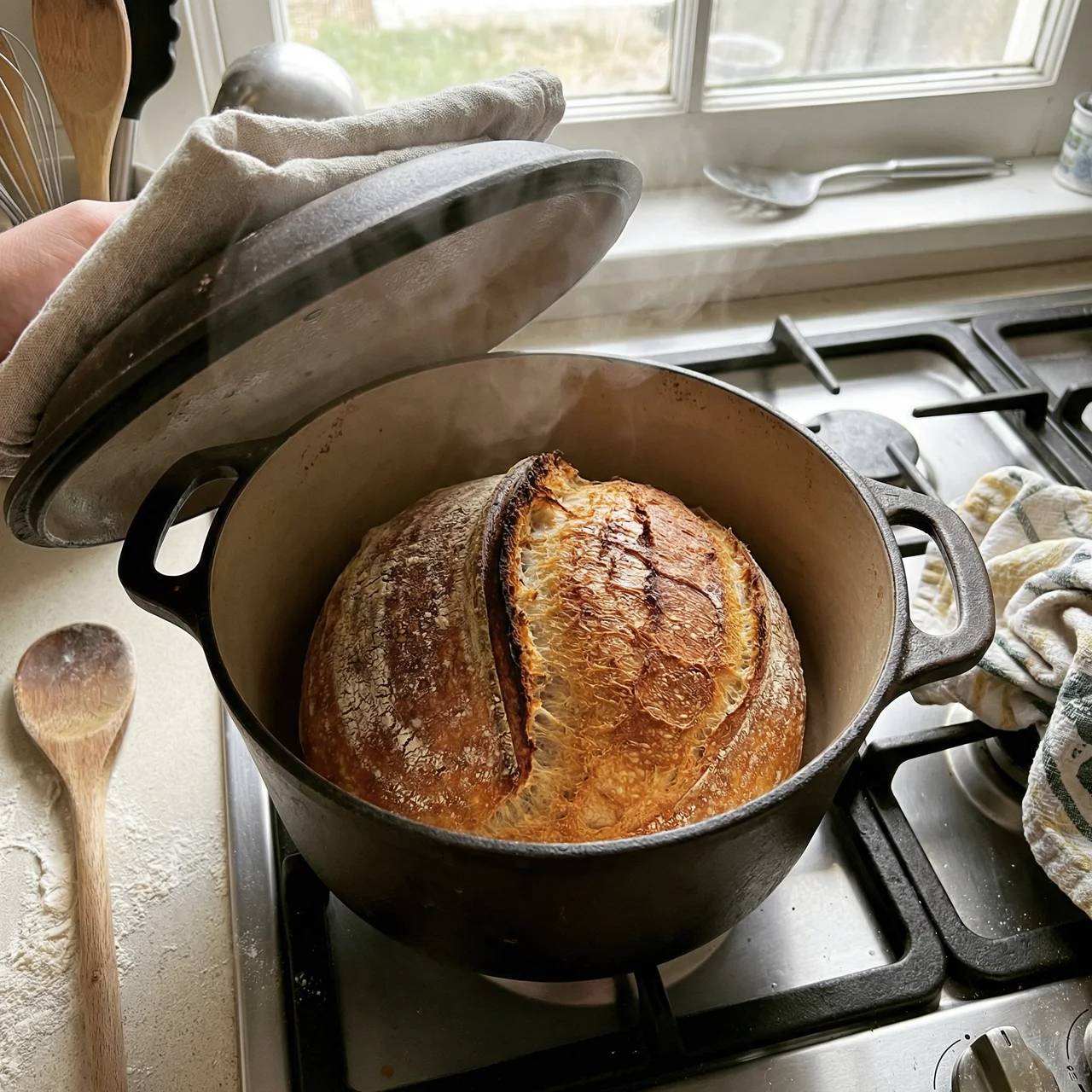
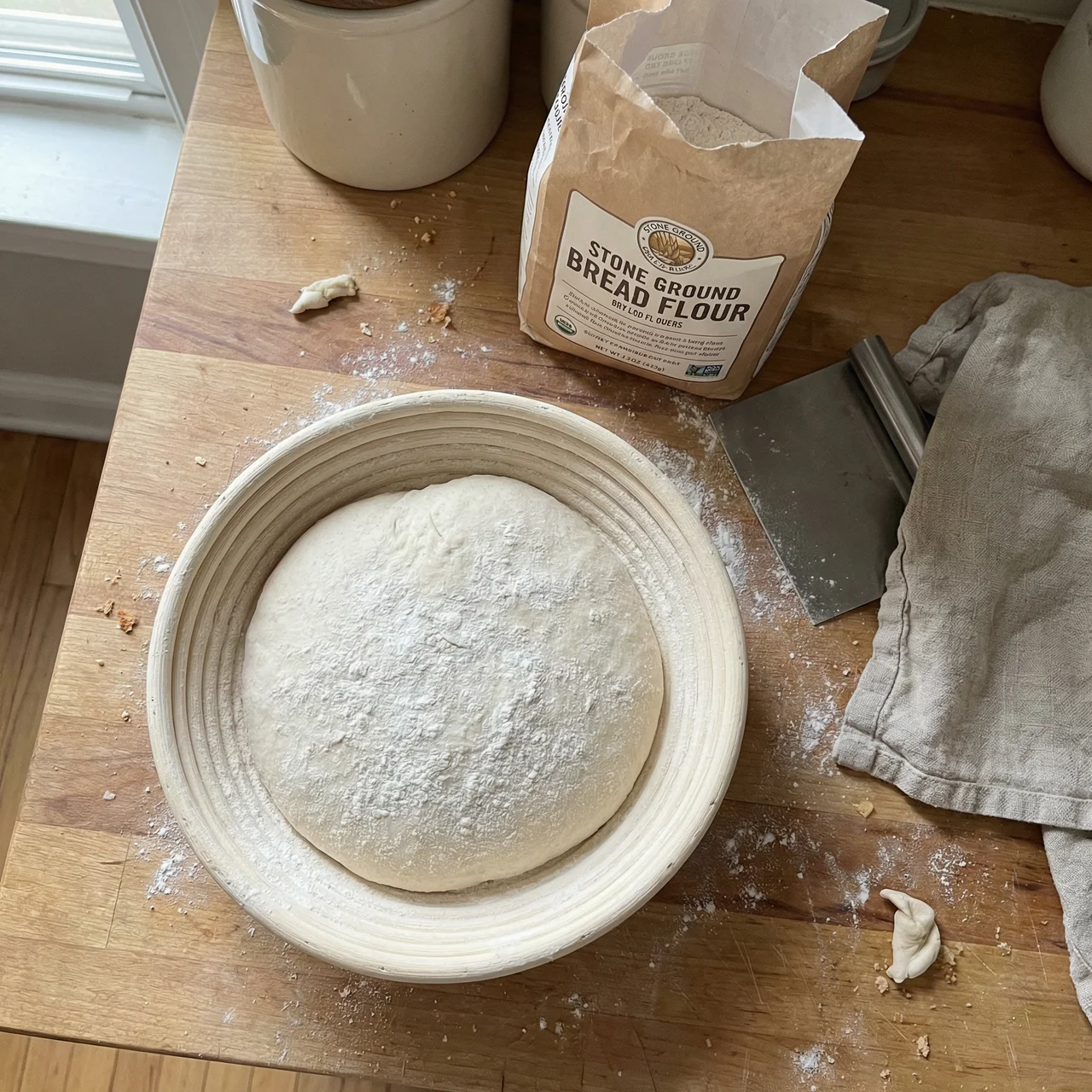
I blamed my oven, my flour, my kitchen, and my hands before a woman at a bread baking class finally asked the right question and showed me why none of those things were actually the problem. The class was a gift from my sister. She'd watched me struggle with sourdough for two years and thought maybe professional instruction would help. Four hours on a Saturday afternoon at a cooking school downtown. Fifteen students, one instructor, and a promise that we'd all leave with a finished loaf. The instructor was in her sixties. She'd trained in Lyon decades ago and had run her own bakery for twenty-two years before retiring to teach. The way she handled dough was mesmerizing. Quick, confident, almost careless. Like she'd done it so many times her hands knew things her brain didn't need to think about anymore. During a break, I approached her with what I thought was a simple question. I asked why my sourdough kept coming out flat even when I followed recipes exactly. She didn't answer right away. Instead, she asked what I was using to proof my shaped dough. I told her I used a stainless steel mixing bowl lined with a floured kitchen towel. Sometimes a glass casserole dish if I was doing a longer proof in the fridge. She set down the bench scraper she'd been cleaning and gave me her full attention. That's your problem, she said. Right there. Let me give you the full picture of where I was before that conversation. I'd been baking sourdough seriously for almost two years. What started as a pandemic project had become something closer to an obsession. I had a starter I'd kept alive for twenty months. I'd named it. I talked to it sometimes when I was feeding it, which I realize sounds unhinged but that's where I was. I'd invested heavily in equipment. A baking steel that cost more than my first car payment. A digital scale that measured to hundredths of a gram. A temperature-controlled proofing box. A gorgeous enameled Dutch oven I'd saved up for specifically for bread. I'd done the research. Read the books. Watched the masterclasses. I understood autolyse and bulk fermentation and lamination folds. I could explain gluten development to anyone who made the mistake of asking. None of it translated to consistent results. Some weeks I'd open the oven and find exactly what I'd been hoping for. A tall, proud loaf with a shatteringly crisp crust and an open, custardy crumb. I'd photograph it from multiple angles. Send the photos to my sister. Feel like I'd finally cracked the code. The following week, same recipe down to the gram, I'd find a flat disc waiting for me. Dense. Pale. The kind of loaf that makes a dull thud when you tap it instead of the hollow ring that indicates success. I kept meticulous notes trying to identify patterns. Ambient temperature. Humidity levels. Starter activity. Proof times. Fold schedules. I had spreadsheets. Actual spreadsheets. The data showed nothing useful. The failures seemed random. Completely disconnected from anything I was doing differently. It started to feel like gambling. I'd invest two full days in each loaf. Feeding the starter the night before. Mixing in the morning. Folding for hours. Shaping carefully. Proofing overnight. Baking the next day. All that time and attention, and then the oven would decide whether I won or lost. I had no control over the outcome. Or at least that's how it felt. My husband had stopped commenting on my bread months earlier. He'd learned that asking how it turned out was a loaded question. If it was good, I'd show him without being asked. If it was bad, I didn't want to talk about it. My kids had developed a habit of checking the bread before committing to it. A quick squeeze to test the density. If it gave, they'd take a slice. If it didn't, they'd quietly reach for the sandwich bread in the pantry. I pretended not to notice. But I noticed. The worst part was the creeping certainty that the problem was me. That some people had an intuition for bread and some people didn't. That I could read every book and watch every video and buy every piece of equipment, and it wouldn't matter because I simply lacked whatever ineffable quality separated real bakers from pretenders. That's the headspace I was in when the instructor at the bread class explained what was actually happening. She said the final proof is the most critical stage of the entire process, and it's where home bakers almost universally go wrong. Everything before the final proof is recoverable, she explained. Underdeveloped gluten can be fixed with more folds. A sluggish bulk fermentation can be extended. Shaping mistakes can be reshaped. But the final proof is where the structure gets locked in. This is when the outer surface of the dough is supposed to develop a dry, taut skin that will contain everything when the heat of the oven causes the interior to expand. Metal and glass don't let this happen. They're impermeable. The moisture migrating out of the dough hits the bowl and has nowhere to go. It just sits there, keeping the surface wet and slack. A towel helps a little, she said. But not enough. Especially on humid days or long proofs. When you turn out dough that's been proofed this way, there's no skin. No tension. No structure to hold the shape. The dough simply relaxes and spreads. Flattens into a disc. Becomes the brick. She said professional bakers solved this centuries ago with woven proofing baskets. Bannetons. The woven cane breathes. It actively wicks moisture away from the dough surface, allowing the skin to form no matter what the ambient humidity is. The basket creates the conditions for success. The metal bowl creates the conditions for failure. Everything else, the recipe, the technique, the expensive equipment, none of it can overcome a proofing environment that's working against you. She said her grandmother used the same banneton for thirty-five years. Her mother inherited it and used it for another twenty. The baskets in the bakery she'd run were older than most of her employees. This knowledge was common sense in Europe, she said. But it got lost somewhere when home baking became popular in America. Everyone just used whatever bowls they had in their kitchen and assumed the inconsistent results were their fault. I drove home that evening with my head spinning. The next morning I started researching bannetons online. I figured I'd order one from Amazon and finally solve this problem. What I found was more complicated than I expected. There are hundreds of options available. They all look basically the same in photos. Woven baskets in various shapes and sizes. Prices ranging from eight dollars to over fifty. Many come bundled with starter kits that include a lame, a scraper, some rice flour, and a recipe card. But when I started reading reviews carefully, a pattern emerged. The cheap ones are essentially decorative. They're made from low-grade materials that don't wick moisture properly. The weave is wrong. Too tight to breathe, or too loose to provide support. The cane splinters after a few uses, shedding pieces into the dough. Some are coated with a sealant that makes them as impermeable as the plastic containers they're meant to replace. Review after review described the same problems. Dough sticking so badly it had to be scraped out. Baskets warping or cracking within weeks. Mold growing in the crevices because the material trapped moisture instead of releasing it. The baskets look right in photos but don't perform the function that matters. They're props, not tools. I almost abandoned the search. I didn't want to become an expert on rattan weaving just to make bread. But I kept seeing the same company mentioned. A small French operation that still makes bannetons the traditional way. Hand-coiled cane. Proper weave density. The kind of baskets that professional bakeries have been using for generations. The reviews for this company weren't just positive. They were transformative. People who'd struggled for years suddenly producing consistent loaves. People who'd bought four or five cheap baskets finally finding one that actually worked. The word that kept appearing was "finally." The price was higher than the Amazon options. About forty dollars. But that's less than I'd spent on fancy flour in the past month alone. Less than I'd wasted on ingredients for loaves that ended up in the trash. I ordered one. It arrived a week later in simple brown packaging. The weight surprised me. Dense, solid, tightly woven. You could feel the quality compared to the flimsy versions in the Amazon photos. That Saturday I made my usual recipe. Same starter, same flour, same hydration, same process. The only variable I changed was the final proof. I dusted the banneton with rice flour and gently set my shaped dough inside. Covered it and put it in the refrigerator overnight. Sunday morning I preheated the oven, trying not to get my hopes up. I'd been disappointed too many times. When I inverted the basket over my baking peel, I braced myself for the usual moment of truth. That instant when you discover whether you're going to have a triumphant morning or a frustrating one. The dough released cleanly. No sticking. No tearing. No frantic scraping while the loaf deflated. It held its shape on the peel. Round and taut, with the beautiful concentric rings from the basket imprinted on the surface. Not spreading. Not sagging. Just sitting there, ready. I scored it and slid it into the Dutch oven. Closed the lid. Set the timer. Thirty-five minutes later I lifted the lid and actually gasped. It was tall. Not just acceptable. Genuinely tall. The score had bloomed into a perfect ear. The crust was deep golden brown and already crackling. I tapped the bottom and heard the hollow sound. The sound I'd heard in videos a hundred times but never produced myself. The sound that means everything worked. When I sliced into it, the crumb was open and airy. Not dense. Not gummy. Actual structure. Actual holes. The kind of bread I used to see on Instagram and assume was beyond my capabilities. I've baked probably thirty loaves since that morning. Not every single one has been perfect. I still make mistakes. I've overproofed a few times, underfermented once or twice. Baking has a learning curve regardless of equipment. But I haven't pulled a brick out of my oven once. The randomness is gone. Completely gone. The instructor was right. Her mother was right. Her grandmother was right. The final proof determines everything, but only if the vessel allows the dough to develop the structure it needs. If you've been blaming your recipe, your starter, your oven, or your hands, maybe the problem is simpler. Maybe it's the bowl. I left a link below to the banneton I found. The French company. It costs more than the Amazon options, but it costs less than I was wasting on failed loaves every month. Might be worth looking into if you're tired of treating every bake like a coin flip.
Where the ad sends people
averiaco.com
Read this if you bake bread👆
Averia
Shop now: averiaco.com(opens in a new tab)