
Inactive· since Jul 2, 2026
- 18
- days it ran
- 0
- relaunches
Ad copy
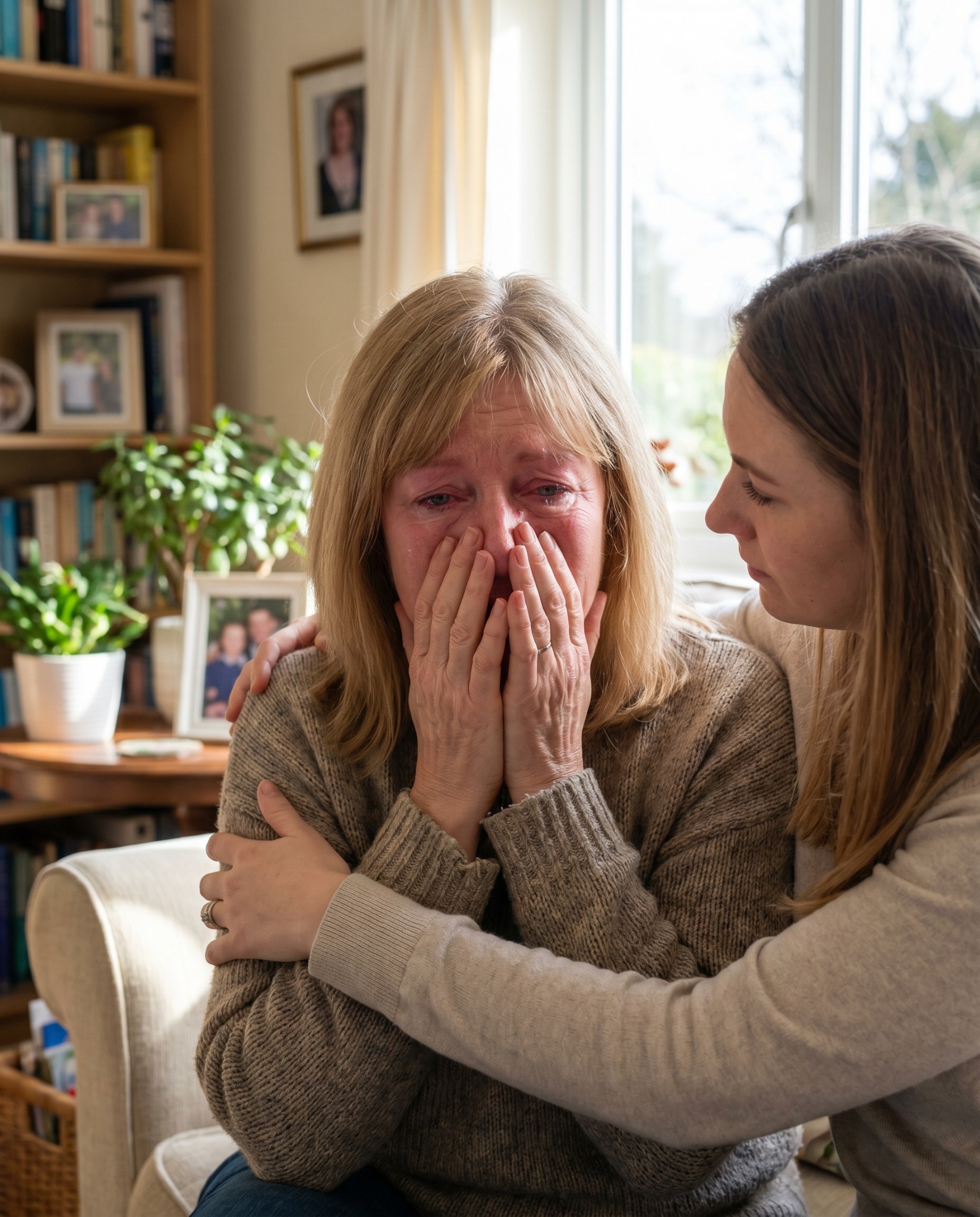
💔 The first Sunday after his funeral, I sat in our pew alone for the first time in forty-two years. His Bible was still on the shelf by the front door. His coat still on the hook. I stared at the empty space beside me and couldn't feel God anywhere in the room. My husband died on a Thursday afternoon. No warning. No goodbye. He made his coffee that morning the same way he always did — too strong, too much sugar, same mug since the kids were in grade school. He kissed me on the forehead on his way to the garage. The hospital called at 2:15. By 4:30 he was gone. I stood in our kitchen that night staring at his mug on the counter. Still half full. Still warm. I didn't wash it for a week. Part of me believed if I left everything exactly the way it was, it wouldn't be real. We used to be the couple who did everything together. Church every Sunday morning. Prayer every single night — his hand on mine, same spot on the bed, same God, same words. We sang in the choir every Wednesday evening. We went to a small group at someone's house on Thursday nights. At 65, I thought we'd have another twenty years of this. I never imagined doing any of it alone. Nobody ever told me that grief felt so like fear. The same fluttering in my stomach, the same restlessness, the same lying awake at 2am in a house that used to have two heartbeats and now only has one. He watched the news too loud. He talked to the dog like she was a person. He hummed hymns while he did the dishes — always off-key, always the same three songs. For forty-two years those sounds were the background of my life. And suddenly the background was gone and all that was left was silence. Not just in the house. In my faith. I tried to pray the night he died. I knelt beside our bed the way we always did. I reached for his hand out of habit and grabbed air. The words wouldn't come. I said out loud to nobody in an empty kitchen one night: "I talk to God, but it feels like I'm talking into an empty sky. I'm angry. I'm heartbroken. I feel abandoned. I don't know how to pray anymore." I didn't cry just because I lost my husband. I cried because I was losing my God at the same time. And I couldn't figure out which loss was worse. People came. People brought casseroles and sympathy cards with verses printed in gold lettering. People said things they meant well by that I will never forget. "He's in a better place." "God needed him more than we did." "Everything happens for a reason." "It was just his time." One woman at church hugged me and whispered, "God must have known something we didn't." Like my husband's death was a correction God made. A woman on a grief forum put it better than anyone at church: "It is deeply hurtful and unhelpful for you to suggest my loving God is doing this to me." That's exactly what it felt like. Every platitude, every card, every verse texted to me at 2am without a word of explanation — all of it felt like people telling me God did this on purpose. The anger came in the second month. Why him? We did everything right. We prayed every night for forty-two years. We went to church every Sunday. We trusted God with our lives, our marriage, our children, our health. We were FAITHFUL. And God took him anyway. Just like that. On a Thursday. Without asking. I felt like I was being punished but couldn't figure out what I'd done wrong. I stopped going to church. Sitting in that pew alone — looking at couples holding hands, grandchildren climbing into laps, everything I used to have — was more than I could bear. I stopped praying. What was the point? I'd prayed for his health every night and God took him between lunch and dinner. Then I did the one thing everyone tells you to do when you're hurting. I opened my Bible. And what I found made EVERYTHING worse. Romans 8:28. The verse everyone had been texting me. "All things work together for good." All things work together for GOOD? I stared at that verse and something inside me went cold. Because all I could hear was: God worked your husband's death together for good. God PLANNED this. That verse didn't comfort me. It made me want to throw my Bible across the room. Then Psalm 23. The verse they read at his funeral. "The Lord is my shepherd." The Lord is my SHEPHERD. But He didn't protect the man sleeping next to me for forty-two years. Then Jeremiah 29:11. "Plans to prosper you and NOT TO HARM YOU." Not to harm you. How is losing the only man I've ever loved not harm? How is standing in an empty kitchen at midnight staring at a cold coffee mug not harm? I closed my Bible that night and didn't open it for nine months. Nine months. His reading glasses still on the nightstand. His Bible still on the shelf. My Bible unopened right next to the glasses I couldn't bring myself to move. My faith didn't die in those nine months. It just went somewhere I couldn't reach. Like it was behind a door I'd lost the key to. A man on Reddit who lost his wife when he was only twenty wrote something I've read a hundred times since: "For a long time, I thought the only way to love her properly was to suffer. That if I let go of the pain, I was letting go of her. But grief already rewrites your future without your permission. You're not broken. You're wounded. And wounds can be sacred." I sat in his chair every evening. Not mine. His. Because I couldn't sit in mine without staring at the empty space where he was supposed to be. THAT'S WHEN SOMETHING CHANGED. My daughter saw what was happening. She didn't text me a verse. She didn't tell me God had a plan. She didn't say he was in a better place. She left a package on my kitchen counter with a note: "Mom, this helped me understand the Bible for the first time. I think it might help you too. No pressure. Whenever you're ready." I walked past it every morning for two weeks. Then one night the silence got so loud I couldn't take it. I didn't want to scroll my phone until 3am the way I'd been doing every night since the funeral. I saw the package on the counter. And I opened it. Inside was a Bible study I'd never seen before. I turned to the Psalms section. Not because I was ready. Because I had nothing else. And right there, before the reading even started, there was a page that explained what I was about to read. Who wrote it. When. Why. What was actually happening when those words were written. HERE'S WHAT I LEARNED: My Bible hadn't failed me. And God hadn't gone silent. The problem was something SPECIFIC that nobody at church ever told me. The Bible is sixty-six books written by dozens of people across thousands of years in languages and cultures completely different from mine. Without anyone explaining who wrote each part, when, why, and what was happening in the world at the time — the most powerful book on earth sits in your hands like a locked door. The verses that wounded me weren't wrong. I was reading them without CONTEXT. And verses without context don't become comfort. They become weapons. 💡 Here's what the study showed me: The Psalms aren't pretty poems for sympathy cards. They're prayers from people who were screaming at God from the darkest places a human being can be. David hiding in caves, running for his life, watching everything he loved get torn away. And God didn't punish him for the screaming. He kept every word in the Book for thousands of years so a woman sitting alone in a quiet house could find them and know she wasn't the first to rage at God in the dark. Romans 8:28 — "All things work together for good." The study explained who Paul was actually writing to. A church in Rome being PERSECUTED. Hunted. Killed for their faith. He wasn't saying "God plans bad things for good reasons." He was saying: even in the absolute worst suffering you can imagine, God has not left you. He's not above your pain. He's inside it with you. That changed everything for me. "All things work together for good" isn't "God planned your husband's death." It's "even here, even in the longest night of your life, God has not abandoned you and your story is not over." Nobody told me that. Not at the funeral. Not on the sympathy cards. Not in the text messages at 2am. They just sent the reference and left me alone with it. Psalm 23 — "The Lord is my shepherd." The study explained David wrote this while being HUNTED through literal valleys of death. "Even though I walk through the valley of the shadow of death" wasn't a metaphor on a funeral program. It was David's actual life. And God didn't take him OUT of the valley. God walked WITH him through it. That verse stopped being a funeral decoration and became the most personal promise I'd ever read. Jeremiah 29:11 — "Plans to prosper and not to harm." The study explained Jeremiah was writing to EXILES. People who had lost their homes, their city, their families — everything. God's promise wasn't "nothing bad will happen." It was: "even in Babylon, even after you've lost everything, I am still here and your story isn't finished." Then I found Lamentations. A book I didn't even know was in the Bible. Nobody at church had ever mentioned it. Nobody put it on a sympathy card. The study explained it was written after the people of God lost EVERYTHING. Raw, unfiltered grief poured onto the page. "My eyes fail from weeping. My heart is poured out on the ground." The Bible has an entire book of GRIEF. And nobody showed it to me during the worst nine months of my life. HERE'S WHAT HAPPENED WEEK BY WEEK: Week 2-3: I could open the study without my hands shaking. The synopses explained what I was reading BEFORE I read it, and for the first time the words had a voice behind them — not a stranger's voice, but a God who'd been speaking the whole time. Week 4: I read Job. A man who lost everything — including his children — and screamed at God from the ashes. God didn't punish him for the questions. God SHOWED UP. Not with answers. With presence. The study explained who wrote Job and why, and suddenly the most confusing book in the Bible became the most personal conversation I'd ever had with God about loss. Week 6-8: John 11:35. "Jesus wept." Two words on the prayer card from his funeral. The study explained: Jesus wept at Lazarus's tomb KNOWING He was about to raise him from the dead. He entered the grief even when He could see the ending. Someone on a grief forum had written: "The most healing thing I heard at my son's funeral was — Christ cries too. He's mourning with you." That's what the study showed me. A God who weeps with me. Not a God who planned my pain. A God who enters it. I remember the exact moment I knew something had shifted. Psalm 34:18 — "The Lord is close to the brokenhearted and saves those who are crushed in spirit." The study explained David wrote that at rock bottom — pretending to be insane to escape a king who wanted him dead. Completely broken. And God was CLOSEST to him in that moment. Not distant. Not silent. Closest. I set the study down and looked at the empty chair across the room. And for the first time in nine months, the room didn't feel empty. By month 4, I was reading my Bible every single morning for the first time in my life. Not out of obligation. Not out of guilt. Because I WANTED to. I'd make his coffee — his mug, his recipe, too strong, too much sugar — and sit at the kitchen table and open the study and hear from a God who understood exactly what I was carrying. One morning my daughter called and asked how I was doing. I told her I'd just finished Romans and I finally understood what Paul was saying after forty years of reading him and never getting it. She went quiet. Then she said: "Mom, you sound different." I said: "I am different. Not because the grief is gone. Because I finally know the God who's carrying it with me." She started crying. And I started crying. Two women who'd both lost the same man — held together by a Word that finally made sense. I went back to church last month. I sat in our pew. His spot was still empty beside me. But this time it didn't feel like God had left with him. It felt like God was sitting right there. In the space between us. Holding the seat until the day I see them both again. HERE'S WHAT I WANT YOU TO KNOW: Your grief isn't a sign that God abandoned you. And the Bible that felt like paper after your worst day isn't broken. You were reading it without CONTEXT. And without context, the most comforting words ever written sound like the cruelest. But when you read those same verses with someone explaining who wrote them, when, why, and what was happening — the God who felt silent turns out to have been speaking the whole time. Don't let grief steal your faith the way it almost stole mine. Don't let it sit between you and the God who's been trying to reach you since the day it happened. Every week you carry this alone with an unopened Bible on your nightstand is another week in the silence when His voice is right there on the page. The Word was written for the worst night of your life. You just need someone to finally show you what it says. ⭐ Over 25,000 women have used this study to finally understand the Bible they've been carrying their whole lives. ⭐ Over 6,000 five-star reviews from women who say the Word finally made sense. Right now it's 62% off with a free pen pack and a 60-day money-back guarantee. Tap below and grab yours before they sell out.
Like this ad? Make it yours.
Crush rebuilds this exact creative around your product — your brand, your colors, your offer — in about a minute.