Aging Well Daily
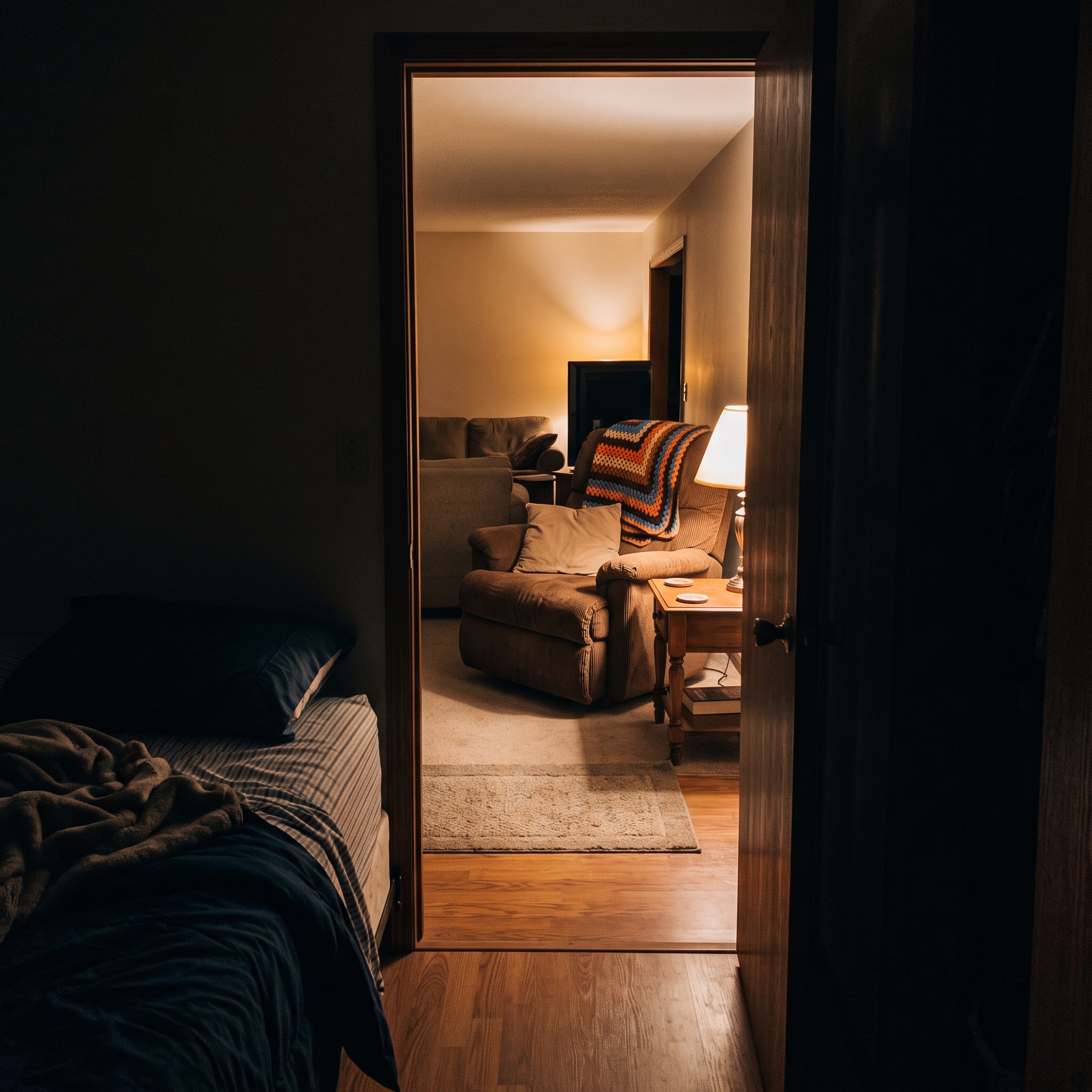
Aging Well Daily Facebook ad: “Two years ago my husband started spending his nights in…”
Ran for 15 days, from July 20 to August 4, 2026, the last day Crush saw it.
Run by Aging Well Daily on Facebook. Crush is not the advertiser and does not verify its claims. See this ad in Meta's Ad Library(opens in a new tab)
Want an ad like this for your product?
Crush makes new ad images for your product from this ad: your logo, your product photo, your offer.
Trials from $19.95 USD, then $79.95 USD a month. Cancel anytime.
About this ad
- Meta Ad Library ID
- 996918569836451
- Platforms
- Facebook, Instagram, Audience Network, Messenger and Threads
- Relaunches
- 0
Ad text
Two years ago my husband started spending his nights in the living room, and I let myself believe a terrible thing about it, and I told no one. Not our daughter. Not my sister. Not the woman I've had coffee with every Thursday since the Reagan administration. Some griefs you carry out loud. This one I carried like a stone I'd swallowed, down where nobody could see it move. His name is Dale. We met at a wedding in 1993 where neither of us was the couple getting married, and he asked me to dance to a song I hated, and I said yes anyway because he had kind hands and a nervous laugh. We've been outside Chillicothe our whole married life, in a low brick house with a bad furnace and a good porch, and for twenty-nine of those years Dale came to bed the same way every night — he'd click off the hall light, feel his way in the dark so as not to wake me even when I was already awake, and settle in on his side with one foot sticking out from under the quilt because the man has run hot since the day I met him. I could set a clock by the weight of him coming down onto that mattress. For twenty-nine years, that sound was the last thing I heard before sleep. The sound of not being alone. And then, sometime in the winter two years back, it stopped. It didn't stop all at once, which is how these things get their claws in you. First it was just the nights his back was bad — Dale threw sod and poured concrete for thirty years and his lower back is a roadmap of all of it — and he'd say, "I'll just take the recliner, honey, I don't want to keep you up with the tossing." And I'd say fine, of course, poor thing. The recliner is a brown corduroy La-Z-Boy the color of a paper bag, and it's got a groove worn into it shaped exactly like Dale. One night became two. Two became most. And by that second winter he wasn't even pretending it was his back anymore. He just took his pillow off the bed each evening — my grandmother's pillow, the flat old thing he's used our whole marriage — and carried it out to the living room like a man checking into a motel, and that was that. Here is the thing I never said out loud. I lay in that bed alone, on my own side, with all that cold empty space where the weight of him used to come down, and I did the math a frightened woman does at two in the morning. I thought: he doesn't want to be next to me anymore. I thought about how long it had been since he'd reached over in the dark. I thought about the twelve pounds I'd put on, and the way I'd started falling asleep with the reading light on, and every dumb little friction of a long marriage, and I stacked them all up into a case, and the verdict I handed down against myself was that the love had finally, quietly, gone cold — the way people always warn you it can, so slowly you don't notice until you're sleeping in two different rooms and calling it his back. I never confronted him. I want you to understand that. Because I was afraid that if I asked the question out loud — "Dale, do you even want to be married to me anymore?" — he might answer it. And an unanswered fear, as awful as it is, at least still has a door in it. So I kept the door shut. We were kind to each other in the daylight. We did the crossword. He fixed my car. We were the most polite two strangers you ever saw, and every single night that hall light clicked off and he walked the other way, and I turned my face into the pillow so he wouldn't hear. It was Rosa who cracked it open, and she didn't even know she was doing it. Rosa Delgado has cleaned houses around here for thirty years, and for the last several she's done ours every other Wednesday — not because I can't run a vacuum but because after her knees went bad her hours got thin and I'd sooner pay Rosa than anybody, and besides she's family now, she's seen this house through a flood and two funerals. Before the houses she spent fifteen years turning rooms at the old Adena Inn out on the highway, the kind of hands-and-knees hotel work that ruins your body and teaches you everything about how people actually live behind a closed door. That Wednesday she was stripping the recliner — I'd started leaving a sheet over it because Dale was practically living in the thing — and she pressed her hand down flat into the seat of it, and then she walked into our bedroom and pressed her hand down flat into Dale's side of the mattress, into the spot where he used to sleep, and it went down and it stayed down, a soft dead hollow her whole forearm disappeared into. She stood there a second. Then she said, not looking at me, folding a towel: "How long has he been out in that chair?" I said something light. Bad back, you know how he is. Rosa's not a woman who fills silences, so she let that one sit. Then she said the thing that I have thought about every day since. "You know it's probably not you." She said it plain, like she was reading it off the wall. And my whole face must have done something, because she finally looked up, and she got soft. "Mija. I turned rooms twenty years. You learn things you're not supposed to say. The men who couldn't sleep, the couples who asked for two beds and cried about it — half the time it wasn't the marriage. It was the bed. A body in pain looks for the firmer spot. That chair holds him up. Your bed" — she nodded back toward that hollow — "your bed's a hole he can't get out of. He's not leaving you. He's leaving the hole. There's a difference, and you're breaking your heart over the wrong one." I had to go stand in the pantry for a minute. Thirty-one years and I had never once let myself imagine there might be a reason that wasn't a rejection. It's amazing what a frightened person can refuse to consider, because considering it means you might have grieved for two years over nothing. Now — I want to be honest, because you've been burned too, I'd bet money on it, and I'm not going to insult you. I did not just run out and fix it because Rosa said a wise thing. I'd been burned. Two winters before, at the very start of all this, I'd panicked and spent four hundred dollars I didn't love spending on one of those memory-foam toppers everybody swears by, the kind that comes rolled up in a box like a magic trick. It made things worse. Dale sank into it like wet sand and woke up sweating through his shirt, said it was like sleeping in a warm bath, and it went out to the garage inside a week where it still sits, four hundred dollars of good intentions gathering spiders. So I was not a woman inclined to believe a chair-cushion could give me my husband back. I was a woman who'd already tried and paid for it. But I'm up anyway, most nights. So now I read. And what I found down there at two in the morning, blue light on my face, made me put the phone against my chest and just breathe for a minute. There's a study — The Lancet, a real medical journal, back in 2003 — where they took three hundred people with bad backs and gave half of them medium-firm surfaces and half the soft ones, and the medium-firm people did better. That study is old enough to vote and almost nobody's ever heard of it, and I sat there wondering why, and then I understood why, and it made me mad in a way I hadn't been mad in years. You cannot patent "firmer." There is no money in it. Nobody's going to run a Super Bowl ad for a plain firm surface, and meanwhile there's a thirty-billion-dollar business built on selling us softer, deeper, more, the exact plush sink-in beds that study quietly flagged as the problem. The truth was just sitting there, free, for twenty years, and no one with a marketing budget had any reason to say it out loud. Then I found the other piece, and this one's the one that undid me. There's a researcher named Okamoto-Mizuno whose work is all about body heat and sleep — your skin has to shed about a degree of warmth to drop into the deep part of the night — and thick synthetic foam holds heat against you like a hand over your mouth. Dale, who has run hot since 1993. Dale, sweating through his shirt in a warm bath of foam I'd bought him. I'd taken a man whose body was already begging for something firmer and something cooler and I'd sold him the exact opposite and then lain in the next room deciding he didn't love me. I read about the shikibuton, too — the thin firm mat people in Japan have slept on for four hundred years, on the floor, on purpose, because firm and cool is not a punishment, it's the point. Four hundred years. And a doctor had once told me, when I asked about my own sleep, that it was "just your age." Just your age. As if a body wanting to be held level instead of swallowed was a character flaw of getting older. I ordered the thing that lined up with every word of it. And I did not tell Dale, because by then I needed to see it for myself before I could stand to hope out loud. What I bought is called a Hanare, and I'll tell you exactly what it is because there's nothing to hide and God knows I'm tired of things being hidden. It's a topper — three inches, and it lays right on top of the mattress you already own, no throwing anything out, no straps, no tools, you just put it down over the bed and put the fitted sheet back over it. It is not memory foam. That's the whole thing, really. It's medium-firm — firm enough to hold a body up level so it can't roll down into the old worn valley, but not board-hard, not cruel. The cover is a bamboo-viscose blend, and it does the thing the research promised: it breathes, it sleeps cool, it doesn't trap a hot man in a warm bath. Ours is a queen and it cost a hundred and twenty-nine dollars, and I will be honest that the price is part of why I almost didn't trust it — after four hundred wasted dollars in the garage, a hundred and twenty-nine felt too cheap to possibly be the answer, like the universe doesn't hand back thirty-one years for the price of a nice pair of shoes. And there's a hundred-night thing on it, which is the only reason a burned woman like me clicked the button at all: you sleep on it a hundred nights, and if it's junk you get a label and a bag and your money back. Not ninety, not "restocking fee," not a runaround. A hundred nights. That's the only promise that gets through to somebody who's already been made a fool of once. It came rolled in a box like the last one. I put it on the bed on a Tuesday while Dale was at the hardware store, and I made the bed back up over it like nothing had happened, and I didn't say a word. That first night I did something I hadn't done in two years. I said, "Come to bed. Just try it. One night. For me." He looked at me for a long second — there was so much in that look, two years of it — and he came. He clicked off the hall light out of thirty-one years of habit, and he felt his way in the dark so as not to wake me, and I lay there in the pitch black waiting, and then it came. That weight. That old exact weight of Dale coming down onto the mattress, the sound that used to be the last thing I heard before sleep. Except this time he didn't sink and vanish. He came down and the surface held him, held both of us, level and even, and he let out a breath I felt more than heard, a long one, the kind you let out when you've been bracing so long you forgot you were doing it. He didn't say anything poetic. Dale's not built that way. Around two in the morning, when I was sure he was asleep, he found my hand under the quilt in the dark, the way he used to, and he just held it. That's all. And I lay there with my husband's hand in mine and cried as quiet as I've ever done anything, because I'd spent two years grieving a marriage that was never dying — it was just trying to get comfortable, and I'd been too scared to ask. I won't oversell you, because you'd catch me at it. It wasn't a fairy tale. His back is still his back; some mornings are still stiff, and the recliner's still out there, and once in a while when he's really aching he still takes it, and now — this is the difference — now I don't lie in the dark building a case against myself when he does. It doesn't mean what I thought it meant. It never did. What came back wasn't a miracle. It was smaller and it was everything: he comes to bed. Most nights, he comes to bed. He reaches over in the dark. We are two people sleeping in one room again, which after where I'd been feels like being handed back something I'd already finished mourning. Here's the part that made me finally open my mouth. A couple months on, I was in line at the Kroger pharmacy and there was a woman ahead of me, maybe my age, tired around the eyes in a way I recognized like a mirror, and she was on the phone saying something low and flat to somebody — "no, he sleeps downstairs now, it's just easier" — and that word, easier, the exact flat word I'd used for two years, it went into me like a hook. And Rosa's voice was in my head. You learn things you're not supposed to say. So I did the thing that got done to me. When she hung up I said, I'm sorry, I couldn't help hearing, and I know it's none of my business, but can I tell you what a woman who cleaned hotels told me? And I told her. Standing there by the reading glasses and the pill organizers, two strangers, I told her it might not be what she thinks it is, that it might be the bed and not the marriage, that there's a difference and she might be breaking her heart over the wrong one. She got the same look I must have given Rosa. She wrote it down on the back of her receipt. That's the whole reason I'm typing all this out where anybody can see it, me, a woman who told no one for two years. Because somewhere on your list is a person doing this exact math in the dark tonight, deciding something cold and final about why the other side of the bed is empty. And it might be true and it might not, but I lost two years to never checking, and I would give a great deal to have those two years back, and I can't, but maybe you can hand them to somebody else. If any of this landed somewhere tender — if you've got your own recliner in your own living room and your own quiet verdict you've never said out loud — you can go read about the thing that gave me my husband's hand back in the dark at www.tryhanare.com/hanaretopper. That's all. Go look if you want to. I'm just a woman who was wrong about the worst thing she ever believed, and grateful past words that I found out in time. Come to bed. Both of you. While you still can. P.S. — The four-hundred-dollar foam one is still in our garage. I keep meaning to throw it out and I never do, and I think it's because it's the only proof I have of how close I came to being certain about the wrong thing. Sometimes I think everybody should have to keep one expensive mistake where they can see it. P.S.S. — Rosa still comes every other Wednesday. Last month she pressed her hand into Dale's side of the bed again, the way she did that first day, and it held firm and didn't swallow her arm, and she looked at me and didn't say a word, just nodded once, and I had to go stand in the pantry again for a whole different reason. If you have a Rosa in your life, tell her what she did. They almost never know. P.S.S.S. — Somebody's going to ask, so: it's not memory foam, that's the whole point of it, it holds you up instead of sucking you down, and it stays cool instead of cooking you, and it just lays on top of whatever bed you've already got. And the hundred nights is real — a label and a bag and your money back — which after the garage is the only reason I trusted it at all. P.S.S.S.S. — And if you're the one reading this at two in the morning, on your own side, listening for a weight that doesn't come anymore, and you've already decided in the dark what it means about you — please hear me, from the other end of that exact same bed: you might be wrong. I was as wrong as a person can be, for two whole years, about the man I love most in this world. Don't wait as long as I did to find out. Go ask. Go check the bed. Go turn the hall light off and just say, one night, for me.
Where the ad sends people
tryhanare.com
Two years ago my husband started spending his nights in the living room. I never told a single soul the thing I'd quietly decided it meant — that after thirty-one years, he had stopped wanting to be anywhere near me.
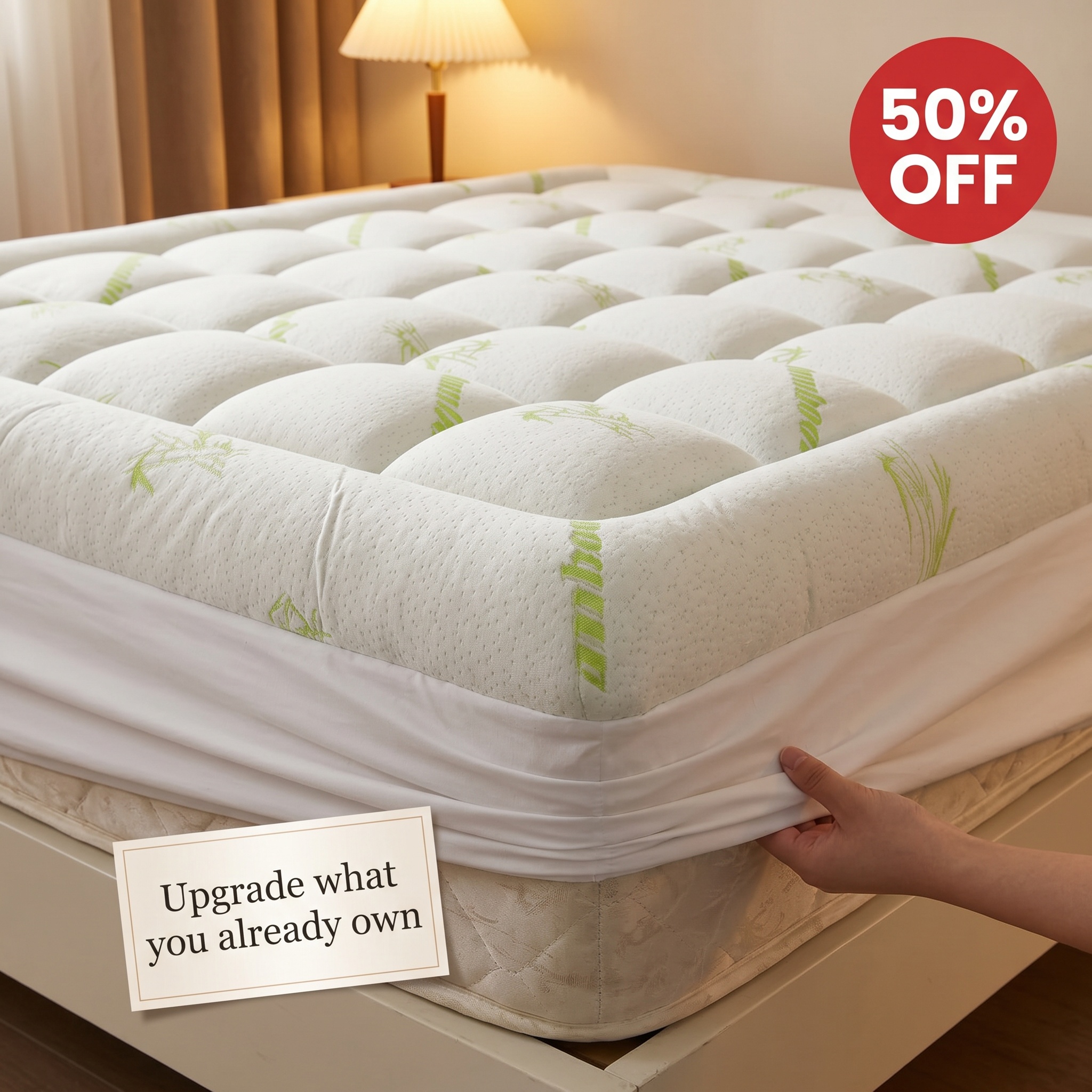
Sleep cooler and wake up refreshed. The BambooBreeze Mattress Topper adds cloud-like cushion with breathable bamboo fabric. Shop now for $149.
Learn more: tryhanare.com(opens in a new tab)