COPD and Me
COPD and Me Facebook ad: “I Watched My Sister Disappear One Polite Appointment At A…”
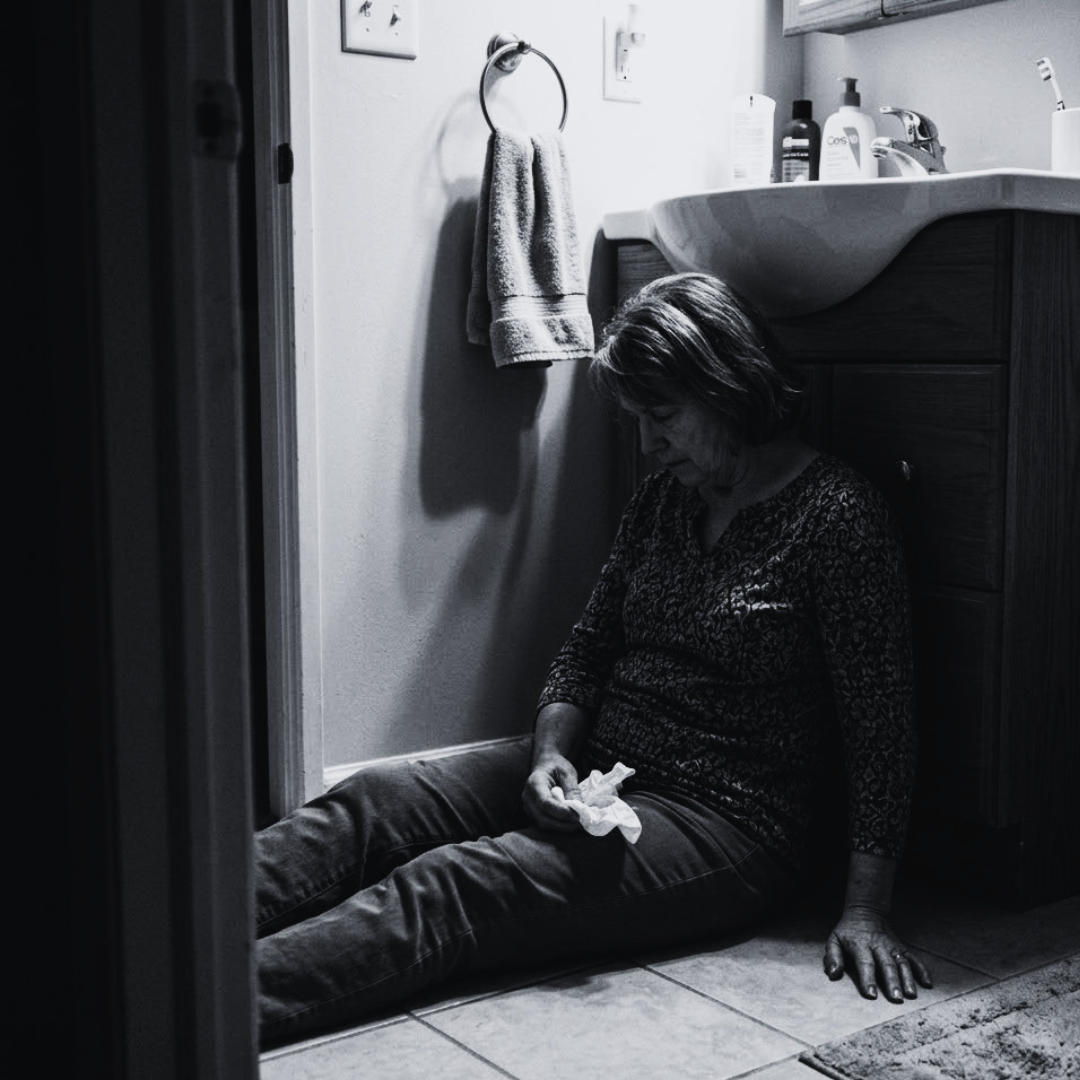
Ran for 68 days, from May 9 to July 16, 2026, the last day Crush saw it.
Run by COPD and Me on Facebook. Crush is not the advertiser and does not verify its claims. See this ad in Meta's Ad Library(opens in a new tab)
Want an ad like this for your product?
Crush makes new ad images for your product from this ad: your logo, your product photo, your offer.
Trials from $19.95 USD, then $79.95 USD a month. Cancel anytime.
About this ad
- Meta Ad Library ID
- 998153246083299
- Platforms
- Facebook, Instagram, Audience Network, Messenger and Threads
- Relaunches
- 0
- Niche
- Business & Money
Ad text
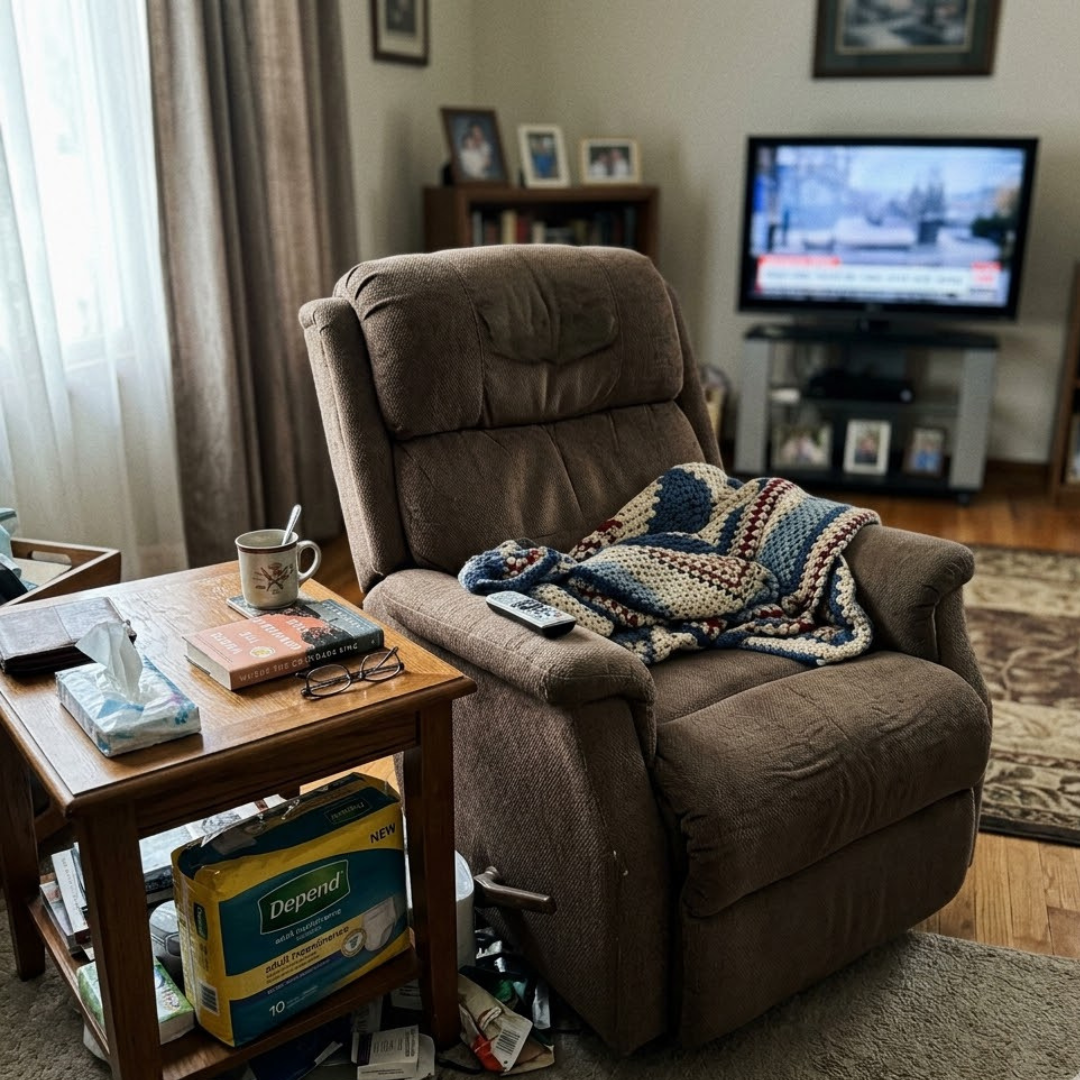
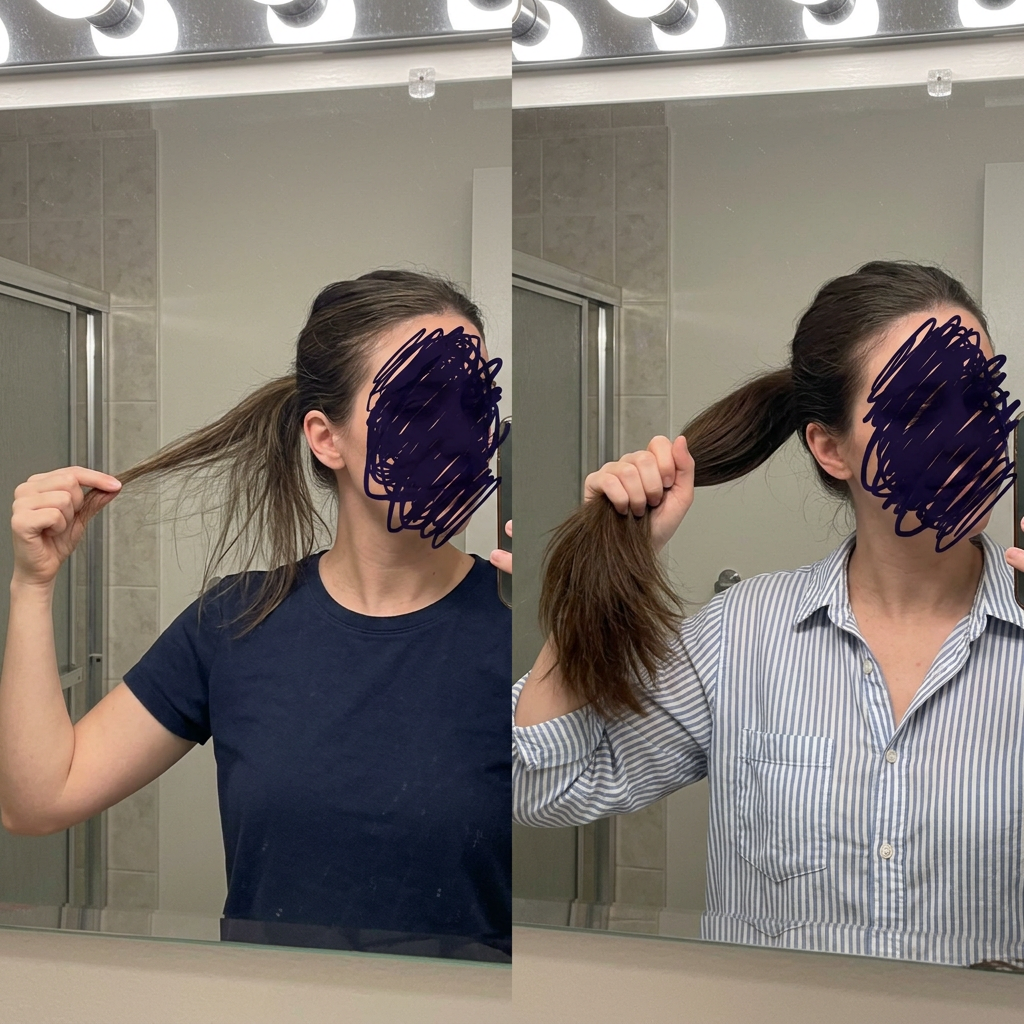
I saw a statistic that made me sick. Over 90% of COPD patients whose pulse ox reads 95% or higher are told by their doctor that they're "fine" — while their respiratory muscles are working 5 to 6 times harder than normal just to hold that number. Not twice as hard. Not three times. Five to six. The pulse ox doesn't measure that. It measures one thing. And one thing is all your doctor looks at. My sister Denise was part of that statistic. Four years of "your sats are fine, it's anxiety." She collapsed at a Giant Eagle at 67. Passed before I got to the hospital. I'm 63. Last month, my doctor looked at my 96% pulse ox and said the same words Denise heard for four years. I refused to walk out of that office the way she did. And what I found instead — from a 71-year-old retired electrician I ran into at a coffee shop — finally made my breathing FEEL as good as the number says it should. But to understand why I was willing to tear up my doctor's note and walk out of the appointment, you have to know what I watched four years of "your numbers are fine" do to my older sister. For FOUR YEARS — and I mean four full calendar years, twelve appointments a year, almost fifty visits total — my sister Denise was told she was fine. Started at 63. She went to her pulmonologist because she couldn't walk up the stairs in her own house without stopping at the landing. He clipped the pulse ox on her finger. 96%. He smiled. Said it was "excellent oxygenation" for someone with COPD. Said keep using the Spiriva. Said he'd see her in six months. Three months in, the breathlessness got worse. She called the office. The nurse read her chart, saw her recent sats, told her on the phone: "Denise, your numbers are stable. Are you under any stress lately? Sometimes anxiety presents exactly like breathlessness." That was the first time somebody used that word on her. Anxiety. By year two, she was hearing it at every visit. "Your sats are excellent. Have you considered that anxiety might be amplifying how this feels?" Her husband started watching her out of the corner of his eye. Our brother asked me quietly at Thanksgiving if Denise was "getting a little dramatic lately." Her own daughter sat her down and begged her to see a therapist. Denise called me crying from her car after one of those appointments. "Paulette," she said, "am I losing my mind?" I didn't know what to tell her. Her numbers were fine. Every doctor said so. So they put her on Xanax. Then Lexapro. Then they added a second round of the same speech: "Your oxygen looks great. Have you tried meditation?" By year three she stopped mentioning the breathlessness. She just lived with it. Every morning she'd stand in her kitchen and hold onto the counter for thirty seconds before walking to the coffee maker because her chest would seize if she tried to walk straight from the bedroom. She stopped gardening. Stopped meeting her friends for lunch. Stopped driving long distances. Her husband told me later: "It was like watching her disappear one polite appointment at a time." Year four, she collapsed in the frozen aisle at Giant Eagle. A stock boy called 911. They got her to the hospital. The ER doctor ran a full workup. Her pulse ox was 94%. On paper, she looked fine. But the arterial blood gas — a test her pulmonologist had never once ordered in four years — came back with trapped CO2 off the charts, respiratory acidosis, and signs that her diaphragm had been in full compensatory overdrive for years. She passed twenty minutes later. At the funeral, her husband put his hand on my arm and said something I'll never forget: "Paulette. They kept telling her she was fine. Her body had been telling her she wasn't. She stopped believing her body." So fast forward to four months ago. I'm 63. I quit smoking fifteen years ago. I eat clean. I walk my dog every morning. I don't drink. I go to my routine pulmonology appointment. Nurse clips the pulse ox on. 96%. Doctor walks in. Looks at the chart. Smiles. "Paulette, your oxygen saturation is excellent. Your spirometry is stable. Keep using the Spiriva. We'll see you in six months." My chest tightened. "But I can't walk to my mailbox without stopping. I cough for twenty minutes every morning and nothing comes up. I feel like I'm breathing through a wet cloth." She nodded. Kindly. "I understand. But your numbers look great. Sometimes with COPD, anxiety can make breathlessness feel worse than the clinical picture—" I stopped hearing her. Anxiety. Four years of watching Denise shrink under that word. Four years of watching her stop believing her own body. And then the frozen aisle. "No," I said. She blinked. "Excuse me?" "I'm not accepting that this is anxiety. My sister was told the same thing for four years. She's dead." She gave me that look doctors give difficult patients. "I'm sorry about your sister, but your case is—" "My case is the same 96% and the same explanation. I'm not accepting it." She sighed. Wrote something in my chart. Probably flagged me as difficult. I didn't care. I walked out to my car and sat there for twenty minutes with my hands on the steering wheel. Because I had refused to believe the same words that had destroyed my sister — but I didn't have anything to replace them with. That night, I couldn't sleep. I went down to my kitchen at 2am and opened my laptop. I started Googling everything. "Normal oxygen but breathless." "SpO2 96 but feel like dying." "Am I making this up." Every forum I found had the same thousand posts: hundreds of people with the same story, the same number, the same dismissal. One thread led me to a comment from someone who said their uncle had been through the same four-year gaslighting loop Denise had — and then his stepson, who was a respiratory therapist, finally explained what the pulse ox wasn't measuring. That comment linked to an article by a respiratory doctor named Dr. Barbara Miller. I read every word at 3am. Two weeks later, I was sitting in a coffee shop near my house reading it again, printed out, taking notes in the margins. The man sitting at the next table looked over and said: "That's Dr. Miller's article. I read that six months ago." I looked up. He was maybe 71. Silver hair. Thick hands. Wearing a flannel shirt. Breathing easy. "I'm Bill," he said. "Kasprzak. Retired IBEW electrician, Local 5. Had COPD for nine years. Mucus at the bottom of my lungs I could feel sitting there every morning. My pulse ox always read 96, 97. My doctor kept telling me I was fine. I spent three years wondering if I was losing my mind." I put the article down. "I'm Paulette. My sister passed from being told she was fine." He nodded slowly. Like he'd been waiting for someone to say that out loud. "Come sit over here," he said. "I'll tell you about my niece." Bill sat me down and told me his niece is a respiratory therapist at a hospital in Pittsburgh. Twelve years on the job. Has worked every floor from the ICU to pulmonary rehab. Over coffee at her kitchen table last summer, Bill had been complaining about the exact same loop. Pulse ox fine. Doctor dismissive. Family skeptical. His niece put down her coffee cup and said this: "Uncle Bill. A pulse oximeter measures ONE thing. It tells you the percentage of hemoglobin in your blood that's carrying oxygen. That's it. That's the entire measurement. "It doesn't tell you how hard your diaphragm is working to hold that number. "It doesn't tell you how much CO2 is trapped behind blocked airways. "It doesn't tell you how much air is stuck in the bottom of your lungs that can't escape. "It doesn't tell you how much mucus load is riding on your respiratory muscles. "You can have a pulse ox of 96% with your engine at 2,000 RPM — easy, cruising, quiet. And you can have a pulse ox of 96% with your engine at 6,500 RPM — redlining, screaming, smoking. The number is identical. The work is not even close." Then she drew a diagram on the back of a napkin. Two cars. Both going 60 miles per hour. Both speedometers reading 60. One engine at 2,000 RPM. The other at 6,500 RPM, five seconds from throwing a rod. "The speedometer lies about the engine," she said. "The pulse ox lies about your breathing." Then she drew a second diagram. A cross-section of an airway. Two layers of mucus. The top layer, pale and thin — what Mucinex thins every morning, what comes up easy. And underneath, a dense, dark, cemented layer. Hardened over years. Oily. Chemically bonded to itself. "That layer down there," she said, "is the mucus load riding on your respiratory muscles. Not enough to drop your oxygen saturation, because your body compensates. But the compensation is exhausting. Your diaphragm is at 6,500 RPM. That's why you feel like you're dying while the number reads 96%." Bill looked at me across the coffee shop table and said: "Paulette. That was the first sentence I'd heard in three years that made me feel like my body wasn't lying to me." Then he told me what his niece had him try. Not a pill. Not a tea. A spray. You spray it directly into the back of your throat, and it travels the same path as the air you breathe. It reaches the airways the way a hospital nebulizer delivers medicine — directly, bypassing the stomach entirely. His niece explained that less than 1% of what's in a swallowed Mucinex capsule ever reaches the lungs because stomach acid destroys the rest. A spray is concentrated botanicals going straight to the tissue where the cemented layer lives. Four ingredients. Eucalyptus to dissolve the hardened bonds in the cemented layer. Licorice root to calm the inflammation that's been keeping the layer swollen. Peppermint to open the airways so the spray reaches deeper. Calendula to revive the cilia buried underneath. "Within two weeks," Bill said, "I coughed up something that was almost black. Thumbnail-sized. Dense. Didn't float — it sank in the water. My niece said that proof. That's the cemented layer finally breaking apart. The darker it is, the longer it was stuck. Mine was almost black because mine had been stuck for nine years." He wrote the name on the back of my coffee receipt. Naturva. Pointed me back to Dr. Miller's article. I ordered a bottle that night. Days one through three: nothing. Just my normal thin-stuff morning cough. Day five: something shifted in my chest. Like a hinge creaking open. Day nine: the first dark one came up. Standing over the sink at 6am. Dark brown. Nickel-sized. It sank in the water. I sat down on the bathroom floor and cried, because that was the first physical proof I'd ever had that my body hadn't been lying to me. Day fourteen: a bigger one. Almost black. Ropy. Week three: morning sink sessions dropped from twenty minutes to six. I walked to my mailbox and back without stopping at the fence. My chest didn't seize. Week five: I slept flat for the first time in two years. Out of the recliner. Back into bed. Week seven: routine pulmonology visit. The nurse clipped the pulse ox on. 97%. Doctor walked in. Same smile. "Paulette, your sats look great." But this time I smiled back. Because the number was the same — and the work was completely different. That was ten months ago. My breathing now feels as easy as the number always said it should. My chest isn't locked up. My mailbox walk is nothing. I took a walking tour of our local botanical gardens with my daughter last month — two full miles — and I wasn't the one asking to stop. Not "I'll try." Not "If I feel up to it." Yes. I called my brother last week and told him about it. He was quiet for a long time on the phone. Then he said: "Denise should have had this." I know. If you're reading this, you probably see yourself in my story. Your pulse ox reads 95, 96, 97%. Your doctor keeps telling you your numbers are fine. You've heard the word anxiety. You've started wondering if you're imagining it. Your family has quietly started wondering too. You've stopped mentioning it at dinner because you're tired of the look. But you feel like you're breathing through a wet cloth. Like you're only getting air into the top third of your lungs. Like every breath costs five times what it should. You're right. You're not crazy. Your body isn't lying. Your doctor is looking at one-fifth of the picture. The other four-fifths are doing exactly what you're feeling — and the cemented mucus layer is the load redlining your engine. You weren't imagining it. You weren't exaggerating. You weren't anxious. You were just the only one who could feel the engine redline. Naturva is different. A spray, not a pill. Delivered directly to your airways the way a hospital nebulizer delivers medicine — bypassing stomach acid entirely. Four concentrated botanicals. Eucalyptus to dissolve the cemented layer's hardened bonds. Licorice root to kill the inflammation. Peppermint to open the airways. Calendula to revive the buried cilia. Self-verifiable physical proof. Within two weeks most people cough up the dark brown or black stuff that's been stuck for years. The darker it is, the longer it was trapped. 60-day money-back guarantee. Use every spray. If the dark stuff doesn't come up — if your breathing doesn't start feeling as easy as the number says it should — send it back. Full refund. Dr. Barbara Miller, the respiratory doctor Bill pointed me to, has written the clearest explanation of why the pulse ox misses the cemented layer that I've ever read. Read her article here: 👉 https://naturvahealth.com/pages/listicle2 You're at a crossroads. One path: keep going to appointments where you're told you're fine. Keep hearing the word anxiety. Keep watching your family decide you're being dramatic. Keep standing in your own kitchen holding onto the counter for thirty seconds before you can walk to the coffee maker. Hope you don't end up in a frozen aisle. Another path: do what Bill did. Do what I did. Finally clear the layer that's redlining your lungs — the one nothing in your house can measure and nothing your doctor is looking for. I chose the second path ten months ago. It gave me my sanity back before it gave me my breath back. The medical system isn't coming to save you. They'll keep looking at the one number that looks fine and telling you everything is fine, because that's what the chart says. They don't get paid when the cemented layer finally comes out. They get paid when you stay on Spiriva for life and quietly start believing you're crazy. You have to save yourself. Because every morning you wait, your diaphragm is redlining a little harder. The muscle fatigues. The compensation weakens. And eventually the number drops too — in a frozen aisle, in a grocery store, in a place you didn't plan to die. You don't have years to waste. Denise didn't either. — Paulette Vannoy 👉 https://naturvahealth.com/pages/listicle2 P.S. — The dark brown stuff that comes up in the first two weeks will look alarming. Almost black. Thick. Sinks in the water. It's not infection. It's not a flare-up. It's the cemented layer finally breaking apart after however many years it's been there. The darker it is, the longer it was stuck. Mine was almost black because mine had been there eleven years. Yours might be too. P.P.S. — I saw Bill at the same coffee shop two weeks ago. He told me his niece has now put four other patients on Naturva — all of them people with "normal" pulse ox readings who'd been told it was anxiety. All four coughed up the dark stuff within two weeks. One of them, a 62-year-old woman who'd been on psychiatric medication for two years for "health anxiety," called Bill's niece crying when she finally believed her body wasn't making it up. You are not crazy. Your body is telling you the truth. Your doctor is looking at one-fifth of the picture. Don't end up in the frozen aisle. 👉 https://naturvahealth.com/pages/listicle2
Where the ad sends people
lunghealthtips.com
I Watched My Sister Disappear One Polite Appointment At A Time😔
Naturva
Learn more: naturvahealth.com(opens in a new tab)